Sebagian Benar

Penilaian: 6.0/10

Coalition
C0960

Klaim

“Mengingkari janji pemilu untuk National Broadband Network 25MBi/s, dan mengumumkan bahwa biayanya akan lebih mahal dari yang dijanjikan.”
Sumber Asli: Matthew Davis

Sumber Asli

VERIFIKASI FAKTA

Klaim ini berisi dua tuduhan berbeda yang perlu diverifikasi. **Tentang pengingkaran janji pemilu untuk 25Mbps:** Kebijakan broadband 2013 Koalisi menjanjikan kecepatan unduh minimum 25 Mbps pada akhir 2016, dengan rentang 25-100 Mbps untuk sebagian besar premise [1].
The claim contains two distinct allegations that require verification. **On breaking the election promise for 25Mbps:** The Coalition's 2013 broadband policy promised a minimum download speed of 25 Mbps by the end of 2016, with a range of 25-100 Mbps for most premises [1].
Teks klaim asli mengandung kesalahan ketik ("25MBi/s" kemungkinan berarti 25 Mbps).
The original claim text contains a typo ("25MBi/s" likely means 25 Mbps).
Setelah naik ke kantor pada September 2013, Koalisi memang mempertahankan target kecepatan minimum 25 Mbps tetapi mengubah teknologi dari model fiber-to-the-premises (FTTP) Labor menjadi multi-technology mix (MTM) yang menggabungkan fiber-to-the-node (FTTN), kabel HFC, dan teknologi lainnya [2].
After taking office in September 2013, the Coalition did maintain the 25 Mbps minimum speed target but changed the technology from Labor's fiber-to-the-premises (FTTP) model to a multi-technology mix (MTM) incorporating fiber-to-the-node (FTTN), HFC cable, and other technologies [2].
Koalisi secara teknis tidak "mengingkari" janji 25 Mbps dalam kebijakan - target minimum tersebut tetap dipertahankan.
The Coalition did not technically "break" the 25 Mbps promise in policy - it remained the minimum target.
Namun, janji kecepatan menjadi kontroversial karena pendekatan MTM menggunakan teknologi FTTN memberikan kecepatan yang sangat bervariasi tergantung pada kualitas saluran tembaga dan jarak dari node, dengan banyak premise yang menerima kecepatan jauh di bawah 25 Mbps dalam praktiknya [3]. **Tentang biaya yang melebihi janji:** Tuduhan ini akurat secara faktual.
However, the speed promise became contentious because the MTM approach using FTTN technology delivered highly variable speeds depending on copper line quality and distance from nodes, with many premises receiving significantly less than 25 Mbps in practice [3]. **On cost exceeding promises:** This allegation is factually accurate.
Tinjauan Strategis 2013 Koalisi memperkirakan NBN MTM akan memakan biaya 41 miliar dolar Australia [4].
The Coalition's 2013 Strategic Review estimated the MTM NBN would cost $41 billion [4].
Namun, pada Agustus 2015, biayanya telah membengkak menjadi antara 46 miliar hingga 56 molar dolar Australia - peningkatan hingga 15 miliar dolar Australia [5].
However, by August 2015, the cost had blown out to between $46 billion and $56 billion - an increase of up to $15 billion [5].
Menteri Komunikasi Malcolm Turnbull mengonfirmasi pembengkakan ini tetapi berargumen bahwa biaya akhir akan tetap "sekitar 30 miliar dolar Australia lebih murah dari apa yang akan dikenakan jika mengikuti rute yang ditetapkan Partai Labor" [6].
Communications Minister Malcolm Turnbull confirmed this blowout but argued the final cost would still be "around $30 billion less than what it would cost to go down the route the Labor Party had set the company on" [6].
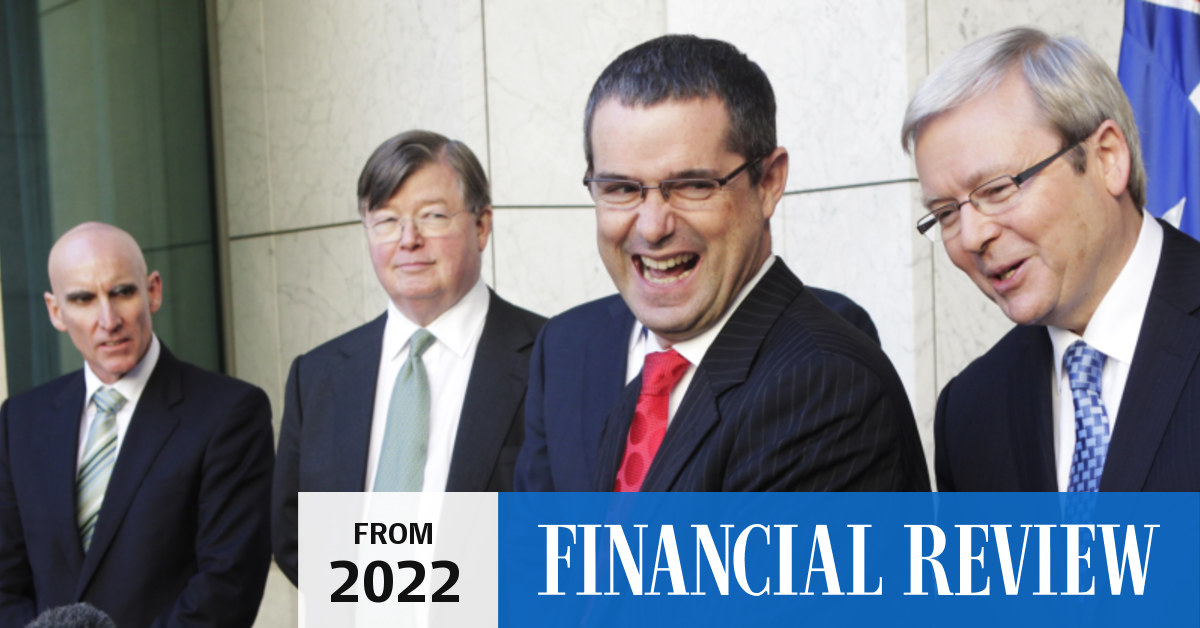
Pada 2022, AFR melaporkan total pembengkakan biaya telah mencapai 31 miliar dolar Australia di atas janji asli Labor tahun 2009 sebesar 43 miliar dolar Australia [7].
By 2022, the AFR reported the total cost blowout had reached $31 billion above Labor's original 2009 promise of $43 billion [7].

Konteks yang Hilang

**NBN milik Labor juga memiliki masalah biaya dan jadwalnya sendiri:** Klaim ini menghilangkan fakta bahwa rencana NBN berbasis FTTP milik Labor, yang diumumkan tahun 2009 dengan label harga 43 miliar dolar Australia, juga mengalami pembengkakan biaya dan penundaan yang signifikan [8].
**Labor's NBN had its own cost and timeline issues:** The claim omits that Labor's original FTTP-based NBN plan, announced in 2009 with a $43 billion price tag, also experienced significant cost overruns and delays [8].
Tinjauan Strategis NBN Co yang dikomisi oleh Koalisi memperkirakan bahwa melanjutkan rencana FTTP Labor akan memakan biaya 73 miliar dolar Australia dan membutuhkan waktu hingga 2028 untuk diselesaikan - delapan tahun lebih lama dari pendekatan MTM [9]. **Pilihan teknologi melibatkan pertukaran yang sah:** Perubahan dari FTTP ke MTM bukan sekadar tentang pengurangan biaya tetapi mencerminkan pendekatan filosofis yang berbeda terhadap infrastruktur broadband.
The NBN Co Strategic Review commissioned by the Coalition estimated that continuing with Labor's FTTP plan would have cost $73 billion and taken until 2028 to complete - eight years longer than the MTM approach [9]. **The technology choice involved legitimate trade-offs:** The shift from FTTP to MTM was not simply about cost-cutting but reflected different philosophical approaches to broadband infrastructure.
FTTP milik Labor menawarkan kecepatan ultimate yang lebih tinggi tetapi dengan biaya awal yang lebih besar dan waktu penyebaran yang lebih lama.
Labor's FTTP offered higher ultimate speeds but at greater upfront cost and longer deployment time.
MTM milik Koalisi menjanjikan penyebaran yang lebih cepat dan biaya awal yang lebih rendah tetapi dengan batas kecepatan yang lebih rendah dan ketergantungan pada infrastruktur tembaga yang menua [10]. **Nuansa janji kecepatan:** Angka 25 Mbps adalah target minimum, bukan jaminan untuk setiap premise.
The Coalition's MTM promised faster rollout and lower initial costs but with lower speed ceilings and reliance on aging copper infrastructure [10]. **Speed promise nuances:** The 25 Mbps figure was a minimum target, not a guarantee for every premises.
Kebijakan Koalisi sebenarnya menjanjikan "25–100 Mbps" untuk sebagian besar premise, dengan kecepatan puncak hingga 100 Mbps [11].
The Coalition's policy actually promised "25–100 Mbps" for most premises, with peak speeds up to 100 Mbps [11].
Perubahan teknologi berarti kecepatan aktual bervariasi secara signifikan berdasarkan kualitas infrastruktur.
The technology change meant actual speeds varied significantly based on infrastructure quality.

Penilaian Kredibilitas Sumber

Sumber aslinya adalah **Australian Financial Review (AFR)**, yang merupakan surat kabar keuangan arus utama yang bereputasi di Australia.
The original source is the **Australian Financial Review (AFR)**, which is a reputable mainstream financial newspaper in Australia.
AFR umumnya dianggap kredibel dan non-partisan, meskipun pembacanya cenderung dari kalangan bisnis dan profesional [12].
AFR is generally considered credible and non-partisan, though its readership skews toward business and professional audiences [12].
Artikel Desember 2013 akan diterbitkan segera setelah Koalisi mengumumkan kebijakan NBN yang direvisi, memberikan liputan kontemporer dari perubahan kebijakan.
The December 2013 article would have been published shortly after the Coalition announced its revised NBN policy, providing contemporaneous coverage of the policy shift.
Sumber yang diarsipkan dapat diakses melalui Wayback Machine, mengonfirmasi artikel tersebut ada dan diterbitkan pada tanggal yang diklaim.
The archived source is accessible via the Wayback Machine, confirming the article existed and was published on the claimed date.
⚖️

Perbandingan Labor

**Apakah Labor melakukan hal yang serupa?** **Pencarian yang dilakukan:** "Labor government NBN cost overruns original estimate 2009 2013" **Temuan:** NBN milik Labor memiliki masalah yang sebanding dengan manajemen biaya dan jadwal.
**Did Labor do something similar?** **Search conducted:** "Labor government NBN cost overruns original estimate 2009 2013" **Finding:** Labor's NBN had comparable issues with cost and timeline management.
Pengumuman NBN asli Labor tahun 2009 menjanjikan: - Biaya: 43 miliar dolar Australia [13] - Jadwal: 8 tahun (selesai pada 2017) - Teknologi: 93% fiber-to-the-premises (FTTP) Pada 2013, di bawah manajemen Labor: - Penyebaran tertinggal jauh dari jadwal - Biaya sudah mulai meningkat - Hanya sebagian kecil dari premise yang dijanjikan telah terhubung - NBN Co harus berulang kali merevisi rencana perusahaannya dengan jadwal yang diperpanjang Tinjauan Strategis Koalisi memperkirakan bahwa melanjutkan rencana FTTP Labor akan memakan biaya 73 miliar dolar Australia - 30 miliar dolar Australia lebih banyak dari alternatif MTM [14].
Labor's original 2009 NBN announcement promised: - Cost: $43 billion [13] - Timeline: 8 years (completion by 2017) - Technology: 93% fiber-to-the-premises (FTTP) By 2013, under Labor's management: - The rollout was significantly behind schedule - Costs had already begun escalating - Only a fraction of the promised premises had been connected - NBN Co had to repeatedly revise its corporate plan with extended timelines The Coalition's Strategic Review estimated that continuing with Labor's FTTP plan would cost $73 billion - $30 billion more than the MTM alternative [14].
Meskipun tinjauan yang dikomisi Koalisi ini dapat dipertanyakan karena potensi bias, analisis independen umumnya mendukung bahwa pendekatan FTTP lebih mahal dan memakan waktu lebih lama [15]. **Perbandingan kinerja NBN kedua partai:** | Metrik | Janji Labor (2009) | Janji Koalisi (2013) | Hasil Koalisi | |--------|-------------------|---------------------|---------------| | Biaya | 43 miliar dolar Australia | 41 miliar dolar Australia | 46-56 miliar dolar Australia | | Jadwal | 2017 | 2020 | 2020 (tercapai) | | Teknologi | FTTP (93%) | Campuran MTM | Campuran MTM | | Kecepatan Min | 100 Mbps (puncak) | 25 Mbps | Bervariasi (FTTN <25 Mbps umum) | Kedua pemerintah kesulitan dalam penyampaian NBN.
While this Coalition-commissioned review can be questioned for potential bias, independent analysis has generally supported that the FTTP approach was more expensive and time-consuming [15]. **Comparison of both parties' NBN performance:** | Metric | Labor Promise (2009) | Coalition Promise (2013) | Coalition Result | |--------|---------------------|-------------------------|------------------| | Cost | $43 billion | $41 billion | $46-56 billion | | Timeline | 2017 | 2020 | 2020 (achieved) | | Technology | FTTP (93%) | MTM mix | MTM mix | | Min Speed | 100 Mbps (peak) | 25 Mbps | Variable (FTTN <25 Mbps common) | Both governments struggled with NBN delivery.
Pendekatan Labor lebih ambisius secara teknis tetapi menghadapi tantangan penyebaran besar.
Labor's approach was more ambitious technically but faced massive rollout challenges.
Koalisi menjanjikan penyampaian yang lebih cepat dan lebih murah tetapi juga mengalami pembengkakan biaya dan menghasilkan produk yang secara teknis lebih rendah [16].
The Coalition promised faster, cheaper delivery but also experienced cost blowouts and delivered a technically inferior product [16].
🌐

Perspektif Seimbang

**Rasional kebijakan untuk pendekatan Koalisi:** Koalisi berargumen bahwa rencana FTTP milik Labor memakan waktu terlalu lama dan biaya terlalu mahal, meninggalkan banyak warga Australia tanpa broadband yang memadai selama bertahun-tahun.
**Policy rationale for the Coalition's approach:** The Coalition argued that Labor's FTTP plan was taking too long and costing too much, leaving many Australians without adequate broadband for years.
Pendekatan MTM mereka memprioritaskan untuk memberikan beberapa peningkatan ke premise lebih cepat daripada layanan sempurna yang jauh lebih lambat [17].
Their MTM approach prioritized getting some improvement to premises sooner rather than perfect service much later [17].
Pemerintah mempertahankan bahwa 25 Mbps akan cukup untuk sebagian besar kebutuhan rumah tangga pada saat itu. **Kritik yang sah terhadap pendekatan Koalisi:** Kritikus, termasuk mantan CEO NBN Co Mike Quigley, berargumen bahwa pendekatan MTM adalah ekonomi palsu.
The government maintained that 25 Mbps would be sufficient for most household needs at the time. **Legitimate criticisms of the Coalition approach:** Critics, including former NBN Co CEO Mike Quigley, argued that the MTM approach was a false economy.
Ketergantungan pada saluran tembaga (FTTN) menghasilkan: - Kecepatan yang sangat bervariasi - Biaya pemeliharaan berkelanjutan yang lebih tinggi - Kurangnya persiapan untuk masa depan - Kebutuhan akan upgrade mahal berikutnya (yang Labor mulai terapkan pada 2022) [18] Analisis AFR 2022 menyimpulkan bahwa "campur tangan Koalisi sebagian besar menjadi salah atas satu dekade pengeluaran yang salah arah" [19]. **Pendekatan kedua partai tidak sempurna:** NBN menjadi bola politik dengan kedua partai menggunakannya untuk mencetak poin daripada perencanaan infrastruktur jangka panjang yang kolaboratif.
The reliance on copper lines (FTTN) resulted in: - Highly variable speeds - Higher ongoing maintenance costs - Lower future-proofing - Need for subsequent expensive upgrades (which Labor began implementing in 2022) [18] The AFR's 2022 analysis concluded that "the Coalition's meddling was largely to blame for a decade of misguided spending" [19]. **Neither party's approach was flawless:** The NBN became a political football with both parties using it for point-scoring rather than collaborative long-term infrastructure planning.
Tantangan fundamental - membangun broadband nasional ke benua yang luas dan jarang penduduknya - akan selalu sulit regardless of pilihan teknologi [20].
The fundamental challenge - building nationwide broadband to a vast, sparsely populated continent - was always going to be difficult regardless of technology choice [20].

SEBAGIAN BENAR

6.0

/ 10

Klaim ini sebagian akurat tetapi terlalu disederhanakan.
The claim is partially accurate but oversimplified.
Koalisi secara teknis tidak mengingkari janji untuk "25MBi/s" (25 Mbps) - target minimum ini tetap dipertahankan.
The Coalition did not technically break a promise for "25MBi/s" (25 Mbps) - this remained their minimum speed target.
Namun, penyampaian kecepatan praktis gagal untuk banyak premise karena pilihan teknologi FTTN.
However, the practical delivery of speeds fell short for many premises due to the FTTN technology choice.
Tuduhan pembengkakan biaya akurat: biaya memang melebihi janji awal Koalisi, meningkat dari 41 miliar dolar Australia menjadi 46-56 miliar dolar Australia.
The cost blowout allegation is accurate: costs did exceed initial Coalition promises, rising from $41 billion to $46-56 billion.
Framing klaim mengabaikan fakta bahwa NBN milik Labor juga memiliki masalah biaya dan jadwal yang signifikan, dengan perkiraan 43 miliar dolar Australia asli mereka tidak realistis.
The claim's framing ignores that Labor's NBN also had significant cost and timeline issues, with their original $43 billion estimate being unrealistic.
Pendekatan MTM Koalisi menghasilkan biaya lebih rendah daripada rencana FTTP milik Labor (menurut Tinjauan Strategis), tetapi tetap melebihi perkiraan awal mereka.
The Coalition's MTM approach delivered lower costs than Labor's FTTP plan would have (per the Strategic Review), but still exceeded its own initial estimates.
Kedua pemerintah kesulitan dengan penyampaian NBN - menjadikan ini kasus tantangan infrastruktur bipartisan daripada kegagalan Koalisi yang unik.
Both governments struggled with NBN delivery - making this a case of bipartisan infrastructure challenges rather than unique Coalition failure.

📚 SUMBER DAN KUTIPAN (15)

  1. 1
    en.wikipedia.org

    en.wikipedia.org

    Wikipedia

  2. 2
    itwire.com

    itwire.com

    Whenever a prime minister departs for good, there is talk of his or her legacy. And this time it is no different; in the case of Malcolm Turnbull, who was scythed down last week by right-wing ideologues in his own party, that talk has already begun. But Turnbull has little to show on the tech front,...

    Turnbull&#39;s tech legacy: the MTM (Malcolm-technology mix) NBN
  3. 3
    abc.net.au

    abc.net.au

    The Federal Government confirms the cost of building the National Broadband Network has blown out by up to $15 billion, but insists the project will still be cheaper than Labor's alternative plan.

    Abc Net
  4. 4
    afr.com

    afr.com

    The NBN has cost a lot more public money than Labor promised back in 2009 but the Coalition’s meddling was largely to blame for a decade of misguided spending.

    Australian Financial Review
  5. 5
    pm.gov.au

    pm.gov.au

    Families and businesses need high speed internet at an affordable price, and the Albanese Government will deliver that as we build Australia’s future.The Albanese Government will fund the upgrade of Australia’s remaining national fibre-to-the node (FTTN) network through an equity injection of up to $3 billion, with NBN Co contributing more than $800 million to the project.The Government will deliver this significant milestone while guaranteeing NBN Co will remain in public ownership.

    Prime Minister of Australia
  6. 6
    abc.net.au

    abc.net.au

    Former NBN boss Mike Quigley says the recent $15 billion blowout of the NBN is entirely due to the Coalition's decision to adopt an inferior mix of old and new technologies. Paddy Manning reports.

    ABC listen
  7. 7
    rmit.edu.au

    rmit.edu.au

    At the 2022 election, Labor promised that 3.5 million premises with a fibre to the node connection to the NBN will be able to access fibre to the premises by 2025. Here's how that promise is tracking.

    Rmit Edu
  8. 8
    afr.com

    afr.com

    The Australian Financial Review reports the latest news from business, finance, investment and politics, updated in real time. It has a reputation for independent, award-winning journalism and is essential reading for the business and investor community.

    Australian Financial Review
  9. 9
    thetimes.com.au

    thetimes.com.au

    World

    The Times
  10. 10
    smh.com.au

    smh.com.au

    The big NBN blowout asks the question anew: was it worth scrapping Labor's full-blown project?

    The Sydney Morning Herald
  11. 11
    innovationaus.com

    innovationaus.com

    Innovationaus

  12. 12
    macrobusiness.com.au

    macrobusiness.com.au

    The Guardian has published “secret figures” revealing how the Coalition’s cut-down NBN tech was three times more expensive than forecast and ended up costing almost as much as the full-fibre plan: The previously redacted 2013 figures detailing the estimated cost of the Coalition’s alternative model – relying on trouble-plagued pay-TV cables and fibre-to-the-node technology –

    MacroBusiness
  13. 13
    malcolmturnbull.com.au

    malcolmturnbull.com.au

    <p>Frequently Asked Questions on the NBN Cost Benefit Analysis.</p>

    Malcolm Turnbull
  14. 14
    delimiter.com.au

    delimiter.com.au

    The former chief executive of the NBN company has released an extraordinarily detailed and highly referenced document analysing the company's costs, to back his claim that the up-to-$15 billion blowout in the cost of the NBN was due to the Multi-Technology Mix imposed by Malcolm Turnbull.

    Delimiter
  15. 15
    zdnet.com

    zdnet.com

    Former NBN Co CEO Mike Quigley has defended the NBN's original fibre-to-the-premises rollout, saying the government must admit it grossly underestimated the cost and time it would take to shift to the multi-technology mix.

    ZDNET
Metodologi Skala Penilaian

1-3: SALAH

Secara faktual salah atau fabrikasi jahat.

4-6: SEBAGIAN

Ada kebenaran tetapi konteks hilang atau menyimpang.

7-9: SEBAGIAN BESAR BENAR

Masalah teknis kecil atau masalah redaksi.

10: AKURAT

Terverifikasi sempurna dan adil secara kontekstual.

Metodologi: Penilaian ditentukan melalui referensi silang catatan pemerintah resmi, organisasi pemeriksa fakta independen, dan dokumen sumber primer.