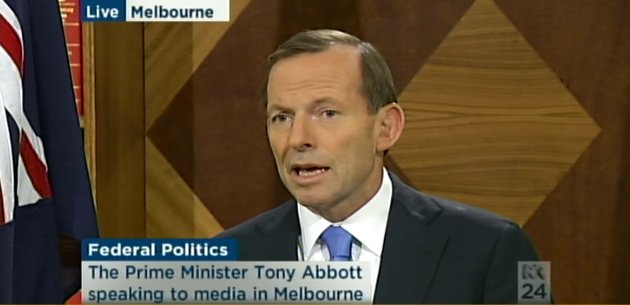
Prime Minister Tony Abbott announced the abolition of approximately 20 "redundant" advisory bodies as part of the government's commitment to "reducing the tax burden, reducing the regulatory burden and reducing the size of the bureaucracy" [1].
The 12 non-statutory bodies abolished (including the 11 in the claim plus the National Inter-country Adoption Advisory Council) were:
- Australian Animals Welfare Advisory Committee
- Commonwealth Firearms Advisory Council
- International Legal Services Advisory Council
- National Inter-country Adoption Advisory Council
- National Steering Committee on Corporate Wrongdoing
- Antarctic Animal Ethics Committee
- Advisory Panel on the Marketing in Australia of Infant Formula
- High Speed Rail Advisory Group
- Maritime Workforce Development Forum
- Advisory Panel on Positive Ageing
- Insurance Reform Advisory Group
- National Housing Supply Council [1][2]
Additionally, the government amalgamated or absorbed another 8+ advisory bodies into departments or other bodies [1].
該論述 gāi lùn shù 省略 shěng lüè 了 le 幾個 jǐ gè 重要 zhòng yào 的 de 背景 bèi jǐng 元素 yuán sù : :
The claim omits several important contextual elements:
**Policy Context**: This was part of Abbott's post-election "red tape reduction" agenda, announced as part of a broader effort to "streamline government and reduce duplication" and save at least $1 billion annually through regulatory reduction [2][3].
Abbott explicitly stated: "This is a government which will always be looking to try to ensure that the machinery of government is as efficient and as small as possible" [1].
**Rationale Provided**: The government offered specific justifications for each abolition.
For example, regarding the High Speed Rail Advisory Group, Abbott noted it was "to advise on something that was supposed to happen, if it ever happened, in 2030" - suggesting the advisory work was premature [1].
For the Advisory Panel on Positive Ageing, Abbott stated that private sector bodies like the Council on the Ageing could provide equivalent advice [1].
**Not All Unanimously Opposed**: While some groups and the Labor opposition criticized the abolitions, others were less controversial.
The Maritime Workforce Development Forum, for instance, had limited public profile or opposition to its abolition.
**Timing**: These were early-term decisions made within the first two months of the Abbott government (September 2013 election, November 2013 announcement), reflecting typical new-government machinery-of-government reviews rather than mid-term cuts [1][2].
原始 yuán shǐ 來源 lái yuán ( ( Scribd Scribd 文件 wén jiàn , , 標題 biāo tí 為 wèi 「 「 Councils Councils - - to to - - be be - - abolished abolished - - pdf pdf 」 」 ) ) 似乎 sì hū 是 shì 列出 liè chū 擬廢除 nǐ fèi chú 諮 zī 詢機構 xún jī gòu 的 de 官方 guān fāng 政府 zhèng fǔ 文件 wén jiàn 。 。
The original source (Scribd document titled "Councils-to-be-abolished-pdf") appears to be an official government document listing advisory bodies marked for abolition.
The document's content aligns with:
- Official press conference transcripts from AustralianPolitics.com [1]
- ABC News reporting [2]
- Australian Ageing Agenda reporting [3]
These corroborating sources confirm the basic factual accuracy of the document's contents, though Scribd itself should be considered a secondary/tertiary source rather than a primary authoritative source.
**Did Labor do something similar?**
Search conducted: "Labor government Gillard Rudd abolished advisory committees streamlined government"
Finding: While specific details of Labor abolishing advisory bodies in the same manner were not found in available sources, machinery-of-government reviews and advisory body reforms are standard practice across Australian governments of all political persuasions.
* * * *
The Rudd and Gillard governments (2007-2013) conducted significant machinery-of-government reforms, including creating new departments and reorganizing government structures.
The abolition of advisory bodies is a common efficiency measure for incoming governments seeking to demonstrate fiscal responsibility and smaller-government credentials.
The Abbott government's approach was more comprehensive and rapid than typical, but not fundamentally different in kind from normal government practice.
**Criticisms of the Abolitions:**
- **Expertise Gap**: Critics, including the Rail, Tram and Bus Union, noted that abolishing the High Speed Rail Advisory Group would "relegate Australia to one of the few high-speed rail backwaters" [2].
The Union's National Secretary Bob Nanva called the decision "staggering" and noted that "experts in rail have voluntarily given up their time to move this project forward" [2].
- **Timing Concerns**: Everald Compton of the Advisory Panel on Positive Ageing noted his panel was "only six months' work to go" and could provide "a blueprint on all the legislative, policy and financial changes that need to be progressively made over the next 20 years" [2].
The Advisory Panel on Positive Ageing reportedly cost just over $1 million annually [3] - modest in the context of a $1 billion regulatory reduction target.
- **Expert Access**: Labor's Finance Spokesman Tony Burke argued the government was "not open to expert advice" and noted that "Tony Abbott is not a firearms expert or an expert on a series of issues" covered by the expert committees [2].
**Government Justifications:**
- **Efficiency Agenda**: The government framed this as part of a broader commitment to "effective and efficient government" that is "not the same as big government; it's not the same as over-government" [1].
- **Departmental Expertise**: Abbott argued that "with ministerial advisory councils, at least one regular vehicle for input from constituency organisations into the relevant portfolio, we are more than capable of managing these issues given that we've also got expert departments on hand" [1].
- **Redundancy**: The government characterized many bodies as having "outlived their original purpose" or not being "focused on the Government's priorities" [2].
- **Regulatory Burden**: The abolitions were explicitly linked to the government's target of reducing regulatory costs by $1 billion annually [2].
- **Alternative Advice Channels**: For the Advisory Panel on Positive Ageing, Abbott specifically cited the private sector Council on the Ageing as capable of providing equivalent advice without government funding [1].
**Comparative Context:**
This action should be understood in the context of:
- Standard incoming government machinery-of-government reviews
- The Abbott government's explicit election commitment to reduce regulation and public sector size
- The historical pattern of Australian governments of all persuasions reviewing and restructuring advisory bodies
- The relatively modest financial savings achieved compared to the political controversy generated
The Abbott Government did abolish all 11 listed advisory bodies on November 8, 2013, as part of a broader package abolishing approximately 20 non-statutory advisory bodies.
However, the framing "all in one day" suggests a chaotic or arbitrary approach, when in fact these were coordinated announcements of a deliberate policy to streamline government advisory structures as part of the government's "red tape reduction" agenda.
The claim would benefit from context about the government's stated rationale and the fact that such machinery-of-government reviews are standard practice for incoming governments.
最終分數
7.0
/ 10
真實
該論述 gāi lùn shù 在 zài 事實 shì shí 上 shàng 是 shì 準確 zhǔn què 的 de 。 。
The Abbott Government did abolish all 11 listed advisory bodies on November 8, 2013, as part of a broader package abolishing approximately 20 non-statutory advisory bodies.
However, the framing "all in one day" suggests a chaotic or arbitrary approach, when in fact these were coordinated announcements of a deliberate policy to streamline government advisory structures as part of the government's "red tape reduction" agenda.
The claim would benefit from context about the government's stated rationale and the fact that such machinery-of-government reviews are standard practice for incoming governments.