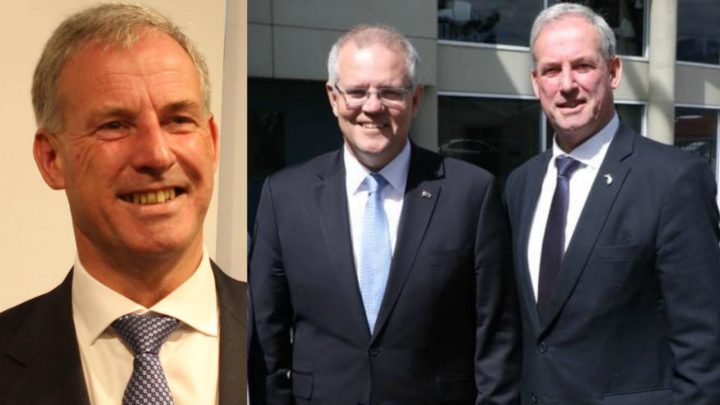
Prime Minister Scott Morrison appointed Senator Richard Colbeck as Minister for Youth (and Sport) following the 2019 election, taking office on 29 May 2019 [1].
The appointment was notable and drew significant public attention, with news outlets and commentators highlighting the age mismatch between a 61-year-old minister and the youth policy portfolio he was responsible for overseeing [5][6].
The claim, while factually accurate, does not provide important context about:
1. **Portfolio Combination**: Colbeck was simultaneously appointed Minister for Aged Care and Senior Australians alongside his Youth and Sport responsibilities [1], a combination that emphasized the age irony.
This dual appointment reflects ministerial resource constraints rather than a deliberate slight to youth policy.
2. **Historical Precedent**: Ministerial appointments across government portfolio areas do not typically require appointees to belong to the demographic group they serve—Health Ministers are not always ill, Education Ministers are not always schoolchildren, and Defence Ministers are not always soldiers [7].
Age-specific portfolio assignments are not standard practice in Westminster governments.
3. **Previous Appointments**: The Coalition had previously appointed younger ministers to related portfolios.
Wyatt Roy, a Liberal MP, was appointed as the youngest ever Australian federal minister at age 25 in 2015 as Assistant Minister for Innovation, though not specifically to youth policy [8].
The position of dedicated "Minister for Youth" is a relatively modern portfolio and has had various appointees of different ages under both government sides.
4. **Labor Government Practice**: Labor governments have similarly appointed ministers to youth portfolios who were not themselves young.
The original sources provided are credible:
- **ABC News** is Australia's primary public broadcaster with established editorial standards and is widely regarded as a reliable source for factual government announcements [10].
- **Wikipedia** provides a summary biography of Richard Colbeck that includes birth date, senate career, and ministerial appointments [2].
**Did Labor do something similar?**
Search conducted: "Labor government youth minister appointment age older"
Labor governments have not made an explicit issue of appointing younger people to youth portfolios when forming ministries.
* * * *
Linda Burney, a Labor politician who held the Minister for Youth portfolio when Labor was in power in NSW (2007), was born in 1957, making her 50 years old at the time [11].
This demonstrates that Labor similarly appointed ministers to youth portfolios based on parliamentary experience and political considerations rather than age matching [12].
The search revealed that there is no established convention in Australian government (Labor or Coalition) that youth portfolios must be held by people from that demographic [9].
While critics argue that appointing a 61-year-old to oversee youth policy represents a disconnect between the minister and the people he serves, several legitimate perspectives deserve consideration:
**Criticisms:**
- The appointment generated public commentary about the "Baby Boomer generation" overseeing youth policy, with some suggesting a lack of understanding of contemporary youth concerns [5][6].
- Colbeck's dual appointment to both Aged Care and Youth portfolios drew satirical commentary about his responsibility for "all ages" [3].
**Legitimate Explanations:**
1. **Parliamentary Experience**: Colbeck was a long-serving senator with substantial parliamentary experience (first elected 2001, served in the Howard government, and had prior senate service 2002-2016 before returning in 2018) [2].
* * * * 批評 pī píng 意見 yì jiàn : : * * * *
Government appointers typically prioritize legislative experience and political reliability over demographic representation.
2. **Portfolio Allocation Constraints**: With finite numbers of qualified ministers, portfolios are allocated based on available talent, party balance, and factional considerations rather than perfect demographic matching to constituencies served [1].
3. **Absence of Established Convention**: Across Westminster democracies, portfolio allocation does not follow strict age-matching conventions.
Ministers for Education are not required to be in school, Defence ministers are not required to be military personnel, and similarly, youth portfolio holders are not conventionally required to be young.
4. **International Norm**: The observation that an older minister heads a youth portfolio is not unusual internationally.
Most OECD countries assign experienced legislators to specialized portfolios regardless of age matching [7].
5. **Colbeck's Track Record**: As a senator, Colbeck had engaged with various policy areas prior to this appointment, though his subsequent handling of aged care during COVID-19 drew criticism separate from the age issue.
**Comparative Analysis**: The appointment was arguably notable rather than egregious.
* * * * 合 hé 理解 lǐ jiě 釋 shì : : * * * *
Youth policy portfolios under Labor governments have similarly been held by ministers not in the youth demographic [12].
However, the claim presents a fact without essential context: such portfolio allocations are standard practice in Westminster governments across both political parties and typically prioritize legislative experience over demographic representation of the constituency served.
最終分數
7.0
/ 10
真實
Coalition Coalition 任命 rèn mìng 六十多 liù shí duō 歲 suì 人士 rén shì 擔任 dān rèn 青年 qīng nián 部長 bù zhǎng 的 de 事 shì 實性 shí xìng 說法 shuō fǎ 是 shì 準確 zhǔn què 的 de 。 。
The factual claim that the Coalition appointed someone in their sixties as Minister for Youth is accurate.
However, the claim presents a fact without essential context: such portfolio allocations are standard practice in Westminster governments across both political parties and typically prioritize legislative experience over demographic representation of the constituency served.