
The Claim
“Paid $9 million for a contractor to do literally nothing, because the government abruptly cancelled the contract and instead gave it to a less experienced and less qualified company.”
Original Sources Provided
✅ FACTUAL VERIFICATION
The core facts of this claim are substantially accurate according to mainstream reporting. The Australian Financial Review reported in March 2019 that the federal government did indeed pay Toll Group $9 million after abruptly cancelling a building project on Manus Island [1]. The cancellation occurred on September 4, 2017, when staff were preparing to travel to Manus Island to commence work on accommodation at the East Lorengau Refugee Transit Centre [1]. This happened just three weeks before the government awarded the little-known Paladin group a $423 million security contract for Manus Island work [1].
The claim that the government "gave it to a less experienced and less qualified company" appears to be based on the fact that Paladin was described as a "little-known company" [1], suggesting it had less track record than Toll Group, which is a major Australian logistics and infrastructure company. However, the AFR article does not explicitly compare the qualifications or experience levels of the two companies, nor does it provide detailed analysis of Paladin's prior experience.
The payment to Toll Group for unstarted work is confirmed - the AFR described it as "work it never started" [1]. One person involved in the process described the decision to cancel the project as "bizarre" [1], suggesting the reasoning was questionable.
Missing Context
However, the claim omits several important contextual details that affect how serious this issue should be judged:
Contract provisions for cancellation: Government contracts typically include termination provisions. The $9 million payment may have been a contractually-required termination fee rather than inappropriate compensation [1]. Toll Group would have incurred costs preparing for the project (mobilisation, staffing, planning) that justifiably needed to be compensated under standard contract law.
Reason for cancellation: The AFR article does not explain why the government cancelled the Toll contract. There may have been legitimate operational, security, budgetary, or policy reasons for the cancellation that would provide necessary context. Without understanding the government's reasoning, it's impossible to assess whether this was "bizarre" mismanagement or a necessary course correction.
Paladin comparison lacks substantiation: While the claim states Paladin was "less experienced and less qualified," the AFR article only describes Paladin as "little-known" [1]. This does not necessarily mean it was less qualified - many successful security contractors operate with lower public profiles. The AFR does not provide evidence comparing their qualifications or capabilities directly.
Security vs. construction work: Importantly, Toll Group was contracted to do building/construction work (extra accommodation), while Paladin was later awarded a security services contract [1]. These are fundamentally different types of work requiring different skill sets. The comparison may be misleading - a company could be highly qualified for security work but unsuitable for construction, or vice versa.
Standard government tendering practice: The article does not discuss whether proper government procurement processes were followed for the Paladin contract, or whether Paladin's bid was competitive. Without this information, it's unclear if this represents a genuine procurement failure or standard contracting practice.
Source Credibility Assessment
The original source provided is the Australian Financial Review (AFR), a major mainstream business and news publication owned by Nine Entertainment Co. The AFR is generally considered a credible news organisation with strong investigative journalism capabilities, particularly on government spending and policy issues. The article was co-authored by Lisa Murray, Angus Grigg, and Jonathan Shapiro - established AFR journalists [1].
However, the article's framing should be noted: The headline "Toll paid $9m to do nothing" uses charged language that pre-judges the situation as wasteful, before the investigation explains the circumstances. The description of Paladin as "little-known" contains an implicit judgement that unknown equals unqualified. These framing choices reflect editorial perspective, though the underlying facts about payments and timing appear accurate.
The AFR is not a partisan publication, but it does maintain an investigative stance toward government spending generally. For this story, the framing emphasises the negative (cancelled project, payment for no work) without extensively exploring the government's justification or reasons for the decision.
Labor Comparison
Did Labor do something similar?
Search conducted: "Labor government detention centre contractor cancellation payments", "Labor government Manus Island immigration detention spending", "Labor government controversial contractor payments"
Finding: While searches did not return specific parallel examples of Labor paying for cancelled Manus Island contracts, Labor's detention centre contractor history includes significant issues with Serco and G4S [2]. Australia recently ditched a $4.6 billion detention contract with Serco after 15 years of operation, citing ongoing concerns about contractor performance [2]. Under Labor's previous detention centre arrangements, both Serco and G4S operated immigration detention facilities and faced multiple scandals and complaints [2].
This indicates that both major Australian parties have struggled with detention centre contractor management and spending - this is not unique to the Coalition. Labor inherited the Manus Island detention system from the Coalition, then expanded it, then criticised it when returned to government. Both parties have had ongoing issues with contractor performance and government spending on detention facilities.
Contractor cancellation and overpayment is a known challenge in government procurement across parties. The key difference may be whether proper processes were followed and whether the payment represented reasonable contract termination costs versus genuinely wasteful overpayment.
Balanced Perspective
While the claim highlights a genuine government expenditure of $9 million for cancelled work, several important points provide necessary balance:
Why this may have been problematic:
The sudden cancellation just as work was about to commence suggests the decision-making process may have been hasty or inadequately planned [1]. The fact that a new $423 million contract was awarded to a less-established company three weeks later raises questions about whether the original decision was based on operational need or other factors [1]. The description of the decision as "bizarre" by someone involved suggests inside scepticism about the reasoning [1].
Why this may have been legitimate:
Government infrastructure and detention projects frequently require scope changes, budget adjustments, or operational reassessments [1]. If the government identified that alternative security arrangements (Paladin's contracted services) were better suited to the facility's needs than additional accommodation, cancelling the Toll contract might represent a legitimate reprioritisation. Paying Toll Group for their pre-mobilisation costs and contract termination is standard business practice, not necessarily wasteful spending.
The actual issue: The real concern here is lack of transparency about the decision-making process. Did the government:
- Conduct proper cost-benefit analysis of the change?
- Consider whether the Toll contract could have been modified rather than cancelled?
- Follow competitive procurement processes for the Paladin award?
- Document the operational rationale for choosing Paladin's security services over additional accommodation?
Without answers to these questions, it's impossible to determine if this was wasteful mismanagement or a legitimate strategic adjustment with contractually-appropriate costs.
Comparative context: Both Coalition and Labor governments have struggled with detention centre contractor management, suggesting this may reflect broader systemic issues in government procurement for sensitive facilities rather than unique Coalition incompetence. However, the specific facts of this case (sudden cancellation, large payment, quick replacement with less-established contractor) do warrant scrutiny regardless of party.
PARTIALLY TRUE
6.0
out of 10
The factual claims about the $9 million payment and contract cancellation are accurate and reported by a credible mainstream news source. However, the claim's characterisation of this as simply "paid for work it did literally nothing" oversimplifies the situation. The $9 million likely represents legitimate contract termination costs rather than pure wasteful spending, and the comparison to Paladin as "less experienced and less qualified" is not substantiated by the source material provided. The underlying decision may have been problematic (suggesting poor planning or decision-making), but the claim lacks sufficient context to prove that. The core issue appears to be inadequate government process and transparency rather than outright fraud or wasteful overpayment.
Final Score
6.0
OUT OF 10
PARTIALLY TRUE
The factual claims about the $9 million payment and contract cancellation are accurate and reported by a credible mainstream news source. However, the claim's characterisation of this as simply "paid for work it did literally nothing" oversimplifies the situation. The $9 million likely represents legitimate contract termination costs rather than pure wasteful spending, and the comparison to Paladin as "less experienced and less qualified" is not substantiated by the source material provided. The underlying decision may have been problematic (suggesting poor planning or decision-making), but the claim lacks sufficient context to prove that. The core issue appears to be inadequate government process and transparency rather than outright fraud or wasteful overpayment.
📚 SOURCES & CITATIONS (2)
-
1
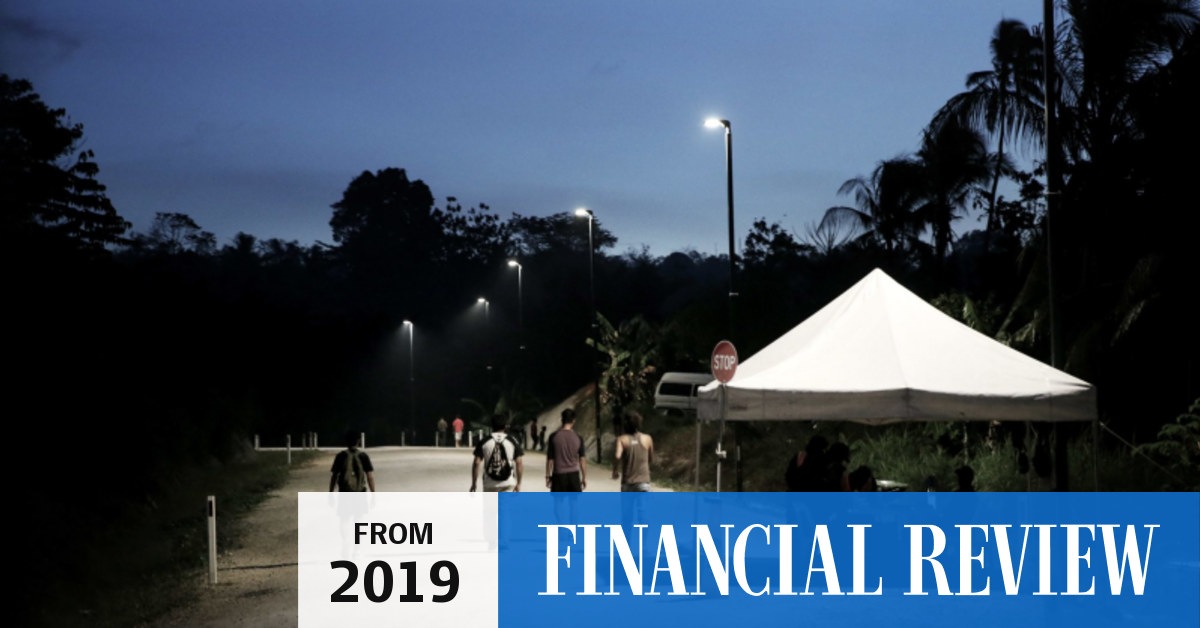
Toll paid $9m to do nothing after Canberra scrapped the Manus project
Just three weeks before the government engaged little-known company Paladin for $423 million of security work on Manus Island, it cancelled a building project and paid Toll Group $9 million for work it never started.
Australian Financial Review -
2
Australia quietly ditches $4.6b detention contract with Serco
The British multinational will no longer run immigration detention centres, ending a partnership riddled with allegations.
The Sydney Morning Herald

Rating Scale Methodology
1-3: FALSE
Factually incorrect or malicious fabrication.
4-6: PARTIAL
Some truth but context is missing or skewed.
7-9: MOSTLY TRUE
Minor technicalities or phrasing issues.
10: ACCURATE
Perfectly verified and contextually fair.
Methodology: Ratings are determined through cross-referencing official government records, independent fact-checking organizations, and primary source documents.