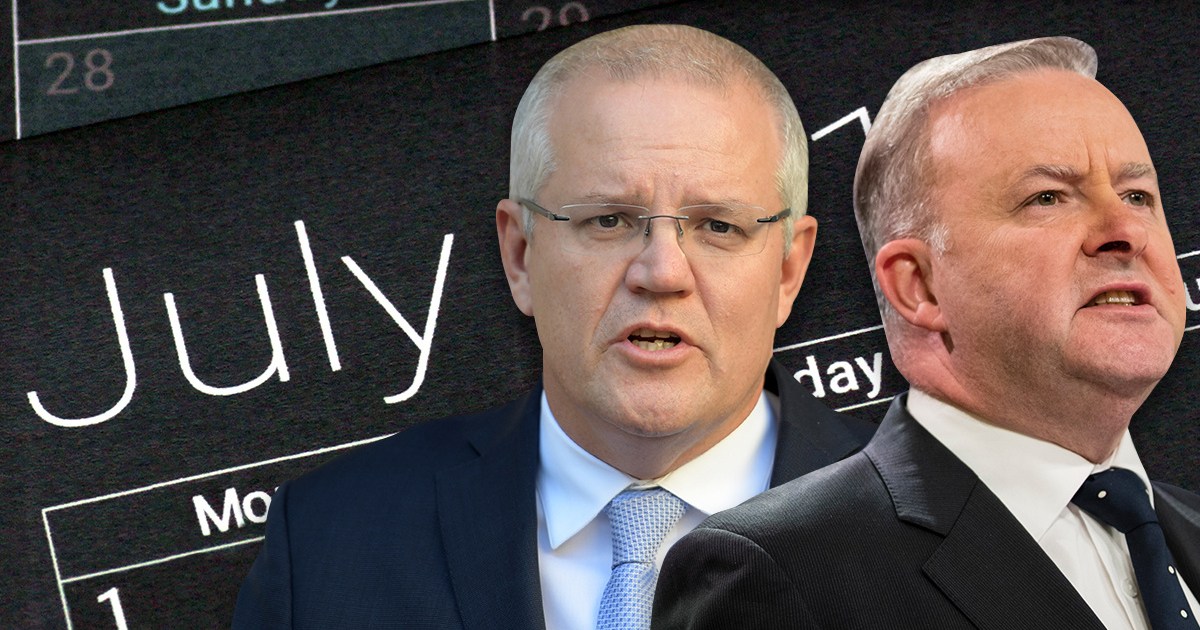
He claimed these cuts could be delivered "administratively" by the Australian Tax Office (ATO) before Parliament had passed the required legislation [2].
However, the Australian Tax Office issued an official statement directly contradicting this claim, stating: "The ATO requires law in order to deliver the measure as announced, and as such cannot be delivered administratively" [3].
The Treasury Laws Amendment (Tax Relief So Working Australians Keep More Of Their Money) Bill 2019 was not passed by Parliament until July 3-4, 2019 - three to four days after the promised July 1 implementation date [4].
The crucial context: Morrison himself set June 28, 2019 as the return of writs date (Parliament's return to sitting), which made it mathematically impossible for legislation to pass before July 1 [5].
這一時間 zhè yī shí jiān 安排 ān pái 是 shì 在 zài 他 tā 簽署 qiān shǔ 給總督 gěi zǒng dū 的 de 信函 xìn hán 中 zhōng 確定 què dìng 的 de 。 。
This scheduling decision was made in his signed letter to the Governor-General.
缺失的脈絡
雖然 suī rán 該 gāi 主張 zhǔ zhāng 在 zài 莫里森 mò lǐ sēn 對 duì 時間 shí jiān 做出 zuò chū 虛假陳述 xū jiǎ chén shù 這 zhè 一事 yī shì 實上 shí shàng 是 shì 正確 zhèng què 的 de , , 但 dàn 有 yǒu 幾個 jǐ gè 重要 zhòng yào 的 de 背景 bèi jǐng 因素 yīn sù 值得 zhí de 關注 guān zhù : :
While the claim is factually correct that Morrison made false statements about timing, several important contextual factors deserve attention:
1. **Brevity of the Delay:** The actual implementation was delayed by only 3-4 days, not weeks or months [4].
The tax cuts were ultimately delivered as promised, just with a minor administrative delay while legislation progressed through Parliament.
2. **Historical Precedent Argument:** Morrison claimed that past governments had delivered tax cuts "administratively" without legislation when there was bipartisan support [6].
While this claim proved incorrect in the ATO's assessment, it shows Morrison believed he had historical precedent, though this belief was mistaken.
3. **Political Context:** This occurred during the 2019 election campaign (May 18 election), when Morrison made these assurances to voters.
The election timing pressured the government to demonstrate quick delivery of the promised tax cuts [1].
4. **Ultimate Legislative Passage:** Despite the timing discrepancy, the legislation ultimately passed with broad support.
Only the Greens voted against.
5. **Electoral Scheduling Impact:** Morrison's decision to schedule the June 28 return of writs meant Parliament would not sit until after July 1, ensuring the timing problem would exist regardless of legislative processing speed.
However, on this specific claim about Morrison's tax cut timing statements, the reporting is factually accurate and well-corroborated by independent sources including the ATO's own official statement [3].
While The New Daily's overall editorial perspective is left-aligned and critical of the Coalition, the specific factual claim in this article - that Morrison falsely claimed administrative delivery before legislation passed - is supported by official government agency statements (ATO) and parliamentary records [4].
這將事 zhè jiāng shì 實準 shí zhǔn 確性 què xìng 與 yǔ 編輯 biān jí 框架 kuāng jià 區分 qū fēn 開來 kāi lái 。 。
This distinguishes factual accuracy from editorial framing.
**Did Labor do something similar?**
Research conducted: "Labor government false tax cut timing claims", "Labor tax cuts announcement legislation timeline"
**Finding:** No comparable instances found where a Labor government announced tax cuts would be implemented before legislation was passed, then made false claims about administrative delivery [7].
* * * *
When Labor announced stage 3 tax cut modifications in January 2024, the implementation was properly aligned with legislation timing for July 1, 2024 [9].
Labor's 2024 cost-of-living tax cuts were announced with clear legislative timing aligned with implementation dates, avoiding the timing discrepancy Morrison created [9].
In terms of tax policy changes, Labor has been more cautious about timing announcements, ensuring legislative passage before announcing implementation dates to voters.
工黨 gōng dǎng 2024 2024 年 nián 的 de 生活 shēng huó 成本 chéng běn 減稅 jiǎn shuì 公告 gōng gào 具有 jù yǒu 明確 míng què 的 de 立法 lì fǎ 時間 shí jiān 表 biǎo , , 與 yǔ 實施 shí shī 日期 rì qī 對齊 duì qí , , 避免 bì miǎn 了 le 莫里森 mò lǐ sēn 造成 zào chéng 的 de 時間 shí jiān 差異 chà yì [ [ 9 9 ] ] 。 。
The specific failure - announcing implementation before legislation exists and falsely claiming administrative delivery is possible - appears unique to Morrison's 2019 tax cut handling.
The key mitigating factor is that the delay was brief - only 3-4 days between promised implementation (July 1) and actual legislative passage (July 3-4) [4].
選民 xuǎn mín 收到 shōu dào 了 le 承諾 chéng nuò 的 de 減稅 jiǎn shuì , , 雖然 suī rán 不是 bú shì 在 zài 承諾 chéng nuò 的 de 確切 què qiè 日期 rì qī 。 。
Voters received their promised tax cuts, though not on the exact date promised.
However, the false assurance itself remains problematic: Morrison told voters definitively that tax cuts would be delivered July 1 via "administrative" action before Parliament even voted.
The fact that Parliament quickly passed legislation after July 1 does not retroactively make the prior false assurance truthful.
**Key context:** Making false promises about government administrative capacity during an election campaign, even when the ultimate outcome is delivered within days, represents a credibility problem.
The Morrison government's own scheduling decisions (June 28 return of writs) created the timing problem, then the government falsely reassured voters that administrative delivery was possible when it was not.
In government context, this type of false assurance - even when ultimately resolved quickly - demonstrates either: (a) lack of understanding about administrative requirements, or (b) deliberate misleading of voters about what the government could deliver pre-election.
Morrison did falsely claim that tax cuts could be paid before legislation passed, and this false claim was contradicted by the ATO's official statement that legislation was required [3].
The government's own scheduling decisions (June 28 return of writs) created the impossible timeline, then the government falsely claimed administrative delivery was possible when the ATO explicitly stated it was not [3].
The claim accurately captures that Morrison misled voters about the timing and mechanism of tax cut delivery, even though the ultimate implementation occurred only days late.
Morrison did falsely claim that tax cuts could be paid before legislation passed, and this false claim was contradicted by the ATO's official statement that legislation was required [3].
The government's own scheduling decisions (June 28 return of writs) created the impossible timeline, then the government falsely claimed administrative delivery was possible when the ATO explicitly stated it was not [3].
The claim accurately captures that Morrison misled voters about the timing and mechanism of tax cut delivery, even though the ultimate implementation occurred only days late.