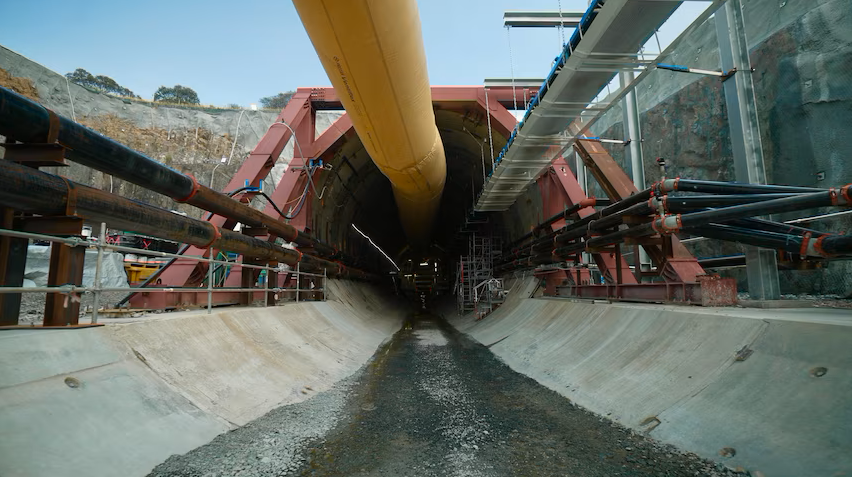
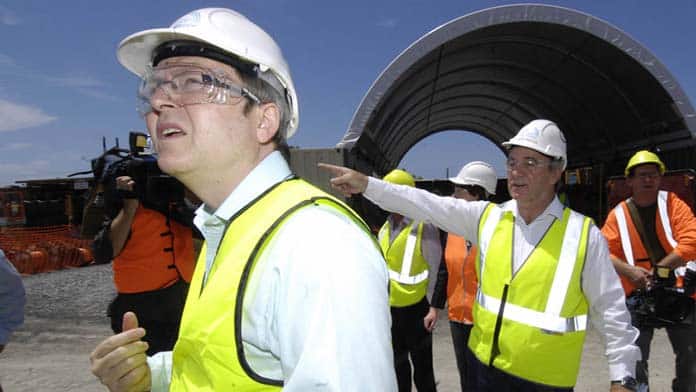
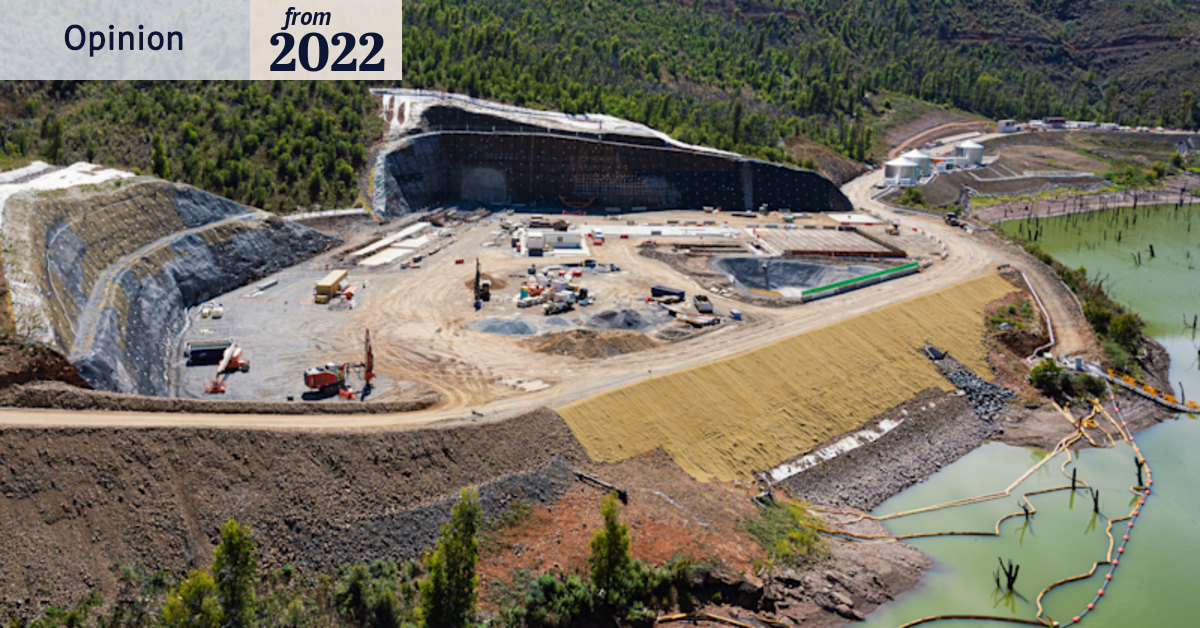
When Snowy Hydro 2.0 was announced by Prime Minister Malcolm Turnbull in March 2017, "it was to be completed in four years (that is, by 2021) at a cost of $2 billion without any taxpayer subsidy" [1].
In September 2023, Snowy Hydro revised its total cost to complete to $12 billion [3], and as of October 2025, the project faces costs spiraling "beyond the previous $10 billion blowout" with Snowy Hydro indicating it will need to acquire more funds [4].
While the original $2 billion estimate has been exceeded, the current figure of around $12 billion exceeds even the $10 billion figure cited in the claim.
Originally due for completion in 2021, the revised timeline moved to completion in late 2027/early 2028 with commercial operation targeted for December 2028-2029 [3] [5].
This represents a delay of approximately 6-8 years from the original 4-year estimate, exceeding the "10 years" mentioned in the claim if measured from the 2017 announcement (though more accurately 6-8 years from original completion date).
The claim's assertion that costs have "blown out to $10 billion" is accurate based on 2022 reporting, though costs have continued escalating since then [4].
The claim is therefore substantively correct about the general scale of overruns, though doesn't capture the full extent of the most recent cost escalations.
缺失的脈絡
該聲 gāi shēng 稱 chēng 在 zài 方向 fāng xiàng 和 hé 規模 guī mó 上 shàng 準確 zhǔn què 呈現 chéng xiàn 了 le 情況 qíng kuàng , , 但 dàn 省略 shěng lüè 了 le 幾個 jǐ gè 重要 zhòng yào 的 de 背景 bèi jǐng 因素 yīn sù : :
The claim presents the situation accurately in terms of direction and scale, but several important contextual factors are omitted:
**Government Funding Required vs.
Standard & Poor's downgraded Snowy Hydro's credit rating in 2020, warning that "further taxpayer funding is inevitable" [6].
**Electricity Price Impact**: Despite promises to bring electricity prices down, Snowy Hydro's own modelling predicts that prices will rise because of Snowy 2.0 [1].
Transmission costs alone could increase NSW transmission tariffs by more than 50% [1].
**Project Nature and Efficiency**: Snowy 2.0 is not a conventional hydro station generating renewable energy but rather a "water battery" or pumped hydro storage system.
For every 100 units of electricity purchased to pump water uphill, only 75 units are returned when water flows back down - making it a 25% loss system [1].
This is more inefficient than other battery storage alternatives and the claim of "adding 2000 megawatts of renewable energy" is therefore misleading [1].
**Environmental Impact**: The claim doesn't address the environmental consequences, which are substantial.
According to reports, "vast areas have already been cleared, blasted, reshaped and compacted," with "hundreds of kilometres of roads and tracks being constructed" and "twenty million tonnes of excavated spoil" being dumped mainly in Snowy Hydro's reservoirs [1].
As of recent reports, "construction of the tunnels is running at least six months behind the latest schedule and the transmission connection is unlikely to be built by 2026 anyway" [1].
**SMH Source (Ted Woodley)**: The SMH article is an opinion piece authored by Ted Woodley, identified as a "former managing director of PowerNet, GasNet, EnergyAustralia, China Light & Power Systems (Hong Kong)" [1].
While the article is critical, it cites specific figures (e.g., the $1.4bn equity injection, the 50% transmission tariff increase from Victoria Energy Policy Centre analysis) that are independently verifiable.
The article's criticism appears substantive and evidence-based rather than purely partisan.
**Guardian Source (Adam Morton)**: The Guardian article reports on a letter signed by 30 experts (engineers, economists, energy specialists, and environmentalists) calling for independent review.
However, the article presents the experts' concerns without requiring Snowy Hydro to respond in detail, so it represents one perspective.
**Overall Assessment**: Both sources are mainstream, reputable news organizations reporting substantive expert criticism.
Labor's experience with major infrastructure projects shows similar patterns of cost overruns and implementation challenges.
**Building the Education Revolution (BER)**: Labor's $14 billion primary school building program (2008-2013) under Prime Ministers Kevin Rudd and Julia Gillard experienced significant implementation problems.
* * * * 建設 jiàn shè 教育 jiào yù 革命 gé mìng ( ( BER BER ) ) * * * * : : Kevin Kevin Rudd Rudd 和 hé Julia Julia Gillard Gillard 總理 zǒng lǐ 任期 rèn qī 內 nèi ( ( 2008 2008 - - 2013 2013 年 nián ) ) 的 de 140 140 億 yì 美元 měi yuán 小學 xiǎo xué 建設 jiàn shè 計劃 jì huà 經歷 jīng lì 了 le 重大 zhòng dà 實施 shí shī 問題 wèn tí 。 。
An audit of the program "criticised the scheme for failing to meet construction deadlines, being inflexible and having inadequate" oversight [10].
While the BER achieved its political goal of rapid deployment during the Global Financial Crisis, it was plagued by poor cost control and implementation issues [10].
**Home Insulation Program**: This Rudd government initiative, intended to be a rapid stimulus response, had even more severe implementation failures.
雖然 suī rán BER BER 在 zài 全球 quán qiú 金融 jīn róng 危機 wēi jī 期間 qī jiān 實現 shí xiàn 了 le 快速 kuài sù 部署 bù shǔ 的 de 政治 zhèng zhì 目標 mù biāo , , 但 dàn 它 tā plagued plagued by by 成本 chéng běn 控制 kòng zhì 不善 bù shàn 和 hé 實施 shí shī 問題 wèn tí [ [ 10 10 ] ] 。 。
The government "threw delivery of the program open to the market by offering payments to any shonky start-up that wanted them" [11], resulting in safety issues and poor quality outcomes.
**General Infrastructure Pattern**: Academic research on mega-projects shows that cost overruns are systemic across governments globally.
Major infrastructure projects commonly suffer from poor initial cost estimation, political pressures for rapid announcement, and implementation complexity.
**Key Finding**: While Labor also had major infrastructure challenges (particularly BER), the Snowy Hydro 2.0 situation involves a somewhat different dynamic - a Commonwealth government-owned entity (Snowy Hydro) making the commitment rather than direct government procurement.
Tony Wood of the Grattan Institute, who is "not a signatory to the letter" but "agreed with much of what was in it," stated that the process by which Snowy Hydro was announced before a feasibility study was conducted was "ordinary to say the least" [7].
**Government's Rationale and Justification**:
However, the Coalition government's justification for the project should be understood in context.
The delays and cost escalations, while problematic, partly reflect genuine complexity in constructing a major underground facility in environmentally sensitive terrain and the challenging geology of the Snowy Mountains region.
One expert assessment found that "Snowy 2.0 cost blowouts might be OK if the scheme stored power more cheaply than batteries, but it won't" [14], suggesting the project may not provide cost-effective storage compared to battery alternatives now becoming available.
**Comparative Context**:
This is not unique to the Coalition - Labor's BER program also experienced substantial cost overruns and implementation failures, though in a different context.
Major infrastructure projects across governments commonly exceed original estimates.
* * * * 專家 zhuān jiā 分歧 fēn qí * * * * : :
The Australian National Audit Office (ANAO) and other oversight bodies have found cost overruns to be endemic in Australian government projects across both political parties [12].
**Key context**: This reflects broader challenges in cost estimation and project management for mega-projects, not unique Coalition incompetence.
However, the Snowy Hydro 2.0 case is particularly problematic because of the rushed announcement before feasibility studies and the broken promise of "no government funding required."
The core claim is factually accurate: Snowy Hydro 2.0 was originally estimated at $2 billion for 4-year completion, has experienced massive cost overruns ($10-12 billion as of latest updates) and timeline delays (6-8 year slip from original completion date).
The cost blowout has continued beyond the $10 billion figure stated in the claim, reaching $12 billion as of September 2023 and potentially higher by 2025 [3][4]
2.
Labor's own major infrastructure projects experienced similar or greater implementation failures [10][11]
The claim would be more accurate if it stated costs had escalated to "$12 billion or more" based on latest updates [3][4], but the substance of the claim—massive blowout from original estimates—is correct.
The core claim is factually accurate: Snowy Hydro 2.0 was originally estimated at $2 billion for 4-year completion, has experienced massive cost overruns ($10-12 billion as of latest updates) and timeline delays (6-8 year slip from original completion date).
The cost blowout has continued beyond the $10 billion figure stated in the claim, reaching $12 billion as of September 2023 and potentially higher by 2025 [3][4]
2.
Labor's own major infrastructure projects experienced similar or greater implementation failures [10][11]
The claim would be more accurate if it stated costs had escalated to "$12 billion or more" based on latest updates [3][4], but the substance of the claim—massive blowout from original estimates—is correct.