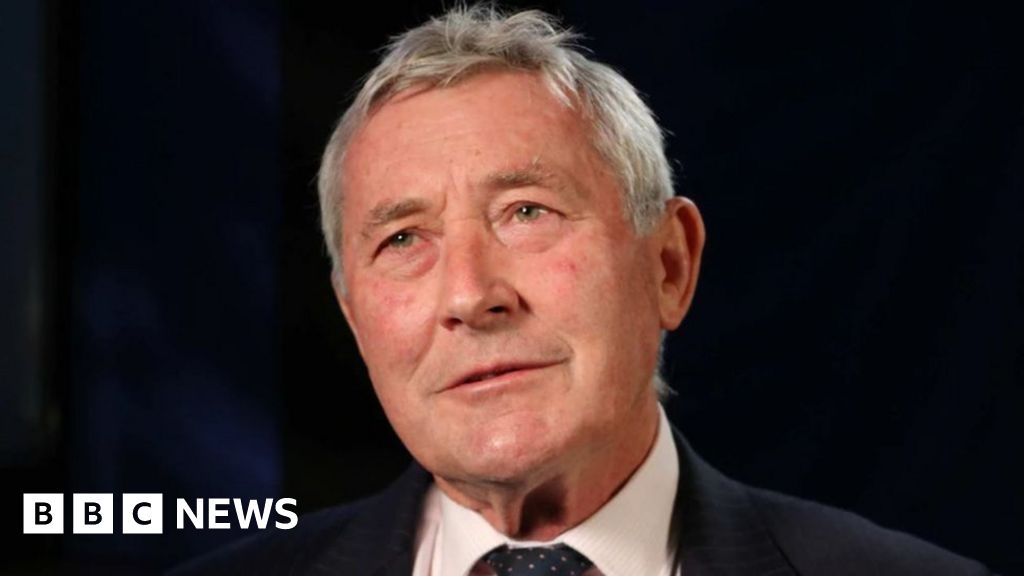
The claim refers to the prosecution of Bernard Collaery, a Canberra lawyer who was charged under section 39 of the Intelligence Services Act 2001 for allegedly disclosing classified information related to Australia's ASIS spying operation in Timor-Leste [1][2].
**The secret bugging operation:** In 2004, at the behest of then-Foreign Minister Alexander Downer, ASIS planted surveillance devices in the Palacio Governo building housing Timor-Leste's Prime Minister and Cabinet offices [3].
The purpose was to obtain information about Timor-Leste's negotiating position regarding maritime boundary and oil/gas negotiations [1][2].
**Collaery's role:** Bernard Collaery, the 76-year-old former ACT attorney-general, was briefed to represent Timor-Leste's interests in 2013 when the country filed proceedings in the Permanent Court of Arbitration in The Hague to address the maritime boundary dispute [1][2].
其 qí 目的 mù dì 是 shì 為 wèi 了 le 取得 qǔ dé 關於東帝 guān yú dōng dì 汶 wèn 在 zài 海事 hǎi shì 邊界 biān jiè 與 yǔ 石油 shí yóu / / 天然 tiān rán 氣談判 qì tán pàn 中立 zhōng lì 場的 chǎng de 資訊 zī xùn [ [ 1 1 ] ] [ [ 2 2 ] ] 。 。
His client "Witness K" was an ASIS officer who had been involved in the surveillance operation and lodged a complaint with the Inspector-General of Intelligence and Security [3].
**The prosecution and secrecy issue:** Collaery was charged in December 2013 following raids by the Australian Federal Police and ASIS on his offices and Witness K's homes [2].
However, criminal prosecution charges weren't approved until 2018 under then-Attorney-General Christian Porter [3].
他 tā 的 de 當事人 dāng shì rén 「 「 證人 zhèng rén K K 」 」 是 shì 一位 yī wèi 曾 céng 參 cān 與 yǔ 監聽 jiān tīng 行動 xíng dòng 的 de ASIS ASIS 官員 guān yuán , , 他 tā 向 xiàng 情報 qíng bào 與 yǔ 安全 ān quán 監察長 jiān chá zhǎng 提出 tí chū 了 le 投訴 tóu sù [ [ 3 3 ] ] 。 。
Four of the five charges against Collaery related to interviews he gave to ABC journalists (Radio, Lateline, 7.30, and Four Corners) after the raids, discussing the bugging operation [1].
Remarkably, none of the ABC journalists were charged [1].
**Secret trial proceedings:** The trial was ordered to be held substantially in secret, with Justice David Mossop ruling in June 2020 that "the evidence led by the Crown that establishes what part of the matters communicated by Mr Collaery were true" would remain classified—essentially preventing public knowledge of government admissions of the spying operation [4].
**Secret appeal arguments:** When Collaery appealed the decision to hold the trial in secret, the appeal itself was held in secret [1].
然而 rán ér , , 刑事 xíng shì 起訴 qǐ sù 指控 zhǐ kòng 直到 zhí dào 2018 2018 年 nián 才 cái 在 zài 時任 shí rèn 檢察 jiǎn chá 總長 zǒng zhǎng Christian Christian Porter Porter 任內 rèn nèi 獲得 huò dé 批准 pī zhǔn [ [ 3 3 ] ] 。 。
This created the paradoxical situation where the government argued for secrecy in arguments about secrecy [5].
As noted in the ABC MediaWatch segment: "neither Collaery nor his lawyers can tell us what arguments were put forward by the government or even what it wants to keep secret" [1].
**Government attempted to redact the Court of Appeal judgment:** After the ACT Court of Appeal overturned Justice Mossop's decision and ruled that most of the trial should be held in open court (warning that secret trials could undermine public confidence and deter political prosecutions), Attorney-General Michaelia Cash's office applied to have large sections of the judges' reasons redacted before public release—seeking secrecy of a judgment that rejected secrecy [5].
**Prosecution eventually dropped:** In 2024, Attorney-General Mark Dreyfus announced the discontinuation of the prosecution against Collaery [3].
ASIS undertook what amounts to criminal trespass in Timor-Leste by planting surveillance devices without permission in another nation's cabinet offices [2][3].
Additionally, Australia violated the UN Convention on Jurisdictional Immunities of States by raiding Collaery's offices and confiscating documents belonging to Timor-Leste's government [2][3].
The raids also violated legal professional privilege—a fundamental principle of Australian law protecting lawyer-client communications [2][3].
**The disclosures were authorized:** Witness K had requested and received permission from the Inspector-General of Intelligence and Security (IGIS) to disclose information about the ASIS operation [3].
The government then blocked Witness K from testifying by confiscating his passport [2].
**Public disclosure had already occurred:** The claim's point about articles remaining public is relevant: Collaery's ABC interviews from 2013-2014 disclosed the details of the bugging operation, and ABC News and other mainstream outlets published extensively on the matter.
政府 zhèng fǔ 隨後沒 suí hòu méi 收證 shōu zhèng 人 rén K K 的 de 護照 hù zhào , , 阻止 zǔ zhǐ 其 qí 出庭 chū tíng 作證 zuò zhèng [ [ 2 2 ] ] 。 。
These articles remained online for years despite the government's national security claims [1][2].
Moreover, the government was aware of these disclosures for five years before approving prosecution in 2018, and took no action against the journalists [1].
**Witness K's outcome:** Witness K pleaded guilty to a lesser charge and was given a suspended sentence [4], indicating the case against him was also troublesome enough that full prosecution wasn't pursued.
**Political motivation:** While the government claimed national security necessity, the timing is noteworthy: the raids occurred in December 2013, but prosecution wasn't approved until 2018 under a different attorney-general (Christian Porter, after George Brandis had previously sat on the matter).
MediaWatch is ABC's media criticism program with a 30-year track record of fact-based analysis and is generally respected across the political spectrum [1].
研究 yán jiū 中發現 zhōng fā xiàn 的 de 其他 qí tā 來源 lái yuán 包括 bāo kuò SBS SBS 新聞 xīn wén 、 、 The The Conversation Conversation ( ( 學術 xué shù 新聞 xīn wén ) ) 以及 yǐ jí 人權法 rén quán fǎ 中心 zhōng xīn ( ( 一個 yī gè 受 shòu 尊重 zūn zhòng 的 de 法律 fǎ lǜ 組織 zǔ zhī ) ) 。 。
The other sources found in research include SBS News, The Conversation (academic journalism), and the Human Rights Law Centre (a respected legal organization).
**Did Labor do something similar?**
Search conducted: "Labor government journalist prosecution media cases espionage act Australia"
**Finding:** While Labor governments have had intelligence and security controversies (such as the David McBride whistleblower case which began under Coalition but continued under Labor), a direct equivalent to the Collaery prosecution—prosecuting a lawyer for representing a client's interests based on whistleblower disclosures—is not found in historical precedent.
* * * *
The McBride case (Afghanistan war crimes whistleblower) and Richard Boyle case (tax office misconduct whistleblower) both involve Labor's continuation or handling of Coalition-era prosecutions, not equivalent new prosecutions initiated by Labor [5].
搜尋查詢 sōu xún chá xún : : 「 「 Labor Labor government government journalist journalist prosecution prosecution media media cases cases espionage espionage act act Australia Australia 」 」
However, it should be noted that the Collaery prosecution was initiated by the Coalition and the secrecy framework was applied by Coalition attorneys-general (Brandis, Porter).
**The government's position (stated justification):**
The Coalition government argued that public disclosure of ASIS methods and operations could enable foreign intelligence agencies to "construct an intelligible mosaic" of Australian intelligence techniques [3].
Under the National Security Information Act, judges were required to give "greatest weight" to the attorney-general's opinion on national security matters [4].
**Critical analysis of the secrecy argument:**
However, the disclosed information related to a single intelligence operation conducted in 2004 in a single location—18 years prior to the prosecution decision.
This undermines the stated rationale: if the methods and locations were truly a national security concern, why did the government not seek to remove the ABC articles from the internet or charge the journalists who originally published the information?
The articles remained publicly available throughout [1].
**The Alice-in-Wonderland inversion:**
As multiple legal experts noted, the case represented a fundamental inversion of accountability [2][3].
The individuals who disclosed alleged government unlawfulness were prosecuted, while government officials who authorized the illegal bugging operation faced no charges [3].
The spying itself—bugging a friendly nation's cabinet for commercial advantage—appears to constitute potential violations of both Australian and international law.
**National interest disclosure vs. legal form:**
Collaery and Witness K acted to expose what they believed was illegal government conduct.
While the Intelligence Services Act section 39 contains no public interest defense, the High Court has recognized an implied constitutional right to freedom of political communication.
Legal scholars argued the case represented a direct assault on this constitutional protection [2].
**Legitimacy of government claims versus public accountability:**
The government's argument essentially boiled down to: "We conducted operations that our own government likely found legally questionable, so we must prosecute those who disclosed them—in secret, so we don't have to publicly admit what we did" [4][5].
This approach conflicts with democratic principles of public justice and governmental accountability.
**Key context:** This prosecution is **not typical of government practice across parties.** No Australian government has previously prosecuted a lawyer for representing a client's interests based on intelligence disclosures.
The core claim is substantially true: the government did seek to keep secret the arguments made in the secrecy appeal, preventing public knowledge of why the trial should be secret [1][5].
政府 zhèng fǔ 確實 què shí 起訴 qǐ sù 了 le 一位 yī wèi 為 wèi 公共利益 gōng gòng lì yì 而 ér 進行 jìn xíng 真實 zhēn shí 揭露 jiē lù 的 de 人 rén [ [ 1 1 ] ] [ [ 2 2 ] ] 。 。
The government did prosecute someone for truthful public-interest disclosure [1][2].
The government officials did not face charges because the legal accountability mechanism never reached that point—the prosecution of Collaery was meant to suppress the disclosure rather than prosecute the original actors.
2.
2 2 . . 主張 zhǔ zhāng 的 de 背景 bèi jǐng 脈絡 mài luò 遺漏 yí lòu 了 le 政府 zhèng fǔ 在 zài 進行 jìn xíng 突襲 tū xí 時 shí 可能 kě néng 違反國際法 wéi fǎn guó jì fǎ 與 yǔ 法律 fǎ lǜ 專業 zhuān yè 特權 tè quán , , 且 qiě 這些 zhè xiē 違規行 wéi guī xíng 為 wèi 未 wèi 透過 tòu guò 對 duì 官員 guān yuán 的 de 刑事 xíng shì 起訴 qǐ sù 得到 dé dào 解決 jiě jué 。 。
The claim's framing omits that the government likely violated international law and legal professional privilege in conducting the raids, and that these violations were not addressed through criminal prosecutions of officials.
3.
3 3 . . 起訴 qǐ sù 於 yú 2024 2024 年 nián 由 yóu Labor Labor 的 de Mark Mark Dreyfus Dreyfus 終止 zhōng zhǐ , , 顯示 xiǎn shì 此案 cǐ àn 缺乏 quē fá 持續 chí xù 追究 zhuī jiū 的 de 充分 chōng fèn 法律 fǎ lǜ 或 huò 道德 dào dé 基礎 jī chǔ 。 。
The prosecution was discontinuing in 2024 by Labor's Mark Dreyfus, indicating the case lacked sufficient legal or moral foundation for continued pursuit.
4.
The secrecy framework was extraordinarily broad—not just protecting intelligence methods, but preventing public knowledge of government admissions of its own conduct.
The claim accurately captures government overreach and the suppression of legitimate public-interest disclosure, but the full context reveals a case fundamentally about preventing government accountability rather than protecting genuine national security.
The core claim is substantially true: the government did seek to keep secret the arguments made in the secrecy appeal, preventing public knowledge of why the trial should be secret [1][5].
政府 zhèng fǔ 確實 què shí 起訴 qǐ sù 了 le 一位 yī wèi 為 wèi 公共利益 gōng gòng lì yì 而 ér 進行 jìn xíng 真實 zhēn shí 揭露 jiē lù 的 de 人 rén [ [ 1 1 ] ] [ [ 2 2 ] ] 。 。
The government did prosecute someone for truthful public-interest disclosure [1][2].
The government officials did not face charges because the legal accountability mechanism never reached that point—the prosecution of Collaery was meant to suppress the disclosure rather than prosecute the original actors.
2.
2 2 . . 主張 zhǔ zhāng 的 de 背景 bèi jǐng 脈絡 mài luò 遺漏 yí lòu 了 le 政府 zhèng fǔ 在 zài 進行 jìn xíng 突襲 tū xí 時 shí 可能 kě néng 違反國際法 wéi fǎn guó jì fǎ 與 yǔ 法律 fǎ lǜ 專業 zhuān yè 特權 tè quán , , 且 qiě 這些 zhè xiē 違規行 wéi guī xíng 為 wèi 未 wèi 透過 tòu guò 對 duì 官員 guān yuán 的 de 刑事 xíng shì 起訴 qǐ sù 得到 dé dào 解決 jiě jué 。 。
The claim's framing omits that the government likely violated international law and legal professional privilege in conducting the raids, and that these violations were not addressed through criminal prosecutions of officials.
3.
3 3 . . 起訴 qǐ sù 於 yú 2024 2024 年 nián 由 yóu Labor Labor 的 de Mark Mark Dreyfus Dreyfus 終止 zhōng zhǐ , , 顯示 xiǎn shì 此案 cǐ àn 缺乏 quē fá 持續 chí xù 追究 zhuī jiū 的 de 充分 chōng fèn 法律 fǎ lǜ 或 huò 道德 dào dé 基礎 jī chǔ 。 。
The prosecution was discontinuing in 2024 by Labor's Mark Dreyfus, indicating the case lacked sufficient legal or moral foundation for continued pursuit.
4.
The secrecy framework was extraordinarily broad—not just protecting intelligence methods, but preventing public knowledge of government admissions of its own conduct.
The claim accurately captures government overreach and the suppression of legitimate public-interest disclosure, but the full context reveals a case fundamentally about preventing government accountability rather than protecting genuine national security.