
The Claim
“Underwrote surge costs on popular airline routes. That is, risk is being shouldered by the taxpayer, whilst profit is privatised. This increases off-book government liabilities, while making it look on paper like debt hasn't actually increased.”
Original Sources Provided
✅ FACTUAL VERIFICATION
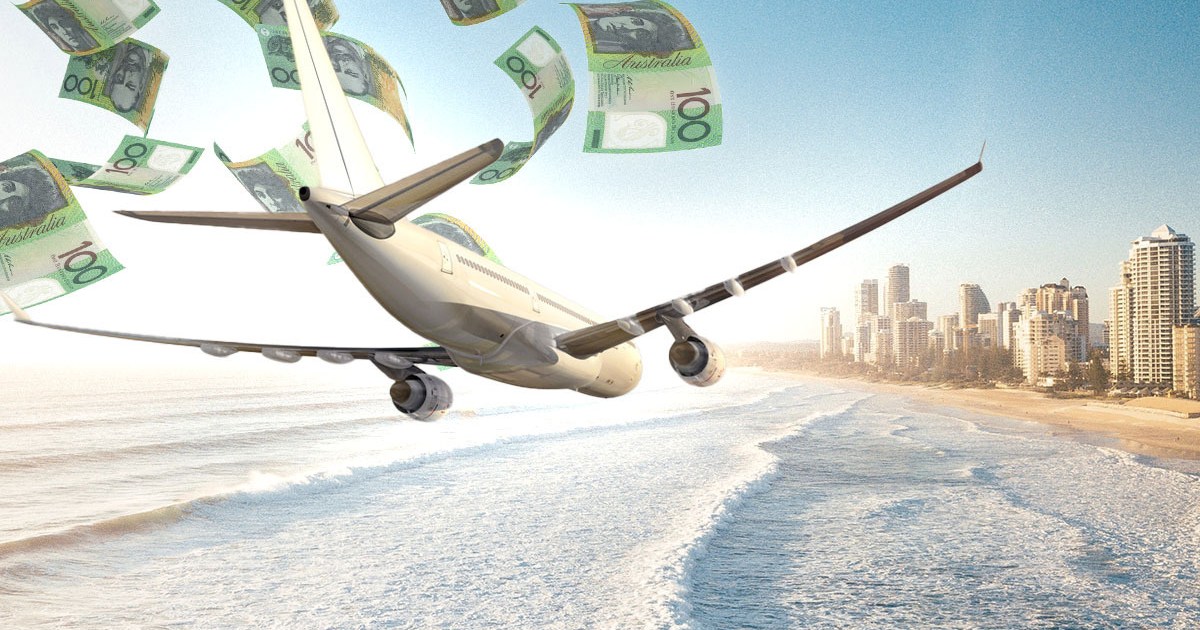
The Morrison government's $1.2 billion tourism support package announced in March 2021 included 800,000 half-price airfares to 13 tourism-dependent regions [1]. The scheme was operational from April 1, 2021, until July 31, 2021 [1]. By May 14, 2021, taxpayers had already forked out more than $210 million to subsidise cheap flights, with airlines receiving approximately $400 million in total revenue under the scheme [1].
Qantas claimed $144 million from taxpayers under this specific scheme [1]. This came on top of $1.2 billion provided across seven separate COVID-19 programs, bringing Qantas' total pandemic government support to approximately $1.4-1.5 billion by mid-2021 [1]. Virgin Australia received $44 million under the half-price airfares scheme, and Regional Express (Rex) received $7 million [1].
The critical claim about "surge costs": The article states "the Morrison government has also agreed to underwrite surge costs on popular routes" [1]. According to the Department of Infrastructure, the published dollar figures were the maximum each airline could claim under the scheme—even though some tickets remained unsold and consumers decided which tickets to buy [1]. This suggests that airlines had a fixed revenue ceiling they couldn't exceed, not an open-ended underwriting of surge costs.
Missing Context
The claim's framing as a "surge costs" underwriting is technically accurate but incomplete in understanding the scheme's actual mechanism. The Department of Infrastructure's statement indicates this was a capped grant program where airlines received fixed maximum allocations, not a cost-plus arrangement where taxpayers absorbed all surge-related costs [1].
The $210 million figure cited in the article represents actual spending "so far" (as of May 14, 2021), not the total committed amount [1]. Deputy Prime Minister Michael McCormack stated he would "quite potentially" release more tickets if they sold out before the July 31 deadline, suggesting the government was controlling ticket allocation, not simply underwriting airline costs [1].
Importantly, the scheme was time-limited to July 31, 2021, with specific routes and ticket allocations determined in advance [1]. This structured approach differs from an indefinite underwriting of surge costs, which the claim's language implies.
The claim doesn't clarify that Qantas made $300 million in profit flying these routes, according to UNSW aviation professor Tony Webber, a former Qantas chief economist [1]. This shows profit did materialize, but the extent to which taxpayers subsidized that profit versus supported regional tourism requires more nuance.
Source Credibility Assessment
The New Daily is the original source. According to Media Bias/Fact Check, The New Daily is rated as Left-Center biased and Mostly Factual [2]. Key credibility factors:
- Ownership: Owned by Industry Super Holdings (ISH), a consortium of industry superannuation funds including AustralianSuper and Cbus, led by former Federal Labor Party Minister Greg Combet [2]
- Bias: "Based on an editorial perspective that moderately aligns with the left" with "minimally loaded wording in news articles" [2]
- Factual Rating: "Mostly Factual rather than high due to a lack of hyperlinked sourcing" [2]
- No recent failed fact checks: None identified in the last 5 years [2]
- High credibility rating from MBFC, despite left-center editorial leanings [2]
The original article cites specific figures from government grant notices and quotes UNSW aviation economist Tony Webber, a former Qantas chief economist with substantial credibility on aviation economics [3]. The article's factual claims about funding amounts and scheme mechanics appear accurate; the interpretive framing around "surge cost underwriting" as privatized profit is the subjective element.
Labor Comparison
Did Labor do something similar?
Search conducted: "Labor government airline subsidies aviation support regional"
Finding: The Rudd and Gillard Labor governments supported regional aviation, with Anthony Albanese (then Infrastructure and Transport Minister) stating in 2012: "The Gillard Labor Government understands the role aviation plays in connecting regional communities, as well as in stimulating regional growth" [4]. However, no direct equivalent to the half-price airfares scheme was identified in Labor's historical record.
More recently, the Albanese Labor Government announced support for Regional Express (Rex) as of 2025, working with administrators during a competitive sale process to ensure regional aviation services continue [5]. This represents ongoing Labor support for aviation, but structured differently than the half-price subsidy model.
During COVID-19, Labor did not implement a direct equivalent half-price airfares scheme. The Albanese government has focused on different aviation support mechanisms, primarily targeting regional service continuity rather than demand-side subsidies [5].
Comparative Finding: While both Coalition and Labor governments provide aviation support, the specific mechanism of demand-side subsidies through taxpayer-funded discounted fares appears more characteristic of the Morrison government's approach. This doesn't make it unique to Coalition policy—it reflects a specific policy choice during a particular crisis—but Labor's comparable support has focused more on supply-side measures (ensuring services continue) rather than demand-side stimuli (subsidizing passenger fares).
Balanced Perspective
The Policy Rationale:
The Morrison government's half-price airfares scheme had stated objectives to support: (1) domestic tourism industry during pandemic-related border closures, (2) regional destinations that rely heavily on tourism, and (3) airline viability during severe demand collapse [1]. These were legitimate policy goals during the severe economic disruption of COVID-19 lockdowns.
The Criticism:
The claim accurately identifies a structural problem: when taxpayers fund passenger fare subsidies, profit from increased passenger volume flows to airlines as a private gain, while losses (if demand remained lower) would hypothetically be shared risk. The $210 million invested generated $400 million in airline revenue, and Qantas made $300 million in profit from these routes [1]. Economists could argue this arrangement favored airline profitability over alternative uses of those funds.
The Legitimate Explanation:
However, the scheme's structure suggests less exposure to "open-ended underwriting" than the claim implies. The Department of Infrastructure set maximum claim amounts per airline, and these were fixed allocations not adjusted for surge costs [1]. Qantas couldn't claim unlimited surge cost recovery—the $144 million ceiling was predetermined. This is different from a cost-plus contract where airlines recover all additional expenses.
Comparative Context:
Both Liberal and Labor governments have supported aviation during crises. Labor's preference appears to be supply-side support (ensuring services continue) while the Coalition chose demand-side support (subsidizing fares to encourage travel). Neither approach is inherently more corrupt or economically sound—they represent different policy philosophies in responding to industry distress.
The half-price airfares scheme was a temporary measure with defined endpoints and allocations, not a permanent or open-ended government liability. While Airlines did profit, the profit derived from stimulated demand, not from cost recovery arrangements.
Key context: This is a real policy choice with genuine trade-offs, but not unique to Coalition governance. Both parties support aviation in crises; they disagree on mechanism.
PARTIALLY TRUE
5.0
out of 10
The Morrison government did agree to underwrite revenue support for airlines on popular tourism routes through the half-price airfares scheme, and airlines (particularly Qantas) did retain significant profits from this arrangement [1]. However, the characterization of this as an open-ended "surge cost underwriting" that creates "off-book government liabilities" is overstated. The scheme involved capped, fixed allocations per airline with predetermined revenue limits, not cost-plus underwriting [1]. The Department of Infrastructure published maximum claim amounts that airlines couldn't exceed, limiting government exposure. This is substantially different from agreeing to shoulder all surge costs indefinitely.
The claim conflates airline profitability (which did occur) with government liability structure (which was actually capped). While the policy choice to subsidize demand rather than direct support is debatable, characterizing it as an undefined "off-book liability" misrepresents the scheme's actual design.
Final Score
5.0
OUT OF 10
PARTIALLY TRUE
The Morrison government did agree to underwrite revenue support for airlines on popular tourism routes through the half-price airfares scheme, and airlines (particularly Qantas) did retain significant profits from this arrangement [1]. However, the characterization of this as an open-ended "surge cost underwriting" that creates "off-book government liabilities" is overstated. The scheme involved capped, fixed allocations per airline with predetermined revenue limits, not cost-plus underwriting [1]. The Department of Infrastructure published maximum claim amounts that airlines couldn't exceed, limiting government exposure. This is substantially different from agreeing to shoulder all surge costs indefinitely.
The claim conflates airline profitability (which did occur) with government liability structure (which was actually capped). While the policy choice to subsidize demand rather than direct support is debatable, characterizing it as an undefined "off-book liability" misrepresents the scheme's actual design.
📚 SOURCES & CITATIONS (5)
-
1
thenewdaily.com.au
The government has paid more than $210 million to airlines under the half-priced tourism package so far, with more than 677,000 tickets already sold.
Thenewdaily Com -
2

mediabiasfactcheck.com
LEFT-CENTER BIAS These media sources have a slight to moderate liberal bias. They often publish factual information that utilizes loaded words (wording
Media Bias/Fact Check -
3

linkeconomics.com
About Us Dr. Anthony (Tony) G. Webber Tony Webber Dr. Anthony (Tony) G. Webber is an economist by trade and a quantitative modelling expert. These skills have led Dr Webber to be summonsed as an expert witness across a variety of court cases. Tony is one of the world’s leading aviation economists. He has almost…
Link Economics -
4

anthonyalbanese.com.au
The Gillard Labor Government will provide up to $19 million for new and upgraded infrastructure and facilities at Port Macquarie, Kempsey and Taree airports, as part of this week’s Budget. Minister for Infrastructure and Transport, Anthony Albanese made the announcement in Kempsey today with the Member for Lyne, Rob Oakeshott. Minister for Regional Australia, Regional Development and Local Government, Simon Crean said that the funding for the Mid North Coast regional aviation plan was further proof of the Government’s commitment to regional Australia. “We are absolutely committed to working with local and regional communities to identify and deliver local economic priorities, like the Mid North Coast regional aviation plan. “The plan will support hundreds of jobs during construction, provide training opportunities and support jobs and businesses over the longer term in the region.” “The Member for Lyne, Rob Oakeshott, has been a strong supporter of this project and the Government is pleased to commit funding to it,” Mr Crean said. Mr Albanese said that this was a major economic infrastructure project for the Mid North Coast. “It’s part of the Mid-North Coast regional aviation plan, which was put together by the three local councils. It’s now in the federal Budget; it will support jobs and be a great economic boost for the region. “The Gillard Labor Government understands the role aviation plays in connecting regional communities, as well as in stimulating regional growth,” Mr Albanese said. Mr Oakeshott said this federal funding for airport facilities at Port Macquarie, Taree and Kempsey provides enormous opportunity for our region to access other markets and for additional dollars to come into the local economy. “The key drivers for economic prosperity in our region are the broadening of our economic base, lifting education and workforce participation rates and providing the environment for existing businesses to expand. “It is a major economic boost for the Mid North Coast we now push to see this work underway as soon as possible,” he said. The plan: Upgrades, extends and strengthens the main runway at Port Macquarie to cater for up to B737-800 and A320 series aircraft; Funds the first stage of construction of new general aviation business precincts, including taxiways, aprons, hangar sites and access roads at Kempsey and Taree; Resurfaces the existing runway at Kempsey; and Upgrades the passenger terminal building and car parking at Port Macquarie.
Anthonyalbanese Com -
5
ministers.finance.gov.au
Ministers Finance Gov
Rating Scale Methodology
1-3: FALSE
Factually incorrect or malicious fabrication.
4-6: PARTIAL
Some truth but context is missing or skewed.
7-9: MOSTLY TRUE
Minor technicalities or phrasing issues.
10: ACCURATE
Perfectly verified and contextually fair.
Methodology: Ratings are determined through cross-referencing official government records, independent fact-checking organizations, and primary source documents.