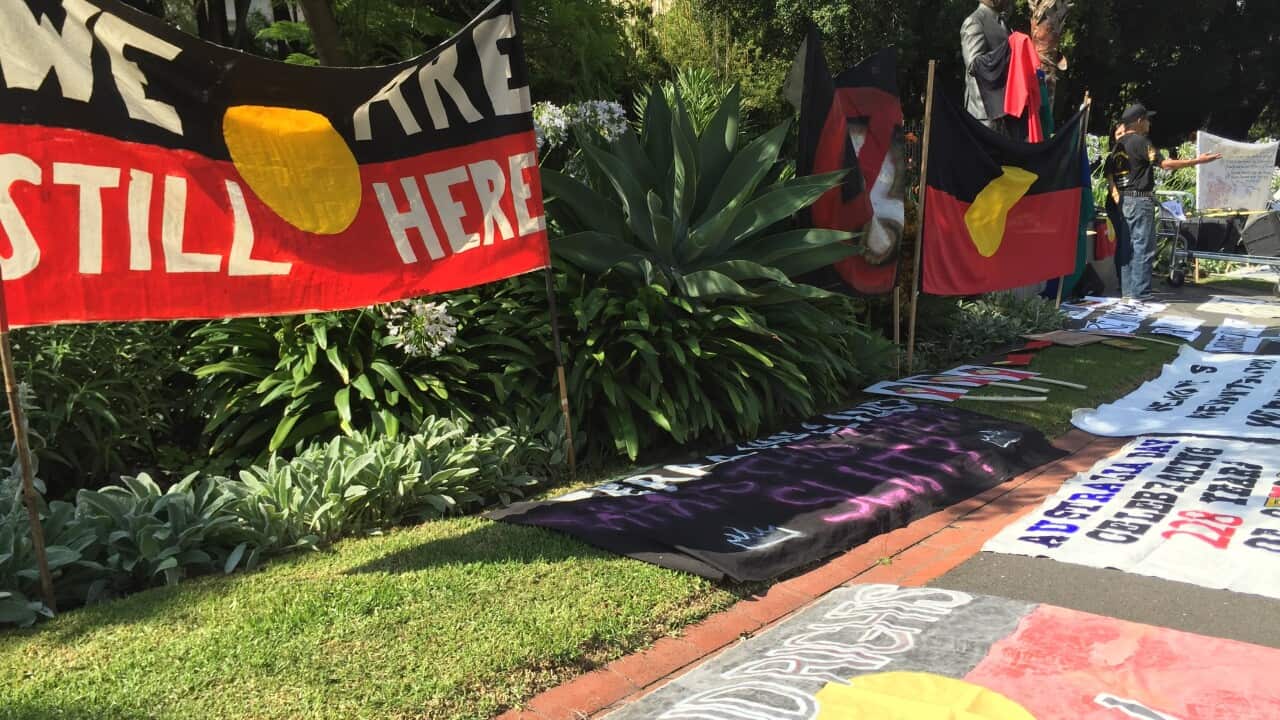
**The core facts are TRUE.** In April 2016, Aboriginal Hostels Limited (AHL) - the federal government's only majority Indigenous public service agency - was offered a pay rise of 3% over three years (1% per year), while the vast majority of other Commonwealth public service organisations were offered 6% over three years (2% per year) [1][2].
AHL has 67-70% Indigenous staff and provides accommodation at 47 sites across Australia for Indigenous people from rural and remote communities, including students, patients receiving medical care, and jobseekers [1][2].
During the 2014-2015 financial year, AHL provided over 500,000 nights of accommodation and served more than 1.5 million meals [3].
**Regarding the inflation claim:** Australian inflation in 2016 was approximately 1.3% annually [4][5].
The 1% per year pay offer was indeed below the inflation rate, meaning workers would experience a real wage reduction (pay cut in real terms) if they accepted the offer [1][2].
**Critical context omitted from the claim:**
1. **Budget constraints:** AHL had its general operating budget slashed by $340,000 (nearly 1%) in 2014-2015 [3].
The organisation stated that the 1% per year offer was "the highest offer AHL can afford without compromising services at our hostels and to our clients" [1][2].
They faced a choice between maintaining frontline services or offering higher pay increases.
2. **Enterprise bargaining autonomy:** Under the government's bargaining framework, individual agencies negotiate their own enterprise agreements based on their financial circumstances.
他们 tā men 不得不 bù dé bù 在 zài 维持 wéi chí 一线 yī xiàn 服务 fú wù 或 huò 提供 tí gōng 更高 gèng gāo 加薪 jiā xīn 之间 zhī jiān 做出 zuò chū 选择 xuǎn zé 。 。
Indigenous Affairs Minister Nigel Scullion stated: "Although the AHL is required to work within the broader government bargaining policy, the details of its pay offer are entirely a matter for the AHL board" [3].
3. **Historical pay freeze:** AHL workers had not received a pay rise in almost three years at the time of the 2016 offer [3].
4. **Agency-level variation:** While most agencies offered 2% per year, pay offers varied across the public service based on each agency's financial position.
The original source (SBS News) is a reputable mainstream Australian news organization with statutory obligations to provide comprehensive multicultural broadcasting.
The article provides factual reporting with quotes from both the union (CPSU) criticizing the offer and AHL management explaining their position [1].
该 gāi 报道 bào dào 得到 dé dào 了 le Sydney Sydney Morning Morning Herald Herald [ [ 2 2 ] ] 和 hé Canberra Canberra Times Times [ [ 3 3 ] ] 的 de 证实 zhèng shí , , 表明 biǎo míng 这些 zhè xiē 事实 shì shí 在 zài 多个 duō gè 独立 dú lì 新闻来源 xīn wén lái yuán 中 zhōng 都 dōu 得到 dé dào 了 le 充分 chōng fèn 确认 què rèn 。 。
The reporting is corroborated by the Sydney Morning Herald [2] and Canberra Times [3], indicating the facts are well-established across multiple independent news sources.
**Did Labor do something similar?**
Search conducted: "Labor government public sector pay rise policy indigenous organisations"
Finding: No direct equivalent found of Labor specifically offering lower pay rises to Indigenous organisations.
* * * *
However:
- Labor governments (Rudd/Gillard) operated under the same agency-level bargaining framework where individual agencies determined pay offers based on their budgets [6][7].
- The Liberal Party's 2013 election policy criticized Labor for agreeing to "an 11 per cent pay rise for all public servants" without budget provision [6], suggesting Labor was generally more generous with public sector pay increases.
- When Labor returned to government in 2022, they implemented a 3% interim pay rise for APS staff and committed to reforming the bargaining framework that had led to fragmented pay outcomes across agencies [7].
**Key context:** The agency-level bargaining system - where individual organisations negotiate pay based on their budgets - was in place under both Labor and Coalition governments.
The structural issue of agencies with constrained budgets offering lower pay increases is a systemic feature of this framework, not unique to the Coalition.
**The full story:**
While critics correctly identified that AHL workers were being offered half the pay rise available to other public servants [1][2], and the union (CPSU) called this "absolutely disgraceful" [1], the claim omits important context about why this occurred.
However, the structural issue of agency-level bargaining - where individual agencies determine pay based on their budgets - existed under Labor governments as well.
The difference appears to be that Labor governments may have provided more generous base funding to agencies.
**This is not unique to the Coalition** - the agency-level bargaining framework that produces these disparities has been in place since 1997 under both Labor and Coalition governments [6][7].
However, the specific budget constraints that forced AHL to offer below-inflation pay increases appear to reflect Coalition budget decisions rather than a systemic feature of the bargaining framework itself.
该 gāi 声明 shēng míng 在 zài 事实上 shì shí shàng 是 shì 准确 zhǔn què 的 de : : AHL AHL 被 bèi 提供 tí gōng 每年 měi nián 1% 1% 的 de 加薪 jiā xīn , , 而 ér 大多数 dà duō shù 其他 qí tā 公共服务 gōng gòng fú wù 机构 jī gòu 被 bèi 提供 tí gōng 每年 měi nián 2% 2% 的 de 加薪 jiā xīn , , 且 qiě 1% 1% 的 de 提议 tí yì 低于 dī yú 2016 2016 年 nián 的 de 通货膨胀率 tōng huò péng zhàng lǜ ( ( 约 yuē 1.3% 1.3% ) ) , , 实际上 shí jì shàng 构成 gòu chéng 了 le 实际工资 shí jì gōng zī 的 de 削减 xuē jiǎn [ [ 1 1 ] ] [ [ 2 2 ] ] [ [ 4 4 ] ] [ [ 5 5 ] ] 。 。
The claim is factually accurate: AHL was offered 1% per year while most other public service organisations were offered 2% per year, and the 1% offer was below inflation (~1.3% in 2016), effectively constituting a real wage cut [1][2][4][5].
However, the claim omits critical context about AHL's budget constraints and the agency-level bargaining framework that existed under both Labor and Coalition governments.
The organisation explicitly stated they could not afford more without cutting services to Indigenous clients [1][2].
最终评分
6.0
/ 10
部分属实
该 gāi 声明 shēng míng 在 zài 事实上 shì shí shàng 是 shì 准确 zhǔn què 的 de : : AHL AHL 被 bèi 提供 tí gōng 每年 měi nián 1% 1% 的 de 加薪 jiā xīn , , 而 ér 大多数 dà duō shù 其他 qí tā 公共服务 gōng gòng fú wù 机构 jī gòu 被 bèi 提供 tí gōng 每年 měi nián 2% 2% 的 de 加薪 jiā xīn , , 且 qiě 1% 1% 的 de 提议 tí yì 低于 dī yú 2016 2016 年 nián 的 de 通货膨胀率 tōng huò péng zhàng lǜ ( ( 约 yuē 1.3% 1.3% ) ) , , 实际上 shí jì shàng 构成 gòu chéng 了 le 实际工资 shí jì gōng zī 的 de 削减 xuē jiǎn [ [ 1 1 ] ] [ [ 2 2 ] ] [ [ 4 4 ] ] [ [ 5 5 ] ] 。 。
The claim is factually accurate: AHL was offered 1% per year while most other public service organisations were offered 2% per year, and the 1% offer was below inflation (~1.3% in 2016), effectively constituting a real wage cut [1][2][4][5].
However, the claim omits critical context about AHL's budget constraints and the agency-level bargaining framework that existed under both Labor and Coalition governments.