
The Claim
“Proposed new powers for job agencies so that they can fine unemployed people, without any oversight, and with minimal avenues for recourse.”
Original Sources Provided
✅ FACTUAL VERIFICATION
The claim refers to the Social Security Legislation Amendment (Further Strengthening Job Seeker Compliance) Bill 2015, introduced by the Turnbull Government in September 2015 [1]. The bill proposed giving privately-run job agencies (under the jobactive program) new powers to impose financial penalties on unemployed job seekers for:
- Failing to sign a job plan at their first appointment
- "Inappropriate behaviour" at appointments (defined as acting in a manner "such that the purpose of the appointment is not achieved")
- Failing to attend Work for the Dole or training without an excuse deemed reasonable by the job agency [2]
The penalties proposed were:
- 10% of income support payment for initial failures
- Increasing by 10% each day until the job seeker "re-engages" with the provider [2]
- Based on Newstart (now JobSeeker) rates at the time, this equated to approximately $55 per week initial penalty [2]
Crucial fact: The bill did not pass. It passed the House of Representatives in October 2015 but lapsed at prorogation in April 2016 after failing to pass the Senate [1]. The proposed powers never became law.
The claim states fines could be imposed "without any oversight" - this is partially accurate in that job agencies could impose penalties at their discretion before any review. However, the claim omits that job seekers could appeal through Centrelink's Administrative Appeals Review (AAR) process and subsequently to the Administrative Appeals Tribunal (AAT) [3]. The appeals process could take up to four months according to the New Matilda article [2].
Missing Context
1. The bill never became law
The most significant omission is that these powers were proposed but never enacted. The bill lapsed when parliament prorogued in April 2016 [1]. Presenting this as an active policy misrepresents the actual outcome.
2. Appeals process existed
While characterized as "minimal avenues for recourse," job seekers could:
- Request an internal review by Centrelink's Authorised Review Officer (ARO) [3]
- Appeal to the Administrative Appeals Tribunal (AAT, now ART) if dissatisfied with the ARO decision [3]
- The AAT could change decisions according to law, though this process could take several months [3]
3. Historical context of welfare compliance
The claim frames this as "one of the most devastating attacks launched against poor and vulnerable Australians in recent memory" [2], but omits that welfare compliance frameworks have existed across multiple governments:
- Job Network (1998-2009) under Howard
- Job Services Australia (2009-2015) under Rudd/Gillard
- jobactive (2015-2022) under Coalition
- All iterations involved mutual obligation requirements and penalties for non-compliance [4]
4. Provider incentive structure
The article correctly identifies that job agencies receive outcome-based payments under the $6.8 billion jobactive program [2], creating perverse incentives. However, this structure existed under previous employment services models and was not unique to the Coalition's proposal.
Source Credibility Assessment
New Matilda (newmatilda.com)
- Political alignment: Left-leaning independent media outlet. Media Bias/Fact Check rates New Matilda as "left-center" bias [5].
- Independence: Small independent outlet, self-described as "independent journalism at its best" [5].
- Author credibility: Owen Bennett is the president of the Australian Unemployed Workers Union (AUWU) and is writing his PhD thesis on the employment services industry [6]. He is a founding member of the AUWU, an advocacy organization for unemployed workers [7].
- Potential bias: The author has an explicit advocacy position as president of a union representing unemployed workers. The article is published in an outlet with a progressive editorial stance. The framing is predictably critical of welfare compliance measures.
- Factual accuracy: The basic facts about the bill's provisions are accurate, but the characterization lacks balance regarding historical context and the bill's ultimate failure to pass.
Labor Comparison
Did Labor do something similar?
Search conducted: "Labor government job seeker compliance welfare mutual obligation"
Finding: Yes, Labor maintained and operated welfare compliance frameworks throughout their government (2007-2013).
Job Services Australia (2009-2015): The Rudd/Gillard government reformed employment services, creating Job Services Australia. While they "significantly softened" mutual obligation penalties compared to the Howard era, they maintained the compliance framework [8].
Welfare to Work (2006): The Howard government introduced Welfare to Work reforms, but Labor continued operating under these arrangements. The Rudd government did not dismantle the core compliance architecture [8].
Work for the Dole: The Rudd government initially axed Work for the Dole but later reinstated elements. The program continued under various forms [9].
Comparison: Labor's approach was generally less punitive than Coalition proposals, but they maintained the principle of mutual obligation and financial penalties for non-compliance. The proposed 2015 bill represented a potential expansion of these powers, not the creation of a new system.
Key distinction: Labor softened the Howard-era compliance regime, while the Coalition's 2015 bill sought to strengthen it. However, both parties operated within the same paradigm of mutual obligation and conditional welfare.
Balanced Perspective
What the claim gets right:
- The bill genuinely proposed giving private job agencies new powers to impose financial penalties
- The penalties were significant for people already below the poverty line (Newstart was $391 below the poverty line at the time) [2]
- Job agencies do have financial incentives tied to compliance, creating potential conflicts of interest [2]
- The appeals process, while existing, could take months leaving people without income in the interim [2]
What the claim omits or mischaracterizes:
- The bill never passed and the powers were never enacted
- Appeals mechanisms existed (Centrelink internal review → AAT), though they were slow
- Welfare compliance has been a bipartisan policy area since the 1990s
- The claim's present-tense framing suggests these powers are active, when they were only proposed
The broader context:
Australia's employment services system has involved mutual obligation requirements under every government since the 1990s. Job Network (Howard), Job Services Australia (Rudd/Gillard), and jobactive (Coalition) all operated on similar principles of activity requirements with penalties for non-compliance. The 2015 bill proposed expanding these powers but failed.
Comparative analysis:
While the Coalition's 2015 proposal was more punitive than Labor's approach, Labor maintained the fundamental framework of conditional welfare. The claim's framing as a uniquely "devastating attack" ignores this continuity. The more accurate characterization is that this was an attempt to intensify an existing bipartisan approach to welfare compliance, which ultimately failed to pass the Senate.
PARTIALLY TRUE
5.0
out of 10
The core factual claim is accurate: the Coalition did propose giving job agencies new powers to fine unemployed people in 2015. However, the characterization of these powers as being implemented "without any oversight" is misleading given the existence of Centrelink and AAT appeals processes. Most significantly, the claim fails to disclose that this bill never became law - it lapsed at prorogation in April 2016. The framing also omits the historical context that welfare compliance frameworks have existed under both Labor and Coalition governments since the 1990s.
Final Score
5.0
OUT OF 10
PARTIALLY TRUE
The core factual claim is accurate: the Coalition did propose giving job agencies new powers to fine unemployed people in 2015. However, the characterization of these powers as being implemented "without any oversight" is misleading given the existence of Centrelink and AAT appeals processes. Most significantly, the claim fails to disclose that this bill never became law - it lapsed at prorogation in April 2016. The framing also omits the historical context that welfare compliance frameworks have existed under both Labor and Coalition governments since the 1990s.
📚 SOURCES & CITATIONS (9)
-
1

Social Security Legislation Amendment (Further Strengthening Job Seeker Compliance) Bill 2015 - Parliament of Australia
Helpful information Text of bill First reading: Text of the bill as introduced into the Parliament Third reading: Prepared if the bill is amended by the house in which it was introduced. This version of the bill is then considered by the second house. As passed by
Aph Gov -
2
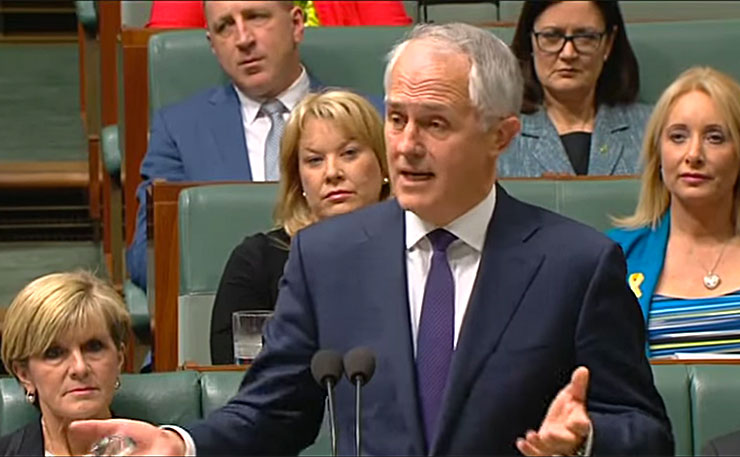
Malcolm Turnbull Escalates His War on the Poor And Unemployed
ANALYSIS: Unemployed and underemployed Australians can be issued with on-the-spot fines by privately owned job agencies under a tough new Government proposal, writes Owen Bennett. Later this month the Turnbull Government will be asking the Senate to support one of the most devastating attacks launched against poor and vulnerable Australians in recent memory. The BillMore
New Matilda -
3
Explanations and formal reviews of a Centrelink decision
Servicesaustralia Gov
-
4PDF
Back to the future: coercive conditionality in the jobactive era
Research Curtin Edu • PDF Document -
5

New Matilda - Bias and Credibility
LEFT BIAS These media sources are moderately to strongly biased toward liberal causes through story selection and/or political affiliation. They may
Media Bias/Fact Check -
6

Owen Bennett, Author at New Matilda
New Matilda -
7

Owen Bennett - Jacobin
Owen Bennett is a founding member of the Australian Unemployed Workers’ Union and Unionists for a Job Guarantee. His PhD thesis on the history of Australian unions and unemployment is being adapted into a book for Interventions.
Jacobin -
8

When it comes to work and welfare, market rules Labor's roost
If I was a long-term unemployed person, how would I answer the question, 'What has the ALP done for me?' 'Lots, and not much.' The Gillard Government's commitment to developing workforce skills suggests it values decent work, not just jobs, but in positing productivity as the path to prosperity it seems more Reagan than Keynes.
Eureka Street -
9

Rudd's blunder to dismantle Work for the Dole
The Rudd government says it supports the principle of mutual obligation in welfare, yet its new policy proposals threaten to …
The Centre for Independent Studies
Rating Scale Methodology
1-3: FALSE
Factually incorrect or malicious fabrication.
4-6: PARTIAL
Some truth but context is missing or skewed.
7-9: MOSTLY TRUE
Minor technicalities or phrasing issues.
10: ACCURATE
Perfectly verified and contextually fair.
Methodology: Ratings are determined through cross-referencing official government records, independent fact-checking organizations, and primary source documents.