
声明内容
“反对联合国对美国种族主义和警察暴行进行调查。这是在乔治·弗洛伊德(George Floyd)死亡之后发生的,当时美国执法人员佩戴无标识徽章,在未经正当程序的情况下从街头绑架随机抗议者,美国警察袭击记者,并闯入多名无辜民众家中,在他们睡觉时开枪射击。联盟党政府不希望联合国对这些系统性事件大做文章。”
原始来源
✅ 事实核查
缺失背景
来源可信度评估
工党对比
平衡视角
The full story: Criticisms and legitimate explanations
Critical perspective: The Coalition government's opposition to a US-specific UN inquiry into documented police brutality and racism was criticized by human rights organizations as inconsistent with Australia's stated commitment to human rights universalism. The Human Rights Law Centre stated: "Australia should support, not hinder, scrutiny of racism and police violence" [3], noting that Australia simultaneously called for international inquiries into other nations (China's Xinjiang practices, for example) while refusing to support inquiry into its closest ally [3]. This revealed what critics saw as selective application of human rights accountability standards based on diplomatic convenience.
The timing was particularly significant: the government documented evidence of police violence against Australian journalists on June 1, 2020, yet opposed international accountability on June 19, 2020 [1][5]. This juxtaposition was criticized as showing that the government prioritized diplomatic relations with the US over human rights universalism.
Government perspective and diplomatic rationale: The Coalition's stated reasoning—that inquiries should focus on systemic issues globally rather than single countries—was framed as a principled position rather than selective defense of an ally. Australia's delegation argued that "racism and discrimination against people of African descent" is "a problem around the world" and therefore should be addressed through globally-focused mechanisms rather than country-specific inquiries [1].
This reflects a legitimate diplomatic approach: many democracies argue that singling out individual countries creates politicization and reduces effectiveness of international human rights mechanisms. The US itself maintains this position regarding its own treatment at the UN. Australia's preference for universal rather than country-specific mechanisms can be seen as consistent application of this principle.
Comparative context: Australia's voting pattern reflects broader Western alliance dynamics. Other democracies with close US relationships—Germany, Italy, Poland—made similar choices [4]. This suggests the Coalition was not uniquely problematic but rather following standard diplomatic practice among US-aligned democracies.
However, the inconsistency remains: Australia simultaneously supported inquiries into other nations, undermining the claim that this was purely about preferring universal mechanisms. The government's decision revealed that diplomatic alliance relationships, not consistent principle, drove the voting position.
Key context: This position was not unique to the Coalition—it reflected broader Australia-US alliance dynamics that Labor, as an alternative government, had not clearly opposed at the time. However, the Coalition explicitly chose to actively lobby against the inquiry rather than simply abstain, which represents a more active stance than neutrality would entail.
部分属实
7.0
/ 10
最终评分
7.0
/ 10
部分属实
📚 来源与引用 (9)
-
1

Australia won't support UN inquiry into U.S racism and police brutality
Australia is reportedly impeding efforts for a motion to pass in the United Nation Human Rights Council that is calling for an inquiry into U.S racism and police brutality.
NITV -
2
UN Human Rights Council Resolution on systemic racism and police violence
Ohchr
Original link no longer available -
3
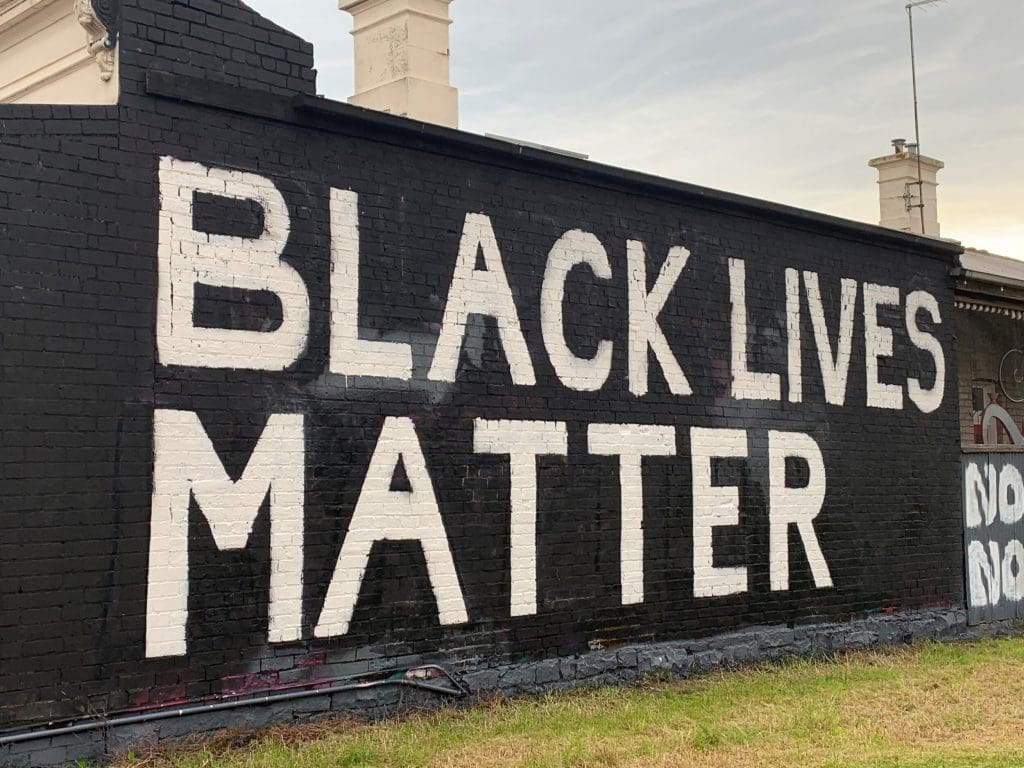
Australia should support, not hinder, scrutiny of racism and police violence
The Australian Government should support an urgent resolution in the UN Human Rights Council for an independent investigation into systemic racism, police brutality and violence against peaceful protest in the US, say Aboriginal and Torres Strait Islander and human rights organisations.
Human Rights Law Centre -
4

UN racism resolution watered down, will no longer mention US
UN racism resolution watered down, will no longer mention US
France 24 -
5

Calls for media freedom during George Floyd protests as Australian news crew assaulted
Prime Minister Scott Morrison has asked the Australian embassy to investigate the assault on a Network Seven reporter and cameraman covering the US protests.
SBS News -
6

Breonna Taylor: Louisville police shooting Kentucky
Amid the virus, the killing of Taylor, 26, in her own home has escaped scrutiny – but anger is building, as are calls for a judicial review
the Guardian -
7
Call kidnapping federal officers accused using unmarked cars
Telegraph Co
-
8
Anthony Albanese defends media freedom during George Floyd protests
Prime Minister Scott Morrison instructs the US embassy to investigate after a Channel 7 news crew is thumped and shot with rubber bullets in the neck and backside.
Abc Net -
9
Australia has long aligned with the US on sanctions voting at the UN
Unsw Edu
评分方法
1-3: 不实
事实错误或恶意捏造。
4-6: 部分属实
有一定真实性,但缺乏背景或有所偏颇。
7-9: 基本属实
仅有微小的技术性或措辞问题。
10: 准确
完全经过验证且客观公正。
方法论: 评分通过交叉参照政府官方记录、独立事实核查机构和原始文件确定。