Bahagyang Totoo

Rating: 5.0/10

Labor
1.5

Ang Claim

“Ang mga manggagawang sumusuweldo ng minimum wage ay kumikita ng $175+ bawat linggo kumpara noong Mayo 2022”
Orihinal na Pinagmulan: Albosteezy

Orihinal na Pinagmulan

FACTUAL NA BERIPIKASYON

Ang claim ay factually accurate.
The claim is factually accurate.
Ang minimum wage noong Mayo 2022 ay $20.33 bawat oras (o $772.60 bawat 38-oras na linggo) [1].
The minimum wage in May 2022 was $20.33 per hour (or $772.60 per 38-hour week) [1].
Pagsapit ng Hulyo 2025, ang minimum wage ay tumaas sa $24.95 bawat oras (o $948 bawat 38-oras na linggo) [2].
By July 2025, the minimum wage had increased to $24.95 per hour (or $948 per 38-hour week) [2].
Ito ay kumakatawan sa pagtaas na $4.62 bawat oras, o humigit-kumulang $175.36 bawat 38-oras na linggo.
This represents an increase of $4.62 per hour, or approximately $175.36 per 38-hour week.
Ginawa ng Fair Work Commission ang mga sunod-sunod na taunang desisyon sa wage review: 3.75% na pagtaas noong Hulyo 2024 at 3.5% na pagtaas noong Hulyo 2025 [2][3].
The Fair Work Commission made successive annual wage review decisions: 3.75% increase in July 2024 and 3.5% increase in July 2025 [2][3].
Ang mga pagtaas na ito ay nakinabang ang humigit-kumulang 2.6 milyong manggagawang nasa minimum at award wages [4].
These increases benefited approximately 2.6 million workers on minimum and award wages [4].

Nawawalang Konteksto

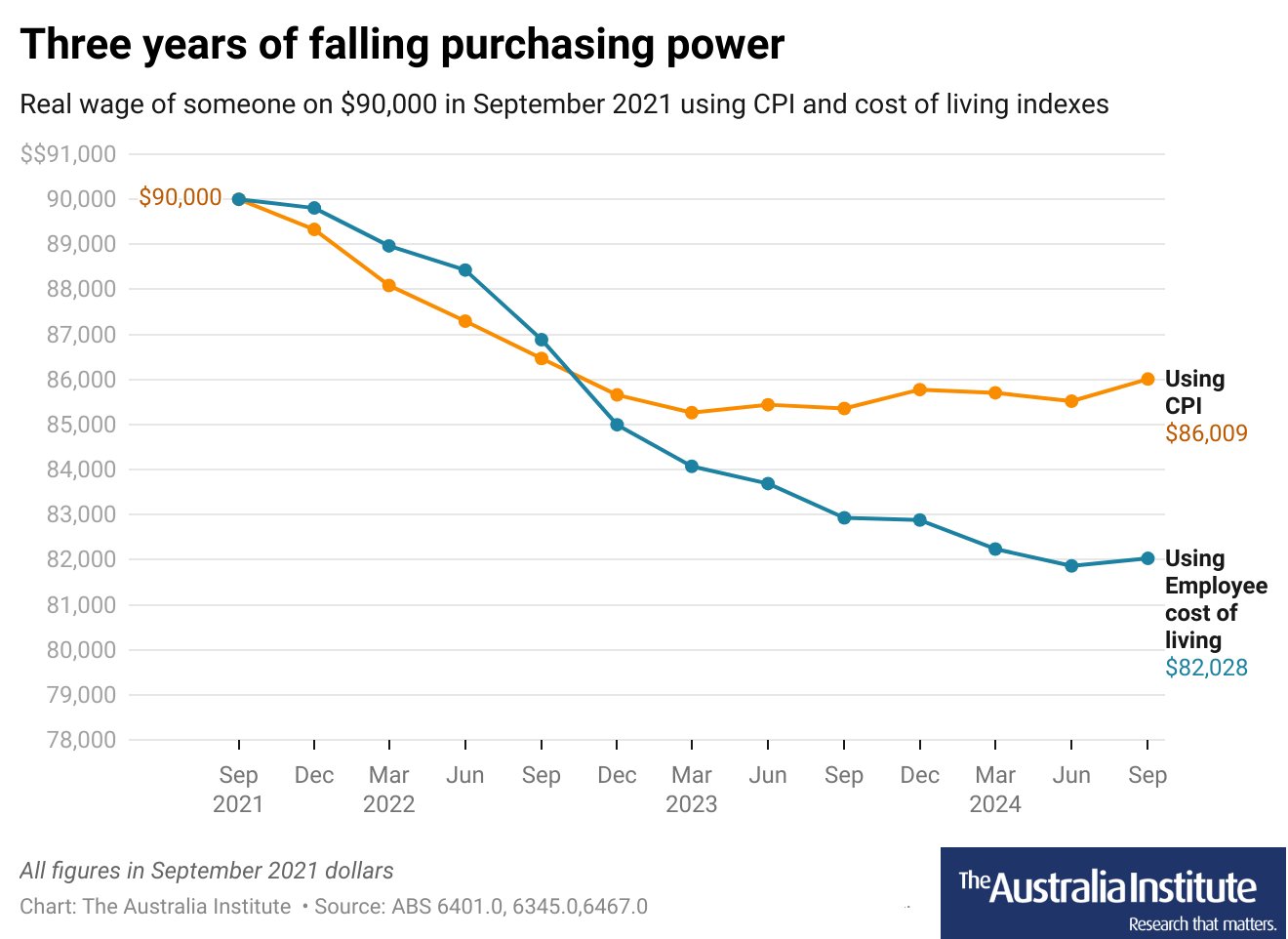
Gayunpaman, ang claim ay nangangailangan ng mahalagang critical examination tungkol sa kung ano talaga ang kahulugan ng pagtaas na ito para sa mga manggagawa: 1. **Inihigop ng inflation ang mga pagkakamit**: Habang ang mga manggagawang minimum wage ay nakakatanggap ng $175 na dagdag bawat linggo sa nominal na halaga, ang inflation ay makabuluhang bumawasan sa purchasing power ng mga pagtaas na ito.
However, the claim requires substantial critical examination about what this increase actually means for workers: 1. **Inflation eroded the gains**: While minimum wage earners received $175 more per week nominally, inflation significantly reduced the purchasing power of these increases.
Sa analysis ng Australia Institute, binabanggit na ang mga pagtaas ng minimum wage ay palaging nauunahan ng trend levels - ang 8.65% na pagtaas noong 2023 ay nag-iwan sa minimum wage na 2% sa ibaba ng trend, at ang mga pagtaas noong 2024-2025 na 3.75% at 3.5% ay kumakatawan sa below-inflation growth [1]. 2. **Real wage calculation**: Ang wage growth na 3.75% at 3.5% kumpara sa inflation na umabot sa 6.1% noong 2024 ay nangangahulugang ang mga manggagawang minimum wage ay naranasan ang negative real wages sa panahong ito.
The Australia Institute analysis notes that minimum wage increases have consistently lagged behind trend levels - the 2023 8.65% increase left the minimum wage 2% below trend, and the 2024-2025 increases at 3.75% and 3.5% represent below-inflation growth [1]. 2. **Real wage calculation**: Wage growth of 3.75% and 3.5% compared to inflation that peaked at 6.1% in 2024 means minimum wage workers experienced negative real wages during this period.
Lamang noong 2025, nang bumaba ang inflation sa 2.4%, ang mga pagtaas na ito sa sahod ang lumampas sa inflation [5]. 3. **Cumulative real loss hindi naibalik**: Mula 2020-2022, ang mga manggagawang minimum wage ay naranasan ang mga taon ng sahod na mas mababa sa inflation.
Only in 2025, with inflation moderated to 2.4%, have these wage increases exceeded inflation [5]. 3. **Cumulative real loss not recovered**: From 2020-2022, minimum wage workers experienced years of wages well below inflation.
Kahit na may $175 na dagdag bawat linggo sa nominal na halaga, ang mga manggagawang minimum wage ay nananatiling materyal na mas masahol ang kalagayan sa real (inflation-adjusted) terms kumpara noong 2019 [6]. 4. **Award wages context**: Ang mga pagtaas ay inilapat sa parehong minimum wage at award wages.
Even with $175 more per week nominally, minimum wage workers remain materially worse off in real (inflation-adjusted) terms than 2019 [6]. 4. **Award wages context**: The increases applied to both minimum wage and award wages.
Ang mga award wages ay nagtatakda ng rates para sa mga partikular na occupation at industriya, kadalasan ay mas mataas sa minimum wage.
Award wages set rates for specific occupations and industries, often above minimum wage.
Ang pagpapakumbalang ito ng minimum wage sa award wage improvements ay lumilikha ng maling impresyon [2]. 5. **Cost of living crisis impact**: Habang ang minimum wage ay tumaas ng $175 bawat linggo, ang mga gastos sa pabahay, pagkain, enerhiya, at transportasyon ay tumaas nang mas mabilis kaysa sa pagtaas na ito.
Conflating minimum wage with award wage improvements creates a misleading picture [2]. 5. **Cost of living crisis impact**: While minimum wage increased $175 per week, housing costs, food, energy, and transport have risen faster than this increase.
Para sa mga manggagawang minimum wage na nagsisimula nang mabuhay mula sahod-sahod lamang, ang real improvement ay mas maliit kaysa sa inihuhula ng mga nominal na halaga [6]. 6. **Low starting point**: Ang minimum wage ng Australia na $24.95/oras (pagsapit ng Hulyo 2025) ay nasa ibaba ng maraming OECD peers at nananatiling hindi sapat para sa mga pangunahing living standards para sa maraming Australian, lalo na sa mga high-cost areas [7].
For minimum wage workers already living paycheck-to-paycheck, the real improvement is much smaller than nominal figures suggest [6]. 6. **Low starting point**: Australia's minimum wage of $24.95/hour (as of July 2025) is below many OECD peers and remains inadequate for basic living standards for many Australians, particularly in high-cost areas [7].

💭 KRITIKAL NA PANANAW

Ang claim ay technically accurate sa nominal terms ngunit lubhang nagbibigay ng maling impresyon tungkol sa kung ano talaga ang kahulugan ng pagtaas: 1. **Nominal vs. real gains na itinago**: Ang pagbanggit na "$175 bawat linggo" ay nakatuon sa nominal na dolyar, na mas hindi meaningful kaysa sa real purchasing power.
The claim is technically accurate in nominal terms but highly misleading about what the increase represents: 1. **Nominal vs. real gains obscured**: Stating "$175 per week more" focuses on nominal dollars, which are less meaningful than real purchasing power.
Ang gobyerno ay nagdiriwang ng mga impressive-sounding na nominal na halaga habang inililihim na ang real wage growth ay minimal o negative sa panahong ito. 2. **Attribution hindi malinaw**: Ang minimum wage ay itinatakda ng taunang wage review process ng Fair Work Commission, hindi direktang sa pamamagitan ng patakaran ng gobyerno.
The government emphasizes impressive-sounding nominal figures while downplaying that real wage growth has been minimal or negative during this period. 2. **Attribution unclear**: Minimum wage is set by the Fair Work Commission's annual wage review process, not directly by government policy.
Habang maaaring kumampi ang Labor para sa mas mataas na pagtaas, limitado ang papel ng gobyerno sa mga partikular na pagtaas na ito.
While Labor could advocate for higher increases, the government's role in these specific increases is limited.
Ang political credit-taking ay bahagyang misleading. 3. **Timing na strategic na ipinakita**: Ang claim ay sinusukat mula noong Mayo 2022 (nang maupo ang Labor at ang minimum wage ay depressed pagkatapos ng pandemya) hanggang sa kasalukuyan, na lumilikha ng mas malaking nominal na halaga.
The political credit-taking is partially misleading. 3. **Timing strategically presented**: The claim measures from May 2022 (when Labor took office and minimum wage was depressed post-pandemic) to present, creating a larger nominal figure.
Ang pagsukat mula 2019 ay magpapakita ng krisis nang mas malinaw. 4. **Hindi sapat para sa poverty line**: Kahit na may $175 na pagtaas, ang mga manggagawang minimum wage ay nananatiling makabuluhang nasa ibaba ng poverty line ng Australia para sa full-time work sa maraming estimate, lalo na sa capital cities na may mataas na gastos sa pabahay [7]. 5. **Hindi tinutugunan ang systemic underemployment**: Marami sa mga manggagawang minimum wage ay casual o part-time.
Measuring from 2019 would show the crisis more clearly. 4. **Insufficient for poverty line**: Even with the $175 increase, minimum wage workers remain significantly below Australia's poverty line for full-time work in many estimates, particularly in capital cities with high housing costs [7]. 5. **Fails to address systemic underemployment**: Many minimum wage workers are casual or part-time.
Ang benepisyo na $175/linggo ay inilapat lamang kung mapanatili nila ang consistent na oras - hindi garantisado sa casual employment [8].
The $175/week benefit applies only if they maintain consistent hours - not guaranteed in casual employment [8].

BAHAGYANG TOTOO

5.0

sa 10

Ang nominal na $175 bawat linggo na pagtaas mula noong Mayo 2022 hanggang Hulyo 2025 ay tumpak.
The nominal $175 per week increase from May 2022 to July 2025 is accurate.
Gayunpaman, kapag inadjust para sa inflation at pagtaas ng cost of living (lalo na sa pabahay at enerhiya), ang real improvement ay minimal o posibleng negative.
However, when adjusted for inflation and cost of living increases (particularly housing and energy), the real improvement is minimal or possibly negative.
Ang claim ay gumagamit ng mga impressive-sounding na nominal na halaga para itago ang realidad na ang mga manggagawang minimum wage ay hindi pa nakakabawi sa real wages na nawala sa inflation sa panahong ito.
The claim uses impressive-sounding nominal figures to mask the reality that minimum wage workers have not recovered real wages lost to inflation during this period.

📚 MGA PINAGMULAN AT SANGGUNIAN (8)

  1. 1
    PDF

    The Continuing Irrelevance of Minimum Wages to Future Inflation

    Australiainstitute Org • PDF Document
  2. 2
    fairwork.gov.au

    Minimum wages increase 3.5% from 1 July 2025

    Fairwork Gov

  3. 3
    ministers.treasury.gov.au

    National Minimum Wage to rise 3.5 per cent following Annual Wage Review

    The Fair Work Commission’s Expert Panel today announced the National Minimum Wage and award wages will increase by 3.5 per cent from 1 July 2025, following the 2024–25 Annual Wage Review.

    Ministers Treasury Gov
  4. 4
    What has Labor done for Cost of Living?

    What has Labor done for Cost of Living?

    What has Labor done for cost of living? Albosteezy tracks energy rebates, medicine price cuts, tax cuts, rent assistance, supermarket reforms. Complete cost of living relief documentation since 2022.

    Albosteezy
  5. 5
    Wage growth remains steady at 3.4 per cent, just ahead of inflation

    Wage growth remains steady at 3.4 per cent, just ahead of inflation

    ABS figures show workers received a real pay increase over the past year, but economists warn that is likely to flip over coming months as inflation increases and wages growth slows further.

    Abc Net
  6. 6
    Wages are growing faster than inflation - but workers are $8,000 worse off than 3 years ago

    Wages are growing faster than inflation - but workers are $8,000 worse off than 3 years ago

    A full-time worker on average earnings has lost around $8,000 in living standards over the past three years.

    The Australia Institute
  7. 7
    Minimum Wage Australia - Are You Being Paid Fairly?

    Minimum Wage Australia - Are You Being Paid Fairly?

    Check the minimum wage rates and award wages in Australia with Australian Unions. Learn if you're receiving fair pay and understand your wage entitlements.

    Australian Unions
  8. 8
    ministers.dewr.gov.au

    2024 marks wins for workers

    Ministers Dewr Gov

Pamamaraan ng Rating Scale

1-3: MALI

Hindi tama sa katotohanan o malisyosong gawa-gawa.

4-6: BAHAGYA

May katotohanan ngunit kulang o baluktot ang konteksto.

7-9: HALOS TOTOO

Maliit na teknikal na detalye o isyu sa pagkakasulat.

10: TUMPAK

Perpektong na-verify at patas ayon sa konteksto.

Pamamaraan: Ang mga rating ay tinutukoy sa pamamagitan ng cross-referencing ng opisyal na mga rekord ng pamahalaan, independiyenteng mga organisasyong nag-fact-check, at mga primaryang dokumento.