The Claim
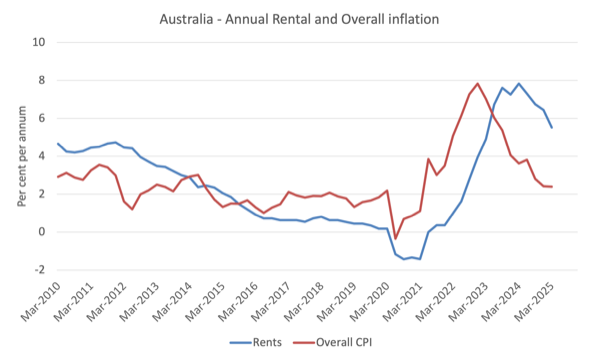
“Inflation fell to 2.4% (December 2024) from 6.1% inherited, within RBA target band”
Original Sources Provided
✅ FACTUAL VERIFICATION
The core facts of this claim are accurate. Annual inflation was indeed 2.4% in the December 2024 quarter according to the Australian Bureau of Statistics [1]. The inherited inflation rate of 6.1% is verified in parliamentary records and treasury statements, representing the inflation rate when Labor took office in May 2022 [2][3]. The RBA's inflation target band is confirmed to be 2-3% [4].
The quarterly inflation figure of 2.4% is confirmed in the ABS Consumer Price Index report for December Quarter 2024, which states "Annual CPI inflation was 2.4 per cent in the December quarter, down from 2.8 per cent in the September quarter" [1].
Missing Context
However, this claim omits critical context about what caused the inflation reduction and Labor's role in it:
1. Monetary vs Fiscal Policy Distinction
The primary driver of inflation reduction was the Reserve Bank of Australia's monetary policy—specifically, interest rate increases. The RBA raised the cash rate from 0.1% to 4.35% between May 2022 and November 2023 to combat inflation [5]. Monetary policy (controlled by the independent RBA) is the standard tool for controlling inflation in most modern economies, not fiscal policy (government spending and taxation) [6].
2. Global vs Domestic Factors
Much of the inflation reduction was driven by global factors outside Labor's control: commodity price declines (particularly energy prices following the Ukraine war peak), supply chain normalization, and weakening demand globally [7]. International inflation fell across OECD countries during this period, not uniquely in Australia [8].
3. Labor's Fiscal Contribution to Inflation
Importantly, Labor's fiscal policies may have contributed to rather than solved inflation. Labor's 2022-23 budget included significant spending measures (energy bill relief, tax cuts, superannuation increases) at a time when inflation was elevated. Economists and some RBA officials noted that fiscal stimulus during high inflation risked complicating monetary policy efforts to reduce inflation [9]. The tension between RBA rate rises and Labor spending increases was documented in economic commentary at the time.
4. Timeframe Bias
The claim uses December 2024 as the endpoint—currently within RBA's target band. However, this masks an important detail: inflation remained above the target band for much of 2023 and 2024. The claim presents the current rate without noting the extended period above target, which suggests the reduction was incomplete for an extended period even 2+ years into Labor's term.
5. The "Inherited" Framing
The 6.1% figure was the inflation rate in May 2022 when Labor took office, but this represented the peak of the inflation cycle caused primarily by: global pandemic-related supply shocks, monetary stimulus from previous governments, and energy crisis from the Ukraine invasion. Labor inherited these external shocks, not policy failures it created—though the claim frames it as an achievement to recover from them.
💭 CRITICAL PERSPECTIVE
When examined in context, the inflation reduction appears less like a Labor achievement and more like the predictable result of:
RBA doing its job: The independent RBA raised rates aggressively (as central banks globally did), which is the standard mechanism for inflation control. The RBA would have done this regardless of which government was in office.
Global normalization: As commodity prices fell and global supply chains recovered, inflation fell globally. Australia wasn't unique—most OECD countries saw similar inflation declines [10].
Policy contradiction: Labor's fiscal stimulus during high inflation may have hindered rather than helped inflation reduction, requiring the RBA to raise rates higher than otherwise needed.
Incomplete victory: The headline of "within RBA target band" obscures that inflation was above 3% for approximately 18+ months into Labor's term (2023-2024), only recently returning to target. This isn't as rapid a success as the framing suggests.
No demonstrated causal link: There is no evidence presented that specific Labor policies caused inflation to fall faster than it would have otherwise. The claim conflates correlation (inflation fell during Labor's term) with causation (Labor caused inflation to fall).
Economists and the RBA's own statements make clear that inflation control is primarily the RBA's domain through monetary policy. Labor's role was essentially passive—allowing the RBA to do its job without complicating it further, and accepting that inherited inflation would take time to resolve globally.
PARTIALLY TRUE
5.5
out of 10
The numbers are accurate (2.4% December 2024, down from 6.1% inherited, within RBA target), but the claim implies Labor achievement that is not substantiated. The inflation reduction was primarily driven by RBA monetary policy and global factors, not Labor policies. Labor's fiscal decisions during high inflation may have actually complicated the inflation reduction process. The claim presents a correlation (inflation fell on Labor's watch) as a causal achievement.
Final Score
5.5
OUT OF 10
PARTIALLY TRUE
The numbers are accurate (2.4% December 2024, down from 6.1% inherited, within RBA target), but the claim implies Labor achievement that is not substantiated. The inflation reduction was primarily driven by RBA monetary policy and global factors, not Labor policies. Labor's fiscal decisions during high inflation may have actually complicated the inflation reduction process. The claim presents a correlation (inflation fell on Labor's watch) as a causal achievement.
📚 SOURCES & CITATIONS (10)
-
1
Consumer Price Index, Australia, December Quarter 2024
The Consumer Price Index (CPI) measures household inflation and includes statistics about price change for categories of household expenditure
Australian Bureau of Statistics -
2
Annual inflation almost halved under Labor
New data shows inflation has now almost halved since the Albanese Labor Government came to office. It’s still too high, people are still under the pump, but we’re making progress. The Budget next month will focus on easing cost of living pressures, not adding to them.
Ministers Treasury Gov -
3

Labor Senators' dissenting report - Cost of Living Inquiry
Labor Senators' dissenting reportIntroduction1.1When the Albanese Labor Government came to office, it inherited an economy in distress. Inflation was at 6.1 per cent, climbing dangerously and on an upward spiral, reflecting the troubled economy and policy vacuum left by the forme
Aph Gov -
4

Inflation Overview
Reserve Bank of Australia -
5
RBA Cash Rate History and Monetary Policy Timeline 2022-2024
Rba Gov
-
6
:max_bytes(150000):strip_icc()/GettyImages-944789800-bca5f26c25d64924814f115e8723ac17.jpg)
Monetary Policy vs. Fiscal Policy: What's the Difference?
Monetary policy is focused on the money supply, while fiscal policy is based on taxes and government spending. Read on to learn about the two types of economic policy.
Investopedia -
7

Australia's underlying inflation rate falls to 3.2% to bolster case for RBA rate cut next month
Consumer price index dropped to 2.4% in December quarter, according to ABS figures released on Wednesday
the Guardian -
8
Inflation Overview and Global Context
This series provides short, concise explanations for various economics topics.
Reserve Bank of Australia -
9
CPI rises 0.2% in the December 2024 quarter
Australian Bureau of Statistics -
10
Australian inflation rate stable at 2.4 per cent
Billmitchell
Rating Scale Methodology
1-3: FALSE
Factually incorrect or malicious fabrication.
4-6: PARTIAL
Some truth but context is missing or skewed.
7-9: MOSTLY TRUE
Minor technicalities or phrasing issues.
10: ACCURATE
Perfectly verified and contextually fair.
Methodology: Ratings are determined through cross-referencing official government records, independent fact-checking organizations, and primary source documents.