Bahagyang Totoo

Rating: 4.0/10

Labor
1.4

Ang Claim

“Tumubo ang real na sahod sa loob ng walong sunod-sunod na quarter, pinakamahabang run sa loob ng halos isang dekada”
Orihinal na Pinagmulan: Albosteezy

Orihinal na Pinagmulan

FACTUAL NA BERIPIKASYON

Ang factual claim ay accurate.
The factual claim is accurate.
Kinukumpirma ng Australian Bureau of Statistics na "ang annual real wages ay lumago na sa loob ng walong sunod-sunod na quarter" [1].
The Australian Bureau of Statistics confirms that "annual real wages have now grown for eight consecutive quarters" [1].
Ito nga ang pinakamahabang sunod-sunod na panahon ng annual real wage growth sa loob ng halos isang dekada, kasunod ng isang serye ng sampung sunod-sunod na quarter ng pagbaba bago ang panahong ito [2].
This is indeed the longest consecutive period of annual real wage growth in almost a decade, following a sequence of ten straight quarters of decline prior to this period [2].
Ang real wage growth ay naging positibo sa isang taong basis simula noong huling bahagi ng 2023/maagang 2024, na umabot sa 1.3% na growth sa Hunyo 2025 [3].
Real wage growth has been positive on an annual basis since late 2023/early 2024, with annual growth reaching 1.3% by June 2025 [3].
Ito ay kumakatawan sa tunay na real (inflation-adjusted) wage growth, hindi lamang nominal growth.
This represents genuine real (inflation-adjusted) wage growth, not merely nominal growth.

Nawawalang Konteksto

Gayunpaman, ang claim na ito ay kumakatawan sa isang lubhang misleading na pag-frame ng posisyon ng sahod sa Australia: 1. **Mas mababa pa rin sa pre-crisis levels**: Explicit na sinabi ng RBA na "ang Real wages...ay bumaba ng humigit-kumulang 5 porsiyento simula noong 2021 at nananatiling nasa paligid ng kanilang 2023 trough" [4].
However, this claim represents a deeply misleading framing of Australia's wage position: 1. **Still below pre-crisis levels**: The RBA explicitly states that "Real wages...have declined by around 5 per cent since 2021 and remain around their 2023 trough" [4].
Ang walong quarter ng growth ay bahagyang nakabawi lamang mula sa isang mas malaking pagbaba.
Eight quarters of growth has only partially recovered from a much larger decline.
Ang real na sahod ay nananatiling mababa sa 2019 levels [5]. 2. **Ang cumulative loss ay hindi nalutas**: Tandaan ng OECD na "ang real wages...ay nananatiling mababa sa 2019 levels sa karamihan" ng mga bansang OECD [5].
Real wages remain substantially below 2019 levels [5]. 2. **Cumulative loss unaddressed**: The OECD notes that "real wages...remain below 2019 levels in most" OECD countries [5].
Sa halip na ipagdiwang ang kamakailang growth, ipinakikita nito ang persistent wage stagnation at pagkawala simula noong 2019 - isang permanenteng pagkawala sa pamumuhay ng mga manggagawa. 3. **Ang modest growth rates ay itinago**: Binibigyang-diin ng gobyerno ang streak ng sunod-sunod na quarter habang minamaliit na ang individual na quarterly growth ay napaka-modest (karaniwang 0.5-0.8% bawat taon) [3].
Rather than celebrating recent growth, this reveals persistent wage stagnation and loss since 2019 - a permanent hit to workers' living standards. 3. **Modest growth rates obscured**: The government emphasizes the streak of consecutive quarters while downplaying that individual quarterly growth is very modest (typically 0.5-0.8% annually) [3].
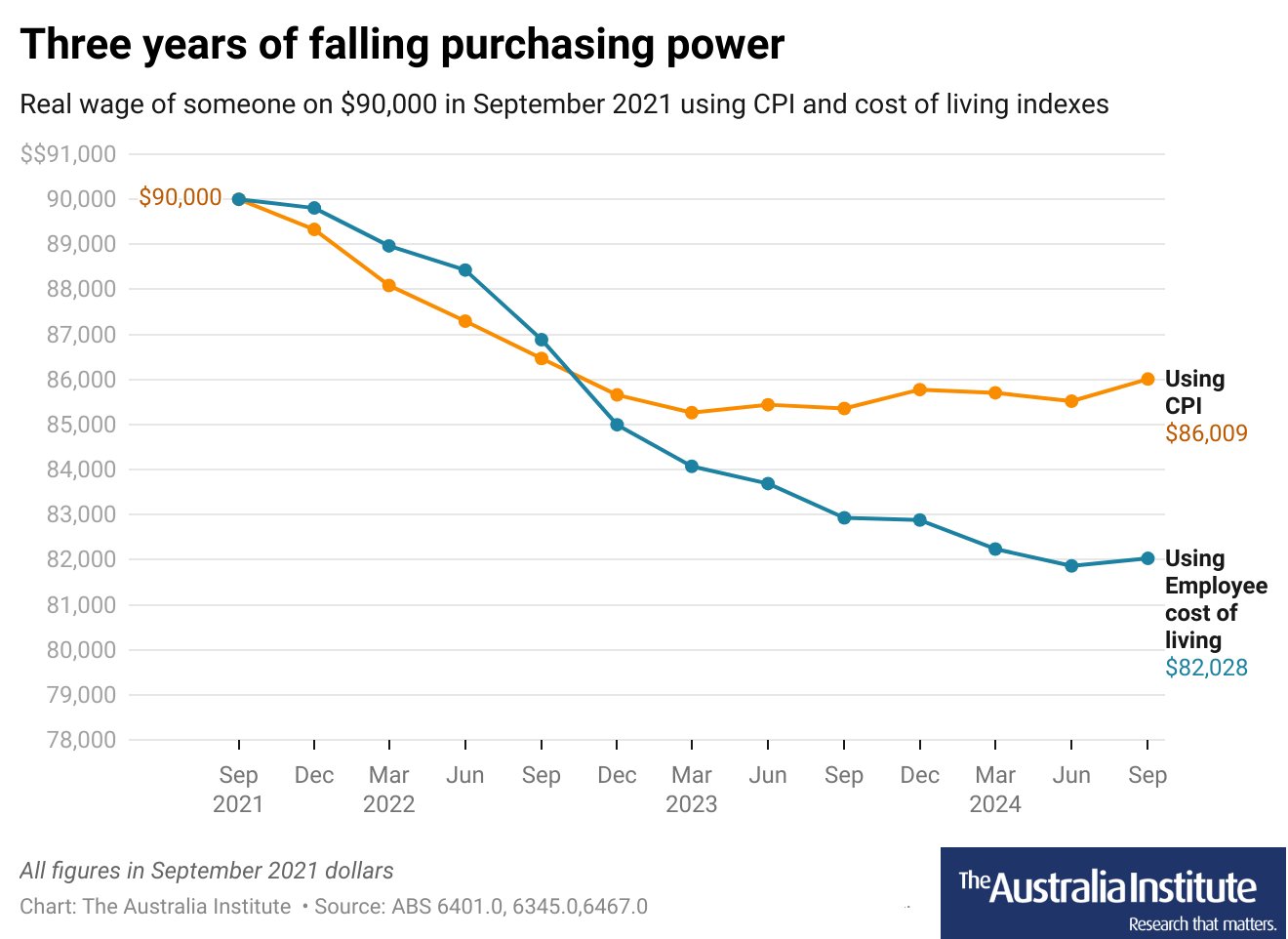
Ito ay maliliit na kita pagkatapos ng isang dekada ng halos-zero growth. 4. **Konteksto ng cost of living crisis**: Habang ang mga sahod ay nagsimulang lumago nang mas mabilis kaysa sa measured inflation, ang mas malawak na cost of living - partikular na ang pabahay, enerhiya, at pagkain - ay lumago nang mas mabilis kaysa sa wage growth at CPI [6].
These are small gains after a decade of near-zero growth. 4. **Cost of living crisis context**: While wages have begun growing faster than measured inflation, the broader cost of living - particularly housing, energy, and food - has grown much faster than wage growth and CPI would suggest [6].
Ang real na pamumuhay ay nananatiling under pressure sa kabila ng positive na wage growth. 5. **Hindi pa rin nakakabawi sa cumulative loss**: Kahit na may walong quarter ng growth, ang mga manggagawa ay materyal na mas mahirap kaysa noong 2019.
Real living standards remain under pressure despite positive wage growth. 5. **Still not recovering cumulative loss**: Even with eight quarters of growth, workers are materially worse off than 2019.
Natuklasan ng Australia Institute analysis na "ang mga manggagawa ay $8,000 na mas mahirap kaysa 3 taon na ang nakalilipas" sa kabila ng mas mabilis na paglago ng mga sahod kaysa sa inflation [6]. 6. **Pag-amin ng long-term stagnation**: Ang claim na ito ang "pinakamahabang run sa loob ng halos isang dekada" ay isang pag-amin ng systemic wage stagnation.
The Australia Institute analysis found that "workers are $8,000 worse off than 3 years ago" despite wages growing faster than inflation [6]. 6. **Long-term stagnation admission**: The claim that this is the "longest run in almost a decade" is an admission of systemic wage stagnation.
Implicit na kinikilala nito ang isang dekada ng wage crisis - ang maliit na positive streak na ito ay newsworthy dahil ang wage growth ay nawala nang napakatagal.
It implicitly acknowledges a decade of wage crisis - this small positive streak is newsworthy precisely because wage growth has been absent for so long.

💭 KRITIKAL NA PANANAW

Ang claim ay technically true ngunit nag-frame ng systemic failure bilang achievement: 1. **Pagdiriwang ng pagbangon mula sa self-inflicted damage**: Ang gobyerno ay nagpe-present ng pagbangon mula sa inflation-driven real wage losses bilang isang accomplishment.
The claim is technically true but frames systemic failure as achievement: 1. **Celebrating recovery from self-inflicted damage**: The government is presenting recovery from inflation-driven real wage losses as an accomplishment.
Ang tamang baseline ay dapat ang 2019 (pre-pandemic), hindi 2023 (trough).
The proper baseline should be 2019 (pre-pandemic), not 2023 (trough).
Sa pamamagitan ng sukatan na iyon, walang achievement - ang mga sahod ay hindi nakabawi. 2. **Misleading na pagpili ng timeframe**: Ang pag-highlight ng "pinakamahabang run sa loob ng halos isang dekada" habang ini-ignore na ito ay dumaan pagkatapos ng isang dekada ng stagnation ay gumagamit ng misleading na comparative frame.
By that measure, there is no achievement - wages have not recovered. 2. **Misleading timeframe selection**: Highlighting "longest run in almost a decade" while ignoring that this came after a decade of stagnation uses a misleading comparative frame.
Ang mas tapat na pahayag: "Pagkatapos ng halos isang dekada ng wage stagnation at pagbaba, ang real na sahod ay nagsimulang bahagyang bumangon" - na napakaibang tunog. 3. **Pagtago ng mas malawak na cost-of-living crisis**: Habang ang nominal na sahod ay lumago ng 3.4% at ang inflation ay 2.4%, ang aktwal na cost of living na naranasan ng mga manggagawa (pabahay, enerhiya, grocery) ay tumaas nang mas mabilis [6].
A more honest statement: "After nearly a decade of wage stagnation and decline, real wages have begun modestly recovering" - which sounds very different. 3. **Hiding the broader cost-of-living crisis**: While nominal wages grew 3.4% and inflation measured 2.4%, the actual cost of living experienced by workers (housing, energy, groceries) rose faster [6].
Ang wage growth claim ay nagtatakip ng katotohanang ito. 4. **Maliit na kita na in-frame bilang significant**: Ang annual real wage growth na 0.8-1.3% ay inihahain bilang malaking achievement kapag ito ay kumakatawan lamang sa pagbangon patungo sa pre-2019 levels [3].
The wage growth claim obscures this reality. 4. **Tiny gains framed as significant**: Annual real wage growth of 0.8-1.3% is presented as major achievement when it merely represents recovery toward pre-2019 levels [3].
Ang tunay na tagumpay sa wage growth ay ang mga sahod na lumampas sa 2019 levels, hindi ang pagbangon patungo sa mga ito. 5. **Hindi malinaw na short-term phenomenon**: Nananatiling hindi malinaw kung ang growth na ito ay magpapatuloy o kumakatawan lamang sa isang pansamantalang cyclical improvement.
True wage growth achievement would be wages exceeding 2019 levels, not recovering toward them. 5. **Short-term phenomenon unclear**: It remains unclear whether this growth will persist or represents a temporary cyclical improvement.
Iminumungkahi ng RBA data na ang mga sahod ay nananatiling "sa paligid ng kanilang 2023 trough" kahit na may kamakailang growth [4].
The RBA data suggests wages remain "around their 2023 trough" even with recent growth [4].

BAHAGYANG TOTOO

4.0

sa 10

Ang walong sunod-sunod na quarter ng real wage growth ay factually accurate, at ito ang pinakamahabang streak sa loob ng halos isang dekada.
The eight consecutive quarters of real wage growth is factually accurate, and it is the longest streak in almost a decade.
Gayunpaman, ang claim ay lubhang misleading tungkol sa kung ano ang kumakatawan nito.
However, the claim is deeply misleading about what this represents.
Pagkatapos ng isang dekada ng near-stagnation at kamakailang malaking pagbaba, ang modest na positive growth ay ino-frame bilang isang malaking achievement.
After a decade of near-stagnation and recent significant decline, modest positive growth is being framed as a major achievement.
Ang real na sahod ay nananatiling mababa sa 2019 levels, ang mga manggagawa ay mas mahirap kaysa sa tatlong taon na ang nakalilipas, at ang growth streak ay kumakatawan sa pagbangon mula sa mga kamakailang low, hindi sa achievement ng bagong kasaganaan.
Real wages remain substantially below 2019 levels, workers are worse off than three years ago, and the growth streak represents recovery from recent lows, not achievement of new prosperity.

📚 MGA PINAGMULAN AT SANGGUNIAN (6)

  1. 1
    ministers.treasury.gov.au

    Longest run of annual real wages growth in almost a decade

    New data released by the Australian Bureau of Statistics shows that annual real wages have now grown for eight consecutive quarters. This is now the longest period of consecutive annual real wage growth in almost a decade. This is an encouraging outcome that shows our policies to deliver higher wages for workers are paying off for hardworking Australians.

    Ministers Treasury Gov
  2. 2
    What are wages telling us?

    What are wages telling us?

    This week we look at the implications of the latest wage data from the ABS and review the Minutes from the November meeting of the RBA’s Monetary Policy Board (MPB).

    AICD
  3. 3
    ministers.dewr.gov.au

    Five quarters of annual real wage growth under Labor

    Ministers Dewr Gov

  4. 4
    Developments in Wages Growth Across Pay-setting Methods

    Developments in Wages Growth Across Pay-setting Methods

    The dynamics of wages growth can differ across pay-setting methods.

    Reserve Bank of Australia
  5. 5
    PDF

    Real wages regaining some of the lost ground

    Oecd • PDF Document
  6. 6
    Wages are growing faster than inflation - but workers are $8,000 worse off than 3 years ago

    Wages are growing faster than inflation - but workers are $8,000 worse off than 3 years ago

    A full-time worker on average earnings has lost around $8,000 in living standards over the past three years.

    The Australia Institute

Pamamaraan ng Rating Scale

1-3: MALI

Hindi tama sa katotohanan o malisyosong gawa-gawa.

4-6: BAHAGYA

May katotohanan ngunit kulang o baluktot ang konteksto.

7-9: HALOS TOTOO

Maliit na teknikal na detalye o isyu sa pagkakasulat.

10: TUMPAK

Perpektong na-verify at patas ayon sa konteksto.

Pamamaraan: Ang mga rating ay tinutukoy sa pamamagitan ng cross-referencing ng opisyal na mga rekord ng pamahalaan, independiyenteng mga organisasyong nag-fact-check, at mga primaryang dokumento.