Trompeur

Note : 3.0/10

Coalition
C0970

L'affirmation

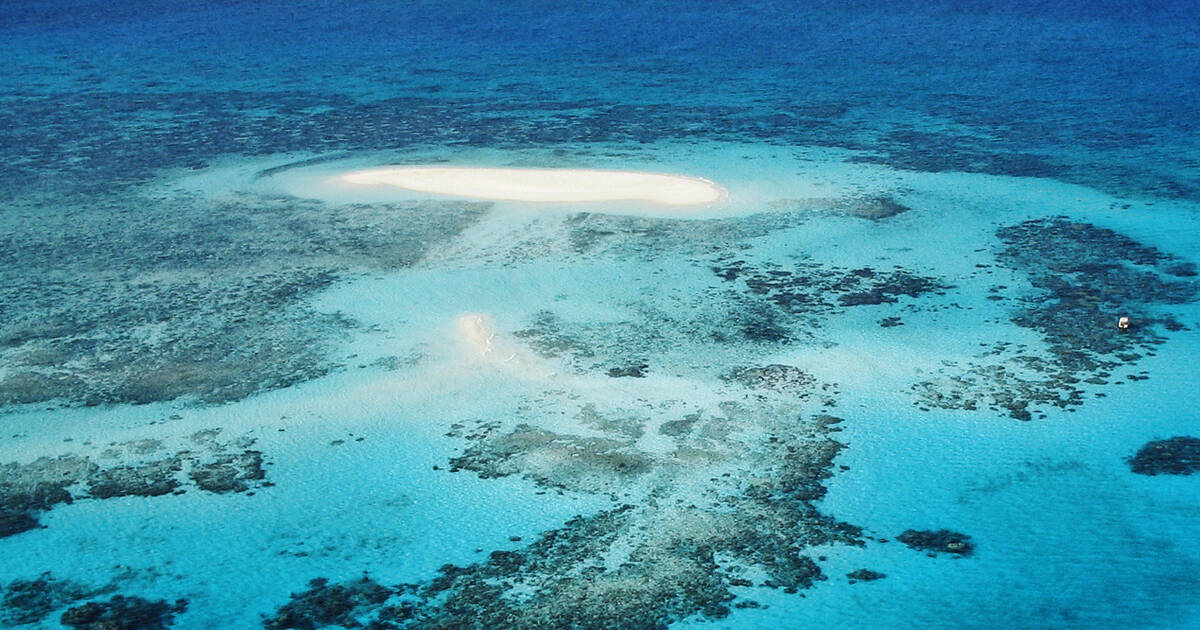
“A approuvé les expansions du port de charbon d'Abbott Point, ce qui nécessite le déversement de 3 millions de mètres cubes de sédiments de dragage sur la Grande Barrière de Corail, menaçant ainsi l'ensemble de l'industrie touristique et de l'hôtellerie du Queensland, ainsi que le statut du récif au patrimoine mondial.”
Source originale : Matthew Davis
Analysé : 3 Feb 2026

Sources originales

VÉRIFICATION FACTUELLE

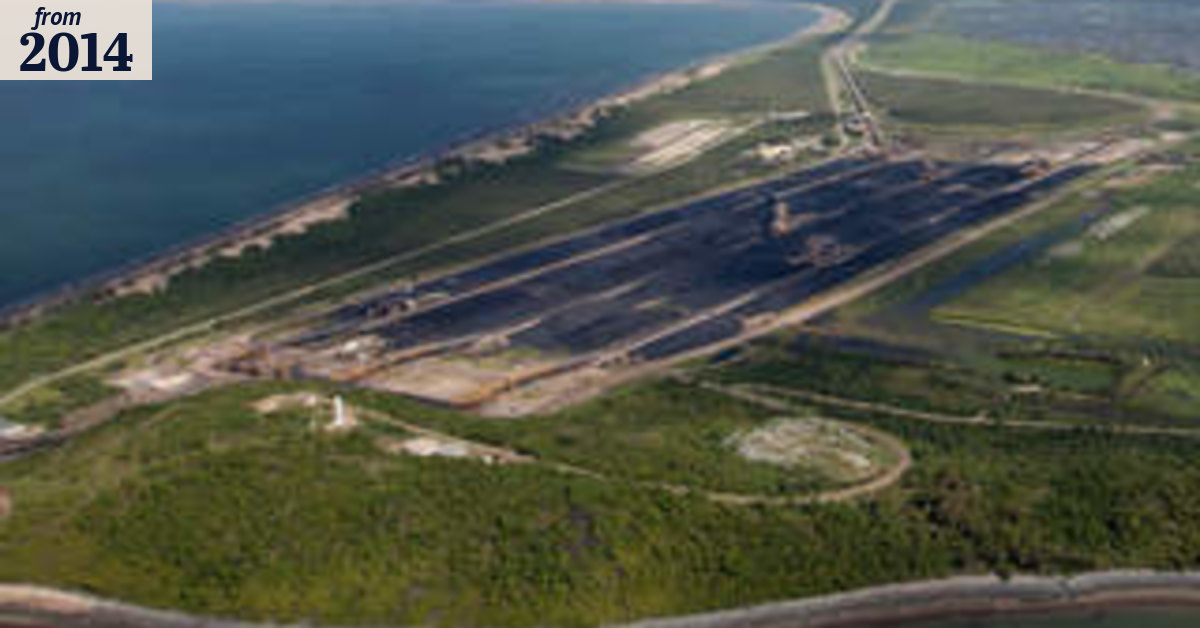
**L'approbation a bien eu lieu :** En janvier 2014, la Great Barrier Reef Marine Park Authority (Autorité du parc marin de la Grande Barrière de Corail, GBRMPA) a approuvé une proposition de déversement de 3 millions de mètres cubes de sédiments de dragage provenant de l'expansion du terminal de charbon d'Abbott Point dans le parc marin de la Grande Barrière de Corail [1].
**The approval did occur:** In January 2014, the Great Barrier Reef Marine Park Authority (GBRMPA) approved a proposal to dump 3 million cubic metres of dredge spoil from the Abbott Point coal terminal expansion within the Great Barrier Reef Marine Park [1].
Le ministre fédéral de l'Environnement, Greg Hunt, avait approuvé le projet dans son ensemble en décembre 2013 [2]. **Confusion d'unités - mètres cubes vs tonnes :** L'affirmation indique « 3 millions de tonnes » mais le volume réellement approuvé était de 3 millions de mètres cubes [1][3].
Federal Environment Minister Greg Hunt had approved the broader project in December 2013 [2]. **Unit confusion - cubic metres vs tonnes:** The claim states "3 million tonnes" but the actual approved volume was 3 million cubic metres [1][3].
Ces unités ne sont pas équivalentes.
These are not equivalent.
Les sédiments de dragage (matériaux du fond marin) ont généralement une densité d'environ 1,5 à 2,0 tonnes par mètre cube à l'état humide, ce qui signifie que 3 millions de mètres cubes pèseraient environ 4,5 à 6 millions de tonnes, et non 3 millions de tonnes [4].
Dredge spoil (seabed material) typically has a density of approximately 1.5-2.0 tonnes per cubic metre when wet, meaning 3 million cubic metres would weigh approximately 4.5-6 million tonnes, not 3 million tonnes [4].
L'affirmation sous-estime le volume en confondant les unités. **Le déversement réel n'a jamais eu lieu comme prévu :** Dans un développement significatif non mentionné dans l'affirmation, le gouvernement du Queensland a annoncé en septembre 2014 qu'il abandonnerait le plan de déversement en mer en faveur d'un déversement à terre [5][6].
The claim understates the volume by conflating units. **The actual dumping never occurred as approved:** In a significant development not mentioned in the claim, the Queensland Government announced in September 2014 that it would abandon the plan to dump dredge spoil at sea in favor of onshore dumping [5][6].
Dès novembre 2014, le gouvernement du Queensland avait approuvé un plan pour déverser le matériel sur des terrains industriels vacants plutôt que dans les eaux du récif [7].
By November 2014, the Queensland Government had endorsed a plan to dump the material on vacant industrial land rather than in reef waters [7].
La déclaration d'impact environnemental finale (2015) reflétait ce changement, impliquant le dragage de 1,1 million de mètres cubes (et non 3 millions) à placer sur des terrains industriels vacants [8].
The final Environmental Impact Statement (2015) reflected this change, involving dredging 1.1 million cubic metres (not 3 million) to be placed on vacant industrial land [8].

Contexte manquant

**Le projet a été significativement modifié :** L'affirmation présente la situation comme si 3 millions de tonnes/mètres cubes avaient réellement été déversés sur le récif.
**The project was significantly modified:** The claim presents the situation as if 3 million tonnes/cubic metres were actually dumped onto the reef.
Cependant, suite à une forte opposition publique et à des préoccupations environnementales, à la fois le volume et l'emplacement ont été modifiés.
However, following widespread public opposition and environmental concerns, both the volume and location were changed.
Le projet finalement approuvé impliquait : - Volume réduit : De 3 millions de mètres cubes à 1,1 million de mètres cubes [8] - Emplacement modifié : Du déversement marin au déversement sur des terrains industriels [6][7] **Le gouvernement du Queensland (LNP) a changé de position :** Le gouvernement Newman du LNP, initialement favorable au déversement marin, a inversé sa position fin 2014 en raison de la pression politique et des préoccupations environnementales [5][6].
The final approved project involved: - Reduced volume: From 3 million cubic metres to 1.1 million cubic metres [8] - Changed location: From marine dumping to onshore industrial land disposal [6][7] **Queensland Government (LNP) changed course:** The Newman LNP government, initially supportive of marine dumping, reversed its position in late 2014 due to political pressure and environmental concerns [5][6].
Cette réversalité est entièrement omise de l'affirmation. **Des conditions strictes ont été imposées :** L'approbation originale comprenait « 29 des conditions les plus strictes de l'histoire australienne » selon le ministère de l'Environnement [9], incluant des exigences pour un bénéfice net de 150% en qualité de l'eau et des exigences de surveillance étendues. **L'UNESCO n'a pas inscrit le récif comme étant « en danger » :** Malgré les préoccupations soulevées en 2014, l'UNESCO a différé sa décision jusqu'en 2015, et la Grande Barrière de Corail n'a pas été inscrite sur la liste du patrimoine mondial en danger à cette époque [10][11].
This reversal is entirely omitted from the claim. **Strict conditions were imposed:** The original approval included "29 of the strictest conditions in Australian history" according to the Department of Environment [9], including requirements for 150% net benefit in water quality and extensive monitoring requirements. **UNESCO did not list the reef as 'in danger':** Despite concerns raised in 2014, UNESCO deferred its decision until 2015, and the Great Barrier Reef was not placed on the World Heritage in Danger list at that time [10][11].

Évaluation de la crédibilité de la source

**Article du SMH (29 janvier 2014) :** - Auteur : Tom Arup, journaliste environnemental établi - Publication : The Sydney Morning Herald - journal australien grand public et réputé - Contenu : Rapporte sur les préoccupations des militants mais vérifie les faits de base concernant l'approbation - Limitation : Publié au début de la controverse, avant que la solution de déversement à terre ne soit proposée **Article de The Guardian (11 juillet 2014) :** - Auteur : Oliver Milman, journaliste établi de The Guardian Australia - Publication : The Guardian - média grand public et réputé international - Contenu : Rapporte sur des documents obtenus par FOIA révélant des différends sur les estimations de coûts entre le développeur et l'autorité du parc marin - Limitation : Publié en pleine controverse, ne reflète pas la réversalité politique finale Les deux sources sont des médias grand public crédibles, et non des organisations de plaidoyer partisanes.
**SMH Article (January 29, 2014):** - Author: Tom Arup, an established environment journalist - Publication: The Sydney Morning Herald - mainstream, reputable Australian newspaper - Content: Reports on activist concerns but does verify the basic facts about the approval - Limitation: Published early in the controversy, before the onshore dumping solution was proposed **The Guardian Article (July 11, 2014):** - Author: Oliver Milman, established Guardian Australia journalist - Publication: The Guardian - mainstream, reputable international outlet - Content: Reports on FOI documents revealing cost estimate disputes between the developer and marine park authority - Limitation: Published mid-controversy, doesn't reflect the eventual policy reversal Both sources are credible mainstream media outlets, not partisan advocacy organizations.
Cependant, les deux articles ont été publiés avant la décision de septembre 2014 du gouvernement du Queensland de passer au déversement à terre, ce qui signifie qu'ils présentent une image incomplète du résultat final.
However, both articles were published before the Queensland Government's September 2014 decision to move to onshore dumping, meaning they present an incomplete picture of the eventual outcome.
⚖️

Comparaison avec Labor

**Le Parti travailliste a-t-il fait quelque chose de similaire ?** Recherche effectuée : « Labor government Great Barrier Reef dredging coal port expansion Queensland » (gouvernement travailliste dragage Grande Barrière de Corail expansion port de charbon Queensland) **Constat :** Le gouvernement travailliste du Queensland (2009-2012) avait ses propres plans d'expansion portuaire.
**Did Labor do something similar?** Search conducted: "Labor government Great Barrier Reef dredging coal port expansion Queensland" **Finding:** The Queensland Labor government (2009-2012) had its own plans for port expansion.
Selon une déclaration du gouvernement du Queensland en janvier 2014, « Le volume de dragage qui aura lieu à Abbott Point dans le cadre de ce processus représente un dixième de celui proposé par l'ancien gouvernement travailliste » [12].
According to a Queensland government statement in January 2014, "The amount of dredging that will take place at Abbot Point under this process is one-tenth of that proposed by the former Labor government" [12].
Cela suggère que les travaillistes avaient envisagé des propositions de dragage significativement plus importantes pour Abbott Point. **Historique de l'expansion portuaire sous les travaillistes :** - Le gouvernement Bligh travailliste (2007-2012) avait proposé des développements dans la région du bassin de Galilée qui nécessiteraient une expansion portuaire - L'affirmation omet que les travaillistes soutenaient également le développement des ressources et les infrastructures associées - Les expansions portuaires à Hay Point et Gladstone ont été menées sous les deux gouvernements, travailliste et de la Coalition, aux niveaux étatique et fédéral **Contexte plus large :** Les expansions portuaires pour l'exportation de charbon ont été soutenues par les deux principaux partis du Queensland, car tous deux ont cherché à faciliter le développement minier dans le bassin de Galilée.
This suggests Labor had considered significantly larger dredging proposals for Abbott Point. **History of port expansion under Labor:** - The Bligh Labor government (2007-2012) had proposed developments in the Galilee Basin region that would require port expansion - The claim omits that Labor also supported resource development and associated infrastructure - Port expansions at Hay Point and Gladstone proceeded under both Labor and Coalition governments at state and federal levels **Broader context:** Port expansions for coal export have been supported by both major parties in Queensland, as both have sought to facilitate mining development in the Galilee Basin.
La différence réside principalement dans l'échelle et les conditions environnementales, et non dans la direction politique fondamentale.
The difference is primarily in scale and environmental conditions, not in fundamental policy direction.
🌐

Perspective équilibrée

**Ce que l'affirmation a de juste :** - Une approbation a effectivement été accordée en janvier 2014 pour le déversement de 3 millions de mètres cubes de sédiments de dragage dans le parc marin de la Grande Barrière de Corail [1] - Il y avait des préoccupations légitimes concernant les impacts sur le récif et l'industrie touristique [13][14] - L'UNESCO a bien exprimé des préoccupations sur le statut du récif au patrimoine mondial [10] **Ce que l'affirmation omet ou déforme :** 1. **Le déversement n'a jamais eu lieu comme décrit :** Le plan de déversement marin a été abandonné en faveur du déversement à terre [6][7] 2. **Le volume a été réduit :** Le projet final impliquait 1,1 million de mètres cubes, et non 3 millions [8] 3. **Confusion d'unités :** L'affirmation indique incorrectement « tonnes » alors que la mesure était en mètres cubes - des unités différentes avec des implications différentes 4. **Réaction du gouvernement aux critiques :** Le gouvernement du Queensland a inversé sa position suite à la levée de bouclier public, adoptant finalement une solution à terre [5][6] 5. **Conditions environnementales strictes :** L'approbation originale incluait des conditions étendues de surveillance et de compensation de qualité de l'eau [9] 6. **Historique des travaillistes :** Les gouvernements travaillistes précédents avaient envisagé des propositions de dragage encore plus importantes pour la même zone [12] **Contexte politique légitime :** - L'expansion d'Abbott Point était conçue pour faciliter les exportations de charbon du bassin de Galilée, représentant un investissement économique significatif (16,5 milliards de dollars australiens pour le seul projet Carmichael) [15] - Le projet impliquait des arbitrages complexes entre développement économique et protection environnementale - Les deux principaux partis ont historiquement soutenu le développement des ressources au Queensland
**What the claim gets right:** - An approval was indeed granted in January 2014 for 3 million cubic metres of dredge spoil dumping within the Great Barrier Reef Marine Park [1] - There were legitimate concerns about impacts on the reef and tourism industry [13][14] - UNESCO did express concerns about the reef's World Heritage status [10] **What the claim omits or misrepresents:** 1. **The dumping never happened as described:** The marine dumping plan was abandoned in favor of onshore disposal [6][7] 2. **Volume was reduced:** The final project involved 1.1 million cubic metres, not 3 million [8] 3. **Unit confusion:** The claim incorrectly states "tonnes" when the measurement was cubic metres - different units with different implications 4. **Government response to criticism:** The Queensland Government reversed its position after public outcry, eventually adopting an onshore solution [5][6] 5. **Strict environmental conditions:** The original approval included extensive conditions for monitoring and water quality offsets [9] 6. **Labor's history:** Previous Labor governments had considered even larger dredging proposals for the same area [12] **Legitimate policy context:** - The Abbott Point expansion was designed to facilitate coal exports from the Galilee Basin, representing significant economic investment ($16.5 billion for the Carmichael project alone) [15] - The project involved complex trade-offs between economic development and environmental protection - Both major parties have historically supported resource development in Queensland

TROMPEUR

3.0

sur 10

L'affirmation contient des erreurs factuelles et présente une image trompeuse de ce qui s'est réellement produit : 1. **Confusion d'unités :** « 3 millions de tonnes » est incorrect - le volume approuvé était de 3 millions de mètres cubes, qui pèseraient significativement plus (environ 4,5 à 6 millions de tonnes selon la densité).
The claim contains factual errors and presents a misleading picture of what actually occurred: 1. **Unit confusion:** "3 million tonnes" is incorrect - the approved volume was 3 million cubic metres, which would weigh significantly more (approximately 4.5-6 million tonnes depending on density).
Cela suggère que l'auteur de l'affirmation a mal compris ou déformé les unités. 2. **L'acte central n'a jamais eu lieu :** L'affirmation présente la situation comme si des sédiments de dragage avaient été déversés sur le récif.
This suggests the claim author misunderstood or misrepresented the units. 2. **The core act never happened:** The claim presents the situation as if dredge spoil was dumped on the reef.
En réalité, le plan de déversement marin a été abandonné dans les mois suivant l'approbation, remplacé par un déversement à terre sur des terrains industriels. 3. **Cadrage obsolète :** L'affirmation utilise des articles de 2014 qui précèdent la réversalité politique, présentant les approbations initiales comme des résultats finaux sans reconnaître le changement ultérieur vers le déversement à terre. 4. **Menaces exagérées :** Alors que l'UNESCO a exprimé des préoccupations, le récif n'a pas été inscrit sur la liste du patrimoine mondial en danger.
In reality, the marine dumping plan was abandoned within months of approval, replaced by onshore disposal on industrial land. 3. **Outdated framing:** The claim uses 2014 news articles that predate the policy reversal, presenting initial approvals as final outcomes without acknowledging the subsequent change to onshore dumping. 4. **Exaggerated threats:** While UNESCO did express concerns, the reef was not placed on the World Heritage in Danger list.
L'affirmation selon laquelle l'approbation « menaçait ainsi » le statut au patrimoine exagère le résultat réel.
The claim's assertion that the approval "thereby threatened" the heritage status overstates the actual outcome.
L'affirmation s'appuie sur des sources publiées avant la résolution de la controverse, créant une impression trompeuse que 3 millions de tonnes de sédiments ont réellement été déversées dans les eaux du récif, ce qui n'est pas arrivé.
The claim relies on sources published before the resolution of the controversy, creating a misleading impression that 3 million tonnes of spoil was actually dumped into reef waters when this did not occur.

📚 SOURCES ET CITATIONS (15)

  1. 1
    Abbot Point: Dredging dumping permitted within Great Barrier Reef waters

    Abbot Point: Dredging dumping permitted within Great Barrier Reef waters

    The final step to allow the dumping of millions of tonnes of dredging spoil in the Great Barrier Reef's waters has been cleared after the Authority overseeing the marine park gave its approval, subject to environmental conditions.

    The Sydney Morning Herald
  2. 2
    au.finance.yahoo.com

    Australia approves coal port expansion near Barrier Reef

    Au Finance Yahoo

  3. 3
    ibtimes.com.au

    Marine Park Authority Allows 3 Million Cubic Metres of Dredge Dumped

    Ibtimes Com

  4. 4
    cat.com

    Material Density Tables to Help Estimate Earthwork Volumes

    Cat

  5. 5
    QLD govt to pay to dump on land, not sea

    QLD govt to pay to dump on land, not sea

    The Queensland government will ask Canberra to approve a plan that will allow the dumping of dredge spoil on land instead of at sea.

    SBS News
  6. 6
    Queensland Government announces Abbot Point Terminal dumping site

    Queensland Government announces Abbot Point Terminal dumping site

    The new Queensland government has stopped the approvals process for the expansion of Abbot Point Coal Terminal, banning Adani and

    Australian Mining
  7. 7
    QLD Govt endorses plan to dump dredge spoil on land, not Great Barrier Reef

    QLD Govt endorses plan to dump dredge spoil on land, not Great Barrier Reef

    The Queensland Government has endorsed a plan to dump dredge spoil on land, rather than into the Great Barrier Reef, from the expansion of the north Queensland coal terminal at Abbot Point. Cabinet has approved the plan to reuse 3 million cubic metres of dredge spoil in a long-term land based port development strategy. It is now up to the Federal Environment Minister Greg Hunt to support and approve the proposal.

    ABC listen
  8. 8
    Abbot Point Growth Gateway Project

    Abbot Point Growth Gateway Project

    State Development, Infrastructure and Planning
  9. 9
    PDF

    Abbot Point Growth Gateway project: Fact sheet

    Dcceew Gov • PDF Document
  10. 10
    Decision on status of Australia's Great Barrier Reef deferred until 2015

    Decision on status of Australia's Great Barrier Reef deferred until 2015

    Doha, 18 June – The World Heritage Committee meeting in Doha (Qatar) today deferred for 12 months a decision on whether to inscribe Australia’s Great Barrier Reef on the List of World Heritage in ...

    UNESCO World Heritage Centre
  11. 11
    Great Barrier Reef's World Heritage status - 9News

    Great Barrier Reef's World Heritage status - 9News

    A timeline of the Great Barrier Reef's status since the natural wonder was listed as a World Heritage site ...

    9News
  12. 12
    Reef protected under Abbot Point and Arrow approvals

    Reef protected under Abbot Point and Arrow approvals

    Ministerial Media Statements
  13. 13
    Tour operators say Abbot Point decision will affect reef, tourism

    Tour operators say Abbot Point decision will affect reef, tourism

    Great Barrier Reef tour operators say a decision to allow the dumping of dredge spoil near the reef's marine park area will affect tourism in the region and Australia's international reputation. Nearly 3 million cubic meters of spoil will be tipped in an area near the marine park as part of the Abbot Point coal port expansion near Bowen after permission was granted on Friday by the Great Barrier Reef Marine Park Authority (GBRMPA) with 47 strict conditions. Scientists and conservation lobbyists had urged the rejection of the expansion arguing sediment from dredging could smother corals and seagrasses and expose them to poisons and elevated nutrients.

    Abc Net
  14. 14
    Australia: Stop Dumping on the Great Barrier Reef, Say Tourism Operators

    Australia: Stop Dumping on the Great Barrier Reef, Say Tourism Operators

    The Australian Marine Conservation Society and tourism operators called on the Federal Government to end dumping of dredge spoil in the waters of the Great Barrier Reef. The State and Federal governments have recently fast-tracked the world’s biggest coal port, less than 50kms from the Whitsunday Islands. There are more than 100 million tonnes of […]

    Dredging Today
  15. 15
    Abbot Point Port: the divisive coal project on the Great Barrier Reef

    Abbot Point Port: the divisive coal project on the Great Barrier Reef

    Australia’s ambition to build one of the world’s largest coal ports at Abbot Point has caused international uproar over the project’s perceived environmental threat. The expansion site is located in close proximity to the Great Barrier Reef, a UNESCO heritage site currently considered at risk of degradation. Despite the Australian Government’s efforts to deliver the expansion within strict environmental parameters, campaigners warn of permanent damage to the world's largest collection of coral reefs.

    Ship Technology
Méthodologie de l'échelle de notation

1-3: FAUX

Factuellement incorrect ou fabrication malveillante.

4-6: PARTIEL

Une part de vérité mais le contexte manque ou est biaisé.

7-9: MAJORITAIREMENT VRAI

Détails techniques mineurs ou problèmes de formulation.

10: EXACT

Parfaitement vérifié et contextuellement équitable.

Méthodologie: Les notations sont déterminées par recoupement des documents gouvernementaux officiels, des organisations indépendantes de vérification des faits et des documents sources primaires.