Irreführend

Bewertung: 3.0/10

Coalition
C0970

Die Behauptung

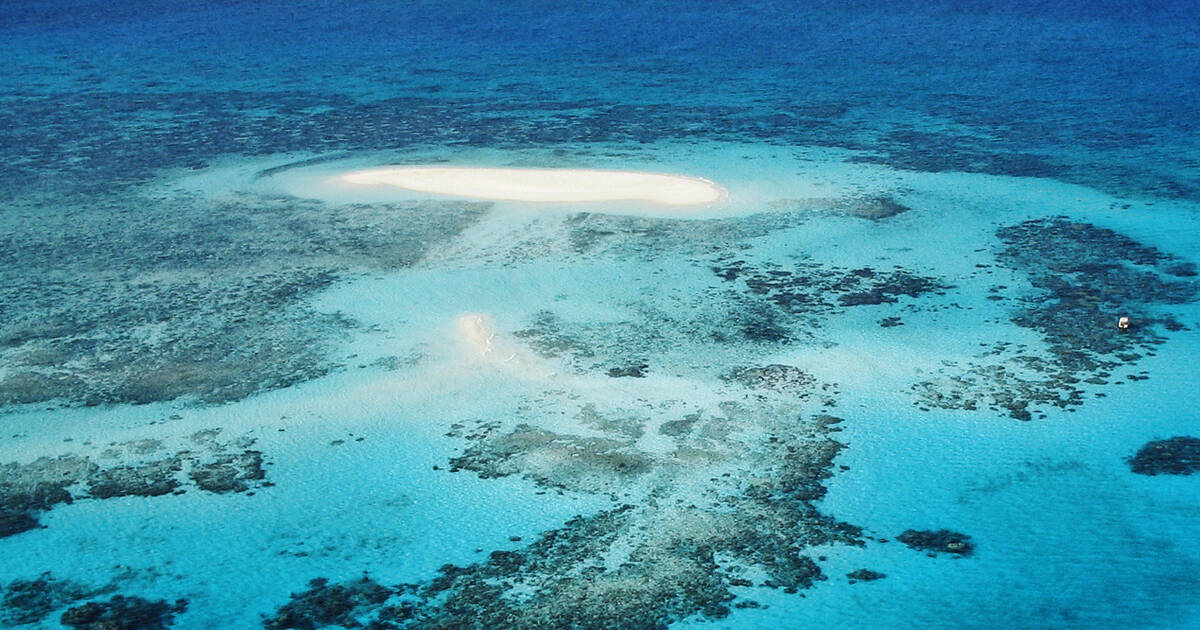
“Genehmigte die Erweiterungen für den Kohlehafen Abbott Point (Abbott Point), die eine Verklappung von 3 Millionen Tonnen Baggergut im Great Barrier Reef (Great Barrier Reef) erfordern, wodurch die gesamte Tourismusbranche und die Hotellerie Queenslands sowie der Weltkulturerbestatus des Riffs gefährdet werden.”
Originalquelle: Matthew Davis
Analysiert: 3 Feb 2026

Originalquellen

FAKTENÜBERPRÜFUNG

**Die Genehmigung erfolgte tatsächlich:** Im Januar 2014 genehmigte die Great Barrier Reef Marine Park Authority (GBRMPA) einen Vorschlag zur Verklappung von 3 Millionen Kubikmetern Baggergut aus der Erweiterung des Kohleterminals Abbott Point innerhalb des Great Barrier Reef Marine Park [1].
**The approval did occur:** In January 2014, the Great Barrier Reef Marine Park Authority (GBRMPA) approved a proposal to dump 3 million cubic metres of dredge spoil from the Abbott Point coal terminal expansion within the Great Barrier Reef Marine Park [1].
Bundesumweltminister Greg Hunt hatte das Gesamtprojekt bereits im Dezember 2013 genehmigt [2]. **Verwechslung der Einheiten Kubikmeter vs.
Federal Environment Minister Greg Hunt had approved the broader project in December 2013 [2]. **Unit confusion - cubic metres vs tonnes:** The claim states "3 million tonnes" but the actual approved volume was 3 million cubic metres [1][3].
Tonnen:** Die Behauptung nennt „3 Millionen Tonnen", doch das tatsächlich genehmigte Volumen betrug 3 Millionen Kubikmeter [1][3].
These are not equivalent.
Diese sind nicht gleichwertig.
Dredge spoil (seabed material) typically has a density of approximately 1.5-2.0 tonnes per cubic metre when wet, meaning 3 million cubic metres would weigh approximately 4.5-6 million tonnes, not 3 million tonnes [4].
Baggergut (Material vom Meeresboden) hat im feuchten Zustand typischerweise eine Dichte von etwa 1,5–2,0 Tonnen pro Kubikmeter, was bedeutet, dass 3 Millionen Kubikmeter etwa 4,5–6 Millionen Tonnen wiegen würden, nicht 3 Millionen Tonnen [4].
The claim understates the volume by conflating units. **The actual dumping never occurred as approved:** In a significant development not mentioned in the claim, the Queensland Government announced in September 2014 that it would abandon the plan to dump dredge spoil at sea in favor of onshore dumping [5][6].
Die Behauptung unterbewertet das Volumen, indem sie die Einheiten verwechselt. **Die tatsächliche Verklappung erfolgte nie wie genehmigt:** In einer bedeutenden Entwicklung, die in der Behauptung nicht erwähnt wird, gab die Regierung von Queensland im September 2014 bekannt, dass sie den Plan zur Meeresverklappung aufgeben und stattdessen zu einer Landverklappung übergehen werde [5][6].
By November 2014, the Queensland Government had endorsed a plan to dump the material on vacant industrial land rather than in reef waters [7].
Bis November 2014 hatte die Regierung von Queensland einen Plan befürwortet, das Material auf ungenutztem Industriegelände zu verklappen, anstatt es in die Gewässer des Riffs zu verbringen [7].
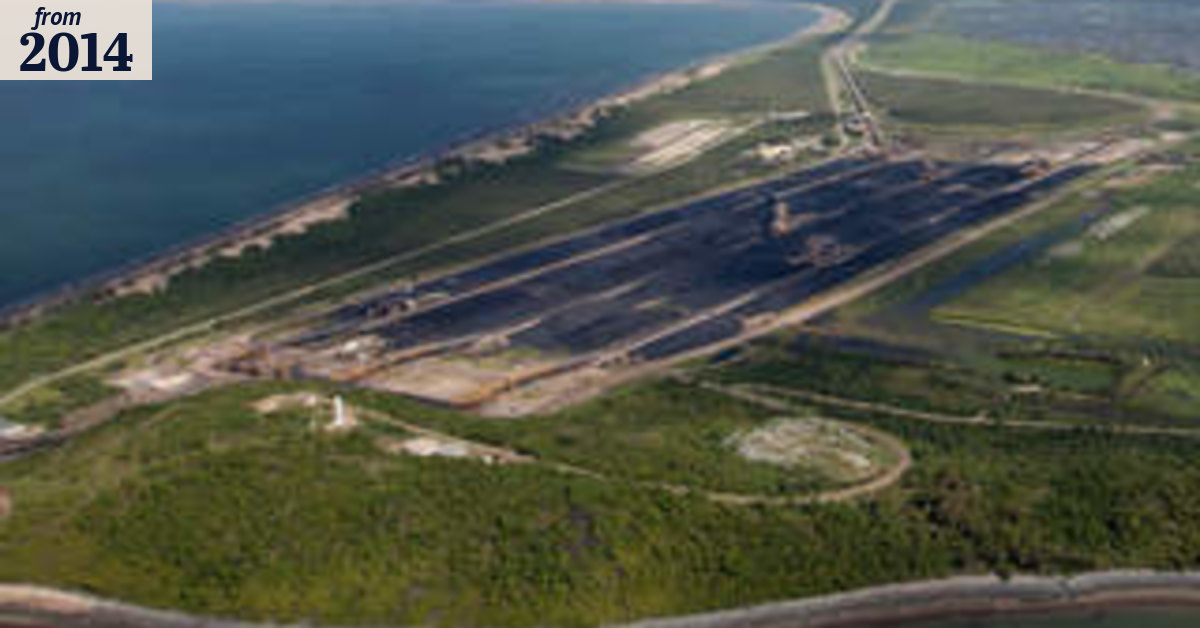
The final Environmental Impact Statement (2015) reflected this change, involving dredging 1.1 million cubic metres (not 3 million) to be placed on vacant industrial land [8].
Der finale Umweltverträglichkeitsbericht (2015) spiegelte diese Änderung wider, mit 1,1 Millionen Kubikmetern (nicht 3 Millionen), die auf ungenutztem Industriegelände verklappt werden sollten [8].

Fehlender Kontext

**Das Projekt wurde erheblich geändert:** Die Behauptung stellt die Situation so dar, als wären tatsächlich 3 Millionen Tonnen/Kubikmeter im Riff verklappt worden.
**The project was significantly modified:** The claim presents the situation as if 3 million tonnes/cubic metres were actually dumped onto the reef.
Nachdem jedoch breite öffentliche Opposition und Umweltbedenken laut geworden waren, wurden sowohl das Volumen als auch der Ort geändert.
However, following widespread public opposition and environmental concerns, both the volume and location were changed.
Das endgültig genehmigte Projekt beinhaltete: - Reduziertes Volumen: Von 3 Millionen Kubikmeter auf 1,1 Millionen Kubikmeter [8] - Geänderter Ort: Von der Meeresverklappung zur Verklappung auf Industriegelände an Land [6][7] **Die Regierung von Queensland (LNP) änderte den Kurs:** Die Newman-LNP-Regierung, die anfänglich die Meeresverklappung unterstützt hatte, kehrte ihrer Position Ende 2014 aufgrund politischen Drucks und Umweltbedenken den Rücken [5][6].
The final approved project involved: - Reduced volume: From 3 million cubic metres to 1.1 million cubic metres [8] - Changed location: From marine dumping to onshore industrial land disposal [6][7] **Queensland Government (LNP) changed course:** The Newman LNP government, initially supportive of marine dumping, reversed its position in late 2014 due to political pressure and environmental concerns [5][6].
Diese Kehrtwende wird in der Behauptung vollständig ausgelassen. **Strenge Bedingungen wurden auferlegt:** Die ursprüngliche Genehmigung beinhaltete „29 der strengsten Bedingungen in der australischen Geschichte" laut des Umweltministeriums [9], einschließlich Anforderungen an einen 150%igen Nettonutzen für die Wasserqualität und umfangreiche Überwachungsauflagen. **Die UNESCO setzte das Riff nicht auf die Liste „in Gefahr":** Trotz der 2014 geäußerten Bedenken verschob die UNESCO ihre Entscheidung bis 2015, und das Great Barrier Reef wurde zu diesem Zeitpunkt nicht auf die Liste des gefährdeten Weltkulturerbes gesetzt [10][11].
This reversal is entirely omitted from the claim. **Strict conditions were imposed:** The original approval included "29 of the strictest conditions in Australian history" according to the Department of Environment [9], including requirements for 150% net benefit in water quality and extensive monitoring requirements. **UNESCO did not list the reef as 'in danger':** Despite concerns raised in 2014, UNESCO deferred its decision until 2015, and the Great Barrier Reef was not placed on the World Heritage in Danger list at that time [10][11].

Bewertung der Quellenglaubwürdigkeit

**Artikel der SMH (29.
**SMH Article (January 29, 2014):** - Author: Tom Arup, an established environment journalist - Publication: The Sydney Morning Herald - mainstream, reputable Australian newspaper - Content: Reports on activist concerns but does verify the basic facts about the approval - Limitation: Published early in the controversy, before the onshore dumping solution was proposed **The Guardian Article (July 11, 2014):** - Author: Oliver Milman, established Guardian Australia journalist - Publication: The Guardian - mainstream, reputable international outlet - Content: Reports on FOI documents revealing cost estimate disputes between the developer and marine park authority - Limitation: Published mid-controversy, doesn't reflect the eventual policy reversal Both sources are credible mainstream media outlets, not partisan advocacy organizations.
Januar 2014):** - Autor: Tom Arup, ein etablierter Umweltjournalist - Publikation: The Sydney Morning Herald Mainstream-Zeitung mit gutem Ruf in Australien - Inhalt: Berichtet über Bedenken von Aktivisten, verifiziert aber die grundlegenden Fakten zur Genehmigung - Einschränkung: Früh in der Kontroverse veröffentlicht, bevor die Lösung für die Landverklappung vorgeschlagen wurde **Artikel des Guardian (11.
However, both articles were published before the Queensland Government's September 2014 decision to move to onshore dumping, meaning they present an incomplete picture of the eventual outcome.
Juli 2014):** - Autor: Oliver Milman, etablierter Journalist des Guardian Australia - Publikation: The Guardian Mainstream-Medium mit gutem internationalen Ruf - Inhalt: Berichtet über FOI-Dokumente, die Kosten-Schätzungsstreitigkeiten zwischen dem Entwickler und der Meeresparkbehörde offenbarten - Einschränkung: Inmitten der Kontroverse veröffentlicht, spiegelt nicht die schließliche politische Kehrtwende wider Beide Quellen sind glaubwürdige Mainstream-Medien, keine parteilichen Interessenvertretungsorganisationen.
Beide Artikel wurden jedoch vor der Entscheidung der Regierung von Queensland im September 2014 veröffentlicht, zur Landverklappung überzugehen, was bedeutet, dass sie ein unvollständiges Bild des schließlichen Ergebnisses zeichnen.
⚖️

Labor-Vergleich

**Hat die Labor-Regierung etwas Ähnliches getan?** Durchgeführte Suche: „Labor-Regierung Great Barrier Reef Baggerung Kohlehafen-Erweiterung Queensland" **Ergebnis:** Die Labor-Regierung von Queensland (2009–2012) hatte eigene Pläne für Hafenerweiterungen.
**Did Labor do something similar?** Search conducted: "Labor government Great Barrier Reef dredging coal port expansion Queensland" **Finding:** The Queensland Labor government (2009-2012) had its own plans for port expansion.
Laut einer Erklärung der Regierung von Queensland im Januar 2014 betrug „die Menge an Baggergut, die bei diesem Verfahren in Abbott Point stattfinden wird, ein Zehntel dessen, was von der ehemaligen Labor-Regierung vorgeschlagen wurde" [12].
According to a Queensland government statement in January 2014, "The amount of dredging that will take place at Abbot Point under this process is one-tenth of that proposed by the former Labor government" [12].
Dies deutet darauf hin, dass Labor sogar noch größere Baggerpläne für Abbott Point erwogen hatte. **Geschichte der Hafenerweiterung unter Labor:** - Die Bligh-Labor-Regierung (2007–2012) hatte Entwicklungen im Galilee Basin vorgeschlagen, die eine Hafenerweiterung erfordert hätten - Die Behauptung lässt aus, dass Labor ebenfalls Rohstoffentwicklung und zugehörige Infrastruktur unterstützte - Hafenerweiterungen in Hay Point und Gladstone wurden unter beiden Regierungen, Labor und Koalition, auf staatlicher und Bundesebene durchgeführt **Weiterer Kontext:** Hafenerweiterungen für Kohlexporte wurden in Queensland von beiden großen Parteien unterstützt, da beide die Bergbauentwicklung im Galilee Basin fördern wollten.
This suggests Labor had considered significantly larger dredging proposals for Abbott Point. **History of port expansion under Labor:** - The Bligh Labor government (2007-2012) had proposed developments in the Galilee Basin region that would require port expansion - The claim omits that Labor also supported resource development and associated infrastructure - Port expansions at Hay Point and Gladstone proceeded under both Labor and Coalition governments at state and federal levels **Broader context:** Port expansions for coal export have been supported by both major parties in Queensland, as both have sought to facilitate mining development in the Galilee Basin.
Der Unterschied liegt primär in der Größenordnung und den Umweltauflagen, nicht in der grundsätzlichen politischen Ausrichtung.
The difference is primarily in scale and environmental conditions, not in fundamental policy direction.
🌐

Ausgewogene Perspektive

**Was die Behauptung richtig darstellt:** - Eine Genehmigung wurde tatsächlich im Januar 2014 für die Verklappung von 3 Millionen Kubikmetern Baggergut innerhalb des Great Barrier Reef Marine Park erteilt [1] - Es gab berechtigte Bedenken hinsichtlich der Auswirkungen auf das Riff und die Tourismusbranche [13][14] - Die UNESCO äußerte tatsächlich Bedenken bezüglich des Weltkulturerbestatus des Riffs [10] **Was die Behauptung auslässt oder falsch darstellt:** 1. **Die Verklappung geschah nie wie beschrieben:** Der Plan zur Meeresverklappung wurde zugunsten einer Landverklappung aufgegeben [6][7] 2. **Das Volumen wurde reduziert:** Das endgültige Projekt umfasste 1,1 Millionen Kubikmeter, nicht 3 Millionen [8] 3. **Verwechslung der Einheiten:** Die Behauptung nennt fälschlicherweise „Tonnen", während es sich um Kubikmeter handelte verschiedene Einheiten mit verschiedenen Implikationen 4. **Reaktion der Regierung auf Kritik:** Die Regierung von Queensland kehrte ihrer Position nach öffentlichem Aufruhr den Rücken und verabschiedete schließlich eine Lösung für die Landverklappung [5][6] 5. **Strenge Umweltauflagen:** Die ursprüngliche Genehmigung beinhaltete umfangreiche Bedingungen für Überwachung und Kompensationen für die Wasserqualität [9] 6. **Labors Geschichte:** Frühere Labor-Regierungen hatten sogar noch größere Baggerpläne für denselben Bereich erwogen [12] **Legitimer politischer Kontext:** - Die Erweiterung von Abbott Point sollte den Kohlexport aus dem Galilee Basin ermöglichen, was eine erhebliche wirtschaftliche Investition darstellte (allein 16,5 Milliarden Australische Dollar für das Carmichael-Projekt) [15] - Das Projekt beinhaltete komplexe Abwägungen zwischen wirtschaftlicher Entwicklung und Umweltschutz - Beide großen Parteien haben historisch die Rohstoffentwicklung in Queensland unterstützt
**What the claim gets right:** - An approval was indeed granted in January 2014 for 3 million cubic metres of dredge spoil dumping within the Great Barrier Reef Marine Park [1] - There were legitimate concerns about impacts on the reef and tourism industry [13][14] - UNESCO did express concerns about the reef's World Heritage status [10] **What the claim omits or misrepresents:** 1. **The dumping never happened as described:** The marine dumping plan was abandoned in favor of onshore disposal [6][7] 2. **Volume was reduced:** The final project involved 1.1 million cubic metres, not 3 million [8] 3. **Unit confusion:** The claim incorrectly states "tonnes" when the measurement was cubic metres - different units with different implications 4. **Government response to criticism:** The Queensland Government reversed its position after public outcry, eventually adopting an onshore solution [5][6] 5. **Strict environmental conditions:** The original approval included extensive conditions for monitoring and water quality offsets [9] 6. **Labor's history:** Previous Labor governments had considered even larger dredging proposals for the same area [12] **Legitimate policy context:** - The Abbott Point expansion was designed to facilitate coal exports from the Galilee Basin, representing significant economic investment ($16.5 billion for the Carmichael project alone) [15] - The project involved complex trade-offs between economic development and environmental protection - Both major parties have historically supported resource development in Queensland

IRREFÜHREND

3.0

von 10

Die Behauptung enthält sachliche Fehler und zeichnet ein irreführendes Bild dessen, was tatsächlich geschah: 1. **Verwechslung der Einheiten:** „3 Millionen Tonnen" ist falsch das genehmigte Volumen betrug 3 Millionen Kubikmeter, was deutlich mehr wiegen würde (etwa 4,5–6 Millionen Tonnen je nach Dichte).
The claim contains factual errors and presents a misleading picture of what actually occurred: 1. **Unit confusion:** "3 million tonnes" is incorrect - the approved volume was 3 million cubic metres, which would weigh significantly more (approximately 4.5-6 million tonnes depending on density).
Dies deutet darauf hin, dass der Verfasser der Behauptung die Einheiten missverstanden oder falsch dargestellt hat. 2. **Der Kern der Behauptung ist nie eingetreten:** Die Behauptung stellt die Situation so dar, als wäre Baggergut im Riff verklappt worden.
This suggests the claim author misunderstood or misrepresented the units. 2. **The core act never happened:** The claim presents the situation as if dredge spoil was dumped on the reef.
In Wirklichkeit wurde der Plan zur Meeresverklappung innerhalb weniger Monate nach der Genehmigung aufgegeben und durch eine Landverklappung ersetzt. 3. **Veraltete Darstellung:** Die Behauptung verwendet Artikel aus dem Jahr 2014, die vor der politischen Kehrtwende veröffentlicht wurden, und stellt die ursprünglichen Genehmigungen als Endergebnisse dar, ohne die spätere Änderung zur Landverklappung zu berücksichtigen. 4. **Übertriebene Bedrohungen:** Während die UNESCO Bedenken äußerte, wurde das Riff nicht auf die Liste des gefährdeten Weltkulturerbes gesetzt.
In reality, the marine dumping plan was abandoned within months of approval, replaced by onshore disposal on industrial land. 3. **Outdated framing:** The claim uses 2014 news articles that predate the policy reversal, presenting initial approvals as final outcomes without acknowledging the subsequent change to onshore dumping. 4. **Exaggerated threats:** While UNESCO did express concerns, the reef was not placed on the World Heritage in Danger list.
Die Behauptung, die Genehmigung habe „dadurch" den Weltkulturerbestatus gefährdet, übertreibt das tatsächliche Ergebnis.
The claim's assertion that the approval "thereby threatened" the heritage status overstates the actual outcome.
Die Behauptung stützt sich auf Quellen, die vor der Beilegung der Kontroverse veröffentlicht wurden, und erweckt den falschen Eindruck, dass 3 Millionen Tonnen Baggergut tatsächlich in die Riffgewässer verklappt wurden, was nicht der Fall ist.
The claim relies on sources published before the resolution of the controversy, creating a misleading impression that 3 million tonnes of spoil was actually dumped into reef waters when this did not occur.

📚 QUELLEN UND ZITATE (15)

  1. 1
    Abbot Point: Dredging dumping permitted within Great Barrier Reef waters

    Abbot Point: Dredging dumping permitted within Great Barrier Reef waters

    The final step to allow the dumping of millions of tonnes of dredging spoil in the Great Barrier Reef's waters has been cleared after the Authority overseeing the marine park gave its approval, subject to environmental conditions.

    The Sydney Morning Herald
  2. 2
    au.finance.yahoo.com

    Australia approves coal port expansion near Barrier Reef

    Au Finance Yahoo

  3. 3
    ibtimes.com.au

    Marine Park Authority Allows 3 Million Cubic Metres of Dredge Dumped

    Ibtimes Com

  4. 4
    cat.com

    Material Density Tables to Help Estimate Earthwork Volumes

    Cat

  5. 5
    QLD govt to pay to dump on land, not sea

    QLD govt to pay to dump on land, not sea

    The Queensland government will ask Canberra to approve a plan that will allow the dumping of dredge spoil on land instead of at sea.

    SBS News
  6. 6
    Queensland Government announces Abbot Point Terminal dumping site

    Queensland Government announces Abbot Point Terminal dumping site

    The new Queensland government has stopped the approvals process for the expansion of Abbot Point Coal Terminal, banning Adani and

    Australian Mining
  7. 7
    QLD Govt endorses plan to dump dredge spoil on land, not Great Barrier Reef

    QLD Govt endorses plan to dump dredge spoil on land, not Great Barrier Reef

    The Queensland Government has endorsed a plan to dump dredge spoil on land, rather than into the Great Barrier Reef, from the expansion of the north Queensland coal terminal at Abbot Point. Cabinet has approved the plan to reuse 3 million cubic metres of dredge spoil in a long-term land based port development strategy. It is now up to the Federal Environment Minister Greg Hunt to support and approve the proposal.

    ABC listen
  8. 8
    Abbot Point Growth Gateway Project

    Abbot Point Growth Gateway Project

    State Development, Infrastructure and Planning
  9. 9
    PDF

    Abbot Point Growth Gateway project: Fact sheet

    Dcceew Gov • PDF Document
  10. 10
    Decision on status of Australia's Great Barrier Reef deferred until 2015

    Decision on status of Australia's Great Barrier Reef deferred until 2015

    Doha, 18 June – The World Heritage Committee meeting in Doha (Qatar) today deferred for 12 months a decision on whether to inscribe Australia’s Great Barrier Reef on the List of World Heritage in ...

    UNESCO World Heritage Centre
  11. 11
    Great Barrier Reef's World Heritage status - 9News

    Great Barrier Reef's World Heritage status - 9News

    A timeline of the Great Barrier Reef's status since the natural wonder was listed as a World Heritage site ...

    9News
  12. 12
    Reef protected under Abbot Point and Arrow approvals

    Reef protected under Abbot Point and Arrow approvals

    Ministerial Media Statements
  13. 13
    Tour operators say Abbot Point decision will affect reef, tourism

    Tour operators say Abbot Point decision will affect reef, tourism

    Great Barrier Reef tour operators say a decision to allow the dumping of dredge spoil near the reef's marine park area will affect tourism in the region and Australia's international reputation. Nearly 3 million cubic meters of spoil will be tipped in an area near the marine park as part of the Abbot Point coal port expansion near Bowen after permission was granted on Friday by the Great Barrier Reef Marine Park Authority (GBRMPA) with 47 strict conditions. Scientists and conservation lobbyists had urged the rejection of the expansion arguing sediment from dredging could smother corals and seagrasses and expose them to poisons and elevated nutrients.

    Abc Net
  14. 14
    Australia: Stop Dumping on the Great Barrier Reef, Say Tourism Operators

    Australia: Stop Dumping on the Great Barrier Reef, Say Tourism Operators

    The Australian Marine Conservation Society and tourism operators called on the Federal Government to end dumping of dredge spoil in the waters of the Great Barrier Reef. The State and Federal governments have recently fast-tracked the world’s biggest coal port, less than 50kms from the Whitsunday Islands. There are more than 100 million tonnes of […]

    Dredging Today
  15. 15
    Abbot Point Port: the divisive coal project on the Great Barrier Reef

    Abbot Point Port: the divisive coal project on the Great Barrier Reef

    Australia’s ambition to build one of the world’s largest coal ports at Abbot Point has caused international uproar over the project’s perceived environmental threat. The expansion site is located in close proximity to the Great Barrier Reef, a UNESCO heritage site currently considered at risk of degradation. Despite the Australian Government’s efforts to deliver the expansion within strict environmental parameters, campaigners warn of permanent damage to the world's largest collection of coral reefs.

    Ship Technology
Bewertungsskala-Methodik

1-3: FALSCH

Sachlich falsch oder böswillige Fälschung.

4-6: TEILWEISE

Etwas Wahrheit, aber Kontext fehlt oder ist verzerrt.

7-9: GRÖSSTENTEILS WAHR

Kleine technische Details oder Formulierungsprobleme.

10: KORREKT

Perfekt verifiziert und kontextuell fair.

Methodik: Bewertungen werden durch Abgleich offizieller Regierungsdokumente, unabhängiger Faktenprüfungsorganisationen und Primärquellendokumente bestimmt.