Engañoso

Calificación: 3.0/10

Coalition
C0970

La Afirmación

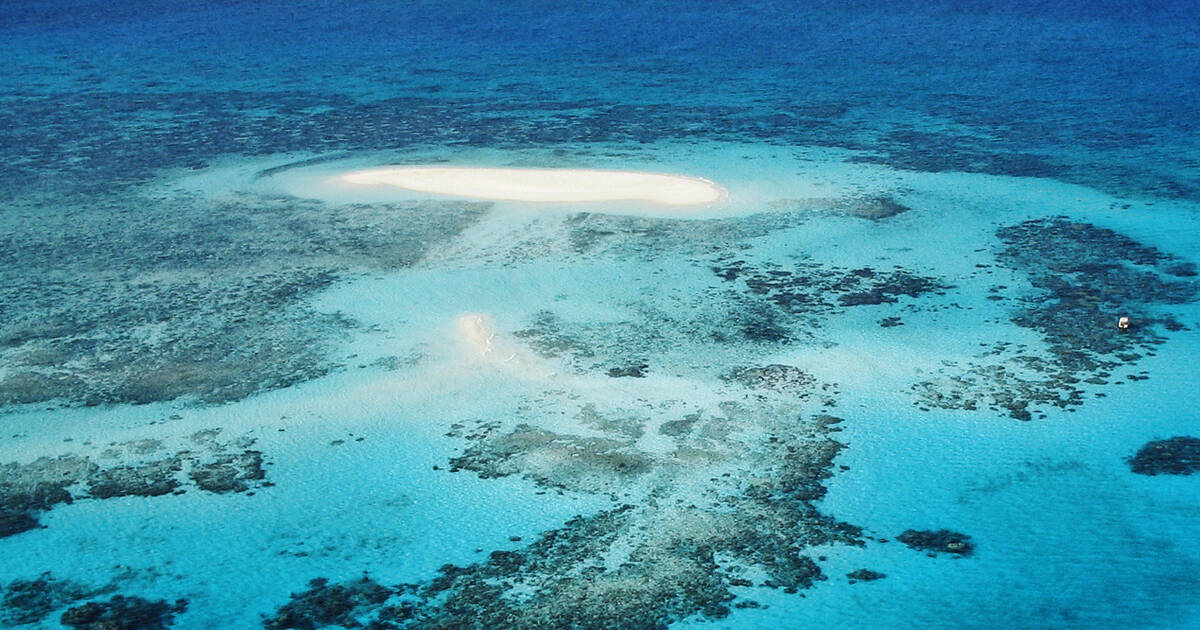
“Se aprobaron las expansiones del puerto de carbón de Abbott Point, lo cual requiere verter 3 millones de toneladas de material de dragado en la Gran Barrera de Coral, amenazando así toda la industria turística y la industria hotelera de Queensland, así como la condición de patrimonio del arrecife.”
Fuente Original: Matthew Davis
Analizado: 3 Feb 2026

Fuentes Originales

VERIFICACIÓN DE HECHOS

**La aprobación ocurrió:** En enero de 2014, la Autoridad del Parque Marino de la Gran Barrera de Coral (GBRMPA, por sus siglas en inglés) aprobó una propuesta para verter 3 millones de metros cúbicos de material de dragado proveniente de la expansión del terminal de carbón de Abbott Point dentro del Parque Marino de la Gran Barrera de Coral [1].
**The approval did occur:** In January 2014, the Great Barrier Reef Marine Park Authority (GBRMPA) approved a proposal to dump 3 million cubic metres of dredge spoil from the Abbott Point coal terminal expansion within the Great Barrier Reef Marine Park [1].
El Ministro de Medio Ambiente federal Greg Hunt había aprobado el proyecto más amplio en diciembre de 2013 [2]. **Confusión de unidades - metros cúbicos vs toneladas:** La afirmación menciona "3 millones de toneladas" pero el volumen real aprobado fue de 3 millones de metros cúbicos [1][3].
Federal Environment Minister Greg Hunt had approved the broader project in December 2013 [2]. **Unit confusion - cubic metres vs tonnes:** The claim states "3 million tonnes" but the actual approved volume was 3 million cubic metres [1][3].
Estos no son equivalentes.
These are not equivalent.
El material de dragado (sedimento del fondo marino) típicamente tiene una densidad de aproximadamente 1,5-2,0 toneladas por metro cúbico cuando está húmedo, lo que significa que 3 millones de metros cúbicos pesarían aproximadamente 4,5-6 millones de toneladas, no 3 millones de toneladas [4].
Dredge spoil (seabed material) typically has a density of approximately 1.5-2.0 tonnes per cubic metre when wet, meaning 3 million cubic metres would weigh approximately 4.5-6 million tonnes, not 3 million tonnes [4].
La afirmación subestima el volumen al confundir las unidades. **El vertido real nunca ocurrió como se aprobó:** En un desarrollo significativo no mencionado en la afirmación, el Gobierno de Queensland anunció en septiembre de 2014 que abandonaría el plan de verter material de dragado en el mar en favor del vertido en tierra firme [5][6].
The claim understates the volume by conflating units. **The actual dumping never occurred as approved:** In a significant development not mentioned in the claim, the Queensland Government announced in September 2014 that it would abandon the plan to dump dredge spoil at sea in favor of onshore dumping [5][6].
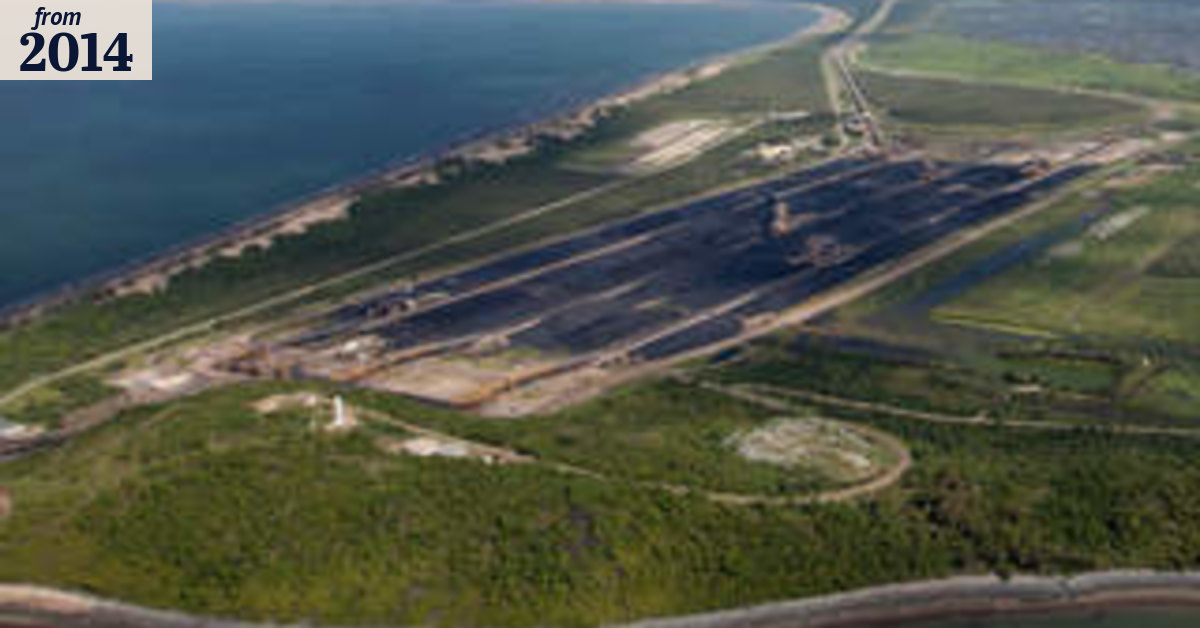
Para noviembre de 2014, el Gobierno de Queensland había respaldado un plan para verter el material en terrenos industriales vacantes en lugar de en las aguas del arrecife [7].
By November 2014, the Queensland Government had endorsed a plan to dump the material on vacant industrial land rather than in reef waters [7].
La Declaración de Impacto Ambiental final (2015) reflejó este cambio, involucrando el dragado de 1,1 millones de metros cúbicos (no 3 millones) para ser colocados en terrenos industriales vacantes [8].
The final Environmental Impact Statement (2015) reflected this change, involving dredging 1.1 million cubic metres (not 3 million) to be placed on vacant industrial land [8].

Contexto Faltante

**El proyecto fue modificado significativamente:** La afirmación presenta la situación como si se hubieran vertido 3 millones de toneladas/metros cúbicos en el arrecife.
**The project was significantly modified:** The claim presents the situation as if 3 million tonnes/cubic metres were actually dumped onto the reef.
Sin embargo, tras la amplia oposición pública y las preocupaciones ambientales, tanto el volumen como la ubicación fueron modificados.
However, following widespread public opposition and environmental concerns, both the volume and location were changed.
El proyecto finalmente aprobado involucró: - Volumen reducido: De 3 millones de metros cúbicos a 1,1 millones de metros cúbicos [8] - Ubicación modificada: Del vertido marino al desecho en tierras industriales [6][7] **El Gobierno de Queensland (LNP) cambió de posición:** El gobierno LNP de Newman, inicialmente partidario del vertido marino, invirtió su posición a finales de 2014 debido a la presión política y las preocupaciones ambientales [5][6].
The final approved project involved: - Reduced volume: From 3 million cubic metres to 1.1 million cubic metres [8] - Changed location: From marine dumping to onshore industrial land disposal [6][7] **Queensland Government (LNP) changed course:** The Newman LNP government, initially supportive of marine dumping, reversed its position in late 2014 due to political pressure and environmental concerns [5][6].
Esta reversión se omite por completo en la afirmación. **Se impusieron condiciones estrictas:** La aprobación original incluyó "29 de las condiciones más estrictas en la historia de Australia" según el Departamento de Medio Ambiente [9], incluyendo requisitos de beneficio neto del 150% en calidad del agua y extensos requisitos de monitoreo. **La UNESCO no incluyó al arrecife como 'en peligro':** A pesar de las preocupaciones planteadas en 2014, la UNESCO aplazó su decisión hasta 2015, y la Gran Barrera de Coral no fue incluida en la Lista del Patrimonio Mundial en Peligro en ese momento [10][11].
This reversal is entirely omitted from the claim. **Strict conditions were imposed:** The original approval included "29 of the strictest conditions in Australian history" according to the Department of Environment [9], including requirements for 150% net benefit in water quality and extensive monitoring requirements. **UNESCO did not list the reef as 'in danger':** Despite concerns raised in 2014, UNESCO deferred its decision until 2015, and the Great Barrier Reef was not placed on the World Heritage in Danger list at that time [10][11].

Evaluación de Credibilidad de Fuente

**Artículo de SMH (29 de enero de 2014):** - Autor: Tom Arup, periodista de medio ambiente establecido - Publicación: The Sydney Morning Herald - periódico australiano convencional y de buena reputación - Contenido: Informa sobre las preocupaciones de activistas pero verifica los hechos básicos sobre la aprobación - Limitación: Publicado al inicio de la controversia, antes de que se propusiera la solución de vertido en tierra firme **Artículo de The Guardian (11 de julio de 2014):** - Autor: Oliver Milman, periodista establecido de The Guardian Australia - Publicación: The Guardian - medio internacional convencional y de buena reputación - Contenido: Informa sobre documentos de libertad de información que revelan disputas de estimación de costos entre el desarrollador y la autoridad del parque marino - Limitación: Publicado en medio de la controversia, no refleja la eventual reversión de la política Ambas fuentes son medios convencionales de buena reputación, no organizaciones de promoción partidistas.
**SMH Article (January 29, 2014):** - Author: Tom Arup, an established environment journalist - Publication: The Sydney Morning Herald - mainstream, reputable Australian newspaper - Content: Reports on activist concerns but does verify the basic facts about the approval - Limitation: Published early in the controversy, before the onshore dumping solution was proposed **The Guardian Article (July 11, 2014):** - Author: Oliver Milman, established Guardian Australia journalist - Publication: The Guardian - mainstream, reputable international outlet - Content: Reports on FOI documents revealing cost estimate disputes between the developer and marine park authority - Limitation: Published mid-controversy, doesn't reflect the eventual policy reversal Both sources are credible mainstream media outlets, not partisan advocacy organizations.
Sin embargo, ambos artículos fueron publicados antes de la decisión de septiembre de 2014 del Gobierno de Queensland de cambiar al vertido en tierra firme, lo que significa que presentan una imagen incompleta del resultado eventual.
However, both articles were published before the Queensland Government's September 2014 decision to move to onshore dumping, meaning they present an incomplete picture of the eventual outcome.
⚖️

Comparación con Labor

**¿Hizo algo similar el Laborista?** Búsqueda realizada: "Gobierno Laborista Gran Barrera de Coral dragado expansión puerto de carbón Queensland" **Hallazgo:** El gobierno Laborista de Queensland (2009-2012) tenía sus propios planes para la expansión del puerto.
**Did Labor do something similar?** Search conducted: "Labor government Great Barrier Reef dredging coal port expansion Queensland" **Finding:** The Queensland Labor government (2009-2012) had its own plans for port expansion.
Según un comunicado del gobierno de Queensland en enero de 2014, "La cantidad de dragado que se llevará a cabo en Abbot Point bajo este proceso es una décima parte de la propuesta del anterior gobierno Laborista" [12].
According to a Queensland government statement in January 2014, "The amount of dredging that will take place at Abbot Point under this process is one-tenth of that proposed by the former Labor government" [12].
Esto sugiere que el Laborista había considerado propuestas significativamente mayores de dragado para Abbott Point. **Historia de la expansión del puerto bajo el Laborista:** - El gobierno Laborista de Bligh (2007-2012) había propuesto desarrollos en la región de la Cuenca Galilee que requerirían expansión del puerto - La afirmación omite que el Laborista también apoyaba el desarrollo de recursos y la infraestructura asociada - Las expansiones de puertos en Hay Point y Gladstone avanzaron bajo gobiernos tanto del Laborista como de la Coalición a nivel estatal y federal **Contexto más amplio:** Las expansiones de puertos para la exportación de carbón han sido apoyadas por ambos principales partidos en Queensland, ya que ambos buscaron facilitar el desarrollo minero en la Cuenca Galilee.
This suggests Labor had considered significantly larger dredging proposals for Abbott Point. **History of port expansion under Labor:** - The Bligh Labor government (2007-2012) had proposed developments in the Galilee Basin region that would require port expansion - The claim omits that Labor also supported resource development and associated infrastructure - Port expansions at Hay Point and Gladstone proceeded under both Labor and Coalition governments at state and federal levels **Broader context:** Port expansions for coal export have been supported by both major parties in Queensland, as both have sought to facilitate mining development in the Galilee Basin.
La diferencia es principalmente en escala y condiciones ambientales, no en la dirección política fundamental.
The difference is primarily in scale and environmental conditions, not in fundamental policy direction.
🌐

Perspectiva Equilibrada

**Lo que la afirmación acierta:** - Una aprobación se concedió efectivamente en enero de 2014 para verter 3 millones de metros cúbicos de material de dragado dentro del Parque Marino de la Gran Barrera de Coral [1] - Existían preocupaciones legítimas sobre los impactos en el arrecife y la industria turística [13][14] - La UNESCO expresó preocupaciones sobre el estatus de Patrimonio Mundial del arrecife [10] **Lo que la afirmación omite o tergiversa:** 1. **El vertido nunca ocurrió como se describe:** El plan de vertido marino fue abandonado en favor del desecho en tierra firme [6][7] 2. **El volumen fue reducido:** El proyecto final involucró 1,1 millones de metros cúgicos, no 3 millones [8] 3. **Confusión de unidades:** La afirmación incorrectamente menciona "toneladas" cuando la medida era metros cúbicos - unidades diferentes con implicaciones diferentes 4. **Respuesta del gobierno ante las críticas:** El Gobierno de Queensland invirtió su posición tras la protesta pública, adoptando finalmente una solución en tierra firme [5][6] 5. **Estrictas condiciones ambientales:** La aprobación original incluía extensas condiciones para monitoreo y compensaciones de calidad del agua [9] 6. **Historia del Laborista:** Gobiernos Laboristas anteriores habían considerado propuestas aún mayores de dragado para la misma área [12] **Contexto legítimo de la política:** - La expansión de Abbott Point fue diseñada para facilitar las exportaciones de carbón de la Cuenca Galilee, representando una inversión económica significativa (16.500 millones de dólares australianos solo para el proyecto Carmichael) [15] - El proyecto involucró complejos equilibrios entre desarrollo económico y protección ambiental - Ambos partidos principales históricamente han apoyado el desarrollo de recursos en Queensland
**What the claim gets right:** - An approval was indeed granted in January 2014 for 3 million cubic metres of dredge spoil dumping within the Great Barrier Reef Marine Park [1] - There were legitimate concerns about impacts on the reef and tourism industry [13][14] - UNESCO did express concerns about the reef's World Heritage status [10] **What the claim omits or misrepresents:** 1. **The dumping never happened as described:** The marine dumping plan was abandoned in favor of onshore disposal [6][7] 2. **Volume was reduced:** The final project involved 1.1 million cubic metres, not 3 million [8] 3. **Unit confusion:** The claim incorrectly states "tonnes" when the measurement was cubic metres - different units with different implications 4. **Government response to criticism:** The Queensland Government reversed its position after public outcry, eventually adopting an onshore solution [5][6] 5. **Strict environmental conditions:** The original approval included extensive conditions for monitoring and water quality offsets [9] 6. **Labor's history:** Previous Labor governments had considered even larger dredging proposals for the same area [12] **Legitimate policy context:** - The Abbott Point expansion was designed to facilitate coal exports from the Galilee Basin, representing significant economic investment ($16.5 billion for the Carmichael project alone) [15] - The project involved complex trade-offs between economic development and environmental protection - Both major parties have historically supported resource development in Queensland

ENGAÑOSO

3.0

/ 10

La afirmación contiene errores factuales y presenta una imagen engañosa de lo que realmente ocurrió: 1. **Confusión de unidades:** "3 millones de toneladas" es incorrecto - el volumen aprobado fue de 3 millones de metros cúbicos, que pesaría significativamente más (aproximadamente 4,5-6 millones de toneladas dependiendo de la densidad).
The claim contains factual errors and presents a misleading picture of what actually occurred: 1. **Unit confusion:** "3 million tonnes" is incorrect - the approved volume was 3 million cubic metres, which would weigh significantly more (approximately 4.5-6 million tonnes depending on density).
Esto sugiere que el autor de la afirmación no entendió o tergiversó las unidades. 2. **El acto principal nunca ocurrió:** La afirmación presenta la situación como si el material de dragado se hubiera vertido en el arrecife.
This suggests the claim author misunderstood or misrepresented the units. 2. **The core act never happened:** The claim presents the situation as if dredge spoil was dumped on the reef.
En realidad, el plan de vertido marino fue abandonado dentro de meses de la aprobación, reemplazado por el desecho en tierra firme en terrenos industriales. 3. **Enfoque desactualizado:** La afirmación utiliza artículos de 2014 que son anteriores a la reversión de la política, presentando aprobaciones iniciales como resultados finales sin reconocer el cambio posterior al vertido en tierra firme. 4. **Amenazas exageradas:** Si bien la UNESCO expresó preocupaciones, el arrecife no fue incluido en la Lista del Patrimonio Mundial en Peligro.
In reality, the marine dumping plan was abandoned within months of approval, replaced by onshore disposal on industrial land. 3. **Outdated framing:** The claim uses 2014 news articles that predate the policy reversal, presenting initial approvals as final outcomes without acknowledging the subsequent change to onshore dumping. 4. **Exaggerated threats:** While UNESCO did express concerns, the reef was not placed on the World Heritage in Danger list.
La afirmación de que la aprobación "amenazó así" el estatus de patrimonio exagera el resultado real.
The claim's assertion that the approval "thereby threatened" the heritage status overstates the actual outcome.
La afirmación se basa en fuentes publicadas antes de la resolución de la controversia, creando una impresión engañosa de que 3 millones de toneladas de material de desecho fueron realmente vertidas en las aguas del arrecife, cuando esto no ocurrió.
The claim relies on sources published before the resolution of the controversy, creating a misleading impression that 3 million tonnes of spoil was actually dumped into reef waters when this did not occur.

📚 FUENTES Y CITAS (15)

  1. 1
    Abbot Point: Dredging dumping permitted within Great Barrier Reef waters

    Abbot Point: Dredging dumping permitted within Great Barrier Reef waters

    The final step to allow the dumping of millions of tonnes of dredging spoil in the Great Barrier Reef's waters has been cleared after the Authority overseeing the marine park gave its approval, subject to environmental conditions.

    The Sydney Morning Herald
  2. 2
    au.finance.yahoo.com

    Australia approves coal port expansion near Barrier Reef

    Au Finance Yahoo

  3. 3
    ibtimes.com.au

    Marine Park Authority Allows 3 Million Cubic Metres of Dredge Dumped

    Ibtimes Com

  4. 4
    cat.com

    Material Density Tables to Help Estimate Earthwork Volumes

    Cat

  5. 5
    QLD govt to pay to dump on land, not sea

    QLD govt to pay to dump on land, not sea

    The Queensland government will ask Canberra to approve a plan that will allow the dumping of dredge spoil on land instead of at sea.

    SBS News
  6. 6
    Queensland Government announces Abbot Point Terminal dumping site

    Queensland Government announces Abbot Point Terminal dumping site

    The new Queensland government has stopped the approvals process for the expansion of Abbot Point Coal Terminal, banning Adani and

    Australian Mining
  7. 7
    QLD Govt endorses plan to dump dredge spoil on land, not Great Barrier Reef

    QLD Govt endorses plan to dump dredge spoil on land, not Great Barrier Reef

    The Queensland Government has endorsed a plan to dump dredge spoil on land, rather than into the Great Barrier Reef, from the expansion of the north Queensland coal terminal at Abbot Point. Cabinet has approved the plan to reuse 3 million cubic metres of dredge spoil in a long-term land based port development strategy. It is now up to the Federal Environment Minister Greg Hunt to support and approve the proposal.

    ABC listen
  8. 8
    Abbot Point Growth Gateway Project

    Abbot Point Growth Gateway Project

    State Development, Infrastructure and Planning
  9. 9
    PDF

    Abbot Point Growth Gateway project: Fact sheet

    Dcceew Gov • PDF Document
  10. 10
    Decision on status of Australia's Great Barrier Reef deferred until 2015

    Decision on status of Australia's Great Barrier Reef deferred until 2015

    Doha, 18 June – The World Heritage Committee meeting in Doha (Qatar) today deferred for 12 months a decision on whether to inscribe Australia’s Great Barrier Reef on the List of World Heritage in ...

    UNESCO World Heritage Centre
  11. 11
    Great Barrier Reef's World Heritage status - 9News

    Great Barrier Reef's World Heritage status - 9News

    A timeline of the Great Barrier Reef's status since the natural wonder was listed as a World Heritage site ...

    9News
  12. 12
    Reef protected under Abbot Point and Arrow approvals

    Reef protected under Abbot Point and Arrow approvals

    Ministerial Media Statements
  13. 13
    Tour operators say Abbot Point decision will affect reef, tourism

    Tour operators say Abbot Point decision will affect reef, tourism

    Great Barrier Reef tour operators say a decision to allow the dumping of dredge spoil near the reef's marine park area will affect tourism in the region and Australia's international reputation. Nearly 3 million cubic meters of spoil will be tipped in an area near the marine park as part of the Abbot Point coal port expansion near Bowen after permission was granted on Friday by the Great Barrier Reef Marine Park Authority (GBRMPA) with 47 strict conditions. Scientists and conservation lobbyists had urged the rejection of the expansion arguing sediment from dredging could smother corals and seagrasses and expose them to poisons and elevated nutrients.

    Abc Net
  14. 14
    Australia: Stop Dumping on the Great Barrier Reef, Say Tourism Operators

    Australia: Stop Dumping on the Great Barrier Reef, Say Tourism Operators

    The Australian Marine Conservation Society and tourism operators called on the Federal Government to end dumping of dredge spoil in the waters of the Great Barrier Reef. The State and Federal governments have recently fast-tracked the world’s biggest coal port, less than 50kms from the Whitsunday Islands. There are more than 100 million tonnes of […]

    Dredging Today
  15. 15
    Abbot Point Port: the divisive coal project on the Great Barrier Reef

    Abbot Point Port: the divisive coal project on the Great Barrier Reef

    Australia’s ambition to build one of the world’s largest coal ports at Abbot Point has caused international uproar over the project’s perceived environmental threat. The expansion site is located in close proximity to the Great Barrier Reef, a UNESCO heritage site currently considered at risk of degradation. Despite the Australian Government’s efforts to deliver the expansion within strict environmental parameters, campaigners warn of permanent damage to the world's largest collection of coral reefs.

    Ship Technology
Metodología de la Escala de Calificación

1-3: FALSO

Fácticamente incorrecto o fabricación maliciosa.

4-6: PARCIAL

Algo de verdad pero falta contexto o está sesgado.

7-9: MAYORMENTE VERDADERO

Tecnicismos menores o problemas de redacción.

10: PRECISO

Perfectamente verificado y contextualmente justo.

Metodología: Las calificaciones se determinan mediante la verificación cruzada de registros gubernamentales oficiales, organizaciones independientes de verificación de hechos y documentos de fuentes primarias.