Partiellement vrai

Note : 6.0/10

Coalition
C0640

L'affirmation

“A donné à l'ASIO (Australian Security Intelligence Organisation, Service de renseignement de sécurité australien) le pouvoir de lire, supprimer et modifier n'importe quoi et tout sur l'ensemble d'Internet, avec un seul mandat. Personne ne peut les poursuivre s'ils utilisent ces informations ou ce pouvoir illégalement. Si un journaliste rapporte un tel abus, il sera emprisonné pendant 10 ans.”
Source originale : Matthew Davis
Analysé : 31 Jan 2026

Sources originales

VÉRIFICATION FACTUELLE

L'affirmation fait référence au National Security Legislation Amendment Bill (No. 1) 2014 (Projet de loi 1 de 2014 modifiant la législation sur la sécurité nationale), adopté par le gouvernement de la Coalition en septembre-octobre 2014.
The claim refers to the National Security Legislation Amendment Bill (No. 1) 2014, passed by the Coalition government in September-October 2014.
Cette législation a considérablement élargi les capacités de surveillance et opérationnelles de l'ASIO [1]. **Concernant « un seul mandat pour l'ensemble d'Internet » :** La législation permettait à l'ASIO d'obtenir un seul mandat pour accéder à « un nombre illimité d'ordinateurs sur un réseau informatique » lorsqu'elle tentait de surveiller une cible [1].
This legislation did significantly expand ASIO's surveillance and operational capabilities [1]. **Regarding "one warrant for the entire internet":** The legislation allowed ASIO to obtain a single warrant to access "a limitless number of computers on a computer network" when attempting to monitor a target [1].
Les critiques, notamment des avocats, des groupes de défense des droits et des universitaires, ont noté que comme Internet est un « réseau de réseaux » et que le projet de loi ne définissait pas spécifiquement ce qui constitue un « réseau informatique », cela pourrait théoriquement permettre à l'ASIO d'accéder à l'ensemble d'Internet australien avec un seul mandat [1].
Critics, including lawyers, rights groups, and academics, noted that because the internet is a "network of networks" and the bill did not specifically define what constitutes a "computer network," this could theoretically allow ASIO to access the entire Australian internet with one warrant [1].
Le procureur général George Brandis a confirmé qu'« il n'y a pas de limite arbitraire ou artificielle sur le nombre d'appareils » [1]. **Concernant « lire, supprimer et modifier » :** La législation habilitait explicitement l'ASIO à « copier, supprimer ou modifier les données détenues sur l'un des ordinateurs qu'elle est autorisée à surveiller » [1].
Attorney-General George Brandis confirmed that "there is no arbitrary or artificial limit on the number of devices" [1]. **Regarding "read, delete and modify":** The legislation explicitly empowered ASIO to "copy, delete, or modify the data held on any of the computers it has a warrant to monitor" [1].
Les comptes-rendus des débats au Sénat confirment que ces mandats permettaient à l'ASIO ou à ceux travaillant pour l'ASIO de « modifier ces ordinateurs, de supprimer des fichiers, d'installer des logiciels malveillants, de demander des niveaux d'accès utilisateur plus élevés et d'usurper l'identité de personnes » [2]. **Concernant l'immunité des poursuites :** La législation a établi un régime d'« opérations de renseignement spéciales » (SIO) qui accordait aux agents de l'ASIO l'immunité contre la responsabilité civile et pénale lorsqu'ils menaient des opérations autorisées [3].
Senate debate records confirm these warrants allowed ASIO or those working for ASIO to "modify these computers, to delete files, to install malware, to seek higher levels of user access and to impersonate people" [2]. **Regarding immunity from lawsuits:** The legislation established a "special intelligence operations" (SIO) regime that granted ASIO officers immunity from civil and criminal liability when conducting authorised operations [3].
Cette immunité s'applique lorsque les agents agissent dans le cadre des SIO autorisées, même s'ils commettraient par ailleurs des crimes ou des torts civils. **Concernant 10 ans de prison pour les journalistes :** La législation a créé des infractions passibles jusqu'à 5 ans de prison pour la divulgation « imprudente » d'informations sur une SIO, et jusqu'à 10 ans si la divulgation « mettra en danger la sécurité des participants ou nuira à l'opération » [4].
This immunity applies when officers act within the scope of authorised SIOs, even if they would otherwise be committing crimes or civil wrongs. **Regarding 10 years jail for journalists:** The legislation created offences punishable by up to 5 years jail for "recklessly" disclosing information about an SIO, and up to 10 years if the disclosure "will endanger the safety of participants or harm the operation" [4].
ABC Fact Check a vérifié que ces peines pourraient s'appliquer aux journalistes exposant des erreurs commises par les agences de sécurité [4].
ABC Fact Check verified that these penalties could apply to journalists exposing errors by security agencies [4].

Contexte manquant

**Soutien bipartite :** L'affirmation omet que cette législation a été adoptée avec le soutien bipartite du Parti travailliste australien [1][5].
**Bipartisan Support:** The claim omits that this legislation passed with bipartisan support from the Australian Labor Party [1][5].
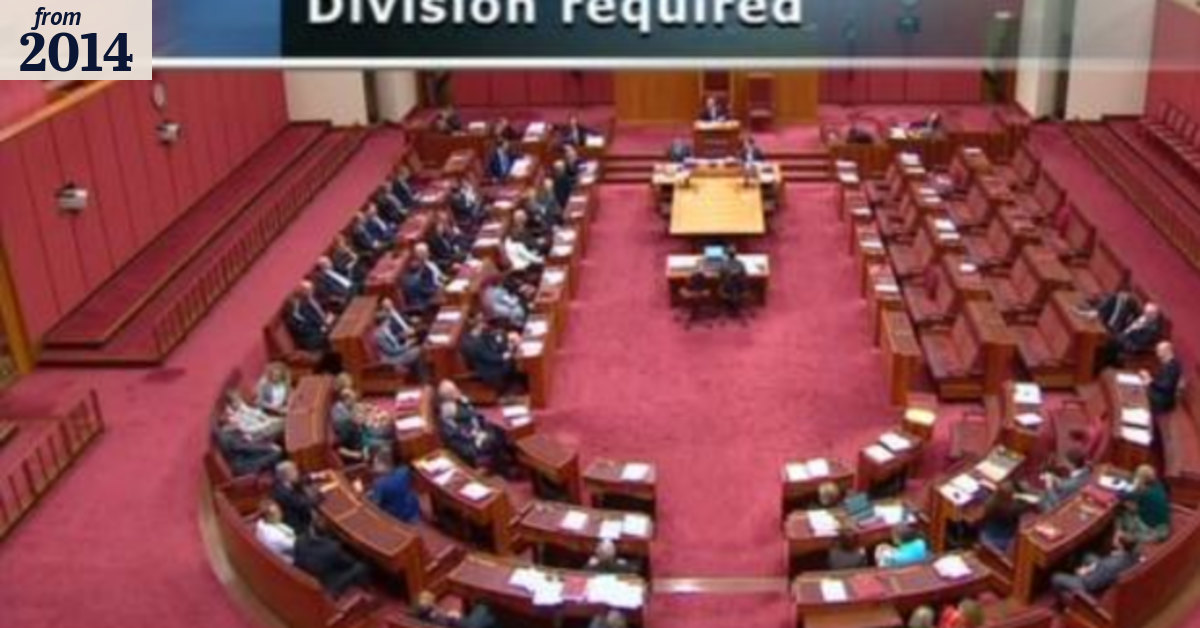
Le projet de loi a été adopté au Sénat par 44 voix contre 12, le Parti travailliste soutenant le gouvernement [1].
The bill passed the Senate 44 votes to 12, with Labor supporting the government [1].
Le chef de l'opposition Bill Shorten a maintenu le soutien du Parti travailliste aux lois malgré certaines préoccupations internes de ministres comme Anthony Albanese [5]. **Précédent des opérations contrôlées :** Le régime SIO s'est inspiré des régimes d'« opérations contrôlées » (CO) existants pour la police fédérale australienne depuis 1996, auxquels des infractions de divulgation ont été ajoutées en 2010 sous le précédent gouvernement travailliste [4].
Opposition Leader Bill Shorten maintained Labor's support for the laws despite some internal concerns from frontbenchers like Anthony Albanese [5]. **Precedent for Controlled Operations:** The SIO regime was modelled on existing "controlled operation" (CO) schemes that had been in place for the Australian Federal Police since 1996, with disclosure offences added in 2010 under the previous Labor government [4].
Ces dispositions CO existantes prévoyaient également des peines de 10 ans pour avoir mis des opérations en danger [4]. **Objectif et contexte :** La législation a été introduite suite aux recommandations d'une enquête de la Parliamentary Joint Committee on Intelligence and Security (Commission parlementaire mixte du renseignement et de la sécurité) initiée sous le précédent gouvernement travailliste [6].
These existing CO provisions also carried 10-year penalties for endangering operations [4]. **Purpose and Context:** The legislation was introduced following recommendations from a Parliamentary Joint Committee on Intelligence and Security inquiry initiated under the previous Labor government [6].
Elle était présentée comme une réponse à la menace émergente de l'État islamique et aux préoccupations terroristes, alors que se déroulaient de grandes opérations antiterroristes et après que l'EI ait appelé à des attaques contre des civils australiens [1]. **Garanties :** La législation comprenait certains mécanismes de surveillance, notamment l'exigence que les SIO soient autorisées par le procureur général ou le directeur général de l'ASIO, et le rôle continu de l'Inspector-General of Intelligence and Security (IGIS, Inspecteur général du renseignement et de la sécurité) comme organe de contrôle indépendant [4].
It was framed as a response to the emerging threat of Islamic State and terrorism concerns, coming amid major counter-terrorism raids and after IS had called for attacks on Australian civilians [1]. **Safeguards:** The legislation included some oversight mechanisms, including the requirement for SIOs to be authorised by the Attorney-General or ASIO Director-General, and the continued role of the Inspector-General of Intelligence and Security (IGIS) as an independent watchdog [4].
Des amendements ont été apportés pour exclure explicitement la torture [1]. **Critère de négligence :** Pour que des journalistes fassent face à des poursuites, ils doivent agir « imprudemment » - le projet de loi a été amendé pour confirmer que les reportages involontaires sans connaissance d'une SIO ne seraient pas suffisants pour une poursuite [4].
Amendments were made to explicitly rule out torture [1]. **Recklessness Standard:** For journalists to face prosecution, they must act "recklessly" - the bill was amended to confirm that inadvertent reporting without knowledge of an SIO would not be sufficient for prosecution [4].

Évaluation de la crédibilité de la source

Les sources originales fournies avec l'affirmation sont : 1. **Sydney Morning Herald** - Un journal australien grand public (Fairfax Media, maintenant Nine).
The original sources provided with the claim are: 1. **Sydney Morning Herald** - A mainstream Australian newspaper (Fairfax Media, now Nine).
Généralement réputé avec des normes éditoriales professionnelles.
Generally reputable with professional editorial standards.
L'article cité cite le sénateur des Verts Scott Ludlam s'opposant au projet de loi [1]. 2. **The Guardian Australia** - L'édition australienne du Guardian britannique, généralement réputée avec une ligne éditoriale progressiste.
The cited article quotes Greens Senator Scott Ludlam's opposition to the bill [1]. 2. **The Guardian Australia** - The Australian edition of the UK-based Guardian, generally reputable with a progressive editorial stance.
A publié une tribune critique à l'égard de la législation [7].
Published an opinion piece critical of the legislation [7].
Les deux sources sont des médias grand public avec une crédibilité établie, bien que les articles spécifiques cités représentent des perspectives critiques/d'opinion plutôt qu'un reportage neutre.
Both sources are mainstream media outlets with established credibility, though the specific articles cited represent critical/opinion perspectives rather than neutral reporting.
Aucune source n'est une organisation de défense partisane, bien qu'elles reflètent les préoccupations soulevées par des experts juridiques, des organisations de défense des droits humains et le parti des Verts concernant la législation.
Neither source is a partisan advocacy organisation, though they reflect the concerns raised by legal experts, human rights organisations, and the Greens party about the legislation.
⚖️

Comparaison avec Labor

**Le Parti travailliste a-t-il fait quelque chose de similaire ?** Recherche effectuée : « gouvernement travailliste opérations contrôlées pouvoirs de surveillance AFP » Constat : **Oui - Le Parti travailliste a établi le précédent pour ce type de législation.** Le régime d'« opérations contrôlées » (CO) pour la police fédérale australienne a été introduit en 1996 et renforcé au fil du temps.
**Did Labor do something similar?** Search conducted: "Labor government controlled operations surveillance powers AFP" Finding: **Yes - Labor established the precedent for this type of legislation.** The "controlled operations" (CO) scheme for the Australian Federal Police was introduced in 1996 and strengthened over time.
Le précédent gouvernement travailliste (2010) a amendé la Crimes Act pour faire de la divulgation d'informations sur les opérations contrôlées une infraction, avec des peines jusqu'à 10 ans de prison pour avoir mis des opérations en danger - identiques aux peines SIO de l'ASIO [4].
The previous Labor government (2010) amended the Crimes Act to make it an offence to disclose information about controlled operations, with penalties of up to 10 years jail for endangering operations - identical to the ASIO SIO penalties [4].
Le Public Interest Disclosure Act de 2013 du Parti travailliste a établi des protections pour les lanceurs d'alerte, bien que celles-ci aient eu une application limitée au nouveau régime SIO [4]. **Comparaison clé :** - Dispositions CO de 2010 du Parti travailliste : jusqu'à 10 ans pour divulgation d'opérations contrôlées - Dispositions SIO de 2014 de la Coalition : jusqu'à 10 ans pour divulgation d'opérations de renseignement spéciales - Les deux dispositions s'appliquent aux journalistes et ne comportent pas de défense d'intérêt public De plus, le gouvernement travailliste actuel (Albanese, 2025) a proposé d'élargir les pouvoirs d'audition obligatoire de l'ASIO et de les rendre permanents - continuant la tendance à renforcer les pouvoirs des agences de sécurité quelle que soit l'orientation politique [8].
Labor's 2013 Public Interest Disclosure Act established whistleblower protections, though these had limited application to the new SIO regime [4]. **Key comparison:** - Labor's 2010 CO provisions: Up to 10 years for disclosing controlled operations - Coalition's 2014 SIO provisions: Up to 10 years for disclosing special intelligence operations - Both provisions apply to journalists and lack a public interest defence Additionally, the current Labor government (Albanese, 2025) has proposed expanding ASIO's compulsory questioning powers and making them permanent - continuing the trend of strengthening security agency powers regardless of party [8].
🌐

Perspective équilibrée

Le National Security Legislation Amendment Bill (No. 1) 2014 représentait une expansion significative des pouvoirs de l'ASIO, conforme à des expansions similaires des pouvoirs des agences de sécurité dans des nations occidentales comparables (Royaume-Uni, États-Unis) suite aux menaces terroristes [9]. **Justification du gouvernement :** Le gouvernement de la Coalition a soutenu que ces pouvoirs étaient nécessaires pour moderniser les capacités de renseignement dans une « ège nouvellement dangereuse » [1].
The National Security Legislation Amendment Bill (No. 1) 2014 represented a significant expansion of ASIO's powers, consistent with similar expansions of security agency powers in comparable Western nations (UK, USA) following terrorism threats [9]. **Government justification:** The Coalition government argued these powers were necessary to modernise intelligence capabilities in a "newly dangerous age" [1].
Le procureur général George Brandis a déclaré que les dispositions s'inspiraient des lois existantes sur les opérations contrôlées de l'AFP et constituaient « la réforme la plus importante pour les agences de renseignement australiennes depuis la fin des années 1970 » [1].
Attorney-General George Brandis stated the provisions were modelled on existing AFP controlled operations laws and were "the most important reform for Australia's intelligence agencies since the late 1970s" [1].
Le gouvernement a souligné que les lois visaient des lanceurs d'alerte comme Edward Snowden, pas le journalisme légitime [1]. **Préoccupations des experts :** Des experts juridiques, le Law Council of Australia (Conseil du droit d'Australie), l'Australian Lawyers Alliance (Alliance des avocats australiens), des défenseurs des droits humains et des organisations médiatiques ont soulevé des préoccupations significatives concernant la liberté de la presse, l'étendue des pouvoirs, et l'absence de défenses d'intérêt public [4].
The government emphasised that the laws targeted leakers like Edward Snowden, not legitimate journalism [1]. **Expert concerns:** Legal experts, the Law Council of Australia, Australian Lawyers Alliance, human rights advocates, and media organisations raised significant concerns about press freedom, the breadth of the powers, and lack of public interest defences [4].
Le professeur George Williams (UNSW) a qualifié le projet de loi de « trop large » [1], et Bret Walker SC (ancien Independent National Security Legislation Monitor, Contrôleur indépendant de la législation sur la sécurité nationale) a soulevé des préoccupations concernant l'effet dissuasif sur les reportages [4]. **Contrôle parlementaire :** La législation a été examinée par la Parliamentary Joint Committee on Intelligence and Security (Commission parlementaire mixte du renseignement et de la sécurité), qui a formulé des recommandations largement adoptées.
Professor George Williams (UNSW) described the bill as "too broad" [1], and Bret Walker SC (former Independent National Security Legislation Monitor) raised concerns about the chilling effect on reporting [4]. **Parliamentary scrutiny:** The legislation was reviewed by the Parliamentary Joint Committee on Intelligence and Security, which made recommendations that were largely adopted.
Cependant, des amendements proposés par les sénateurs des Verts et des crossbench pour limiter le nombre d'ordinateurs par mandat 20), protéger les lanceurs d'alerte, et exiger des considérations d'intérêt public dans la détermination des peines ont été rejetés avec l'opposition du Parti travailliste et du gouvernement [1][4]. **Contexte comparatif :** Ce n'était pas unique à la Coalition.
However, amendments proposed by Greens and crossbench Senators to limit the number of computers per warrant (to 20), protect whistleblowers, and require public interest considerations in sentencing were defeated with Labor and government opposition [1][4]. **Comparative context:** This was not unique to the Coalition.
Le Parti travailliste a soutenu le projet de loi et avait établi des cadres similaires pour l'AFP.
Labor supported the bill and had established similar frameworks for the AFP.
La tendance à l'expansion des pouvoirs sécuritaires a été bipartite, reflétant un schéma occidental plus large post-11 septembre et post-émergence de l'EI.
The trend of expanding security powers has been bipartisan, reflecting a broader Western pattern post-9/11 and post-ISIS emergence.
Le Royaume-Uni et les États-Unis ont des capacités de surveillance similairement expansives, souvent avec moins de contrôle parlementaire que le système australien [9].
The UK and US have similarly expansive surveillance capabilities, often with less parliamentary oversight than Australia's system [9].

PARTIELLEMENT VRAI

6.0

sur 10

L'affirmation contient des exagérations significatives aux côtés d'éléments factuels exacts.
The claim contains significant exaggerations alongside factually accurate elements.
L'ASIO a reçu des pouvoirs élargis pour accéder à plusieurs ordinateurs avec un seul mandat et pouvait copier, supprimer ou modifier des données.
ASIO was given expanded powers to access multiple computers with a single warrant and could copy, delete, or modify data.
Le régime SIO a bien fourni une immunité contre les responsabilités civiles et pénales pour les opérations autorisées.
The SIO regime did provide immunity from civil and criminal liability for authorised operations.
Les journalistes pourraient faire face jusqu'à 10 ans de prison pour divulgation d'informations SIO.
Journalists could face up to 10 years jail for disclosing SIO information.
Cependant, l'affirmation exagère la portée (le mandat s'applique à un « réseau informatique » plutôt qu'à « l'ensemble d'Internet » - bien que les critiques aient noté que l'absence de définition pourrait avoir une large application).
However, the claim overstates the scope (the warrant applies to a "computer network" rather than "the entire internet" - though critics noted the lack of definition could have broad application).
Plus significativement, l'affirmation omet un contexte crucial : cette législation a été adoptée avec le soutien bipartite du Parti travailliste, s'est inspirée des dispositions AFP de l'ère travailliste, et faisait suite aux recommandations d'une enquête parlementaire initiée sous le gouvernement précédent.
More significantly, the claim omits crucial context: this legislation passed with bipartisan Labor support, was modelled on Labor-era AFP provisions, and followed recommendations from a parliamentary inquiry initiated under the previous government.
Le cadrage suggère qu'il s'agissait d'un excès de pouvoir unique de la Coalition, alors qu'il s'agissait en fait d'une continuation d'expansions sécuritaires bipartites.
The framing suggests this was unique Coalition overreach, when it was actually a continuation of bipartisan national security expansions.

📚 SOURCES ET CITATIONS (9)

  1. 1
    smh.com.au

    smh.com.au

    Australian spies will soon have the power to monitor the entire Australian internet with just one warrant, and journalists and whistleblowers will face up to 10 years' jail for disclosing classified information.

    The Sydney Morning Herald
  2. 2
    openaustralia.org.au

    openaustralia.org.au

    Making parliament easy.

    Openaustralia Org
  3. 3
    unsw.edu.au

    unsw.edu.au

    Unsw Edu

  4. 4
    abc.net.au

    abc.net.au

    Labor frontbencher Anthony Albanese is concerned about how the Government's new counter-terrorism laws will affect the media. "The media laws... when we talk about potential penalties of five to 10 years' jail for exposing what might be an error made by the security agencies," Mr Albanese said. ABC Fact Check examines whether journalists face up to 10 years' jail for exposing errors made by security agencies.

    Abc Net
  5. 5
    smh.com.au

    smh.com.au

    Opposition Leader Bill Shorten has brushed aside concerns raised by his former leadership rival Anthony Albanese about national security laws recently passed with Labor's support

    The Sydney Morning Herald
  6. 6
    aph.gov.au

    aph.gov.au

    Helpful information Text of bill First reading: Text of the bill as introduced into the Parliament Third reading: Prepared if the bill is amended by the house in which it was introduced. This version of the bill is then considered by the second house. As passed by

    Aph Gov
  7. 7
    theguardian.com

    theguardian.com

    A series of law enforcement and intelligence gathering bills to be considered by parliament will affect the freedom of all Australians

    the Guardian
  8. 8
    theguardian.com

    theguardian.com

    Exclusive: Tony Burke also introduced legislation to add sabotage, promotion of communal violence and serious threats to Australia’s border security to the rules

    the Guardian
  9. 9
    en.wikipedia.org

    en.wikipedia.org

    Wikipedia

Méthodologie de l'échelle de notation

1-3: FAUX

Factuellement incorrect ou fabrication malveillante.

4-6: PARTIEL

Une part de vérité mais le contexte manque ou est biaisé.

7-9: MAJORITAIREMENT VRAI

Détails techniques mineurs ou problèmes de formulation.

10: EXACT

Parfaitement vérifié et contextuellement équitable.

Méthodologie: Les notations sont déterminées par recoupement des documents gouvernementaux officiels, des organisations indépendantes de vérification des faits et des documents sources primaires.