Parcialmente Verdadero

Calificación: 6.0/10

Coalition
C0640

La Afirmación

“Otorgó a la ASIO (Organización de Seguridad e Inteligencia de Australia) el poder para leer, eliminar y modificar cualquier cosa en toda Internet, con una sola orden judicial. Nadie puede demandarlos si usan esa información o poder de manera ilegal. Si un periodista denuncia dicho abuso, será encarcelado durante 10 años.”
Fuente Original: Matthew Davis
Analizado: 31 Jan 2026

Fuentes Originales

VERIFICACIÓN DE HECHOS

La afirmación se refiere a la Ley de Enmienda a la Legislación de Seguridad Nacional (No. 1) de 2014, aprobada por el gobierno de la Coalición (Coalition) en septiembre-octubre de 2014.
The claim refers to the National Security Legislation Amendment Bill (No. 1) 2014, passed by the Coalition government in September-October 2014.
Esta legislación amplió significativamente las capacidades de vigilancia y operativas de la ASIO [1]. **Respecto a "una sola orden judicial para toda Internet":** La legislación permitía a la ASIO obtener una sola orden judicial para acceder a "un número ilimitado de computadoras en una red de computadoras" al intentar monitorear un objetivo [1].
This legislation did significantly expand ASIO's surveillance and operational capabilities [1]. **Regarding "one warrant for the entire internet":** The legislation allowed ASIO to obtain a single warrant to access "a limitless number of computers on a computer network" when attempting to monitor a target [1].
Los críticos, incluidos abogados, grupos de derechos y académicos, señalaron que, dado que Internet es una "red de redes" y el proyecto de ley no definió específicamente qué constituye una "red de computadoras", esto podría permitir teóricamente a la ASIO acceder a toda la Internet australiana con una sola orden [1].
Critics, including lawyers, rights groups, and academics, noted that because the internet is a "network of networks" and the bill did not specifically define what constitutes a "computer network," this could theoretically allow ASIO to access the entire Australian internet with one warrant [1].
El Fiscal General George Brandis confirmó que "no hay un límite arbitrario o artificial en el número de dispositivos" [1]. **Respecto a "leer, eliminar y modificar":** La legislación otorgó explícitamente a la ASIO el poder para "copiar, eliminar o modificar los datos almacenados en cualquiera de las computadoras que está autorizada a monitorear" [1].
Attorney-General George Brandis confirmed that "there is no arbitrary or artificial limit on the number of devices" [1]. **Regarding "read, delete and modify":** The legislation explicitly empowered ASIO to "copy, delete, or modify the data held on any of the computers it has a warrant to monitor" [1].
Los registros de debates del Senado confirman que estas órdenes judiciales permitían a la ASIO o quienes trabajaran para la ASIO "modificar estas computadoras, eliminar archivos, instalar malware, buscar niveles más altos de acceso de usuario y suplantar a personas" [2]. **Respecto a la inmunidad ante demandas:** La legislación estableció un régimen de "operaciones especiales de inteligencia" (SIO, por sus siglas en inglés) que otorgaba a los oficiales de la ASIO inmunidad ante responsabilidades civiles y penales al realizar operaciones autorizadas [3].
Senate debate records confirm these warrants allowed ASIO or those working for ASIO to "modify these computers, to delete files, to install malware, to seek higher levels of user access and to impersonate people" [2]. **Regarding immunity from lawsuits:** The legislation established a "special intelligence operations" (SIO) regime that granted ASIO officers immunity from civil and criminal liability when conducting authorised operations [3].
Esta inmunidad aplica cuando los oficiales actúan dentro del alcance de las SIO autorizadas, incluso si de otro modo estarían cometiendo delitos o agravios civiles. **Respecto a 10 años de cárcel para periodistas:** La legislación creó delitos punibles con hasta 5 años de cárcel por "imprudentemente" divulgar información sobre una SIO, y hasta 10 años si la divulgación "pondrá en peligro la seguridad de los participantes o dañará la operación" [4].
This immunity applies when officers act within the scope of authorised SIOs, even if they would otherwise be committing crimes or civil wrongs. **Regarding 10 years jail for journalists:** The legislation created offences punishable by up to 5 years jail for "recklessly" disclosing information about an SIO, and up to 10 years if the disclosure "will endanger the safety of participants or harm the operation" [4].
ABC Fact Check verificó que estas penalidades podrían aplicarse a periodistas que expongan errores de las agencias de seguridad [4].
ABC Fact Check verified that these penalties could apply to journalists exposing errors by security agencies [4].

Contexto Faltante

**Apoyo bipartidista:** La afirmación omite que esta legislación fue aprobada con el apoyo bipartidista del Partido Laborista Australiano (Australian Labor Party, ALP) [1][5].
**Bipartisan Support:** The claim omits that this legislation passed with bipartisan support from the Australian Labor Party [1][5].
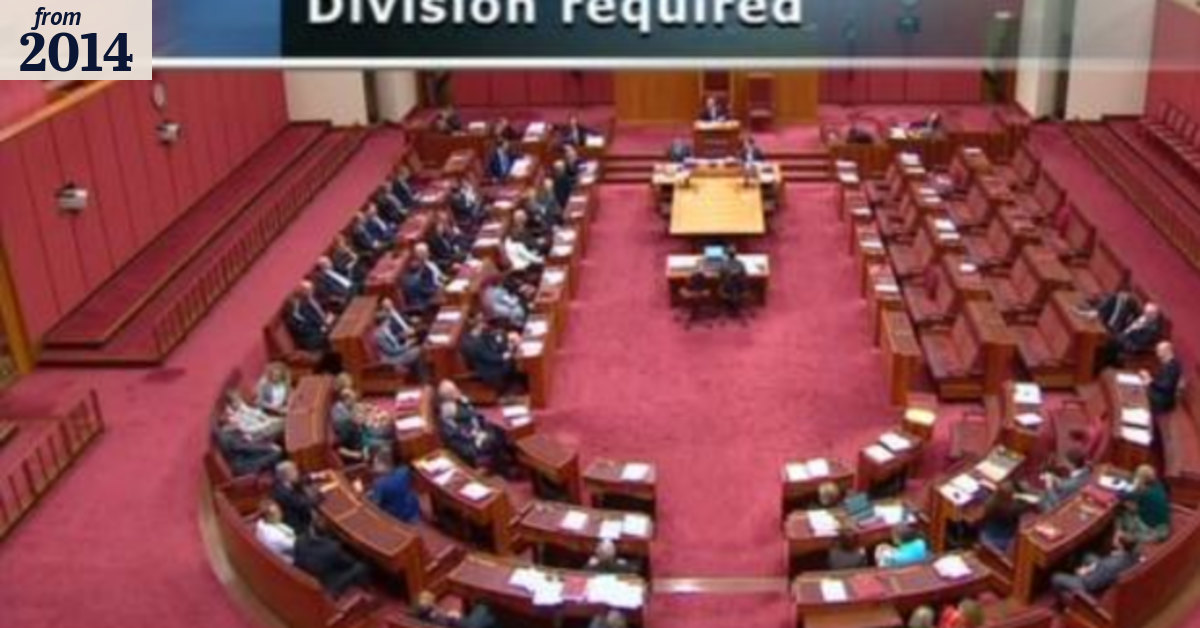
El proyecto de ley pasó el Senado por 44 votos contra 12, con el Laborismo apoyando al gobierno [1].
The bill passed the Senate 44 votes to 12, with Labor supporting the government [1].
El Líder de la Oposición Bill Shorten mantuvo el apoyo del Laborismo a las leyes a pesar de algunas preocupaciones internas de ministros de gabinete como Anthony Albanese [5]. **Precedente de operaciones controladas:** El régimen de SIO se modeló a partir de los esquemas existentes de "operación controlada" (CO, por sus siglas en inglés) que habían estado vigentes para la Policía Federal Australiana (Australian Federal Police, AFP) desde 1996, con delitos de divulgación añadidos en 2010 bajo el anterior gobierno laborista [4].
Opposition Leader Bill Shorten maintained Labor's support for the laws despite some internal concerns from frontbenchers like Anthony Albanese [5]. **Precedent for Controlled Operations:** The SIO regime was modelled on existing "controlled operation" (CO) schemes that had been in place for the Australian Federal Police since 1996, with disclosure offences added in 2010 under the previous Labor government [4].
Estas disposiciones existentes de CO también conllevaban penalidades de 10 años por poner en peligro operaciones [4]. **Propósito y contexto:** La legislación se introdujo tras las recomendaciones de una investigación del Comité Conjunto Parlamentario de Seguridad e Inteligencia iniciada bajo el anterior gobierno laborista [6].
These existing CO provisions also carried 10-year penalties for endangering operations [4]. **Purpose and Context:** The legislation was introduced following recommendations from a Parliamentary Joint Committee on Intelligence and Security inquiry initiated under the previous Labor government [6].
Se planteó como respuesta a la amenaza emergente del Estado Islámico y las preocupaciones terroristas, llegando en medio de grandes redadas antiterroristas y después de que el IS hubiera llamado a ataques contra civiles australianos [1]. **Salvaguardias:** La legislación incluía algunos mecanismos de supervisión, incluyendo el requisito de que las SIO fueran autorizadas por el Fiscal General o el Director General de la ASIO, y el continuo rol del Inspector General de Seguridad e Inteligencia (Inspector-General of Intelligence and Security, IGIS) como órgano de vigilancia independiente [4].
It was framed as a response to the emerging threat of Islamic State and terrorism concerns, coming amid major counter-terrorism raids and after IS had called for attacks on Australian civilians [1]. **Safeguards:** The legislation included some oversight mechanisms, including the requirement for SIOs to be authorised by the Attorney-General or ASIO Director-General, and the continued role of the Inspector-General of Intelligence and Security (IGIS) as an independent watchdog [4].
Se hicieron enmiendas para descartar explícitamente la tortura [1]. **Estándar de imprudencia:** Para que los periodistas enfrenten enjuiciamiento, deben actuar "imprudentemente"; el proyecto de ley fue enmendado para confirmar que la reportaje inadvertido sin conocimiento de una SIO no sería suficiente para el enjuiciamiento [4].
Amendments were made to explicitly rule out torture [1]. **Recklessness Standard:** For journalists to face prosecution, they must act "recklessly" - the bill was amended to confirm that inadvertent reporting without knowledge of an SIO would not be sufficient for prosecution [4].

Evaluación de Credibilidad de Fuente

Las fuentes originales proporcionadas con la afirmación son: 1. **Sydney Morning Herald** - Un periódico australiano de circulación nacional (Fairfax Media, ahora Nine).
The original sources provided with the claim are: 1. **Sydney Morning Herald** - A mainstream Australian newspaper (Fairfax Media, now Nine).
Generalmente reputado con estándares editoriales profesionales.
Generally reputable with professional editorial standards.
El artículo citado cita al senador de los Verdes Scott Ludlam en su oposición al proyecto de ley [1]. 2. **The Guardian Australia** - La edición australiana del Guardian británico, generalmente reputada con una postura editorial progresista.
The cited article quotes Greens Senator Scott Ludlam's opposition to the bill [1]. 2. **The Guardian Australia** - The Australian edition of the UK-based Guardian, generally reputable with a progressive editorial stance.
Publicó un artículo de opinión crítico de la legislación [7].
Published an opinion piece critical of the legislation [7].
Ambas fuentes son medios de comunicación convencionales con credibilidad establecida, aunque los artículos específicos citados representan perspectivas críticas/de opinión más que reportaje neutral.
Both sources are mainstream media outlets with established credibility, though the specific articles cited represent critical/opinion perspectives rather than neutral reporting.
Ninguna fuente es una organización de defensa partidista, aunque reflejan las preocupaciones planteadas por expertos legales, organizaciones de derechos humanos y el partido de los Verdes sobre la legislación.
Neither source is a partisan advocacy organisation, though they reflect the concerns raised by legal experts, human rights organisations, and the Greens party about the legislation.
⚖️

Comparación con Labor

**¿Hizo algo similar el Laborismo?** Búsqueda realizada: "Labor government controlled operations surveillance powers AFP" Hallazgo: **Sí - El Laborismo estableció el precedente para este tipo de legislación.** El esquema de "operaciones controladas" (CO) para la Policía Federal Australiana se introdujo en 1996 y se fortaleció con el tiempo.
**Did Labor do something similar?** Search conducted: "Labor government controlled operations surveillance powers AFP" Finding: **Yes - Labor established the precedent for this type of legislation.** The "controlled operations" (CO) scheme for the Australian Federal Police was introduced in 1996 and strengthened over time.
El anterior gobierno laborista (2010) enmendó la Ley de Crímenes para hacer delito divulgar información sobre operaciones controladas, con penalidades de hasta 10 años de cárcel por poner en peligro operaciones - idénticas a las penalidades de SIO de la ASIO [4].
The previous Labor government (2010) amended the Crimes Act to make it an offence to disclose information about controlled operations, with penalties of up to 10 years jail for endangering operations - identical to the ASIO SIO penalties [4].
La Ley de Divulgación de Interés Público (Public Interest Disclosure Act) de 2013 del Laborismo estableció protecciones para denunciantes, aunque estas tenían aplicación limitada al nuevo régimen de SIO [4]. **Comparación clave:** - Disposiciones de CO del Laborismo de 2010: Hasta 10 años por divulgar operaciones controladas - Disposiciones de SIO de la Coalición de 2014: Hasta 10 años por divulgar operaciones especiales de inteligencia - Ambas disposiciones aplican a periodistas y carecen de defensa de interés público Además, el actual gobierno laborista (Albanese, 2025) ha propuesto ampliar los poderes de interrogatorio obligatorio de la ASIO y hacerlos permanentes - continuando la tendencia de fortalecer los poderes de las agencias de seguridad independientemente del partido [8].
Labor's 2013 Public Interest Disclosure Act established whistleblower protections, though these had limited application to the new SIO regime [4]. **Key comparison:** - Labor's 2010 CO provisions: Up to 10 years for disclosing controlled operations - Coalition's 2014 SIO provisions: Up to 10 years for disclosing special intelligence operations - Both provisions apply to journalists and lack a public interest defence Additionally, the current Labor government (Albanese, 2025) has proposed expanding ASIO's compulsory questioning powers and making them permanent - continuing the trend of strengthening security agency powers regardless of party [8].
🌐

Perspectiva Equilibrada

La Ley de Enmienda a la Legislación de Seguridad Nacional (No. 1) de 2014 representó una expansión significativa de los poderes de la ASIO, consistente con expansiones similares de poderes de agencias de seguridad en naciones occidentales comparables (Reino Unido, EE.UU.) tras amenazas terroristas [9]. **Justificación del gobierno:** El gobierno de la Coalición argumentó que estos poderes eran necesarios para modernizar las capacidades de inteligencia en una "nueva era de peligro" [1].
The National Security Legislation Amendment Bill (No. 1) 2014 represented a significant expansion of ASIO's powers, consistent with similar expansions of security agency powers in comparable Western nations (UK, USA) following terrorism threats [9]. **Government justification:** The Coalition government argued these powers were necessary to modernise intelligence capabilities in a "newly dangerous age" [1].
El Fiscal General George Brandis declaró que las disposiciones se modelaron a partir de las leyes existentes de operaciones controladas de la AFP y eran "la reforma más importante para las agencias de inteligencia de Australia desde finales de los años 70" [1].
Attorney-General George Brandis stated the provisions were modelled on existing AFP controlled operations laws and were "the most important reform for Australia's intelligence agencies since the late 1970s" [1].
El gobierno enfatizó que las leyes apuntaban a filtradores como Edward Snowden, no al periodismo legítimo [1]. **Preocupaciones de expertos:** Expertos legales, el Consejo de Derecho de Australia (Law Council of Australia), la Alianza de Abogados Australianos (Australian Lawyers Alliance), defensores de derechos humanos y organizaciones de medios plantearon preocupaciones significativas sobre la libertad de prensa, la amplitud de los poderes y la falta de defensas de interés público [4].
The government emphasised that the laws targeted leakers like Edward Snowden, not legitimate journalism [1]. **Expert concerns:** Legal experts, the Law Council of Australia, Australian Lawyers Alliance, human rights advocates, and media organisations raised significant concerns about press freedom, the breadth of the powers, and lack of public interest defences [4].
El Profesor George Williams (UNSW) describió el proyecto de ley como "demasiado amplio" [1], y Bret Walker SC (ex Monitor Independiente de Legislación de Seguridad Nacional) planteó preocupaciones sobre el efecto inhibitorio en el reportaje [4]. **Escrutinio parlamentario:** La legislación fue revisada por el Comité Conjunto Parlamentario de Seguridad e Inteligencia, que hizo recomendaciones que fueron ampliamente adoptadas.
Professor George Williams (UNSW) described the bill as "too broad" [1], and Bret Walker SC (former Independent National Security Legislation Monitor) raised concerns about the chilling effect on reporting [4]. **Parliamentary scrutiny:** The legislation was reviewed by the Parliamentary Joint Committee on Intelligence and Security, which made recommendations that were largely adopted.
Sin embargo, enmiendas propuestas por senadores de los Verdes y del crossbench para limitar el número de computadoras por orden judicial (a 20), proteger a denunciantes y requerir consideraciones de interés público en la sentencia fueron derrotadas con la oposición del Laborismo y el gobierno [1][4]. **Contexto comparativo:** Esto no fue exclusivo de la Coalición.
However, amendments proposed by Greens and crossbench Senators to limit the number of computers per warrant (to 20), protect whistleblowers, and require public interest considerations in sentencing were defeated with Labor and government opposition [1][4]. **Comparative context:** This was not unique to the Coalition.
El Laborismo apoyó el proyecto de ley y había establecido marcos similares para la AFP.
Labor supported the bill and had established similar frameworks for the AFP.
La tendencia de expandir poderes de seguridad ha sido bipartidista, reflejando un patrón occidental más amplio post-11/9 y post-emergencia del ISIS.
The trend of expanding security powers has been bipartisan, reflecting a broader Western pattern post-9/11 and post-ISIS emergence.
El Reino Unido y EE.UU. tienen capacidades de vigilancia igualmente amplias, a menudo con menos supervisión parlamentaria que el sistema de Australia [9].
The UK and US have similarly expansive surveillance capabilities, often with less parliamentary oversight than Australia's system [9].

PARCIALMENTE VERDADERO

6.0

/ 10

La afirmación contiene exageraciones significativas junto a elementos factualmente precisos.
The claim contains significant exaggerations alongside factually accurate elements.
La ASIO recibió poderes ampliados para acceder a múltiples computadoras con una sola orden judicial y podía copiar, eliminar o modificar datos.
ASIO was given expanded powers to access multiple computers with a single warrant and could copy, delete, or modify data.
El régimen de SIO proporcionó efectivamente inmunidad ante responsabilidades civiles y penales por operaciones autorizadas.
The SIO regime did provide immunity from civil and criminal liability for authorised operations.
Los periodistas podrían enfrentar hasta 10 años de cárcel por divulgar información de SIO.
Journalists could face up to 10 years jail for disclosing SIO information.
Sin embargo, la afirmación exagera el alcance (la orden judicial aplica a una "red de computadoras" más que a "toda Internet" - aunque los críticos señalaron que la falta de definición podría tener aplicación amplia).
However, the claim overstates the scope (the warrant applies to a "computer network" rather than "the entire internet" - though critics noted the lack of definition could have broad application).
Más significativamente, la afirmación omite contexto crucial: esta legislación fue aprobada con apoyo bipartidista del Laborismo, se modeló a partir de disposiciones de la era laborista para la AFP, y siguió recomendaciones de una investigación parlamentaria iniciada bajo el gobierno anterior.
More significantly, the claim omits crucial context: this legislation passed with bipartisan Labor support, was modelled on Labor-era AFP provisions, and followed recommendations from a parliamentary inquiry initiated under the previous government.
El planteamiento sugiere que esto fue un exceso exclusivo de la Coalición, cuando en realidad fue una continuación de expansiones de seguridad nacional bipartidistas.
The framing suggests this was unique Coalition overreach, when it was actually a continuation of bipartisan national security expansions.

📚 FUENTES Y CITAS (9)

  1. 1
    smh.com.au

    smh.com.au

    Australian spies will soon have the power to monitor the entire Australian internet with just one warrant, and journalists and whistleblowers will face up to 10 years' jail for disclosing classified information.

    The Sydney Morning Herald
  2. 2
    openaustralia.org.au

    openaustralia.org.au

    Making parliament easy.

    Openaustralia Org
  3. 3
    unsw.edu.au

    unsw.edu.au

    Unsw Edu

  4. 4
    abc.net.au

    abc.net.au

    Labor frontbencher Anthony Albanese is concerned about how the Government's new counter-terrorism laws will affect the media. "The media laws... when we talk about potential penalties of five to 10 years' jail for exposing what might be an error made by the security agencies," Mr Albanese said. ABC Fact Check examines whether journalists face up to 10 years' jail for exposing errors made by security agencies.

    Abc Net
  5. 5
    smh.com.au

    smh.com.au

    Opposition Leader Bill Shorten has brushed aside concerns raised by his former leadership rival Anthony Albanese about national security laws recently passed with Labor's support

    The Sydney Morning Herald
  6. 6
    aph.gov.au

    aph.gov.au

    Helpful information Text of bill First reading: Text of the bill as introduced into the Parliament Third reading: Prepared if the bill is amended by the house in which it was introduced. This version of the bill is then considered by the second house. As passed by

    Aph Gov
  7. 7
    theguardian.com

    theguardian.com

    A series of law enforcement and intelligence gathering bills to be considered by parliament will affect the freedom of all Australians

    the Guardian
  8. 8
    theguardian.com

    theguardian.com

    Exclusive: Tony Burke also introduced legislation to add sabotage, promotion of communal violence and serious threats to Australia’s border security to the rules

    the Guardian
  9. 9
    en.wikipedia.org

    en.wikipedia.org

    Wikipedia

Metodología de la Escala de Calificación

1-3: FALSO

Fácticamente incorrecto o fabricación maliciosa.

4-6: PARCIAL

Algo de verdad pero falta contexto o está sesgado.

7-9: MAYORMENTE VERDADERO

Tecnicismos menores o problemas de redacción.

10: PRECISO

Perfectamente verificado y contextualmente justo.

Metodología: Las calificaciones se determinan mediante la verificación cruzada de registros gubernamentales oficiales, organizaciones independientes de verificación de hechos y documentos de fuentes primarias.