Verdadero

Calificación: 7.0/10

Coalition
C0913

La Afirmación

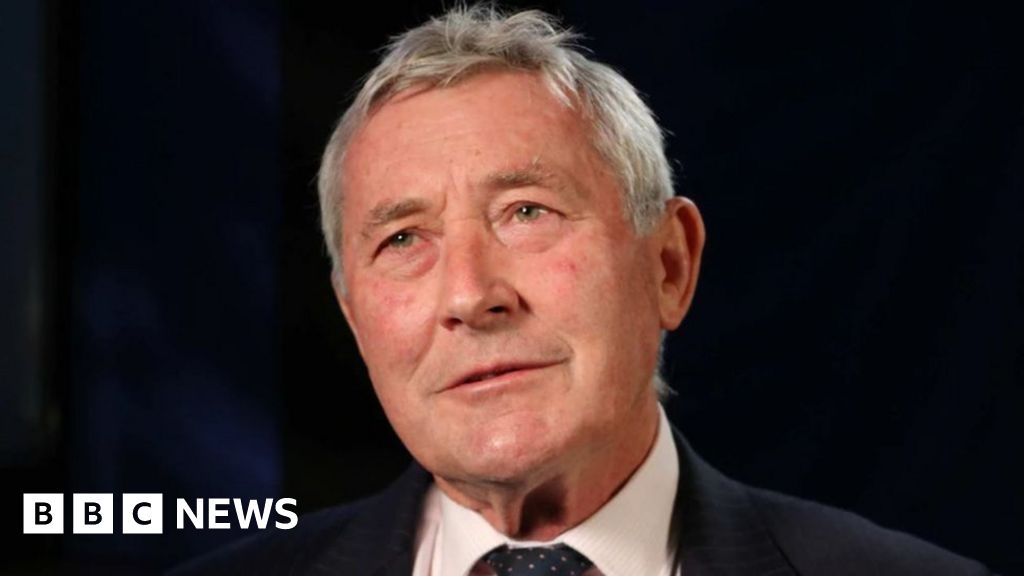
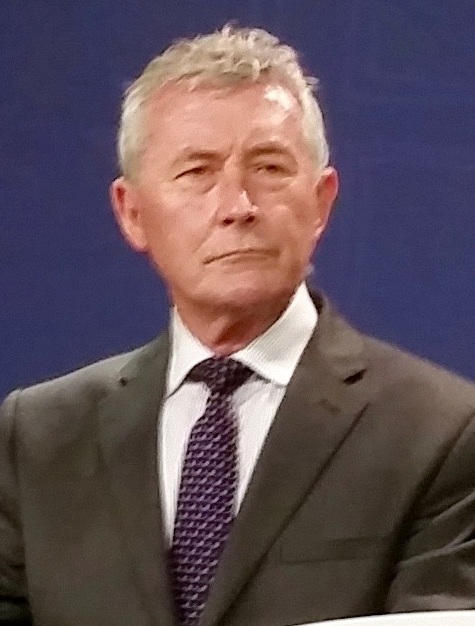
“Robaron evidencia crucial de un abogado australiano que representaba a Timor Oriental en un tribunal internacional contra Australia relacionado con nuestro espionaje ilegal sobre el acuerdo petrolero de Timor Oriental.”
Fuente Original: Matthew Davis

Fuentes Originales

VERIFICACIÓN DE HECHOS

**VERDADERO** - ASIO allanó la oficina de Bernard Collaery, el abogado que representaba a Timor Oriental en un caso internacional contra Australia, e incautó documentos y archivos electrónicos relacionados con el caso [1][2].
**TRUE** - ASIO did raid the office of Bernard Collaery, the lawyer representing East Timor in an international case against Australia, and seized documents and electronic files related to the case [1][2].
El 3 de diciembre de 2013, agentes de ASIO, acompañados por la Policía Federal Australiana, allanaron el despacho de abogados de Collaery en Canberra e incautaron documentos y datos electrónicos [1].
On December 3, 2013, ASIO agents, accompanied by Australian Federal Police, raided Collaery's Canberra law office and seized documents and electronic data [1].
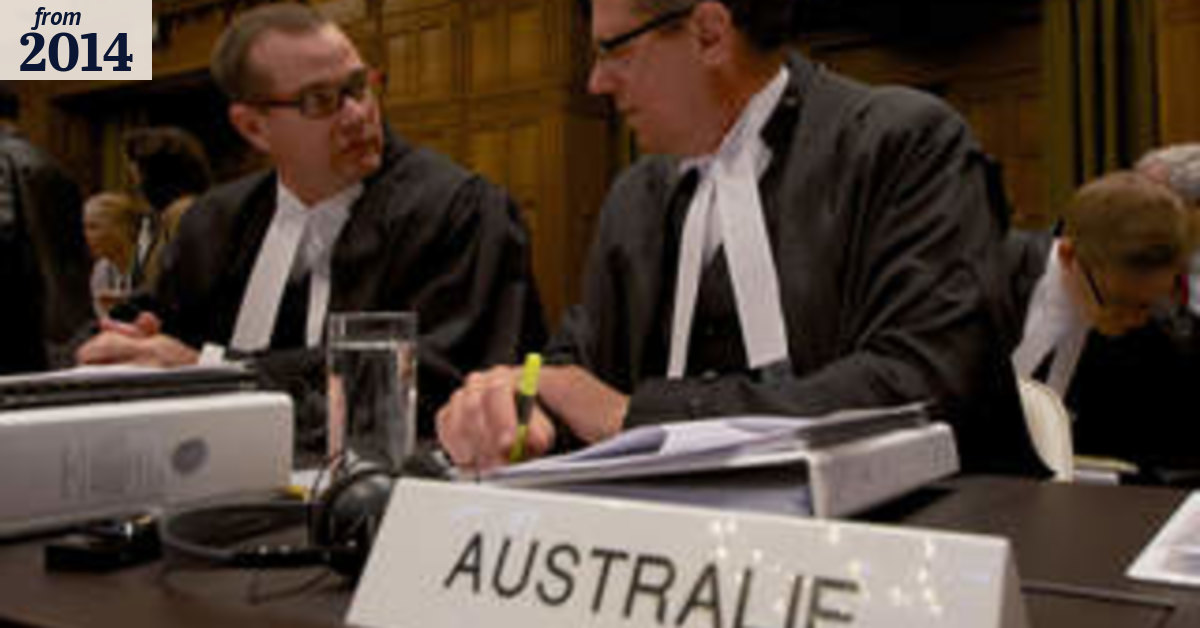
El allanamiento ocurrió apenas días antes de que comenzaran las audiencias en la Corte Permanente de Arbitraje en La Haya, donde Timor Oriental impugnaba el tratado de Arreglos Marítimos en el Mar de Timor (CMATS) [1][2].
The raid occurred just days before hearings were scheduled to begin at the Permanent Court of Arbitration in The Hague, where East Timor was challenging the Certain Maritime Arrangements in the Timor Sea (CMATS) treaty [1][2].
El material incautado incluía: - Documentos legales relacionados con las negociaciones del Tratado del Mar de Timor [3] - Archivos electrónicos que contenían evidencia del presunto espionaje australiano [1] - Una declaración de un ex agente de ASIS (conocido como «Witness K») que alegaba que Australia colocó micrófonos en la sala de gabinete de Timor Oriental durante las negociaciones del tratado en 2004 [3][4] El Fiscal General George Brandis confirmó que autorizó las órdenes de registro, afirmando que se emitieron «porque los documentos contenían información de inteligencia relacionada con asuntos de seguridad» [1].
The seized material included: - Legal documents related to the Timor Sea Treaty negotiations [3] - Electronic files containing evidence of Australia's alleged spying [1] - A statement by a former ASIS agent (known as "Witness K") alleging Australia bugged East Timor's cabinet room during 2004 treaty negotiations [3][4] Attorney-General George Brandis confirmed he authorized the search warrants, stating they were issued "on the grounds that the documents contained intelligence related to security matters" [1].
En marzo de 2014, la Corte Internacional de Justicia (CIJ) ordenó a Australia que sellara todos los documentos y datos incautados en el allanamiento y que no accediera a ellos, marcando la primera vez que el tribunal impuso restricciones a las agencias de espionaje de un estado de los Cinco Ojos [3][5].
In March 2014, the International Court of Justice (ICJ) ordered Australia to seal all documents and data seized in the raid and not to access them, marking the first time the court had imposed restrictions on the spy agencies of a Five Eyes state [3][5].
Australia posteriormente admitió ante la CIJ que pretendía oponerse a que Witness K diera evidencia en el tribunal arbitral, temiendo que el ex agente «haría más revelaciones que Australia no podría contener» [6].
Australia subsequently admitted before the ICJ that it intended to object to Witness K giving evidence at the arbitral tribunal, fearing the former agent "would make further disclosures that Australia could not confine" [6].

Contexto Faltante

**La afirmación omite varios hechos críticos:** 1. **El espionaje mismo ocurrió en 2004 bajo el gobierno Howard** - La supuesta colocación de micrófonos en las oficinas del gabinete de Timor Oriental durante las negociaciones del tratado ocurrió en 2004 bajo John Howard de la Coalición, no durante el gobierno Abbott cuando ocurrió el allanamiento de ASIO [2][4]. 2. **La justificación declarada del allanamiento** - El gobierno afirmó que el allanamiento era necesario para proteger la seguridad nacional y prevenir la exposición de agentes de inteligencia australianos y métodos de trabajo [6].
**The claim omits several critical facts:** 1. **The spying itself occurred in 2004 under the Howard government** - The alleged bugging of East Timor's cabinet offices during treaty negotiations occurred in 2004 under the Coalition's John Howard, not during the Abbott government when the ASIO raid occurred [2][4]. 2. **The raid's stated justification** - The government claimed the raid was necessary to protect national security and prevent the exposure of Australian intelligence officers and tradecraft [6].
El Procurador General Justin Gleeson defendió la acción citando riesgos de «poner en peligro» a espías y exponer capacidades técnicas [6]. 3. **El pasaporte de Witness K fue cancelado** - Al ex agente de ASIS le cancelaron el pasaporte, impidiéndole viajar a La Haya para dar testimonio oral [6]. 4. **Australia y Timor Oriental eventualmente alcanzaron un nuevo tratado** - En 2018, Australia y Timor Oriental firmaron un nuevo tratado de límites marítimos que fue más favorable para Timor Oriental [2]. 5. **Los procesos judiciales fueron eventualmente retirados** - En julio de 2022, el Fiscal General de Labor, Mark Dreyfus, retiró el apoyo para el procesamiento de Collaery, poniendo fin a una saga legal de casi una década [4][7]. 6. **Se violó el privilegio legal** - El allanamiento incautó material sujeto al privilegio abogado-cliente, una acción sin precedentes que recibió condenas de expertos legales [2][8].
Solicitor-General Justin Gleeson defended the action citing risks to "endanger" spies and expose technical capabilities [6]. 3. **Witness K's passport was cancelled** - The former ASIS agent had his passport cancelled, preventing him from traveling to The Hague to give oral evidence [6]. 4. **Australia and East Timor eventually reached a new treaty** - In 2018, Australia and East Timor signed a new maritime boundary treaty that was more favorable to East Timor [2]. 5. **The prosecutions were eventually dropped** - In July 2022, Labor Attorney-General Mark Dreyfus withdrew support for the prosecution of Collaery, ending a nearly decade-long legal saga [4][7]. 6. **Legal privilege was breached** - The raid seized material subject to lawyer-client privilege, an unprecedented action that drew condemnation from legal experts [2][8].

Evaluación de Credibilidad de Fuente

La fuente original, *The Age* (Fairfax Media), es un periódico australiano convencional y de buena reputación con una postura editorial de centro-izquierda.
The original source, *The Age* (Fairfax Media), is a mainstream, reputable Australian newspaper with a center-left editorial stance.
Generalmente se considera confiable para reportaje factual [6].
It is generally regarded as reliable for factual reporting [6].
Fuentes adicionales consultadas (ABC News, BBC, The Sydney Morning Herald, Wikipedia y documentos de la CIJ) son autoritativas y proporcionan relatos factuales consistentes de los eventos [1][2][3][4][5].
Additional sources consulted (ABC News, BBC, The Sydney Morning Herald, Wikipedia, and ICJ documents) are authoritative and provide consistent factual accounts of the events [1][2][3][4][5].
El reportaje está corroborado por: - La propia declaración del Fiscal General George Brandis confirmando el allanamiento [1] - Documentación oficial del caso de la CIJ [5] - Múltiples medios de comunicación convencionales en todo el espectro político
The reporting is corroborated by: - Attorney-General George Brandis's own statement confirming the raid [1] - ICJ official case documentation [5] - Multiple mainstream media outlets across the political spectrum
⚖️

Comparación con Labor

¿Hizo Labor algo similar?
**Did Labor do something similar?** Search conducted: "Labor government ASIO intelligence operations spying foreign countries" Finding: **Partial equivalent with important distinctions:** 1. **The original spying operation occurred under Coalition government (2004)** - The alleged bugging of East Timor's cabinet occurred under the Howard government (Coalition), not Labor [2][4]. 2. **Labor was aware but took no action** - East Timor first raised the spying allegations with then-Prime Minister Julia Gillard (Labor) in late 2012, but no action was taken [6].
Búsqueda realizada: «Labor government ASIO intelligence operations spying foreign countries» Hallazgo: **Equivalente parcial con distinciones importantes:** 1. **La operación de espionaje original ocurrió bajo el gobierno de la Coalición (2004)** - La supuesta colocación de micrófonos en el gabinete de Timor Oriental ocurrió bajo el gobierno Howard (Coalición), no de Labor [2][4]. 2. **Labor estaba al tanto pero no tomó acción** - Timor Oriental planteó primero las acusaciones de espionaje con la entonces Primera Ministra Julia Gillard (Labor) a finales de 2012, pero no se tomó ninguna acción [6].
The Labor government maintained the position that the 2004 operation was a legitimate intelligence activity. 3. **Labor eventually dropped the prosecutions** - In July 2022, the Albanese Labor government dropped the prosecution of Bernard Collaery through Attorney-General Mark Dreyfus, acknowledging it was not in the public interest to continue [4][7]. 4. **Labor shelved inquiry promise** - Despite pre-election promises to hold an inquiry into the ASIS operation and subsequent prosecution, the Labor government shelved this commitment in 2023 [4]. 5. **Broader context on intelligence operations** - Australian intelligence agencies have conducted foreign spying operations under governments of both parties.
El gobierno de Labor mantuvo la posición de que la operación de 2004 era una actividad legítima de inteligencia. 3. **Labor eventualmente retiró los procesos judiciales** - En julio de 2022, el gobierno de Labor de Albanese retiró el procesamiento de Bernard Collaery a través del Fiscal General Mark Dreyfus, reconociendo que no era de interés público continuar [4][7]. 4. **Labor archivó la promesa de investigación** - A pesar de las promesas pre-electorales de realizar una investigación sobre la operación de ASIS y el subsiguiente procesamiento, el gobierno de Labor archivó este compromiso en 2023 [4]. 5. **Contexto más amplio sobre operaciones de inteligencia** - Las agencias de inteligencia australianas han realizado operaciones de espionaje extranjero bajo gobiernos de ambos partidos.
The 2004 East Timor operation was unusual primarily in that it allegedly targeted a friendly nation for commercial advantage rather than national security purposes [2][8]. **Comparison:** While the raid itself occurred under a Coalition government, the broader pattern of protecting intelligence operations and resisting transparency has been consistent across both major parties.
La operación de Timor Oriental de 2004 fue inusual principalmente en que supuestamente apuntaba a una nación amiga para ventaja comercial en lugar de propósitos de seguridad nacional [2][8]. **Comparación:** Mientras que el allanamiento mismo ocurrió bajo un gobierno de la Coalición, el patrón más amplio de proteger operaciones de inteligencia y resistirse a la transparencia ha sido consistente a través de ambos partidos principales.
The key distinction is that Labor ultimately discontinued the prosecutions that the Coalition had initiated.
La distinción clave es que Labor eventualmente discontinuó los procesos judiciales que la Coalición había iniciado.
🌐

Perspectiva Equilibrada

Este caso representa uno de los episodios relacionados con inteligencia más controvertidos en la historia australiana, que involucra acusaciones de espionaje impropio contra un vecino amigo para ventaja comercial, seguido de acciones que parecieron diseñadas para prevenir la divulgación de esas actividades. **Críticas a las acciones del gobierno:** 1. **Momento del allanamiento** - El allanamiento de diciembre de 2013 ocurrió apenas dos días antes de que comenzaran los procedimientos en La Haya, dando lugar a acusaciones de que fue diseñado para interrumpir el caso de Timor Oriental [6].
This case represents one of the most controversial intelligence-related episodes in Australian history, involving allegations of improper spying on a friendly neighbor for commercial advantage, followed by actions that appeared designed to prevent disclosure of those activities. **Criticisms of the government's actions:** 1. **Timing of the raid** - The December 2013 raid occurred just two days before The Hague proceedings were to begin, leading to accusations it was designed to disrupt East Timor's case [6].
Bernard Collaery lo describió como un «intento flagrante y vergonzoso de impedir la justicia» [1]. 2. **Motivación comercial** - La supuesta colocación de micrófonos en 2004 parecía motivada por asegurar términos favorables en negociaciones de petróleo y gas valoradas en unos 40.000 millones de dólares australianos, en lugar de preocupaciones genuinas de seguridad nacional [2][8]. 3. **Violación del privilegio legal** - Allanar la oficina de un abogado e incautar materiales del cliente es extraordinariamente raro y socava la capacidad de la profesión legal para representar efectivamente a los clientes [2][8]. 4. **Exceso de secretismo** - El subsiguiente procesamiento de Collaery y Witness K bajo la Ley de Información de Seguridad Nacional, con intentos de realizar juicios secretos, fue criticado por expertos legales como perjudicial para la justicia abierta [4][8]. 5. **Preocupaciones sobre procesamiento político** - El retraso entre el allanamiento de 2013 y los cargos de 2018, coincidiendo con un cambio de Fiscal General de George Brandis a Christian Porter, planteó preguntas sobre motivación política [4]. **Justificaciones declaradas del gobierno:** 1. **Seguridad nacional** - El gobierno sostuvo que el allanamiento era necesario para proteger información clasificada y prevenir la exposición de agentes de inteligencia y métodos [6]. 2. **Base legal** - El Fiscal General Brandis declaró que las órdenes fueron apropiadamente emitidas por motivos de seguridad nacional e instruyó a ASIO que el material incautado no debería comunicarse a quienes conducían la defensa de Australia en La Haya [1]. 3. **Prevención de divulgaciones adicionales** - El gobierno temía que Witness K haría «más revelaciones que Australia no podría contener» [6]. 4. **Estado de derecho** - Los partidarios del procesamiento argumentaron que divulgar información clasificada es un delito grave, independientemente de los motivos del informante. **Evaluaciones de expertos:** Figuras legales australianas senior, incluyendo al abogado Geoffrey Watson SC y a la experta en derecho constitucional Rebecca Ananian-Welsh, describieron el procesamiento como inapropiado y dañino para la confianza pública en la justicia [2][8].
Bernard Collaery described it as a "blatant, disgraceful attempt to impede justice" [1]. 2. **Commercial motivation** - The alleged 2004 bugging appeared motivated by securing favorable terms in oil and gas treaty negotiations worth an estimated $40 billion, rather than genuine national security concerns [2][8]. 3. **Breach of legal privilege** - Raiding a lawyer's office and seizing client materials is extraordinarily rare and undermines the legal profession's ability to represent clients effectively [2][8]. 4. **Secrecy overreach** - The subsequent prosecution of Collaery and Witness K under the National Security Information Act, with attempts to hold secret trials, was criticized by legal experts as damaging to open justice [4][8]. 5. **Political prosecution concerns** - The delay between the 2013 raid and 2018 charges, coinciding with a change in Attorney-General from George Brandis to Christian Porter, raised questions about political motivation [4]. **Government's stated justifications:** 1. **National security** - The government maintained the raid was necessary to protect classified information and prevent exposure of intelligence officers and methods [6]. 2. **Legal basis** - Attorney-General Brandis stated the warrants were properly issued on national security grounds and instructed ASIO that the seized material should not be communicated to those conducting Australia's defense at The Hague [1]. 3. **Preventing further disclosures** - The government feared Witness K would make "further disclosures that Australia could not confine" [6]. 4. **Rule of law** - Supporters of the prosecution argued that disclosing classified information is a serious offense, regardless of the whistleblower's motives. **Expert assessments:** Senior Australian legal figures, including barrister Geoffrey Watson SC and constitutional law expert Rebecca Ananian-Welsh, described the prosecution as inappropriate and damaging to public confidence in justice [2][8].
La Corte de Apelaciones del ACT finalmente dictaminó que la audiencia pública de juicios criminales era importante porque «disuadía procesamientos políticos» y permitía el escrutinio público [4]. **Contexto clave:** Este episodio **NO es típico** de las relaciones Australia-Timor Oriental, que generalmente han sido estrechas desde que Australia lideró la intervención INTERFET en 1999.
The ACT Court of Appeal ultimately ruled that the open hearing of criminal trials was important because it "deterred political prosecutions" and allowed public scrutiny [4]. **Key context:** This episode is **not typical** of Australia-East Timor relations, which have generally been close since Australia led the INTERFET intervention in 1999.
El caso destacó tensiones entre seguridad nacional, intereses comerciales y derecho internacional - con la intervención de la CIJ sugiriendo que las acciones de Australia cruzaron los límites legales internacionales [3][5].
The case highlighted tensions between national security, commercial interests, and international law - with the ICJ's intervention suggesting Australia's actions crossed international legal boundaries [3][5].

VERDADERO

7.0

/ 10

La afirmación factual central es precisa.
The core factual claim is accurate.
ASIO allanó la oficina de Bernard Collaery e incautó documentos y archivos electrónicos relacionados con el caso internacional de Timor Oriental contra Australia.
ASIO did raid Bernard Collaery's office and seize documents and electronic files related to East Timor's international case against Australia.
Posteriormente, la CIJ ordenó a Australia que sellara el material incautado, y Australia admitió que buscaba impedir que el testigo clave diera evidencia.
The ICJ subsequently ordered Australia to seal the seized material, and Australia admitted it sought to prevent the key witness from giving evidence.
Sin embargo, el encuadre como "robo" es técnicamente impreciso - el allanamiento se realizó bajo órdenes judiciales legales autorizadas por el Fiscal General, aunque órdenes que la CIJ posteriormente efectivamente consideró impropias en el contexto internacional.
However, the framing as "theft" is technically imprecise - the raid was conducted under legal warrants authorized by the Attorney-General, albeit warrants that the ICJ later effectively found improper in the international context.
La caracterización más precisa sería que Australia realizó un allanamiento motivado inapropiadamente para incautar material legalmente privilegiado con el aparente propósito de interrumpir un caso legal de una nación extranjera en su contra.
The more accurate characterization would be that Australia conducted an improperly motivated raid to seize legally privileged material for the apparent purpose of disrupting a foreign nation's legal case against it.

📚 FUENTES Y CITAS (8)

  1. 1
    abc.net.au

    abc.net.au

    A lawyer representing East Timor in its spying case against Australia says his office has been raided by the Australian Security Intelligence Organisation (ASIO) and accused the agency of "muzzling" a key witness. Bernard Collaery says a number of agents seized electronic and paper files on Tuesday afternoon from his law practice in Canberra. East Timor has accused the Australia Secret Intelligence Service (ASIS) of covertly recording Timorese ministers and officials during oil-and-gas negotiations with Australia in 2004. Mr Collaery says a former spy turned whistleblower who had been due to give evidence to The Hague has been arrested in a separate raid in Canberra. The ABC is trying to confirm the arrest, but Mr Collaery says it is a "crass" effort by ASIO and the Government to muzzle "the oral evidence of the prime witness".

    Abc Net
  2. 2
    bbc.com

    bbc.com

    Bernard Collaery is a hero in East Timor, but faced prosecution in Australia for revealing a spy mission.

    Bbc
  3. 3
    en.wikipedia.org

    en.wikipedia.org

    Wikipedia
  4. 4
    PDF

    240112GuardianLabor shelves election promise for inquiry into prosecution of Witness K and Bernard Collaery

    Laohamutuk • PDF Document
  5. 5
    icj-cij.org

    icj-cij.org

    Icj-cij

  6. 6
    theage.com.au

    theage.com.au

    The Australian government has admitted it wants to block a former spy turned whistleblower from giving evidence to an international tribunal where East Timor is challenging a treaty between the two countries splitting lucrative oil and gas revenues.

    The Age
  7. 7
    hrlc.org.au

    hrlc.org.au

    The ACT Court of Appeal has published previously secret judgments to mark the end of the Bernard Collaery and Witness K saga, underscoring the need for the Albanese Government to implement transparency and whistleblowing reforms. 

    Human Rights Law Centre
  8. 8
    theconversation.com

    theconversation.com

    The prosecution was a scandal and should never have been commenced. It was a direct assault upon freedom of political communication, and it intimidated whistleblowers.

    The Conversation
Metodología de la Escala de Calificación

1-3: FALSO

Fácticamente incorrecto o fabricación maliciosa.

4-6: PARCIAL

Algo de verdad pero falta contexto o está sesgado.

7-9: MAYORMENTE VERDADERO

Tecnicismos menores o problemas de redacción.

10: PRECISO

Perfectamente verificado y contextualmente justo.

Metodología: Las calificaciones se determinan mediante la verificación cruzada de registros gubernamentales oficiales, organizaciones independientes de verificación de hechos y documentos de fuentes primarias.