The Biodiversity Fund was established by the Gillard Labor Government in 2011 as part of the Clean Energy Future (CEF) plan, with an initial budget of $946.2 million over six years from 2011-12 to 2016-17 [1].
The program was designed to improve the resilience of Australia's unique species to climate change impacts, enhance environmental outcomes of carbon farming projects, and help landholders protect carbon and biodiversity values on their land [2].
In the 2013-14 Federal Budget (delivered by the outgoing Labor government), the overall funding was reduced by $32.3 million, with $225.4 million rephased to 2017-18 and 2018-19 [1].
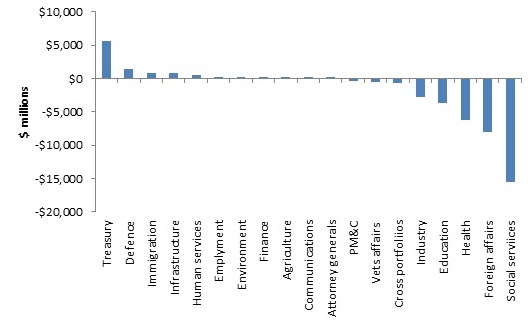
The Abbott government's first budget in May 2014 marked a significant shift in environmental policy, with ABC News reporting "massive, massive cut" to government environment and climate programs [4].
The Biodiversity Fund was effectively abolished as the Coalition replaced Labor's carbon pricing mechanism with the voluntary Emissions Reduction Fund (ERF), which commenced in December 2014 [3].
The ERF uses the Carbon Farming Initiative (CFI) as its statutory vehicle but operates under a fundamentally different voluntary market-based approach rather than the grant-based Biodiversity Fund model.
缺失的脈絡
此聲明 cǐ shēng míng 遺漏 yí lòu 了 le 幾個 jǐ gè 重要 zhòng yào 的 de 背景 bèi jǐng 要素 yào sù : :
The claim omits several important contextual elements:
1. **The Biodiversity Fund was part of the carbon price package**: The Fund was intrinsically linked to the Clean Energy Future plan, which included a carbon pricing mechanism that the Coalition had campaigned explicitly to abolish [2].
The abolition of the Biodiversity Fund was part of a broader dismantling of the carbon price framework that had been central to Coalition policy opposition.
2. **Labor had already reduced funding**: The outgoing Labor government in the 2013-14 Budget had already reduced Biodiversity Fund funding by $32.3 million and rephased $225.4 million to later years, indicating fiscal pressures affected both parties' approach to the program [1].
3. **Replacement policy existed**: The Coalition replaced the Biodiversity Fund with the Emissions Reduction Fund (ERF), which while operating under different principles (voluntary vs. grants), was presented as the new mechanism for achieving carbon and biodiversity outcomes [3].
4. **Budget consolidation context**: The 2014 budget was delivered in a context where the government claimed Australia faced a "budget emergency" requiring significant spending reductions across multiple portfolios [5].
原始 yuán shǐ 來源 lái yuán 為 wèi 《 《 The The Australian Australian 》 》 報紙 bào zhǐ , , 由 yóu News News Corp Corp Australia Australia 擁有 yōng yǒu 。 。
The original source is *The Australian* newspaper, which is owned by News Corp Australia.
根據 gēn jù Media Media Bias Bias / / Fact Fact Check Check , , 《 《 The The Australian Australian 》 》 具有 jù yǒu 中間 zhōng jiān 偏右 piān yòu 的 de 編輯 biān jí 傾向 qīng xiàng , , 在 zài 各種 gè zhǒng 政策 zhèng cè 議題 yì tí 上 shàng 有 yǒu 明顯 míng xiǎn 的 de 保守 bǎo shǒu 立場 lì chǎng [ [ 6 6 ] ] 。 。
According to Media Bias/Fact Check, *The Australian* has a center-right editorial bias, with distinct conservative positions on various policy topics [6].
該報 gāi bào 整合 zhěng hé 來 lái 自 zì 海外 hǎi wài News News Corp Corp 出版物 chū bǎn wù 的 de 內容 nèi róng , , 包括 bāo kuò 右 yòu 傾 qīng 的 de 《 《 Wall Wall Street Street Journal Journal 》 》 和 hé 《 《 The The Times Times 》 》 [ [ 6 6 ] ] 。 。
The newspaper integrates content from overseas News Corp publications including the right-leaning *Wall Street Journal* and *The Times* of London [6].
While *The Australian* is a mainstream national newspaper with professional journalism standards, its editorial stance leans conservative, which is relevant when assessing coverage of Coalition government environmental policy changes.
所 suǒ 引用 yǐn yòng 的 de 特定 tè dìng 文章 wén zhāng 似乎 sì hū 是 shì 對 duì 預算 yù suàn 決定 jué dìng 的 de 事實 shì shí 報導 bào dǎo , , 而 ér 非 fēi 評論 píng lùn 內容 nèi róng 。 。
The specific article cited appears to be factual reporting on budget decisions rather than opinion content.
**Did Labor do something similar?**
Search conducted: "Labor government environmental programs funding cuts conservation"
Finding: The Rudd-Gillard Labor Government (2007-2013) did not abolish comparable major environmental programs established by its predecessor.
* * * *
However, Labor did:
1. **Already reduced the Biodiversity Fund**: The 2013-14 Labor Budget reduced Biodiversity Fund funding by $32.3 million and rephased $225.4 million to later years [1], demonstrating fiscal pressures were already affecting the program before the Coalition took office.
2. **Made cuts to environmental programs**: In July 2013, the Labor government announced millions of dollars in cuts to the Biodiversity Fund and Carbon Farming Futures program to help pay for the transition to a floating carbon price [7].
3. **Different approach to environmental funding**: Labor's record shows they generally increased environmental program establishment (creating the Biodiversity Fund, Clean Energy Future package, etc.) rather than abolishing existing programs.
The main exception was modifying or reducing programs they themselves had created when fiscal circumstances required.
**Comparison:** The Coalition's approach differed from Labor's in that the Coalition systematically dismantled programs created by the previous government as a matter of policy principle (opposition to carbon pricing), whereas Labor's reductions were primarily fiscal adjustments to their own programs.
The Abbott government campaigned on abolishing the carbon price and associated mechanisms, and the dismantling of the Biodiversity Fund was consistent with this mandate [3].
The Coalition argued that the Emissions Reduction Fund (ERF), which replaced the carbon pricing architecture including the Biodiversity Fund, would achieve emissions reductions more cost-effectively through a voluntary, incentive-based approach rather than grants and regulatory mechanisms [3].
However, critics noted that the ERF represented a fundamentally different approach that shifted from direct biodiversity investment to carbon offset-focused mechanisms, potentially reducing support for biodiversity conservation that didn't directly generate carbon credits [2].
The context of fiscal consolidation provided justification for the cuts, though critics argued the "budget emergency" was overstated and the cuts disproportionately targeted environmental programs while other areas were protected [5].
This occurred following the 2013 election and was implemented through the 2014 budget process and subsequent repeal of the carbon pricing legislation.
該 gāi 聲明 shēng míng 在 zài 事實 shì shí 上 shàng 是 shì 準確 zhǔn què 的 de , , 但 dàn 遺漏 yí lòu 了關 le guān 於 yú 該 gāi 計劃 jì huà 與 yǔ 碳定價 tàn dìng jià 的 de 聯 lián 繫 xì 、 、 替代 tì dài 機制 jī zhì ( ( ERF ERF ) ) 的 de 存在 cún zài , , 以及 yǐ jí 即將 jí jiāng 離任 lí rèn 的 de Labor Labor 政府 zhèng fǔ 先前 xiān qián 資金 zī jīn 削減 xuē jiǎn 的 de 背景 bèi jǐng 。 。
The claim is factually accurate, though it omits context about the program's link to the carbon price, the existence of replacement mechanisms (ERF), and prior funding reductions by the outgoing Labor government.
This occurred following the 2013 election and was implemented through the 2014 budget process and subsequent repeal of the carbon pricing legislation.
該 gāi 聲明 shēng míng 在 zài 事實 shì shí 上 shàng 是 shì 準確 zhǔn què 的 de , , 但 dàn 遺漏 yí lòu 了關 le guān 於 yú 該 gāi 計劃 jì huà 與 yǔ 碳定價 tàn dìng jià 的 de 聯 lián 繫 xì 、 、 替代 tì dài 機制 jī zhì ( ( ERF ERF ) ) 的 de 存在 cún zài , , 以及 yǐ jí 即將 jí jiāng 離任 lí rèn 的 de Labor Labor 政府 zhèng fǔ 先前 xiān qián 資金 zī jīn 削減 xuē jiǎn 的 de 背景 bèi jǐng 。 。
The claim is factually accurate, though it omits context about the program's link to the carbon price, the existence of replacement mechanisms (ERF), and prior funding reductions by the outgoing Labor government.