The Abbott government's 2014 federal budget did reintroduce twice-yearly indexation of the fuel excise to CPI, effective from 1 August 2014 (later adjusted to 10 November 2014) [1].
The measure was expected to raise $3.7 billion over its first four years [1].
這些 zhè xiē 收入 shōu rù 專門 zhuān mén 指定 zhǐ dìng 用 yòng 於 yú 道路 dào lù 基礎 jī chǔ 設施 shè shī 項目 xiàng mù , , 包括 bāo kuò 雪梨 xuě lí 的 de WestConnex WestConnex 、 、 墨爾本 mò ěr běn 的 de East East West West Link Link 、 、 Ipswich Ipswich Motorway Motorway 升級 shēng jí 工程 gōng chéng 以及 yǐ jí Toowoomba Toowoomba Second Second Range Range Crossing Crossing [ [ 1 1 ] ] 。 。
The revenue was specifically earmarked for road infrastructure projects including WestConnex in Sydney, Melbourne's East West Link, the Ipswich Motorway upgrade, and the Toowoomba Second Range Crossing [1].
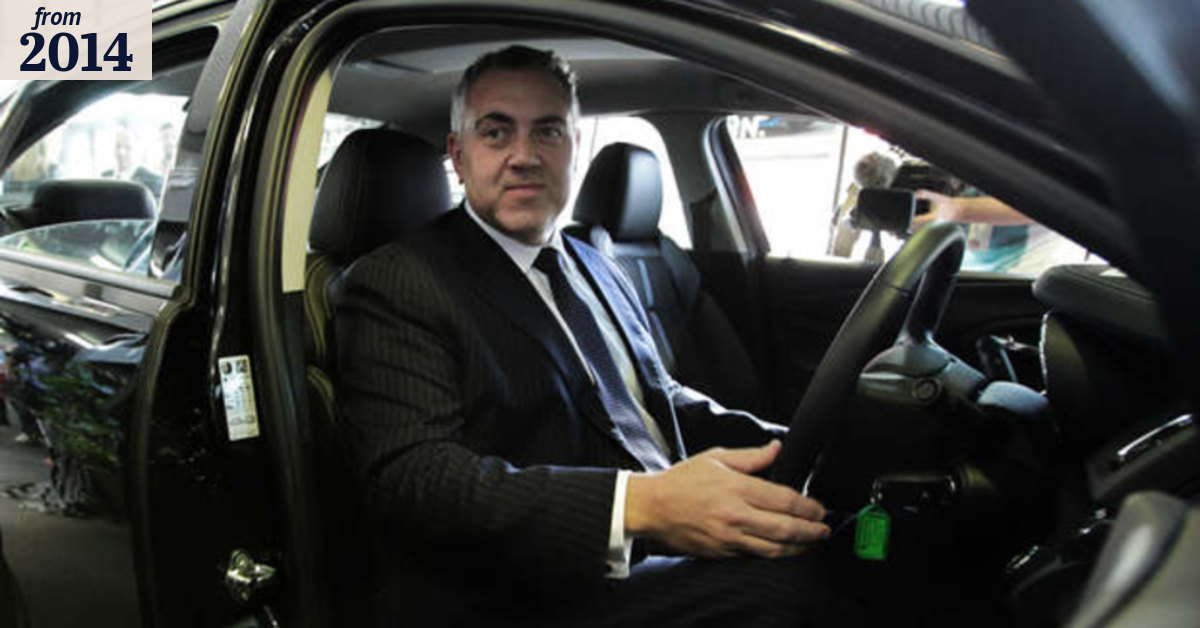
On August 13, 2014, Treasurer Joe Hockey made controversial comments defending the fuel excise increase during an ABC Radio interview:
> "The people that actually pay the most are higher income people, with an increase in fuel excise… The poorest people either don't have cars or actually don't drive very far in many cases" [3].
Hockey issued a media release the following day citing Australian Bureau of Statistics (ABS) data showing that the highest 20% of households by income pay over three times more in fuel tax than the lowest 20% [3].
The 2014 budget heavily prioritized road infrastructure over public transport, but this represented a continuation of existing federal funding patterns rather than explicit cuts to established public transport programs [1].
The budget allocated significant new funding to road projects while public transport received comparatively less attention in the infrastructure package [1].
Treasury included "not stated" and "not applicable" Census responses (approximately 1.5 million households) in the "no car" category, artificially inflating the percentage of low-income households without vehicles [3].
When using more appropriate ABS data, only about 15% of households in the lowest socioeconomic band had no car, compared to Treasury's claim of over 30% [3].
The claim omits critical research showing that low-income households in outer suburban areas often face "forced car ownership" due to poor public transport access [4].
Professor Graham Currie's research found that low-income households on Melbourne's urban fringe make longer trips (16.4km average) than inner-area residents (6.4km), due to limited public transport options [3].
The 2009-10 ABS Household Expenditure Survey showed that petrol consumed 4.5% of income for low-income households versus only 1.4% for high-income households - making the tax burden three times heavier proportionally on the poor [3].
The claim omits that fuel excise indexation had been frozen since 2001 under the Howard government (Coalition), meaning the 2014 measure simply restored a practice that had existed before [1].
The original sources are all from the Sydney Morning Herald (SMH), a mainstream Fairfax newspaper with center-left editorial leanings [5].
- **SMH articles (2014):** These are news reports and opinion pieces from a reputable mainstream outlet.
While SMH has been editorially critical of Coalition governments, the factual reporting on the budget measures and Hockey's comments is consistent across multiple independent sources including ABC News and SBS [3][6].
- **No partisan advocacy sources:** Unlike some claims in this dataset that cite explicitly partisan websites, these sources are from established Australian media with professional journalism standards.
The Rudd and Gillard Labor governments (2007-2013) maintained this freeze during their terms - meaning they did not increase fuel excise through indexation either.
In this sense, Labor's approach was similar to the Coalition's pre-2014 position.
**Public transport vs roads priority:** Both major Australian parties have historically prioritized roads funding over public transport at the federal level.
Federal infrastructure spending under Labor governments also heavily favored road projects, though the 2014 budget's explicit tying of fuel excise revenue exclusively to roads was a distinctive feature.
**Controversial comments by Labor figures:** While no direct equivalent to Hockey's specific comments exists, Labor politicians have made other controversial statements about cost-of-living pressures that were criticized as out-of-touch.
The roads infrastructure would benefit all Australians, particularly in growth areas
The 2014 budget was explicitly framed as a "budget repair" exercise responding to perceived deficit crisis, with Joe Hockey declaring "the age of entitlement is over" [1].
Outer suburban residents - often lower-income - are "forced" into car ownership due to poor public transport, making them particularly vulnerable to fuel price increases [4]
4.
The "cut to public transport funding" framing is somewhat misleading - the budget heavily favored roads over public transport, but this was more about relative priorities than explicit cuts.
The federal government has limited direct responsibility for public transport (primarily a state responsibility), so this was arguably a continuation of federal infrastructure spending patterns under both parties.
Hockey apologized for his comments, and the controversy contributed to the budget's poor reception and ultimately to Tony Abbott's replacement as Prime Minister in September 2015 [1].
核心 hé xīn 事實 shì shí 元素 yuán sù 是 shì 準確 zhǔn què 的 de : : Coalition Coalition 確實 què shí 通過 tōng guò 2014 2014 年 nián 預算 yù suàn 中 zhōng 的 de 消費稅 xiāo fèi shuì 指數化 zhǐ shù huà 提高 tí gāo 了 le 燃油 rán yóu 成本 chéng běn , , Joe Joe Hockey Hockey 確實 què shí 發表 fā biǎo 了關 le guān 於 yú 窮 qióng 人 rén 不 bù 擁有 yōng yǒu 汽車 qì chē 或 huò 行駛 xíng shǐ 不遠 bù yuǎn 的 de 爭議性 zhēng yì xìng 和 hé 廣受 guǎng shòu 批評 pī píng 的 de 言論 yán lùn 。 。
The core factual elements are accurate: the Coalition did increase fuel costs through excise indexation in the 2014 budget, and Joe Hockey did make the controversial and widely-criticized comments about poor people not owning cars or driving far.
The "public transport funding cuts" framing overstates the situation - the budget prioritized roads over public transport, but this reflects bipartisan federal infrastructure patterns rather than unique Coalition cuts
3.
Labor also maintained the fuel excise freeze during their 2007-2013 government
4.
4 4 . . 該聲 gāi shēng 稱 chēng 忽略 hū lüè 了 le Hockey Hockey 為 wèi 其言論 qí yán lùn 道歉 dào qiàn 的 de 事實 shì shí
The claim omits that Hockey apologized for his comments
The claim accurately identifies a genuine controversy and insensitive remarks by the Treasurer, but presents the situation as uniquely problematic Coalition behavior when the underlying infrastructure spending priorities and fuel excise freeze were bipartisan patterns.
該聲 gāi shēng 稱 chēng 準確 zhǔn què 地識別 dì shí bié 了 le 真正 zhēn zhèng 的 de 爭議 zhēng yì 和 hé 財政部長 cái zhèng bù zhǎng 的 de 不 bù 敏感 mǐn gǎn 言論 yán lùn , , 但將 dàn jiāng 情況 qíng kuàng 呈 chéng 現為 xiàn wèi 獨特 dú tè 的 de Coalition Coalition 問題 wèn tí 行為 xíng wèi , , 而 ér 基礎 jī chǔ 設施 shè shī 支出 zhī chū 優先 yōu xiān 順序 shùn xù 和 hé 燃油 rán yóu 消費稅 xiāo fèi shuì 凍結 dòng jié 實際 shí jì 上 shàng 是 shì 兩黨 liǎng dǎng 共有 gòng yǒu 的 de 模式 mó shì 。 。
最終分數
6.0
/ 10
部分真實
核心 hé xīn 事實 shì shí 元素 yuán sù 是 shì 準確 zhǔn què 的 de : : Coalition Coalition 確實 què shí 通過 tōng guò 2014 2014 年 nián 預算 yù suàn 中 zhōng 的 de 消費稅 xiāo fèi shuì 指數化 zhǐ shù huà 提高 tí gāo 了 le 燃油 rán yóu 成本 chéng běn , , Joe Joe Hockey Hockey 確實 què shí 發表 fā biǎo 了關 le guān 於 yú 窮 qióng 人 rén 不 bù 擁有 yōng yǒu 汽車 qì chē 或 huò 行駛 xíng shǐ 不遠 bù yuǎn 的 de 爭議性 zhēng yì xìng 和 hé 廣受 guǎng shòu 批評 pī píng 的 de 言論 yán lùn 。 。
The core factual elements are accurate: the Coalition did increase fuel costs through excise indexation in the 2014 budget, and Joe Hockey did make the controversial and widely-criticized comments about poor people not owning cars or driving far.
The "public transport funding cuts" framing overstates the situation - the budget prioritized roads over public transport, but this reflects bipartisan federal infrastructure patterns rather than unique Coalition cuts
3.
Labor also maintained the fuel excise freeze during their 2007-2013 government
4.
4 4 . . 該聲 gāi shēng 稱 chēng 忽略 hū lüè 了 le Hockey Hockey 為 wèi 其言論 qí yán lùn 道歉 dào qiàn 的 de 事實 shì shí
The claim omits that Hockey apologized for his comments
The claim accurately identifies a genuine controversy and insensitive remarks by the Treasurer, but presents the situation as uniquely problematic Coalition behavior when the underlying infrastructure spending priorities and fuel excise freeze were bipartisan patterns.
該聲 gāi shēng 稱 chēng 準確 zhǔn què 地識別 dì shí bié 了 le 真正 zhēn zhèng 的 de 爭議 zhēng yì 和 hé 財政部長 cái zhèng bù zhǎng 的 de 不 bù 敏感 mǐn gǎn 言論 yán lùn , , 但將 dàn jiāng 情況 qíng kuàng 呈 chéng 現為 xiàn wèi 獨特 dú tè 的 de Coalition Coalition 問題 wèn tí 行為 xíng wèi , , 而 ér 基礎 jī chǔ 設施 shè shī 支出 zhī chū 優先 yōu xiān 順序 shùn xù 和 hé 燃油 rán yóu 消費稅 xiāo fèi shuì 凍結 dòng jié 實際 shí jì 上 shàng 是 shì 兩黨 liǎng dǎng 共有 gòng yǒu 的 de 模式 mó shì 。 。