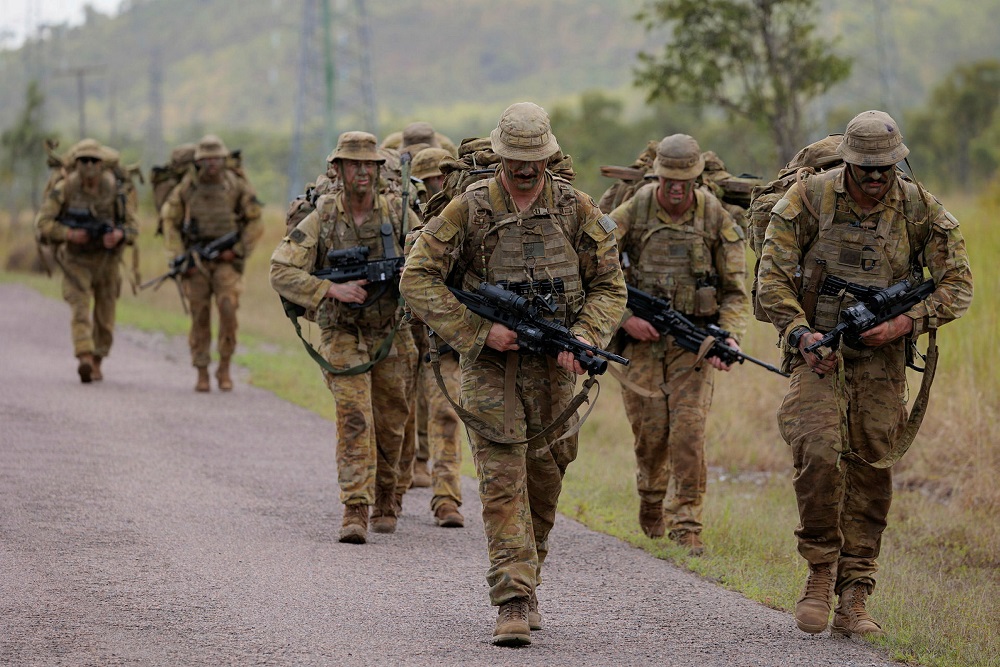
The operation began with humanitarian aid drops and weapons drops to Kurdish forces, escalating to combat operations in September 2014 when RAAF fighter jets and approximately 600 military personnel (including special forces) were deployed [1][2].
The claim states there was "no clear, public and testable objective." However, Prime Minister Tony Abbott publicly stated the objective was to "disrupt and degrade IS, to do as much damage as possibly can be done to IS and hopefully to drive it from Iraq" [2].
Defence Minister David Johnston stated the "end game is that we will disrupt and potentially destroy what is in the minds of the leadership of ISIL" [2].
The operation ultimately lasted 10 years (2014-2024), concluding in December 2024 without ISIS being fully destroyed [5], suggesting the objectives were either inadequately defined or overly ambitious.
The claim states there was "no proposed timeline." Abbott acknowledged the mission could take "many, many months" but no firm end date was established [2].
該聲 gāi shēng 稱 chēng 指出 zhǐ chū 「 「 沒有 méi yǒu 提出 tí chū 時間 shí jiān 表 biǎo 」 」 。 。
This was criticized by the Greens, who noted "no limit to the numbers of personnel nor the duration of their involvement" [2].
這 zhè 受到 shòu dào 了 le 綠黨 lǜ dǎng 的 de 批評 pī píng , , 他們 tā men 指出 zhǐ chū 「 「 人員 rén yuán 數量 shù liàng 和 hé 參 cān 與 yǔ 時間 shí jiān 都 dōu 沒 méi 有 yǒu 限制 xiàn zhì 」 」 [ [ 2 2 ] ] 。 。
The claim states there was "no explanation of why we won't fail just like the last time." This is **incorrect**.
### ### 與 yǔ 2003 2003 年 nián 的 de 比 bǐ 較 jiào
Abbott explicitly differentiated the 2014 mission from the 2003 Iraq War, stating: "It's a very different government, it's a very different coalition, to the one that we last saw in this part of the world" and emphasized that "the Iraqi government has welcomed the international military involvement" [2].
Both the Coalition and Labor voted together to block attempts to bring on parliamentary debate about Australia's involvement [3][4].
### ### 國會 guó huì 辯論 biàn lùn
In September 2014, Senate crossbenchers attempted to force a debate, but Labor sided with the government in rejecting calls for parliamentary approval [3].
Opposition Leader Bill Shorten stated Labor's position was that it would be "unacceptable … to cooperate with evil by doing nothing" and supported the deployment [4].
The claim omits that Australia was part of a 40-nation international coalition against ISIS, with operations coordinated through the UN and at the request of the Iraqi government [2].
While the $7.6 billion aid budget cut is accurate, the claim omits that this was part of broader budget consolidation efforts, not uniquely targeted at Iraq.
The Coalition also announced 4,400 humanitarian places for Iraqis and Syrians fleeing violence (though within the existing 13,750 annual humanitarian program) [6].
**New Matilda** (original source): Rated as having "Left Bias" by Media Bias/Fact Check, described as "moderately to strongly biased toward liberal causes through story selection and/or political affiliation" [9].
An independent online publication known for progressive political commentary.
雖然 suī rán 不是 bú shì 主流 zhǔ liú 媒體 méi tǐ , , 但 dàn 它 tā 通常 tōng cháng 報導 bào dǎo 事實 shì shí 信息 xìn xī , , 但 dàn 有 yǒu 明確 míng què 的 de 政治 zhèng zhì 框架 kuāng jià 。 。
While not mainstream media, it generally reports factual information but with clear political framing.
**ASPI Strategist**: The Australian Strategic Policy Institute is Australia's premier defence and strategic policy think tank.
The original ASPI source used in the claim was arguing *for* parliamentary debate, not against intervention.
**The Guardian Australia**: Mainstream international news outlet with generally progressive editorial stance but journalistic credibility.
**Did Labor do something similar?**
Search conducted: "Labor government 2003 Iraq war parliamentary debate"
Finding: Under the Keating and Hawke governments, Labor also deployed troops without parliamentary votes.
* * * *
Most significantly, in 2003, the Howard government committed Australia to the Iraq War without formal parliamentary approval or debate - matching the approach taken in 2014 [8].
**Key finding**: When in government, Labor has also deployed troops without parliamentary approval.
In 2014, Labor as Opposition *supported* the Coalition's decision and actively voted against parliamentary debate [3][4], making this a bipartisan position rather than partisan Coalition overreach.
**Labor's position on war powers reform**: The Australian Labor Party has never supported legislative reform for parliamentary war powers while in Government or in Opposition, though in March 2021 they expressed qualified support [7].
雖然 suī rán 該 gāi 聲稱 shēng chēng 準確 zhǔn què 地 dì 指出 zhǐ chū 了 le 澳洲 ào zhōu 2014 2014 年 nián 伊拉克 yī lā kè 介入 jiè rù 的 de 幾個 jǐ gè 令人 lìng rén 擔憂 dān yōu 的 de 方面 fāng miàn — — — — 缺乏 quē fá 國會 guó huì 辯論 biàn lùn 、 、 沒有 méi yǒu 明確 míng què 指標 zhǐ biāo 的 de 模糊 mó hú 目標 mù biāo 、 、 沒有 méi yǒu 確定 què dìng 時間 shí jiān 表 biǎo , , 以及 yǐ jí 將其稱 jiāng qí chēng 為 wèi 「 「 人道 rén dào 主義 zhǔ yì 」 」 行動 xíng dòng 的 de 同時 tóng shí 削減 xuē jiǎn 援助 yuán zhù 的 de 矛盾 máo dùn — — — — 但 dàn 其 qí 框架 kuāng jià 暗示 àn shì 這是 zhè shì 聯盟 lián méng 黨 dǎng 獨特 dú tè 的 de 有 yǒu 問題 wèn tí 行為 xíng wèi 。 。
While the claim accurately identifies several concerning aspects of Australia's 2014 Iraq intervention - the lack of parliamentary debate, vague objectives without clear metrics, no firm timeline, and the contradiction of calling it "humanitarian" while cutting aid - the framing implies this was uniquely problematic Coalition behavior.
現實 xiàn shí 更 gèng 為 wèi 細微 xì wēi : :
The reality is more nuanced:
1. **Bipartisan support**: Labor supported the deployment and voted with the Coalition to block parliamentary debate [3][4].
This was not a partisan issue.
2. **Executive tradition**: Prime ministers of both parties have deployed troops without parliamentary approval.
這 zhè 不是 bú shì 黨派 dǎng pài 問題 wèn tí 。 。
Howard did so in 2003; Labor governments have done similarly [7][8].
3. **Some objectives were stated**: Abbott did publicly articulate objectives (disrupt/degrade ISIS, drive them from Iraq) and differentiated the mission from 2003 [2], though these objectives were vague and ultimately unachieved within the stated timeframe.
4. **Multilateral context**: Australia was acting as part of a 40-nation coalition at the Iraqi government's request, with UN Security Council involvement [2].
The key legitimate criticisms remain: (1) objectives were inadequately defined with no clear success metrics; (2) the operation lasted 10 years (2014-2024) rather than "many months" [5]; (3) the humanitarian framing contradicted aid cuts; and (4) both major parties denied Parliament a meaningful debate or vote.
**Key context**: This is NOT unique to the Coalition - both parties have maintained executive war powers and both supported the 2014 Iraq deployment without parliamentary scrutiny.
The claim contains verified elements: there was no firm timeline (Operation Okra lasted 10 years rather than the "many months" suggested), there was no parliamentary debate or vote (both parties blocked this), and the government did call it a "humanitarian mission" while cutting aid to Iraq from $7.7 million to zero [6].
However, the claim is incorrect in stating there was "no explanation" of why this would differ from 2003 - Abbott explicitly cited the Iraqi government's invitation and different coalition dynamics [2].
Most importantly, the claim's partisan framing ignores that Labor supported the deployment and voted with the Coalition against parliamentary debate [3][4], making this a failure of the Australian political system generally, not uniquely a Coalition failing.
The claim contains verified elements: there was no firm timeline (Operation Okra lasted 10 years rather than the "many months" suggested), there was no parliamentary debate or vote (both parties blocked this), and the government did call it a "humanitarian mission" while cutting aid to Iraq from $7.7 million to zero [6].
However, the claim is incorrect in stating there was "no explanation" of why this would differ from 2003 - Abbott explicitly cited the Iraqi government's invitation and different coalition dynamics [2].
Most importantly, the claim's partisan framing ignores that Labor supported the deployment and voted with the Coalition against parliamentary debate [3][4], making this a failure of the Australian political system generally, not uniquely a Coalition failing.