
The Claim
“Refused to send the Prime Minister to a UN climate summit with 125 other heads of state, even though the Prime Minister was attending another UN summit in the same city the next day.”
Original Sources Provided
✅ FACTUAL VERIFICATION
The core facts of this claim are accurate. The 2014 UN Climate Summit was held in New York on September 23, 2014, and was attended by approximately 125 heads of state [1]. Prime Minister Tony Abbott did not attend, instead sending Foreign Minister Julie Bishop to represent Australia [1]. Abbott was scheduled to arrive in New York the following day (September 24-25) to attend a UN Security Council meeting on terrorism and Iraq, as well as deliver Australia's national statement to the UN General Assembly [1][2].
EU Climate Action Commissioner Connie Hedegaard publicly expressed surprise at Abbott's absence, stating "It is, of course, I think, a pity that not everyone is going" and noting that "the world will interpret who is showing up and who will not be showing up" [1].
Abbott's stated reason for not attending was that his "first duty" was to the Australian Parliament, which was sitting during that week [1][2]. The government had significant anti-terrorism legislation planned for introduction, and Abbott was scheduled to deliver a major national security statement to Parliament on September 22, 2014 [3][4].
Missing Context
The claim omits several important contextual elements:
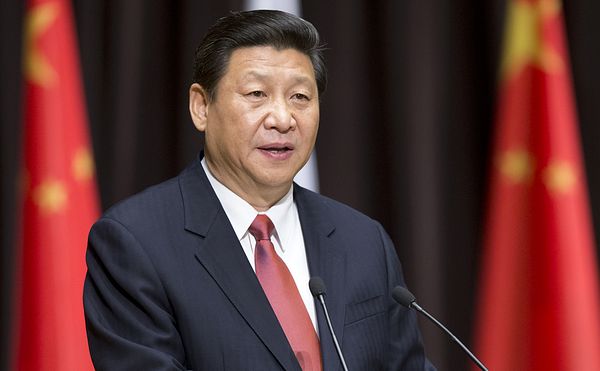
Other major leaders also absent: China President Xi Jinping and India Prime Minister Narendra Modi—representing two of the world's largest emitters—also did not attend the summit [5][6]. Their absence was arguably more significant given their countries' emissions profiles, yet the claim focuses exclusively on Australia.
Nature of the summit: The 2014 UN Climate Summit was a one-day preparatory event designed to build momentum for the more substantive Paris 2015 negotiations [1]. It was not a formal negotiating session like the 2009 Copenhagen summit, which lasted 11 days and involved complex treaty negotiations.
Australia was represented: Foreign Minister Julie Bishop did attend the summit and delivered Australia's statement, announcing a $200 million contribution to the Green Climate Fund and hosting commitments for an Asia-Pacific Rainforest Summit [7][8]. Australia was not "unrepresented" as the claim might imply.
Significant domestic priorities: The parliamentary sitting week in question included the introduction of major counter-terrorism legislation following heightened security concerns, including threats from the Islamic State and domestic terrorism risks [3][4]. Abbott's decision to prioritize Parliament was not without substantive justification.
Recent policy context: Abbott had campaigned on and delivered the repeal of Australia's carbon tax in July 2014 [9][10]. His government's climate policy prioritized direct action programs over emissions trading schemes—a policy difference, not merely an attendance snub.
Source Credibility Assessment
ABC News: Australia's national public broadcaster, generally regarded as reputable and balanced. The cited article provides factual reporting with quotes from both the EU Commissioner and Abbott's defense. No significant bias detected in the reporting itself [1].
Canberra Times: Regional daily newspaper, generally mainstream. The article title indicates critical coverage of Australia's climate stance at the summit, which may reflect editorial perspective. Without accessing the full article, the framing appears to focus on criticism rather than balanced assessment.
Both sources are from September 2014, contemporaneous with the events, which strengthens their reliability for factual claims.
Labor Comparison
Did Labor do something similar?
Search conducted: "Kevin Rudd Copenhagen climate summit 2009 Australia attendance UN"
Finding: The Rudd Labor Government (2007-2010) took a markedly different approach to climate summit attendance. Prime Minister Kevin Rudd did attend the 2009 UN Climate Change Conference (Copenhagen Summit) from December 7-18, 2009 [11][12].
However, direct comparison requires acknowledging key differences:
Nature of summits: Copenhagen was an 11-day formal negotiating conference attempting to create a binding international treaty—the most significant climate negotiation since Kyoto [13]. The 2014 New York summit was a one-day preparatory meeting for momentum-building ahead of Paris 2015 [1].
Copenhagen outcome: Despite Rudd's attendance, the Copenhagen summit ended with only a weak political statement and no legally binding commitments [14]. High-level attendance did not translate to successful outcomes.
Domestic policy divergence: The Rudd/Gillard governments implemented a carbon pricing scheme (the "carbon tax"), while the Abbott government campaigned explicitly on repealing it [9][10]. The different attendance decisions partly reflect these divergent policy approaches rather than simply a refusal to engage.
Conclusion: Labor leaders did attend major climate summits, but the summits themselves differed significantly in purpose and format. Abbott's decision not to attend the 2014 one-day preparatory summit, while in New York the next day, contrasts with Labor's attendance at the multi-day Copenhagen negotiations.
Balanced Perspective
The claim accurately describes the factual situation but frames it to maximize criticism while omitting mitigating context.
Legitimate criticisms: Abbott's decision not to attend—while being in the same city the following day—was widely interpreted internationally as signaling low priority for climate action [1]. The EU Commissioner's public expression of surprise indicates Australia's absence was noted and considered significant by international partners. Coming shortly after carbon tax repeal, the decision reinforced perceptions of Australia's retreat from climate leadership.
Missing context and justifications:
Substantive domestic priorities: Abbott cited parliamentary duties, and this was not merely a pretext. The September 2014 parliamentary sitting included major counter-terrorism legislation following legitimate security concerns, and Abbott delivered a significant national security statement [3][4]. The balance between international summit attendance and domestic legislative duties involves genuine trade-offs.
Not unique to Australia: China and India—the world's largest and third-largest emitters—also did not send their leaders [5][6]. Australia's absence, while noteworthy, was part of a broader pattern of major emitters declining to send heads of government to what was explicitly a non-binding preparatory event.
Australia was represented: Julie Bishop attended and delivered Australia's commitments, including $200 million in climate funding announcements [7][8]. The claim implies Australia was absent; in reality, Australia was represented by its Foreign Minister rather than Prime Minister.
Different policy framework: Abbott's government had been elected on a platform that explicitly rejected the previous government's carbon pricing approach [9][10]. His attendance decision was consistent with this policy divergence—he was not simply ignoring an issue his government actively supported.
Comparative context: The Rudd government's attendance at Copenhagen (2009) produced no binding international agreement despite high-level participation [14]. The causal link between prime ministerial attendance and climate outcomes is not straightforward. Both parties have historically made attendance decisions based on a combination of policy priorities, domestic political considerations, and the significance of the specific summit.
Key context: This was a visible diplomatic choice that reinforced perceptions of Australia's climate policy shift, but it was neither unprecedented internationally nor without domestic justification. The framing as a simple "refusal" obscures both the genuine domestic priorities involved and the fact that Australia was represented at the summit by its Foreign Minister.
TRUE
6.0
out of 10
The core factual claim is accurate: Abbott did not attend the 2014 UN Climate Summit despite being in New York the following day for a UN Security Council meeting, while 125+ other heads of state attended. However, the claim omits critical context that would enable balanced assessment:
- Other major emitters (China, India) also did not send their leaders to this preparatory, non-binding summit
- Australia was represented by Foreign Minister Julie Bishop, who made substantive climate commitments
- Abbott had legitimate domestic priorities—parliamentary sitting week with significant anti-terrorism legislation
- The summit was a one-day preparatory event for Paris 2015, not a formal negotiating conference
- Abbott's decision aligned with his government's policy shift away from carbon pricing, which had been an explicit election mandate
The claim presents the attendance decision in isolation from these mitigating factors, creating a more negative impression than the full context supports.
Final Score
6.0
OUT OF 10
TRUE
The core factual claim is accurate: Abbott did not attend the 2014 UN Climate Summit despite being in New York the following day for a UN Security Council meeting, while 125+ other heads of state attended. However, the claim omits critical context that would enable balanced assessment:
- Other major emitters (China, India) also did not send their leaders to this preparatory, non-binding summit
- Australia was represented by Foreign Minister Julie Bishop, who made substantive climate commitments
- Abbott had legitimate domestic priorities—parliamentary sitting week with significant anti-terrorism legislation
- The summit was a one-day preparatory event for Paris 2015, not a formal negotiating conference
- Abbott's decision aligned with his government's policy shift away from carbon pricing, which had been an explicit election mandate
The claim presents the attendance decision in isolation from these mitigating factors, creating a more negative impression than the full context supports.
📚 SOURCES & CITATIONS (14)
-
1
Climate Summit: European Union surprised Tony Abbott will not attend high level climate talks
The European Union's climate chief says it is a pity Prime Minister Tony Abbott will not attend a major UN climate meeting in New York next week.
Abc Net -
2
Tony Abbott defends UN climate change meeting snub
PM says his first duty is to the parliament, not to world climate meeting in New York.
Thenewdaily Com -
3
PM warns of more security, less freedom, ahead of anti-terror laws
Sarah Ferguson presents Australia's premier daily current affairs program, delivering agenda-setting public affairs journalism and interviews that hold the powerful to account. Plus political analysis from Laura Tingle.
Abc Net -
4

Abbott to make parliamentary statement on terrorism fight
Prime Minister Tony Abbott will make a statement to Parliament on Monday on national security developments at home and abroad, as the government prepares to introduce counter-terrorism legislation centred…
The Conversation -
5
Top Leaders From China, India to Skip UN Climate Change Summit
Xi Jinping and Narendra Modi will be absent from the September 23 world leaders’ summit on climate change.
Thediplomat -
6
China, India leaders are no shows at UN Climate Summit. Why that's OK.
At Tuesday's UN Climate Summit in New York, the leaders of two major carbon emitters are taking a rain check. Why it's unfair to interpret their absence as a rejection of efforts to curb global emissions.
The Christian Science Monitor -
7
United Nations Secretary-General's Climate Summit
Dfat Gov
-
8
Climate change: Julie Bishop announces Australia's $200 million contribution to UN Green Climate Fund
The Federal Government announces it will give $200 million to a UN climate change fund, despite previously indicating it did not intend to make a contribution.
Abc Net -
9
Carbon tax scrapped: PM Tony Abbott sees key election promise fulfilled
Australia no longer has a carbon tax, after the Government finally secured enough Senate support to kill it off, fulfilling a key election promise for Prime Minister Tony Abbott. The final vote was won by the Coalition 39 to 32 with the help of the micro-party senators, including those from Palmer United. "It will be good for confidence, the abolition of the carbon tax ... it will be a sign to the Australian people that this is a government which does keep its commitments," Mr Abbott told the ABC's 7.30 program. "Because the price of power is a component of just about every price in the economy; when the price of power falls, other prices should go down as well."
Abc Net -
10
Australia scraps carbon tax
Science
-
11

Rudd confirms Copenhagen attendance
Prime Minister Kevin Rudd confirmed on Thursday he would travel to Copenhagen in December for the United Nations conference on climate change.
The Sydney Morning Herald -
12
Australia's Rudd Looks for Success in Copenhagen
Nytimes
-
13

Copenhagen climate summit
Wikipedia -
14

Leaders skip UN talks as China looks to go it alone on carbon
There are a few notable absentees among the more than 120 world leaders gathered in New York for today’s United Nations Climate Summit. Perhaps most notable of all is the head of the world’s highest-emitting…
The Conversation
Rating Scale Methodology
1-3: FALSE
Factually incorrect or malicious fabrication.
4-6: PARTIAL
Some truth but context is missing or skewed.
7-9: MOSTLY TRUE
Minor technicalities or phrasing issues.
10: ACCURATE
Perfectly verified and contextually fair.
Methodology: Ratings are determined through cross-referencing official government records, independent fact-checking organizations, and primary source documents.