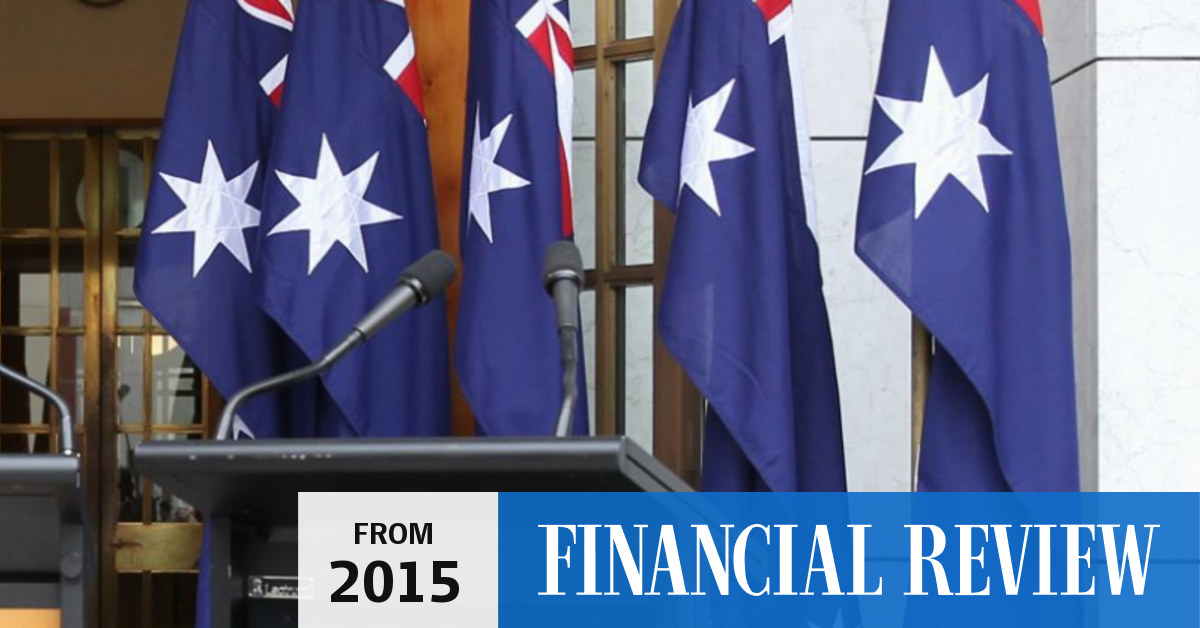
According to parliamentary expense records analyzed by the Australian Financial Review and Sydney Morning Herald, federal politicians collectively spent $502,000 on Australian flags during the second half of 2014 (July 1 to December 31, 2014) [1][2].
This represented a significant spike in flag purchases coinciding with the national terrorism alert level rising to "high" following IS threats, terrorist raids in Brisbane and Sydney, and the Lindt Cafe siege [1].
支出 zhī chū 細目 xì mù 顯示 xiǎn shì : :
The spending breakdown reveals:
- **Coalition MPs:** Approximately $330,000 (66% of total)
- **Labor MPs:** Approximately $130,000 (26% of total)
- **Other parties/independents:** Remaining balance [1]
The top individual spenders were:
1.
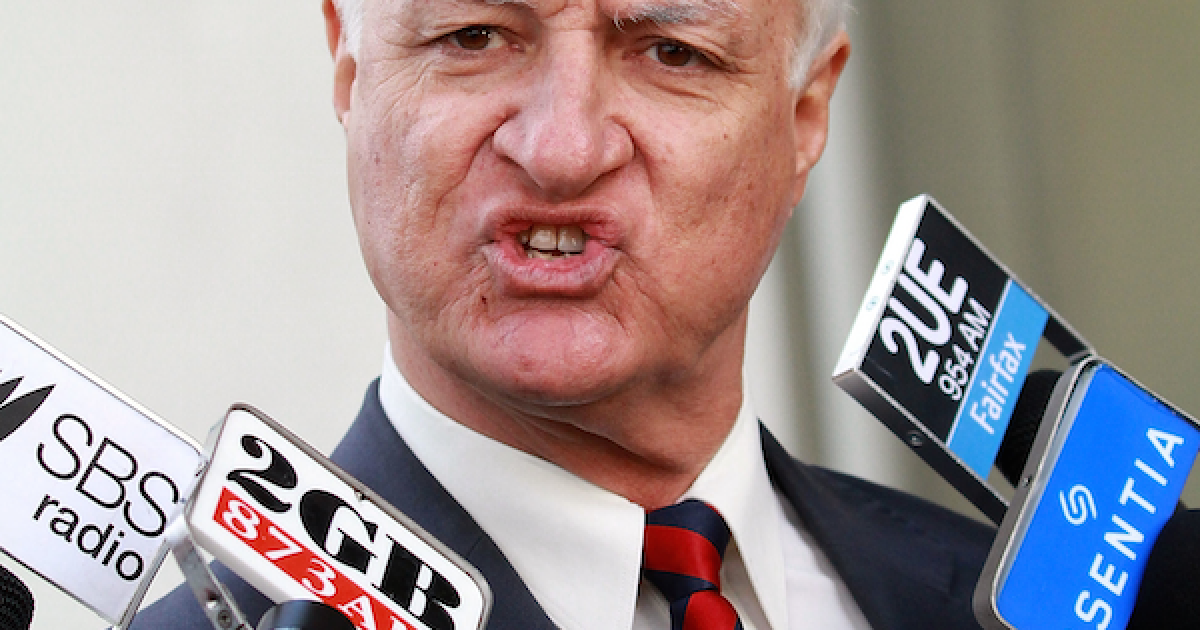
National MP Bruce Scott: $12,236 [1][2]
Notably, Prime Minister Tony Abbott purchased **zero** flags during this period, despite his press conferences becoming famous for featuring multiple Australian flags as backdrops [1].
Politicians were entitled to distribute unlimited numbers of large flags to schools, RSLs, and eligible community organizations, plus up to 50 large flags to private individuals and $900 worth of desktop/hand-waver flags [1].
Timing Context**
The spending surge coincided with specific national security events:
- National terrorism alert level raised to "high" (September 2014)
- High-profile terrorist raids in Brisbane and Sydney
- Lindt Cafe siege in Martin Place (December 2014)
The increased flag purchases aligned with increased displays of national symbolism during this period of heightened security concerns [1].
**4.
Budget Tightening Response**
Following this spending spike, Treasurer Joe Hockey tightened the flag budget effective July 1, 2015.
* * * * 3 3 . . 時間 shí jiān 背景 bèi jǐng * * * *
Senators were placed under a "single office budget" of approximately $98,000, while lower house MPs received approximately $130,000 budgets covering flags, publications, stationery, printing, and software combined [1].
**Sydney Morning Herald (SMH)** and **Australian Financial Review (AFR)** are both reputable mainstream Australian news organizations with high journalistic standards [1][2].
- **SMH:** Fairfax Media publication, established 1831, generally center-left editorial stance but factual reporting standards
- **AFR:** Australia's leading business/financial newspaper, data-driven analysis
Both articles reported the same parliamentary expense data accurately.
**Did Labor do something similar?**
During this same six-month period (July-December 2014), Labor MPs spent approximately $130,000 on flags - roughly 26% of the total $500,000 expenditure [1].
* * * *
This demonstrates that flag purchasing was a bipartisan practice, not unique to the Coalition.
**Historical Context:**
Parliamentary entitlements for flags have existed across multiple governments.
The ability for MPs to purchase flags for distribution to schools, community groups, and constituents has been a standard feature of parliamentary allowances under both Labor and Coalition governments.
The spike in 2014 was unusual in magnitude but not in practice.
* * * * 歷史 lì shǐ 背景 bèi jǐng : : * * * *
The fact that the Coalition spent more ($330K vs $130K) correlates with their being in government during a period of heightened national security focus, where flag displays at official events increased significantly.
**What the claim gets right:**
- The $500,000 figure is accurate
- The 6-month timeframe is accurate (July-December 2014)
- The spending did occur during the Coalition government period
**What the claim gets wrong:**
- This was **not** Coalition-only spending - it was all federal politicians combined
- The Coalition spent ~$330K, while Labor spent ~$130K during the same period
- This was not a new policy or unusual entitlement - it was standard parliamentary allowances
- Prime Minister Abbott himself purchased zero flags
**Legitimate policy context:**
The flag entitlement serves a legitimate purpose - enabling MPs to provide flags to schools, RSLs, community organizations, and constituents.
- - 50 50 萬 wàn 澳元 ào yuán 數字 shù zì 準確 zhǔn què
This is standard practice in democracies (similar programs exist in the US, UK, Canada).
The spike in 2014 correlated with national security events that increased demand for national symbols.
- - 支出 zhī chū 確實 què shí 發生 fā shēng 在 zài 聯盟 lián méng 黨 dǎng 政府 zhèng fǔ 時期 shí qī
The government responded appropriately to the high spending by tightening the budget from July 2015 onward, indicating fiscal oversight was exercised.
**Key comparison:** While the Coalition's $330,000 represented higher spending than Labor's $130,000, this reflects the Coalition being in government during a period of increased national security focus and ceremonial flag usage.
Prime Minister Abbott himself purchased zero flags
The claim cherry-picks a true statistic but strips away the bipartisan context that would allow readers to understand this was standard parliamentary practice across all parties, not a Coalition-specific expenditure.
Prime Minister Abbott himself purchased zero flags
The claim cherry-picks a true statistic but strips away the bipartisan context that would allow readers to understand this was standard parliamentary practice across all parties, not a Coalition-specific expenditure.