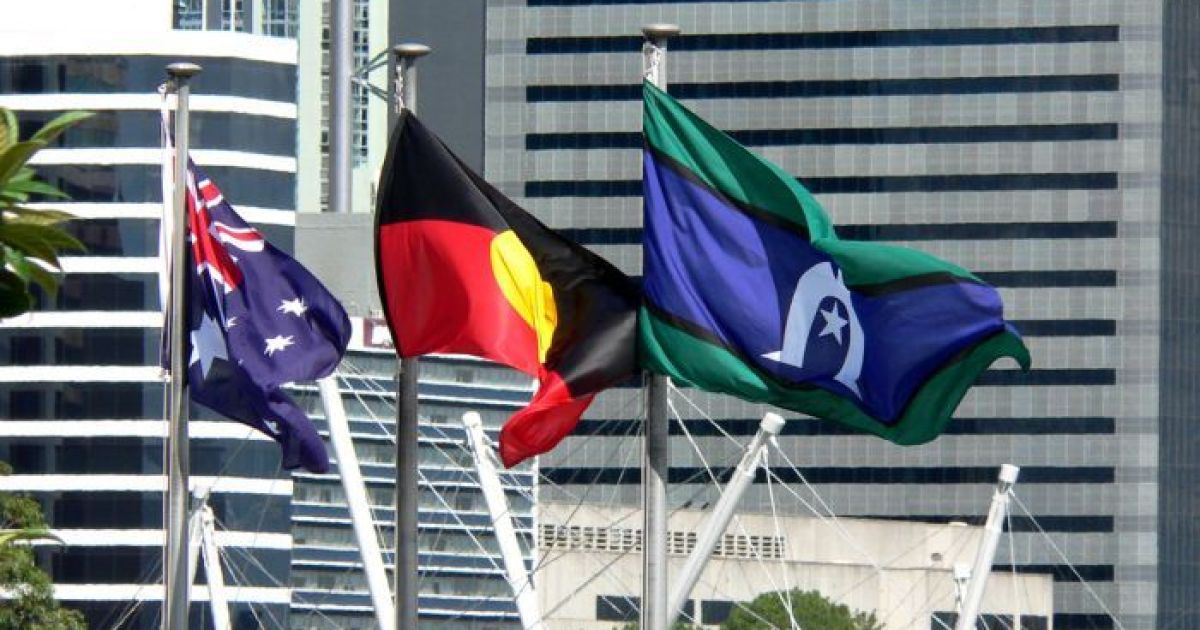
On 10 November 2020, during NAIDOC Week, the Morrison Government Coalition voted against a Labor-led motion to fly the Aboriginal and Torres Strait Islander flags in the Senate chamber [1][2][3].
The motion, tabled by Indigenous Labor senators Malarndirri McCarthy and Pat Dodson along with Greens senator Lidia Thorpe, was defeated 29 votes to 28 [4].
Liberal senator Anne Ruston stated the government position: "The Government believes that the Australian national flag which represents all Australians is the only appropriate flag to be flown in the Senate chamber" [1].
The vote occurred specifically during NAIDOC Week (National Aboriginals and Islanders Day Observance Committee week), which made the timing politically significant [2][3].
When Labor proposed flying the flag in Parliament in September 2020, Minister Ken Wyatt dismissed the proposal as a "stunt," citing the copyright issue as a practical barrier [6].
This was not a trivial concern—the Aboriginal flag had been officially proclaimed as an Australian flag under the Flags Act 1953, but its creator retained copyright, allowing him to restrict commercial use.
On 25 January 2022, Prime Minister Scott Morrison announced the government had acquired copyright to the Aboriginal flag from Harold Thomas for over $20 million, making it freely available for public use [7][8].
After the 2022 election, when Labor returned to government, one of its first actions was to install the Aboriginal and Torres Strait Islander flags in Parliament House.
According to the Parliamentary Library, "One of the noticeable changes that occurred with the new 47th Parliament is the flying of the Aboriginal and the Torres Strait Islander flags alongside the Australian National Flag in the Senate and House chambers" [9].
Ken Wyatt, the Indigenous Affairs Minister (himself Aboriginal), argued this was about not making "symbolism" a substitute for substantive policy on Indigenous disadvantage [10].
The previous Labor government (2007-2013) had also not flown the flags in Parliament, and the copyright issue predated the Coalition's 2013-2022 period.
The article is written in opinion-editorial style with emotionally charged language ("mean-spirited," "Even though we are in the middle of NAIDOC week").
It presents the government vote negatively without substantial exploration of the copyright reasoning or the government's stated position.
**Parliamentary Hansard Records** [2] are primary government documents and are authoritative sources.
These are objective records, though they require interpretation of intent.
**Secondary sources used** (Central News, The New Daily, Mamamia, 9News) are mainstream Australian outlets that reported the event factually but with varying degrees of critical tone toward the government.
Critics of the Coalition's 2020 vote had legitimate grievances:
- The timing during NAIDOC Week appeared insensitive to Indigenous constituencies [3]
- A one-vote margin (29-28) suggested weak conviction from the government
- Ken Wyatt's argument that this was "symbolism" rather than substantive policy was seen as dismissive of Indigenous representation concerns [10]
- The government had resources to resolve copyright barriers but chose not to before voting against the motion
The government's position also had merit:
- The Aboriginal flag faced legitimate copyright restrictions at that time that created legal uncertainty [6]
- The government eventually resolved the copyright issue completely, which was necessary before flying the flag could proceed without legal complications [7][8]
- Minister Ken Wyatt (an Indigenous minister) argued the vote reflected concern about "symbolism over substance" in Indigenous policy [10]
- Establishing new protocols for parliamentary flags is not a trivial administrative matter
The copyright resolution by the Morrison Government in January 2022 was significant.
### ### 政府 zhèng fǔ 的 de 觀點 guān diǎn
By acquiring copyright for over $20 million, the government removed the legal barrier that had prevented any government from flying the flag in Parliament without potential legal complications [7][8].
This suggests the government's 2020 position—while appearing obstructive—was based on a real legal constraint that the government then chose to resolve through acquisition rather than legal gamble.
The coherent reasoning behind the government's position, even if one disagreed with it [1][10]
The claim presents a one-dimensional narrative suggesting the Coalition opposed indigenous symbolism or rights.
The fuller context reveals the issue was more complex: a genuine legal barrier (copyright) that the Coalition eventually resolved (at significant expense), after which Labor implemented flying the flags as soon as it returned to power.
The coherent reasoning behind the government's position, even if one disagreed with it [1][10]
The claim presents a one-dimensional narrative suggesting the Coalition opposed indigenous symbolism or rights.
The fuller context reveals the issue was more complex: a genuine legal barrier (copyright) that the Coalition eventually resolved (at significant expense), after which Labor implemented flying the flags as soon as it returned to power.