This figure was confirmed by multiple authoritative sources including the Australian National Audit Office (ANAO), which stated the government would "save $534.4 million over five years by rationalising Indigenous programs, grants and activities" [2].
The savings were achieved through the Indigenous Advancement Strategy (IAS), which consolidated over 150 separate Indigenous programs, grants and activities into five broad-based program categories: jobs, land and economy; children and schooling; safety and wellbeing; culture and capability; and remote Australia strategies [1][3].
In addition to the $534.4 million program consolidation savings, the budget also cut $15 million over three years by cancelling funding to the National Congress of First Peoples, bringing total Indigenous portfolio savings to approximately $549.4 million [4].
**The claim omits important context about the nature and timeframe of the cuts:**
1. **Timeframe:** The $534 million was a five-year projection (2014-2019), not a single-year cut [2][5].
This averages approximately $107 million per year.
2. **Structural reform, not pure cuts:** The savings came primarily from consolidating 150+ separate programs into five streamlined categories [3].
The government's stated rationale was to "eliminate waste and duplication" and "fix the bureaucratic mess we inherited" [6].
3. **Health program consolidation:** Health funding for Indigenous programs was centralised into one Indigenous Australians' Health Program, consolidating four existing funding streams [7].
4. **Tony Abbott's personal investment:** At the time of these cuts, Prime Minister Abbott had brought Indigenous affairs into his own office and publicly invested considerable political capital in Indigenous issues, including supporting constitutional recognition [6].
This created tension between the symbolic commitment and the budget reality.
5. **Advisory Council perspective:** The Prime Minister's Indigenous Advisory Council acknowledged the cuts but expressed optimism that the $534 million reduction would be "absorbed by reducing the costs of administration" rather than frontline services [5].
It is generally regarded as a credible mainstream news source with statutory independence, though like all media organizations, individual reporting may reflect editorial choices.
**Did Labor do something similar?**
Search conducted: "Labor government Indigenous spending cuts budget reductions"
**Finding:** Direct equivalent cuts to Indigenous-specific programs during the Rudd/Gillard governments (2007-2013) are not well-documented in available sources.
* * * *
However, several relevant comparisons emerge:
1. **Efficiency dividends:** Both Labor and Coalition governments have historically applied efficiency dividends (across-the-board budget reductions) to government departments.
The Rudd/Gillard governments implemented efficiency dividends that affected all portfolios, including Indigenous affairs [10].
2. **Program consolidations:** The Indigenous Advancement Strategy approach of consolidating multiple programs was not unique to the Coalition.
Labor governments also undertook program rationalizations, though the scale of the 2014 consolidation (150+ to 5 programs) was particularly extensive [10].
3. **Historical context:** Program consolidations and efficiency measures have been a feature of federal budgets across multiple governments.
The Howard government before Rudd also undertook Indigenous program reviews [10].
**Comparison:** While the specific $534 million figure was Coalition-specific, the underlying approach—consolidating programs to reduce administrative overhead—has been used by governments of both major parties.
**The full story involves competing perspectives:**
**Government justification:** The Coalition argued the consolidation would improve efficiency by reducing bureaucratic overhead.
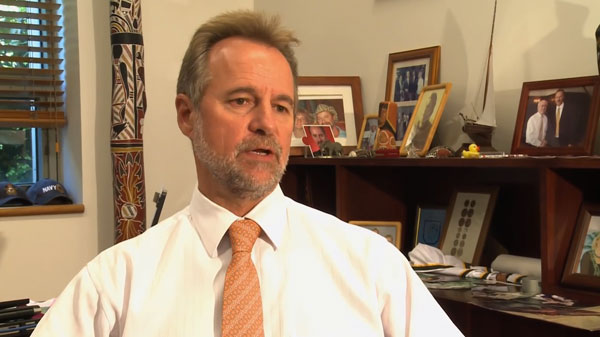
Minister Nigel Scullion stated the changes were designed to "eliminate waste and duplication" and described the previous system as a "bureaucratic mess" [6].
The government maintained that the $4.8 billion commitment to the Indigenous Advancement Strategy demonstrated continued substantial investment despite the savings [2].
**Criticism from Indigenous organizations:** The cuts faced significant opposition from Indigenous organizations and advocacy groups.
The National Congress of First Peoples lost all its funding ($15 million), which was seen as particularly significant given its role as a national representative body [3].
The "rationalisation" was criticized for being made without adequate consultation with affected communities [11].
**ANAO assessment:** The Australian National Audit Office later reviewed the Indigenous Advancement Strategy implementation and found issues with the design and delivery framework, though this was separate from assessing the budget cuts themselves [12].
**International context:** Indigenous funding shortfalls are not unique to Australia.
Comparable issues exist in other countries with Indigenous populations, including Canada and the United States [13].
**Key context:** While the dollar figure ($534 million) is accurate, this was part of a structural reform rather than simply "slashing" services.
The 2014-15 budget announced $534.4 million in savings over five years ($534 million rounds to "over half a billion") through the Indigenous Advancement Strategy [1][2].
However, the simple dollar figure, while true, lacks the context that these were structural savings from consolidating 150+ programs into five categories, spread over five years, and represented a reorganization with stated efficiency goals rather than purely arbitrary cuts [3][6].
The 2014-15 budget announced $534.4 million in savings over five years ($534 million rounds to "over half a billion") through the Indigenous Advancement Strategy [1][2].
However, the simple dollar figure, while true, lacks the context that these were structural savings from consolidating 150+ programs into five categories, spread over five years, and represented a reorganization with stated efficiency goals rather than purely arbitrary cuts [3][6].