The core claim contains elements of truth but requires significant clarification.
New New Daily Daily 的 de 文章 wén zhāng 報導 bào dǎo , , 莫里森 mò lǐ sēn 政府 zhèng fǔ 確實 què shí 拒絕 jù jué 了 le 墨爾本 mò ěr běn 包機業者 bāo jī yè zhě Gaura Gaura Travel Travel 的 de 提議 tí yì , , 即 jí 使用 shǐ yòng 從 cóng 印度 yìn dù 返航 fǎn háng 的 de 航班 háng bān 來 lái 運送 yùn sòng 滯留 zhì liú 的 de 澳洲人 ào zhōu rén [ [ 1 1 ] ] 。 。
The New Daily article reports that the Morrison government did reject offers from Gaura Travel, a Melbourne-based charter flight operator, to use returning flights from India to transport stranded Australians [1].
Gaura's managing director stated: "We have innumerable times applied for permission to do the same [for Australians, as for Indians] but have always been denied" since June 2020, with 35 charter flights organized by that time [1].
然而 rán ér , , 政府 zhèng fǔ 的 de 理由 lǐ yóu 以及 yǐ jí 這項 zhè xiàng 政策 zhèng cè 的 de 實際範圍 shí jì fàn wéi 與 yǔ 標題 biāo tí 主張 zhǔ zhāng 有 yǒu 顯著 xiǎn zhù 差異 chà yì 。 。
However, the government's rationale and the actual scope of this policy differ substantially from the headline claim.
The rejections were specifically related to how returning charter flights could be utilized within Australia's border management framework, not a blanket refusal to use available aircraft.
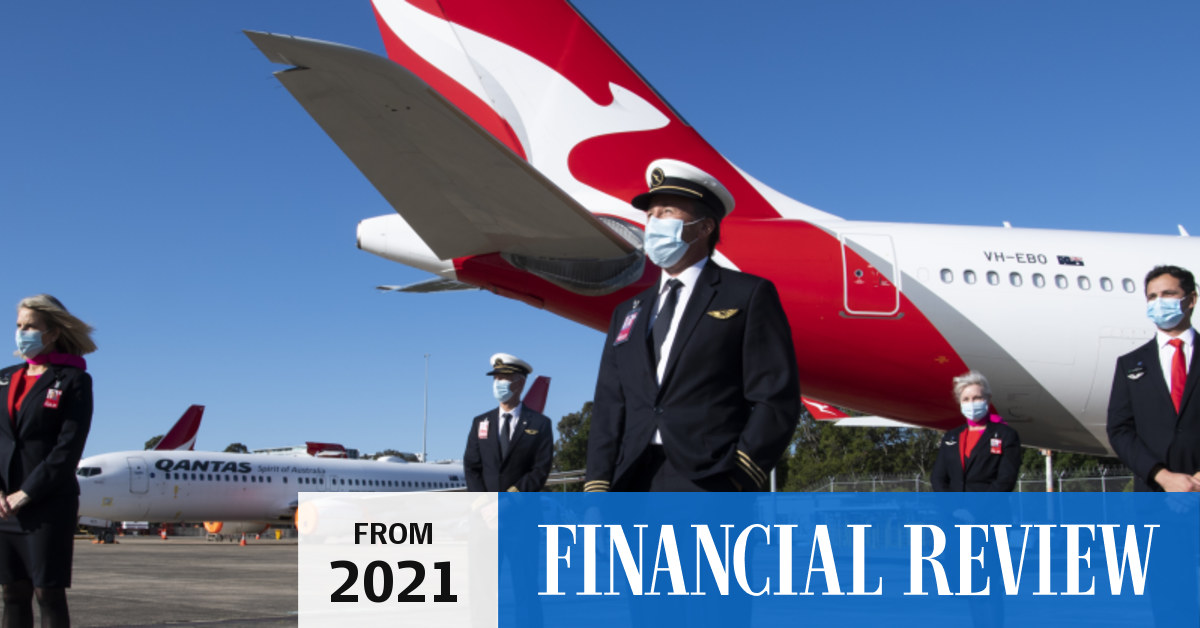
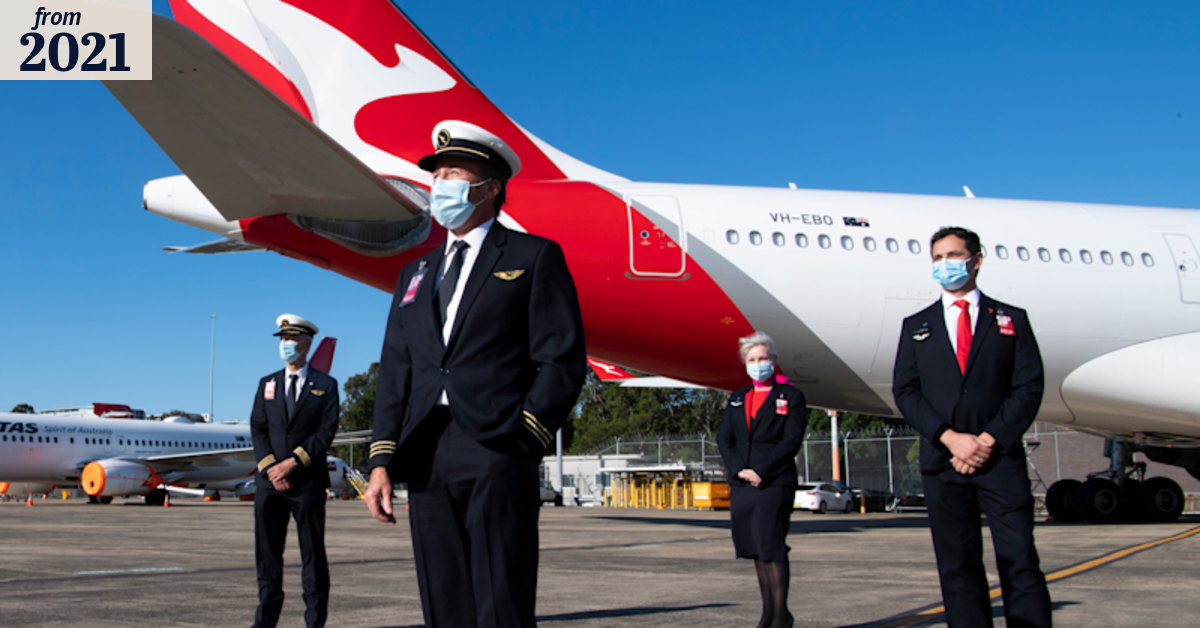
The AFR reported in October 2021 that Qantas' record-breaking repatriation flight from Buenos Aires (described as the world's longest commercial flight) "departed with empty seats, stranding Australians in South America" [2].
The article notes this was "the return leg of a charter flight that carried the Argentine rugby team home from Brisbane," suggesting Australians couldn't board what might have been an available return flight [2].
The parliamentary inquiry into DFAT's crisis management identified two main phases of repatriation efforts from January 2020 to September 2021, with contracted flights managed across multiple countries [3].
By October 2021, approximately 46,800 Australians were registered with DFAT for assistance returning home [4], and the government had organized 26,000 repatriations on government-subsidized flights [5].
The claim omits critical context about why the government implemented these restrictions:
**Border Capacity Constraints**: Australia implemented strict international arrival caps as part of its pandemic border control strategy.
In January 2021, the government cut arrival quotas from 6,700 per week to 4,200, specifically because healthcare and quarantine systems were at capacity [1].
This wasn't arbitrary—it reflected real infrastructure limitations, as confirmed by the Senate's COVID-19 committee, which heard that some Australians turned down available seats due to quarantine requirements or other personal circumstances [6].
**Government Repatriation Program vs.
Private Commercial Routes**: The government's rejection of Gaura Travel's offer reflected policy about how repatriation flights should be managed through official DFAT channels, not a refusal to use aircraft per se.
The government was organizing its own chartered flights specifically as official repatriation flights, ensuring proper processing, health screening, and quarantine coordination [3].
**Scale of Government Effort**: The government invested significantly in repatriation.
Between March 2020 and September 2021, DFAT coordinated 27 contracted flights in phase one alone, plus government-subsidized Qantas flights that eventually returned 26,000 Australians [3][5].
While this proved insufficient for the 37,000-46,800 Australians stranded overseas, it demonstrates active effort rather than passive refusal [1][4].
**Policy Trade-off**: The core issue wasn't whether empty seats existed on commercial flights, but rather Australia's deliberate choice to prioritize quarantine capacity over repatriation speed.
This was contentious—Margaret Wilson, writing in The Australian, noted that Australia's "Fortress Australia" approach was stricter than comparable nations' policies [7].
The article is reported journalism citing a named operator (Gaura Travel's Abhishek Sonthalia), but importantly notes that "The departments of Home Affairs, and Foreign Affairs and Trade (DFAT) did not respond to The New Daily's questions before deadline" [1].
This means the government's perspective on why the requests were denied was not included in the article.
**Australian Financial Review**: A mainstream, reputable financial/political publication.
The October 2021 article by Michael Read reports factually on the Buenos Aires flight with empty seats and includes criticism from stranded Australians [2].
**Parliamentary Sources**: The Joint Public Accounts and Audit Committee inquiry (Report 494) represents authoritative, non-partisan government scrutiny, documented findings from the Australian National Audit Office, and parliamentary discussion [3].
Michael Michael Read Read 在 zài 2021 2021 年 nián 10 10 月 yuè 的 de 文章 wén zhāng 事實 shì shí 報導 bào dǎo 了 le 布宜諾 bù yí nuò 斯艾利斯 sī ài lì sī 航班 háng bān 的 de 空位 kòng wèi 情況 qíng kuàng , , 並 bìng 包含 bāo hán 滯留 zhì liú 澳洲人 ào zhōu rén 的 de 批評 pī píng [ [ 2 2 ] ] 。 。
The original source (The New Daily article) presents a legitimate complaint but lacks the government's explanation for policy decisions, making it inherently incomplete.
**Did Labor do something similar?**
Search conducted: "Labor government repatriation stranded citizens overseas pandemic response"
During the COVID-19 pandemic, both parties faced the same fundamental challenge: managing border entry during a health crisis while stranded citizens demanded repatriation.
* * * *
The Labor government (when in opposition and during any state-based COVID responses) supported repatriation efforts.
However, direct comparisons are limited because:
1. **No equivalent Labor federal government response exists**: The pandemic occurred entirely under the Morrison Coalition government (2020-2022), so Labor didn't face the responsibility of implementing repatriation caps.
2. **State-level Labor responses**: Labor-led states (Victoria, NSW) also managed border restrictions that affected domestic and international arrivals.
When NSW and Victoria eventually opened borders (October 2021), they did so by increasing quarantine capacity rather than prioritizing international arrivals over domestic needs [4].
3. **Opposition stance**: Labor opposition figures criticized the Coalition's repatriation caps, supporting the view that more Australians should have been allowed home faster [8].
However, this is opposition criticism of implementation, not evidence of a superior alternative plan.
**Historical precedent**: Previous governments have also restricted citizen repatriation during crises.
The closest historical parallel would be government limits on citizen return during other health crises, though the scale and nature of the COVID border closure was unprecedented globally.
**Key finding**: This appears to be an issue of timing and capacity management during an unprecedented pandemic, not a partisan policy difference.
**Legitimate Criticisms**:
The complaint from Gaura Travel and stranded Australians is legitimate: the government could have been more flexible about using return-leg charter flights for Australian repatriations [1].
There's evidence the government missed opportunities—the Buenos Aires Qantas flight with empty seats is a concrete example of capacity that went unused for Australians [2].
Professor Greg Bamber of Monash University warned that the government's caps on arrivals could lead airlines to reduce services, and he called for the government to be "more proactive about trying to support airlines in bringing Australians home" [1].
For those stranded 18+ months (like the Harewood family in Barbados), the policy clearly failed to serve them adequately [4].
**Government's Justification**:
The government's position, while not publicly detailed in responses to The New Daily, reflected several legitimate concerns:
1. **Quarantine system capacity**: Australia's quarantine infrastructure was genuinely limited.
State-based hotel quarantine systems couldn't process unlimited arrivals without risking outbreaks [1].
* * * * 政府 zhèng fǔ 的 de 理由 lǐ yóu * * * * : :
This was confirmed by the government's decision to cut caps from 6,700 to 4,200 per week [1].
2. **Official repatriation control**: Using government-managed charter flights ensured health screening, proper documentation, and coordination with state quarantine authorities.
政府 zhèng fǔ 的 de 立場 lì chǎng 雖然 suī rán 未 wèi 在 zài 對 duì The The New New Daily Daily 的 de 回應 huí yīng 中公開 zhōng gōng kāi 詳細 xiáng xì 說明 shuō míng , , 但 dàn 反映 fǎn yìng 了 le 幾項 jǐ xiàng 合理 hé lǐ 的 de 關切 guān qiè : :
Private charters would have complicated this coordination [3].
3. **Priority to most vulnerable**: The government stated that "the priority has to be for returning Australians" [4], and did attempt to target those in most need through official channels.
**Complexity of the Decision**:
This represents a genuine policy trade-off between two legitimate goals:
- Repatriating citizens faster (favored by opposition and some stranded Australians)
- Maintaining quarantine capacity and preventing uncontrolled outbreak importation (favored by epidemiologists and state governments)
Both were valid concerns during the pandemic.
Australia's approach was stricter than some comparable nations but reflected the government's decision to prioritize disease suppression over rapid repatriation [7].
莫里森 mò lǐ sēn 政府 zhèng fǔ 確實 què shí 拒絕 jù jué 了 le 使用 shǐ yòng 包機 bāo jī 航班 háng bān 運送 yùn sòng 滯留 zhì liú 澳洲人 ào zhōu rén 返國 fǎn guó 的 de 提議 tí yì ( ( 屬實 shǔ shí ) ) , , 且 qiě 部分 bù fèn 飛機確 fēi jī què 實帶 shí dài 著 zhù 空位 kòng wèi 起飛 qǐ fēi , , 而 ér 非載運 fēi zài yùn 所有 suǒ yǒu 滯留 zhì liú 公民 gōng mín ( ( 屬實 shǔ shí ) ) 。 。
The Morrison government did reject offers to use chartered flights for stranded Australians' return (TRUE), and some planes did depart with empty seats rather than accommodating all stranded citizens (TRUE).
However, the claim obscures the policy rationale: Australia implemented deliberately restrictive arrival caps due to quarantine system limitations, not arbitrary refusal to use aircraft.
The government was attempting to manage competing pandemic priorities (disease suppression vs. repatriation speed), and while this approach clearly failed to accommodate 46,800 registered stranded Australians, it wasn't a simple case of "preventing boarding" of available flights.
The claim's framing as government obstruction is partially justified but lacks the context that would explain why these restrictions existed.
最終分數
5.0
/ 10
部分真實
莫里森 mò lǐ sēn 政府 zhèng fǔ 確實 què shí 拒絕 jù jué 了 le 使用 shǐ yòng 包機 bāo jī 航班 háng bān 運送 yùn sòng 滯留 zhì liú 澳洲人 ào zhōu rén 返國 fǎn guó 的 de 提議 tí yì ( ( 屬實 shǔ shí ) ) , , 且 qiě 部分 bù fèn 飛機確 fēi jī què 實帶 shí dài 著 zhù 空位 kòng wèi 起飛 qǐ fēi , , 而 ér 非載運 fēi zài yùn 所有 suǒ yǒu 滯留 zhì liú 公民 gōng mín ( ( 屬實 shǔ shí ) ) 。 。
The Morrison government did reject offers to use chartered flights for stranded Australians' return (TRUE), and some planes did depart with empty seats rather than accommodating all stranded citizens (TRUE).
However, the claim obscures the policy rationale: Australia implemented deliberately restrictive arrival caps due to quarantine system limitations, not arbitrary refusal to use aircraft.
The government was attempting to manage competing pandemic priorities (disease suppression vs. repatriation speed), and while this approach clearly failed to accommodate 46,800 registered stranded Australians, it wasn't a simple case of "preventing boarding" of available flights.