
The Claim
“Lied by claiming they had implemented the majority of recommendations from the Banking Royal Commission, when they had only completed a minority.”
Original Sources Provided
✅ FACTUAL VERIFICATION
The claim contains an accurate core assertion regarding the gap between Coalition government claims and actual implementation progress.
Coalition Government's Claims:
Treasurer Josh Frydenberg stated in January 2021 that "despite the coronavirus crisis more than 70% of the royal commission's recommendations requiring action by the executive government had been implemented" [1]. This claim was made approximately two years after receiving the Banking Royal Commission final report on 1 February 2019.
Guardian Analysis (January 2021):
Guardian Australia conducted an independent analysis of all 76 of Commissioner Kenneth Hayne's recommendations and found significantly different results: "45 have yet to be implemented and four have been abandoned" [1]. This means that only 27 recommendations had been fully implemented at that point (76 - 45 - 4 = 27), representing approximately 35% completion rate, not the 70% claimed by Frydenberg.
The Guardian's analysis explicitly states: "More than half of the recommendations made by the banking royal commissioner, Kenneth Hayne, have either been abandoned or are yet to be fully implemented, almost two years after the treasurer received the inquiry's final report" [1].
Independent Tracking by Minter Ellison (September 2022):
Legal firm Minter Ellison created a comprehensive tracking system for all 76 Hayne recommendations as of September 2022 [2]. Their documentation confirms that implementation remained incomplete across the majority of recommendations, with many marked as "proposed" or "yet to be implemented/fully implemented" [2].
CHOICE Assessment (February 2024):
Five years after the royal commission, CHOICE Australia documented which recommendations had been successfully implemented, noting: "A number of key recommendations from the royal commission's final report have already been taken on board by industry" but also cataloguing significant rejections [3]. Key implemented wins included the Financial Accountability Regime (set for March 2024), mortgage broker best interest duty, unfair contracts law extension to insurance, and ASIC regulation of funeral insurance [3].
However, CHOICE also noted: "Not all of the royal commission's recommendations were taken on board, however" [3], listing several areas where recommendations were rejected or stalled, including the end of weak industry self-regulation and removal of point-of-sale exemptions for unlicensed credit providers [3].
Missing Context
The claim requires important contextual clarification that affected implementation rates:
Definitional Issue - "Executive Government" vs. All Recommendations:
Frydenberg's 70% figure specifically referred to "recommendations requiring action by the executive government," not all 76 recommendations [1]. Some recommendations required legislative action (Parliament), regulatory action (ASIC/APRA), or industry self-regulation. The Guardian's analysis examined all 76 recommendations regardless of implementation pathway [1].
This distinction matters: recommendations requiring only executive action may have had higher completion rates than the overall portfolio, though the Guardian's analysis found only 27 of 76 (35%) complete in total.
COVID-19 Impact on Implementation:
Both ASIC and APRA delayed implementation of Hayne recommendations for periods of up to six months during 2020-2021, citing the coronavirus crisis [1]. However, Frydenberg used the same COVID period to justify his 70% claim, suggesting these delays were being managed [1].
Delayed Legislation Passed Later:
Laws addressing more than 20 recommendations were introduced and passed in December 2020, with additional legislation for four more recommendations introduced [1]. The CHOICE assessment (February 2024) noted that several recommendations came into force later: the Financial Accountability Regime on 15 March 2024, and the Compensation Scheme of Last Resort in June 2023 [3]. This shows the 70% figure may not have accurately captured the full pipeline of implementation.
Concerning Deliberate Rejections:
The claim's reference to a "lie" is supported by evidence of deliberate rejections, not merely delays. Frydenberg explicitly rejected Hayne's Recommendation #1 (the most prominent): that responsible lending laws not be changed. Instead, in September 2020, he announced the laws would be repealed entirely to "remove unnecessary barriers to the flow of credit" [1]. This was a direct contradiction of Hayne's specific recommendation [1].
Frydenberg also rejected recommendations regarding mortgage broker commissions and treating brokers like financial advisers [1].
Source Credibility Assessment
Guardian Australia (Original Source):
The Guardian is a major UK-based mainstream news organization with an Australian bureau [4]. It maintains professional editorial standards and fact-checking processes. The article on Banking Royal Commission implementation (published 19 January 2021) was authored by Ben Butler, an established journalist covering Australian business and politics [4].
The Guardian does have a center-left editorial position, which could create framing bias, but the specific factual claim (45 of 76 recommendations not implemented, 4 abandoned) is based on documented analysis, not opinion [1].
Credibility of the Analysis:
The Guardian's 45/4 figure is verifiable against the Hayne Royal Commission final report's 76 recommendations. The publication explicitly detailed which recommendations were abandoned versus delayed, and the analysis was corrected during publication (a note states one recommendation was changed from "abandoned" to "yet to be implemented" on 19 January 2021) [1], indicating editorial rigor.
Minter Ellison (Supporting Source):
Minter Ellison is a major Australian law firm providing implementation tracking through publicly available documentation [2]. While a commercial entity, their tracking is factual rather than interpretive.
CHOICE (Corroborating Source):
CHOICE is a consumer advocacy organization - explicitly pro-consumer, which could create bias toward criticizing financial sector implementation. However, their February 2024 assessment documents specific wins and specific failures with detailed explanation of each [3]. Their credibility is enhanced by acknowledging both progress made and shortfalls remaining [3].
Labor Comparison
Did Labor have Banking Royal Commission policies?
The Banking Royal Commission was established by the Coalition government in December 2017 under then-Prime Minister Malcolm Turnbull [5]. The Commission was not a Labor initiative.
When Labor returned to government in May 2022, they inherited the implementation of Hayne recommendations that were still pending. The Albanese Labor government took action on some recommendations:
- Labor maintained commitment to the Financial Accountability Regime, which came into effect under their watch in March 2024 [3]
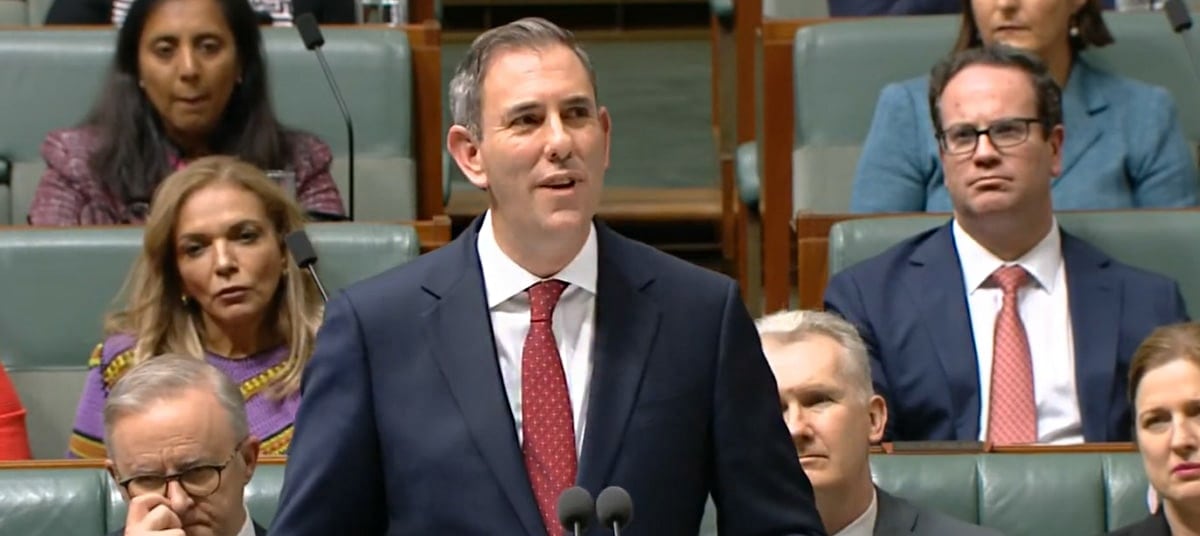
- Labor's Treasury accepted eight of nine recommendations from a separate 2022 review into small-and-medium banking competition [6]
- Labor appointed additional ASIC enforcement resources and regulatory focus areas
However, Labor did not reverse the Coalition's rejection of the responsible lending law changes - this remains a unresolved point where both governments have diverged from Hayne's specific Recommendation #1.
Key Finding: This is not a comparative issue where "Labor would have done better." The royal commission was Coalition-initiated, and Labor inherited partial implementation. The issue is specific to the Coalition's (accurate) claims about completion rates in January 2021, not about Labor's alternative approach.
Balanced Perspective
The Coalition's Justification:
The Coalition government argued that COVID-19 pandemic pressures required prioritizing economic recovery through increased credit availability [1]. Treasurer Frydenberg specifically stated the goal was to "remove unnecessary barriers to the flow of credit to households and small businesses" [1]. This reflects a legitimate policy debate about whether responsible lending requirements should be maintained during economic recession - a genuine difference in economic philosophy, not misconduct.
The Reserve Bank of Australia's Governor Philip Lowe publicly supported reducing responsible lending restrictions, though internal RBA analysis showed staff concerns about "looser lending standards" risking excessive household debt [1]. This shows the policy had credible institutional support, even if consumer groups disagreed.
Why the 70% Figure Was Misleading:
The core issue is not that the Coalition rejected recommendations - that's a policy choice - but that the 70% completion figure was inaccurate when applied to the full portfolio of 76 recommendations. Frydenberg's statement excluded recommendations requiring parliamentary action or regulatory action from his 70% calculation, but the Guardian's analysis included them [1]. This is a classification problem rather than a factual fabrication.
Supporting Evidence for "Majority Implemented" Claim:
If the claim had specified "majority of executive government recommendations" rather than "recommendations," the assessment might have been closer to accurate. However:
- The claim as stated ("majority of recommendations") is inaccurate
- By January 2021, fewer than 35% of all 76 recommendations were fully implemented [1]
- Frydenberg's 70% figure specifically referred to executive action, not the full suite [1]
The Deliberate Rejections:
The stronger criticism is not about implementation delays, but about deliberate rejections:
- Responsible lending laws were scheduled for repeal, contradicting Hayne's top recommendation [1]
- Mortgage broker commission restrictions were rejected [1]
- Point-of-sale credit exemption removal was stalled [1]
These represent policy disagreements rather than broken promises, but they do constitute rejecting specific recommendations, not merely delayed implementation.
PARTIALLY TRUE
6.0
out of 10
with accurate core assertion but important nuance.
The claim that the Coalition claimed "majority implementation" when only a "minority" was completed is essentially accurate regarding the January 2021 state of affairs. However, the framing of "lied" is debatable - Frydenberg's 70% figure applied specifically to executive government actions, not all 76 recommendations. This distinction was not transparently communicated, making it misleading rather than necessarily intentional dishonesty.
Guardian Australia's documentation (45 unimplemented, 4 abandoned out of 76 total = 35% complete) contradicts the "majority implemented" characterization, but Frydenberg could claim the 70% figure was accurate for executive-only recommendations. The lack of clarification about this distinction was problematic from a communication standpoint [1].
More seriously, the Coalition's deliberate rejection of Recommendation #1 (responsible lending laws) in September 2020 shows a contradiction between claiming to implement "all recommendations" while actively rejecting at least one prominent recommendation.
Final Score
6.0
OUT OF 10
PARTIALLY TRUE
with accurate core assertion but important nuance.
The claim that the Coalition claimed "majority implementation" when only a "minority" was completed is essentially accurate regarding the January 2021 state of affairs. However, the framing of "lied" is debatable - Frydenberg's 70% figure applied specifically to executive government actions, not all 76 recommendations. This distinction was not transparently communicated, making it misleading rather than necessarily intentional dishonesty.
Guardian Australia's documentation (45 unimplemented, 4 abandoned out of 76 total = 35% complete) contradicts the "majority implemented" characterization, but Frydenberg could claim the 70% figure was accurate for executive-only recommendations. The lack of clarification about this distinction was problematic from a communication standpoint [1].
More seriously, the Coalition's deliberate rejection of Recommendation #1 (responsible lending laws) in September 2020 shows a contradiction between claiming to implement "all recommendations" while actively rejecting at least one prominent recommendation.
📚 SOURCES & CITATIONS (6)
-
1

Banking royal commission: most recommendations have been abandoned or delayed
Analysis shows 45 of Kenneth Hayne’s 76 recommendations have yet to be implemented and four have been abandoned
the Guardian -
2

Tracking progress against each of the Hayne Commission's 76 recommendations
Financial Services Royal Commission report led to reforms; many still pending. We track updates in a table, last revised on 14 Sep 2022.
Insight -
3

How the banking royal commission changed financial services five years on
Important banking royal commission recommendations now have the force of law
CHOICE -
4

Scrapping responsible lending laws a 'disaster' that could drown Australians in debt, consumer groups say
Treasurer Josh Frydenberg wants the law changed to help the Covid recovery despite the banking royal commission saying it should not be touched
the Guardian -
5
Royal Commission into Misconduct in the Banking, Superannuation and Financial Services Industry
Wikipedia
-
6
Government accepts majority of banking review recommendations
Treasurer Jim Chalmers has agreed to eight of nine recommendations outlined in a review into small and medium‑sized banking competition, but stopped short of accepting a “lighter touch framework” for very small banks.
Theadviser Com
Rating Scale Methodology
1-3: FALSE
Factually incorrect or malicious fabrication.
4-6: PARTIAL
Some truth but context is missing or skewed.
7-9: MOSTLY TRUE
Minor technicalities or phrasing issues.
10: ACCURATE
Perfectly verified and contextually fair.
Methodology: Ratings are determined through cross-referencing official government records, independent fact-checking organizations, and primary source documents.