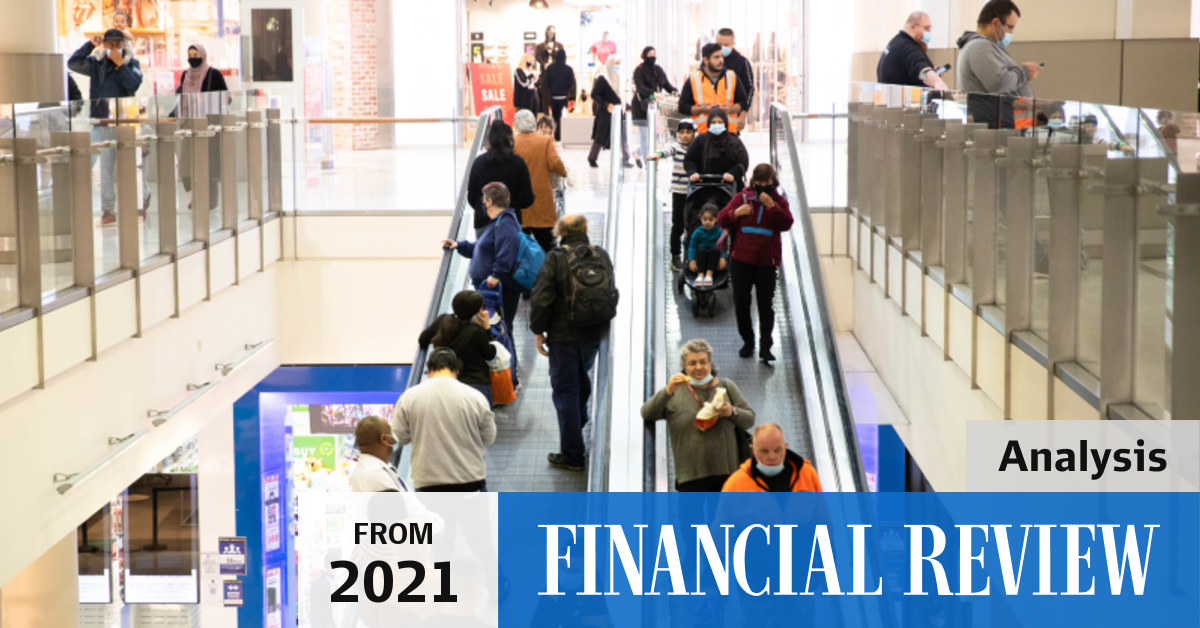
The claim contains two distinct assertions: (1) that $38 billion was paid to companies without significant downturns, and (2) that the government refused to seek recovery.
**The $38 billion figure is accurate.** The Parliamentary Budget Office (PBO) found that at least $38 billion of the $72 billion JobKeeper payments they examined went to companies where quarterly turnover did not fall below the required thresholds [1].
This represented 53 percent of the taxpayer cash spend examined by the PBO [1].
**The scale of overpayments was even higher than $38 billion.** Treasury's own analysis confirmed $27 billion in the first six months alone went to businesses whose turnover either increased or did not decline as much as required [2].
Within the July-September quarter (when most states were open), at least $18 billion went to companies that did not meet the 30 percent turnover decline threshold [3].
More granular data showed $1.3 billion went to companies where turnover tripled during the quarter they claimed JobKeeper, and another $1.3 billion went to companies that doubled their quarterly turnover [1].
**The government knew this was happening.** The ABC confirmed that Treasury informed Treasurer Josh Frydenberg in mid-June 2020 (less than three months into the scheme) that 15 percent of JobKeeper businesses sampled had boosted their turnovers in April 2020 [4].
Despite this knowledge, the government did not tighten eligibility until late September 2020—three months later [4].
**The second part of the claim is substantially correct: no mandatory recovery mechanism was implemented.** There was no clawback mechanism for any period of JobKeeper [1].
The government made it voluntary for companies to repay, with Treasury explicitly defending the decision not to implement a clawback, arguing it would have "muted the recovery" [2].
However, the ATO did pursue recovery in limited cases: $120 million in JobKeeper payments was clawed back from ineligible businesses who made deliberate or reckless mistakes, and $180 million was not recovered from businesses that made "honest mistakes" [5].
Additionally, some companies voluntarily repaid: 33 companies agreed to voluntarily repay $180 million, and Harvey Norman repaid $6 million of an estimated $22 million received [1].
Design rationale:** JobKeeper was deliberately designed with a six-month guaranteed payment period to provide certainty during unprecedented economic uncertainty [6].
Initial pessimism was justified:** The scheme was announced on March 30, 2020, when the economy faced uncertainty about lockdown duration and economic impact [2].
Treasury's initial modeling predicted unemployment would peak at least 5 percentage points higher without JobKeeper—potentially reaching 14-15 percent [2].
這種 zhè zhǒng 不確 bù què 定性 dìng xìng 證明 zhèng míng 了 le 一個 yī gè 更 gèng 簡單 jiǎn dān 、 、 更 gèng 寬 kuān 鬆 sōng 的 de 資 zī 格 gé 結 jié 構 gòu 是 shì 合理 hé lǐ 的 de , , 而 ér 非 fēi 複 fù 雜的 zá de 即 jí 時 shí 營業額 yíng yè é 測試 cè shì 。 。
This uncertainty justified a simpler, more generous eligibility structure rather than complex, real-time turnover testing.
**3.
Some companies that appeared to do well still suffered real downturns:** Treasury's report noted that turnover could appear higher for firms that had grown over the previous year before COVID struck, even though they experienced a hit to turnover [4].
The analysis excluded certain businesses that didn't record GST turnover in the corresponding quarter the previous year, and those that didn't lodge a Business Activity Statement [1].
**4.
The majority of payments still went to small businesses:** Treasury data showed 99 percent of JobKeeper entities had turnover less than $50 million or were not-for-profits, and over 80 percent of payments went to these entities [2].
營業額 yíng yè é 超過 chāo guò 2.5 2.5 億 yì 澳元 ào yuán 的 de 大型 dà xíng 企業僅 qǐ yè jǐn 佔 zhàn 受助者 shòu zhù zhě 的 de 0.2% 0.2% , , 但 dàn 獲得 huò dé 了 le 11% 11% 的 de 補助 bǔ zhù [ [ 2 2 ] ] 。 。
Large businesses with turnover exceeding $250 million made up only 0.2 percent of recipients but received 11 percent of payments [2].
The government simply chose not to implement a blanket clawback, arguing this would have discouraged businesses from maintaining operations and activity during the recovery.
The journalists (Dan Conifer for the ABC 7.30 program) conducted original investigative reporting, including obtaining Treasury documents via Freedom of Information laws [4].
然而 rán ér , , 文章 wén zhāng 確實 què shí 大量 dà liàng 強調 qiáng diào 批評 pī píng 意見 yì jiàn , , 特別 tè bié 是 shì 透過 tòu guò 工黨 gōng dǎng 議員 yì yuán Andrew Andrew Leigh Leigh 的 de 引述 yǐn shù 。 。
However, the article does emphasize criticism heavily, particularly through quotes from Labor MP Andrew Leigh.
The claim as framed in this task appears to come from a Labor-aligned source (mdavis.xyz), which would naturally emphasize criticisms of Coalition policy.
基本 jī běn 事實 shì shí 準確 zhǔn què , , 但論述 dàn lùn shù 方式 fāng shì 忽略 hū lüè 了 le 政府 zhèng fǔ 的 de 正當 zhèng dāng 理由 lǐ yóu 。 。
The underlying facts are accurate, but the framing omits government justifications.
**Did Labor do something similar?**
Labor's approach to emergency business assistance during the 2008-2009 Global Financial Crisis (GFC) was significantly different in structure but faced similar efficiency questions.
* * * *
During the GFC, the Rudd government implemented:
- **First Home Owner Boost scheme** (October 2008 - December 2009): Direct payments to first-home buyers ($7,000-$14,000 per person) [7].
This provided broad stimulus but was later criticized for inflating housing prices rather than creating productive economic benefit [7].
- **Superannuation co-contribution schemes** and **general stimulus cash payments** to boost demand [7].
- **No large-scale direct business wage subsidy equivalent to JobKeeper** [7].
Labor's approach relied more on demand-side stimulus (cash payments to consumers) and temporary tax benefits rather than direct employer support.
**Key difference:** Labor's GFC response did not involve direct ongoing payments to businesses conditional on employment levels or turnover—the structural approach was fundamentally different.
JobKeeper was unique in Australian economic policy as a large-scale, employment-conditional wage subsidy.
**Similar issues with efficiency:** However, Labor's First Home Boost scheme faced criticism for being poorly targeted, with evidence it inflated housing prices and may not have generated productive economic stimulus [7].
This suggests that broad-based emergency assistance programs across both parties tend to involve some level of inefficiency or unintended consequences.
The JobKeeper overpayment issue presents a genuine policy trade-off with legitimate criticisms on both sides:
**Criticisms (valid):**
- $38-$27 billion in payments to companies that did not experience required downturns represents significant public money allocated beyond the scheme's stated criteria [1][2]
- The government was warned as early as mid-June that 15 percent of sampled recipients had increased turnovers, yet waited three months to tighten eligibility [4]
- Some large, profitable companies received substantial payments (Harvey Norman received ~$22 million and reported record profits, though they eventually repaid $6 million) [1]
- No clawback mechanism meant once businesses recovered and boomed, they kept the support—effectively converting intended emergency support into profit enhancement [1]
- The issue could have been addressed sooner if Treasury had recommended earlier tightening [4]
**Counter-arguments (also valid):**
- The scheme accomplished its core macroeconomic objectives: unemployment did not spike dramatically, economic recovery was relatively swift, and businesses remained operational [2]
- Simplicity and certainty during maximum uncertainty had value—complex, means-tested schemes require administrative overhead and create perverse incentives [6]
- Most "overpayments" went to small businesses, not the large corporates critics focused on [2]
- The distinction between "the scheme worked for its intended purpose" versus "every dollar was well-targeted" are different questions—JobKeeper was arguably more successful at the former [2]
- Evidence the scheme preserved business relationships and knowledge prevented longer-term economic scarring that would have cost more to recover from [2]
**Expert assessment:** University of New South Wales economist Richard Holden stated the scheme "did its job" and it was "the right call not to adjust JobKeeper for six months" because certainty was needed [1].
However, this is contested by Labor politicians and some economists who argue the tightening should have come sooner.
**Key context:** This is not unique to the Coalition—Labor's GFC stimulus also involved broad-based payments that later faced criticism for poor targeting and unintended consequences.
However, the claim presents this as straightforward mismanagement without acknowledging: (1) the scheme's macroeconomic objectives were achieved [2]; (2) the government knowingly chose simplicity/certainty over precision as a deliberate policy trade-off [6]; (3) most overpayments went to small, vulnerable businesses, not major corporations [2]; and (4) Treasury explicitly defended why tightening sooner would have muted recovery [2].
A more accurate framing would be: "JobKeeper delivered $38 billion to companies that didn't experience required downturns because the government chose speed and certainty over precision during peak crisis uncertainty.
However, the claim presents this as straightforward mismanagement without acknowledging: (1) the scheme's macroeconomic objectives were achieved [2]; (2) the government knowingly chose simplicity/certainty over precision as a deliberate policy trade-off [6]; (3) most overpayments went to small, vulnerable businesses, not major corporations [2]; and (4) Treasury explicitly defended why tightening sooner would have muted recovery [2].
A more accurate framing would be: "JobKeeper delivered $38 billion to companies that didn't experience required downturns because the government chose speed and certainty over precision during peak crisis uncertainty.