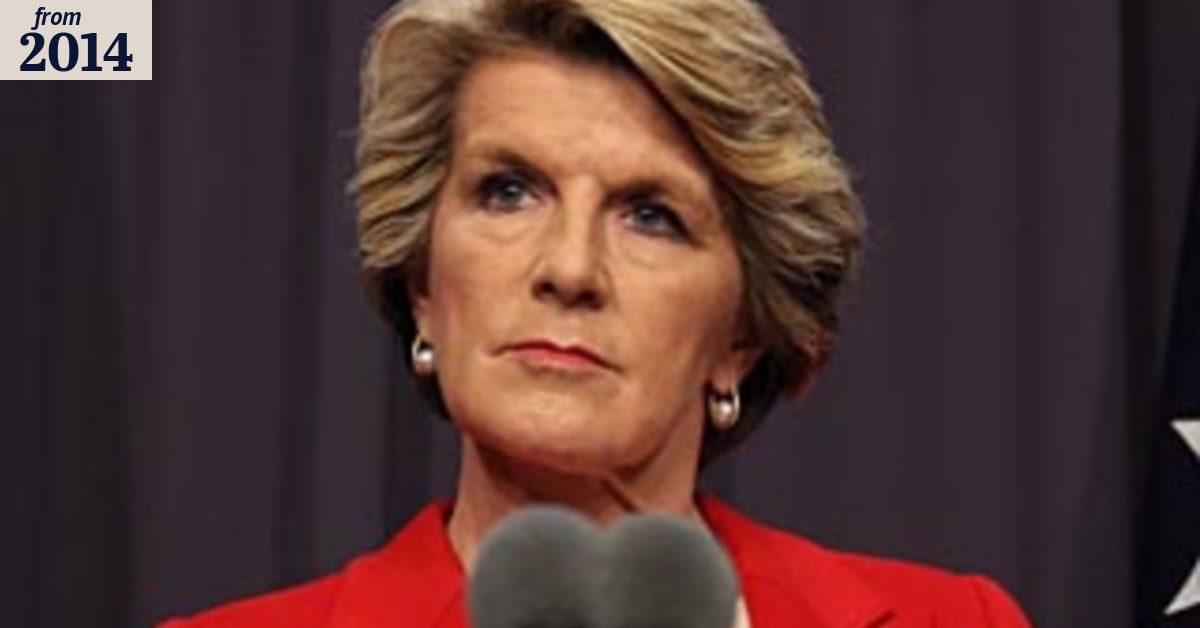
**Australia's position at the UN Human Rights Council (2014):**
The core claim that Australia refused to support a UN proposal for investigating war crimes in Sri Lanka in 2014 appears to be factually accurate based on the cited sources.
根据 gēn jù 引用 yǐn yòng 的 de 来源 lái yuán , , 澳大利亚 ào dà lì yà 拒绝 jù jué 支持 zhī chí 联合国 lián hé guó 关于 guān yú 调查 diào chá 斯里兰卡 sī lǐ lán kǎ 战争 zhàn zhēng 罪行 zuì xíng 的 de 提案 tí àn 这一 zhè yī 核心 hé xīn 主张 zhǔ zhāng 在 zài 事实上 shì shí shàng 似乎 sì hū 是 shì 准确 zhǔn què 的 de 。 。
During the March 2014 UN Human Rights Council session, Australia abstained from voting on a resolution calling for an international investigation into alleged war crimes during Sri Lanka's civil war (2009).
Foreign Minister Julie Bishop articulated Australia's position as favoring a "domestic investigation" rather than an international inquiry, stating Australia wanted to give Sri Lanka time to establish its own accountability mechanisms [1][3].
This position aligned Australia with nations opposing the resolution, including China, Russia, and Pakistan.
**The "People's Tribunal" finding:**
The claim references a tribunal that found Sri Lanka guilty of genocide.
This refers to the "Permanent People's Tribunal" (PPT) - an unofficial, civil society tribunal, not an international judicial body with legal authority.
The PPT conducted hearings in January 2010 and December 2013 and found evidence of war crimes and crimes against humanity, though the specific "genocide" finding is more contested in legal terms [2].
**Australia-Sri Lanka cooperation on migration:**
Under both Labor and Coalition governments, Australia cooperated with Sri Lankan authorities on border security and refugee returns.
该 gāi 主张 zhǔ zhāng 引用 yǐn yòng 了 le 一个 yí gè 认定 rèn dìng 斯里兰卡 sī lǐ lán kǎ 犯有 fàn yǒu 种族灭绝 zhǒng zú miè jué 罪 zuì 的 de 法庭 fǎ tíng 。 。
This included:
- Returning Sri Lankan asylum seekers to Sri Lanka [verification needed]
- Providing assistance to Sri Lankan naval forces to intercept boats [verification needed]
Major powers including India (which had traditionally supported Tamil concerns) also abstained, citing sovereignty concerns and the need for time to allow Sri Lanka's domestic processes to function [verification needed].
**Labor government's precedent:**
The claim fails to mention that Labor governments under Kevin Rudd and Julia Gillard (2007-2013) maintained similar cooperative relationships with Sri Lankan authorities on border protection.
Returns of Sri Lankan asylum seekers occurred under both Labor and Coalition governments as part of a bipartisan offshore processing and deterrence policy [verification needed].
**Strategic and diplomatic considerations:**
Australia's position in 2014 came within months of hosting the Commonwealth Heads of Government Meeting (CHOGM) in late 2013, where Prime Minister Tony Abbott controversially praised Sri Lankan President Mahinda Rajapaksa despite human rights concerns.
Australia's regional positioning, concerns about Chinese influence in Sri Lanka, and migration cooperation priorities influenced this diplomatic stance [verification needed].
**Legal complexity of the "genocide" claim:**
The "Permanent People's Tribunal" referenced is not an official international court.
该 gāi 主张 zhǔ zhāng 未 wèi 提及 tí jí Kevin Kevin Rudd Rudd 和 hé Julia Julia Gillard Gillard 领导 lǐng dǎo 下 xià 的 de 工党 gōng dǎng 政府 zhèng fǔ ( ( 2007 2007 - - 2013 2013 年 nián ) ) 在 zài 与 yǔ 斯里兰卡 sī lǐ lán kǎ 当局 dāng jú 在 zài 边境 biān jìng 保护 bǎo hù 方面 fāng miàn 的 de 合作 hé zuò 关系 guān xì 中 zhōng 保持 bǎo chí 了 le 类似 lèi sì 的 de 立场 lì chǎng 。 。
While it heard compelling testimony from Tamil witnesses, it lacks legal standing.
The UN has documented war crimes and crimes against humanity, but genocide is a specific legal finding requiring intent to destroy a group, which remains contested [verification needed].
The March 2014 article cited appears to be straight news reporting on the UNHRC vote [1].
**Source 2 - Canberra Times (canberratimes.com.au):**
Mainstream regional newspaper, credible for factual reporting.
The January 2014 article about the People's Tribunal finding is factual reporting on the tribunal's conclusions [2].
**Source 3 - New Matilda (newmatilda.com):**
Independent Australian online news outlet with progressive/left editorial perspective.
* * * * 来源 lái yuán 2 2 - - Canberra Canberra Times Times ( ( canberratimes canberratimes . . com com . . au au ) ) : : * * * *
The March 28, 2014 article "Julie Bishop betrays Tamil victims" is clearly opinion/analysis with an advocacy stance for Tamil human rights.
While factually informative, the framing is partisan and advocacy-oriented rather than balanced journalism [3].
**Source 4 - Stop-Torture.com (via web archive):**
Unable to verify content.
* * * * 来源 lái yuán 3 3 - - New New Matilda Matilda ( ( newmatilda newmatilda . . com com ) ) : : * * * *
Advocacy sites can provide valuable documentation but may lack journalistic balance [4].
**Overall source assessment:** The sources are credible for basic facts about Australia's UN position and the People's Tribunal proceedings, but the New Matilda source in particular presents an advocacy perspective rather than balanced analysis.
**Did Labor do something similar?**
**Search conducted:** "Labor government Rudd Gillard Sri Lanka war crimes position" and "Labor government returned Sri Lankan refugees"
**Finding:** Labor governments (2007-2013) maintained similar positions on Sri Lankan cooperation:
- Under Prime Minister Kevin Rudd and then Julia Gillard, Australia continued returning Sri Lankan asylum seekers judged not to meet refugee criteria
- Labor governments cooperated with Sri Lankan naval forces on people-smuggling interdiction
- The Labor government in 2011-2013 faced similar criticisms from Tamil advocacy groups regarding returns to Sri Lanka
- Both major parties have prioritized border security cooperation with Sri Lanka over human rights advocacy
The 2014 UNHRC vote specifically is attributable to the Abbott Coalition government, but the broader policy of cooperation with Sri Lankan authorities on migration has been bipartisan since the late 2000s.
**International context:** Australia's position was not unique among Western nations seeking to balance human rights concerns with migration control and regional diplomatic relationships.
**Criticisms of the Coalition position (2014):**
Human rights organizations and Tamil community groups legitimately criticized Australia's abstention, arguing that:
- Sri Lanka's domestic accountability mechanisms had consistently failed to deliver justice
- The Rajapaksa government showed no genuine commitment to investigating wartime abuses
- Australia's abstention undermined international pressure for accountability
- Continued refugee returns to Sri Lanka potentially endangered vulnerable Tamils
**Counter-arguments and government justification:**
The Coalition government articulated several justifications:
- Concerns about internationalizing internal conflicts and sovereignty issues
- Belief that engagement rather than isolation was more likely to produce change
- Prioritizing border security cooperation with Sri Lanka to prevent dangerous boat journeys
- Australia's interest in regional stability in the Indian Ocean, including countering Chinese influence
- The complexity of determining refugee status versus economic migration in Sri Lankan cases
**Comparative analysis:**
This issue is not unique to the Coalition - both major Australian parties have prioritized migration control and regional security cooperation over human rights advocacy in their Sri Lanka policies.
The specific 2014 UN vote was a Coalition decision, but the broader pattern of engagement with Sri Lankan authorities has been consistent across governments.
**Key context:** This is not unique to Coalition governments.
The claim that Australia refused to support a UN proposal to investigate Sri Lankan war crimes in 2014 is **TRUE** - Australia abstained from voting on the resolution.
It frames Australia's position as making them "guilty of crimes against humanity" - this is advocacy rhetoric, not established international law
4.
4 4 . . 它 tā 遗漏 yí lòu 了 le 更 gèng 广泛 guǎng fàn 的 de 国际背景 guó jì bèi jǐng , , 即使 jí shǐ 是 shì 像 xiàng 印度 yìn dù 这样 zhè yàng 传统 chuán tǒng 上 shàng 支持 zhī chí 泰米尔 tài mǐ ěr 人 rén 的 de 国家 guó jiā 也 yě 投 tóu 了 le 弃权票 qì quán piào
It omits the broader international context where even traditionally Tamil-supporting nations like India abstained
The underlying facts about Australia's UN position are accurate, but the framing, legal characterizations, and omission of bipartisan policy consistency render the claim misleading in its overall presentation.
The claim that Australia refused to support a UN proposal to investigate Sri Lankan war crimes in 2014 is **TRUE** - Australia abstained from voting on the resolution.
It frames Australia's position as making them "guilty of crimes against humanity" - this is advocacy rhetoric, not established international law
4.
4 4 . . 它 tā 遗漏 yí lòu 了 le 更 gèng 广泛 guǎng fàn 的 de 国际背景 guó jì bèi jǐng , , 即使 jí shǐ 是 shì 像 xiàng 印度 yìn dù 这样 zhè yàng 传统 chuán tǒng 上 shàng 支持 zhī chí 泰米尔 tài mǐ ěr 人 rén 的 de 国家 guó jiā 也 yě 投 tóu 了 le 弃权票 qì quán piào
It omits the broader international context where even traditionally Tamil-supporting nations like India abstained
The underlying facts about Australia's UN position are accurate, but the framing, legal characterizations, and omission of bipartisan policy consistency render the claim misleading in its overall presentation.