Abbott was scheduled to arrive in New York the following day (September 24-25) to attend a UN Security Council meeting on terrorism and Iraq, as well as deliver Australia's national statement to the UN General Assembly [1][2].
EU Climate Action Commissioner Connie Hedegaard publicly expressed surprise at Abbott's absence, stating "It is, of course, I think, a pity that not everyone is going" and noting that "the world will interpret who is showing up and who will not be showing up" [1].
Abbott Abbott stated stated reason reason for for not not attending attending was was that that his his " " first first duty duty " " was was to to the the Australian Australian Parliament Parliament , , which which was was sitting sitting during during that that week week [ [ 1 1 ] ] [ [ 2 2 ] ] . . The The government government had had significant significant anti anti - - terrorism terrorism legislation legislation planned planned for for introduction introduction , , and and Abbott Abbott was was scheduled scheduled to to deliver deliver a a major major national national security security statement statement to to Parliament Parliament on on September September 22 22 , , 2014 2014 [ [ 3 3 ] ] [ [ 4 4 ] ] . .
Abbott's stated reason for not attending was that his "first duty" was to the Australian Parliament, which was sitting during that week [1][2].
缺失背景
该 gāi 主张 zhǔ zhāng 遗漏 yí lòu 了 le 几个 jǐ gè 重要 zhòng yào 的 de 背景 bèi jǐng 要素 yào sù : :
The claim omits several important contextual elements:
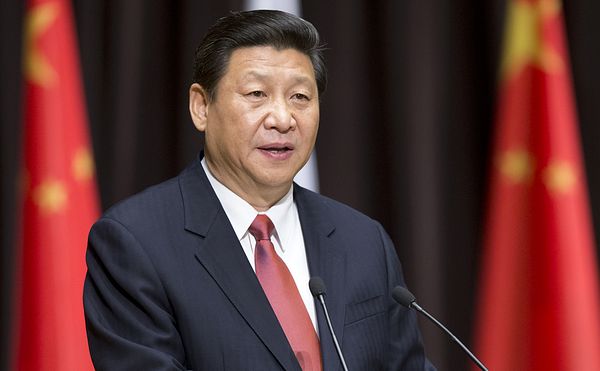
**Other major leaders also absent**: China President Xi Jinping and India Prime Minister Narendra Modi—representing two of the world's largest emitters—also did not attend the summit [5][6].
Their absence was arguably more significant given their countries' emissions profiles, yet the claim focuses exclusively on Australia.
**Nature of the summit**: The 2014 UN Climate Summit was a one-day preparatory event designed to build momentum for the more substantive Paris 2015 negotiations [1].
考虑 kǎo lǜ 到 dào 他们 tā men 国家 guó jiā 的 de 排放 pái fàng 水平 shuǐ píng , , 他们 tā men 的 de 缺席 quē xí arguably arguably 更为 gèng wéi 重大 zhòng dà , , 但 dàn 该 gāi 主张 zhǔ zhāng 却 què 仅 jǐn 聚焦 jù jiāo 于 yú 澳大利亚 ào dà lì yà 。 。
It was not a formal negotiating session like the 2009 Copenhagen summit, which lasted 11 days and involved complex treaty negotiations.
**Australia was represented**: Foreign Minister Julie Bishop did attend the summit and delivered Australia's statement, announcing a $200 million contribution to the Green Climate Fund and hosting commitments for an Asia-Pacific Rainforest Summit [7][8].
Australia was not "unrepresented" as the claim might imply.
**Significant domestic priorities**: The parliamentary sitting week in question included the introduction of major counter-terrorism legislation following heightened security concerns, including threats from the Islamic State and domestic terrorism risks [3][4].
它 tā 不 bù 像 xiàng 2009 2009 年 nián 哥本哈根 gē běn hā gēn 峰会 fēng huì 那样 nà yàng 是 shì 正式 zhèng shì 的 de 谈判 tán pàn 会议 huì yì , , 后者 hòu zhě 持续 chí xù 11 11 天 tiān 并 bìng 涉及 shè jí 复杂 fù zá 的 de 条约 tiáo yuē 谈判 tán pàn 。 。
Abbott's decision to prioritize Parliament was not without substantive justification.
**Recent policy context**: Abbott had campaigned on and delivered the repeal of Australia's carbon tax in July 2014 [9][10].
**Did Labor do something similar?**
Search conducted: "Kevin Rudd Copenhagen climate summit 2009 Australia attendance UN"
Finding: The Rudd Labor Government (2007-2010) took a markedly different approach to climate summit attendance.
* * * *
Prime Minister Kevin Rudd did attend the 2009 UN Climate Change Conference (Copenhagen Summit) from December 7-18, 2009 [11][12].
进行 jìn xíng 的 de 搜索 sōu suǒ : : " " Kevin Kevin Rudd Rudd Copenhagen Copenhagen climate climate summit summit 2009 2009 Australia Australia attendance attendance UN UN " "
However, direct comparison requires acknowledging key differences:
1. **Nature of summits**: Copenhagen was an 11-day formal negotiating conference attempting to create a binding international treaty—the most significant climate negotiation since Kyoto [13].
The 2014 New York summit was a one-day preparatory meeting for momentum-building ahead of Paris 2015 [1].
2. **Copenhagen outcome**: Despite Rudd's attendance, the Copenhagen summit ended with only a weak political statement and no legally binding commitments [14].
High-level attendance did not translate to successful outcomes.
3. **Domestic policy divergence**: The Rudd/Gillard governments implemented a carbon pricing scheme (the "carbon tax"), while the Abbott government campaigned explicitly on repealing it [9][10].
The different attendance decisions partly reflect these divergent policy approaches rather than simply a refusal to engage.
**Conclusion**: Labor leaders did attend major climate summits, but the summits themselves differed significantly in purpose and format.
Abbott's decision not to attend the 2014 one-day preparatory summit, while in New York the next day, contrasts with Labor's attendance at the multi-day Copenhagen negotiations.
该 gāi 主张 zhǔ zhāng 准确 zhǔn què 描述 miáo shù 了 le 事实 shì shí 情况 qíng kuàng , , 但 dàn 其 qí 表述 biǎo shù 方式 fāng shì 旨在 zhǐ zài 最大化 zuì dà huà 批评 pī píng , , 同时 tóng shí 遗漏 yí lòu 了 le 可减轻 kě jiǎn qīng 责任 zé rèn 的 de 背景 bèi jǐng 。 。
The claim accurately describes the factual situation but frames it to maximize criticism while omitting mitigating context.
**Legitimate criticisms**: Abbott's decision not to attend—while being in the same city the following day—was widely interpreted internationally as signaling low priority for climate action [1].
Coming shortly after carbon tax repeal, the decision reinforced perceptions of Australia's retreat from climate leadership.
**Missing context and justifications**:
1. **Substantive domestic priorities**: Abbott cited parliamentary duties, and this was not merely a pretext.
The September 2014 parliamentary sitting included major counter-terrorism legislation following legitimate security concerns, and Abbott delivered a significant national security statement [3][4].
The balance between international summit attendance and domestic legislative duties involves genuine trade-offs.
2. **Not unique to Australia**: China and India—the world's largest and third-largest emitters—also did not send their leaders [5][6].
Australia's absence, while noteworthy, was part of a broader pattern of major emitters declining to send heads of government to what was explicitly a non-binding preparatory event.
3. **Australia was represented**: Julie Bishop attended and delivered Australia's commitments, including $200 million in climate funding announcements [7][8].
The claim implies Australia was absent; in reality, Australia was represented by its Foreign Minister rather than Prime Minister.
4. **Different policy framework**: Abbott's government had been elected on a platform that explicitly rejected the previous government's carbon pricing approach [9][10].
His attendance decision was consistent with this policy divergence—he was not simply ignoring an issue his government actively supported.
**Comparative context**: The Rudd government's attendance at Copenhagen (2009) produced no binding international agreement despite high-level participation [14].
Both parties have historically made attendance decisions based on a combination of policy priorities, domestic political considerations, and the significance of the specific summit.
**Key context**: This was a visible diplomatic choice that reinforced perceptions of Australia's climate policy shift, but it was neither unprecedented internationally nor without domestic justification.
The framing as a simple "refusal" obscures both the genuine domestic priorities involved and the fact that Australia was represented at the summit by its Foreign Minister.
The core factual claim is accurate: Abbott did not attend the 2014 UN Climate Summit despite being in New York the following day for a UN Security Council meeting, while 125+ other heads of state attended.
然而 rán ér , , 该 gāi 主张 zhǔ zhāng 遗漏 yí lòu 了 le 能够 néng gòu 进行 jìn xíng 平衡 píng héng 评估 píng gū 的 de 关键 guān jiàn 背景 bèi jǐng : :
However, the claim omits critical context that would enable balanced assessment:
1.
The summit was a one-day preparatory event for Paris 2015, not a formal negotiating conference
5.
5 5 . . Abbott Abbott 的 de 决定 jué dìng 与其 yǔ qí 政府 zhèng fǔ 远离 yuǎn lí 碳 tàn 定价 dìng jià 的 de 政策 zhèng cè 转变 zhuǎn biàn 一致 yí zhì , , 而 ér 这 zhè 已 yǐ 是 shì 明确 míng què 的 de 选举 xuǎn jǔ 授权 shòu quán
Abbott's decision aligned with his government's policy shift away from carbon pricing, which had been an explicit election mandate
The claim presents the attendance decision in isolation from these mitigating factors, creating a more negative impression than the full context supports.
The core factual claim is accurate: Abbott did not attend the 2014 UN Climate Summit despite being in New York the following day for a UN Security Council meeting, while 125+ other heads of state attended.
然而 rán ér , , 该 gāi 主张 zhǔ zhāng 遗漏 yí lòu 了 le 能够 néng gòu 进行 jìn xíng 平衡 píng héng 评估 píng gū 的 de 关键 guān jiàn 背景 bèi jǐng : :
However, the claim omits critical context that would enable balanced assessment:
1.
The summit was a one-day preparatory event for Paris 2015, not a formal negotiating conference
5.
5 5 . . Abbott Abbott 的 de 决定 jué dìng 与其 yǔ qí 政府 zhèng fǔ 远离 yuǎn lí 碳 tàn 定价 dìng jià 的 de 政策 zhèng cè 转变 zhuǎn biàn 一致 yí zhì , , 而 ér 这 zhè 已 yǐ 是 shì 明确 míng què 的 de 选举 xuǎn jǔ 授权 shòu quán
Abbott's decision aligned with his government's policy shift away from carbon pricing, which had been an explicit election mandate
The claim presents the attendance decision in isolation from these mitigating factors, creating a more negative impression than the full context supports.