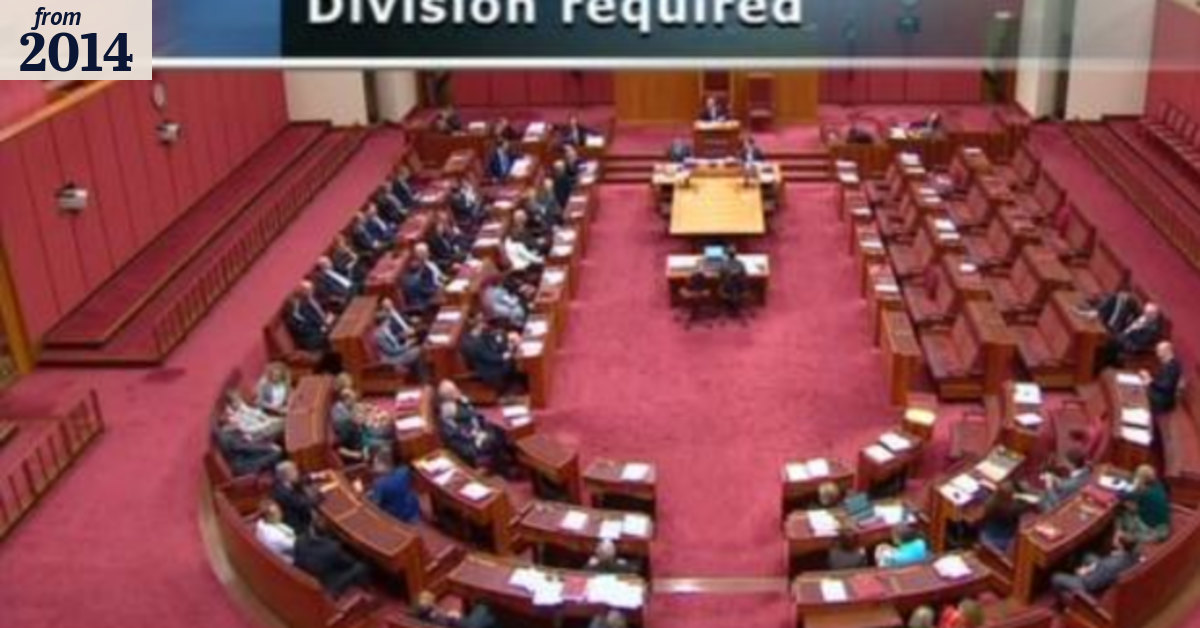
The claim refers to the National Security Legislation Amendment Bill (No. 1) 2014, passed by the Coalition government in September-October 2014.
该 gāi 立法 lì fǎ 确实 què shí 大幅 dà fú 扩展 kuò zhǎn 了 le ASIO ASIO 的 de 监视 jiān shì 和 hé 作战 zuò zhàn 能力 néng lì [ [ 1 1 ] ] 。 。
This legislation did significantly expand ASIO's surveillance and operational capabilities [1].
**Regarding "one warrant for the entire internet":**
The legislation allowed ASIO to obtain a single warrant to access "a limitless number of computers on a computer network" when attempting to monitor a target [1].
Critics, including lawyers, rights groups, and academics, noted that because the internet is a "network of networks" and the bill did not specifically define what constitutes a "computer network," this could theoretically allow ASIO to access the entire Australian internet with one warrant [1].
Attorney-General George Brandis confirmed that "there is no arbitrary or artificial limit on the number of devices" [1].
**Regarding "read, delete and modify":**
The legislation explicitly empowered ASIO to "copy, delete, or modify the data held on any of the computers it has a warrant to monitor" [1].
Senate debate records confirm these warrants allowed ASIO or those working for ASIO to "modify these computers, to delete files, to install malware, to seek higher levels of user access and to impersonate people" [2].
**Regarding immunity from lawsuits:**
The legislation established a "special intelligence operations" (SIO) regime that granted ASIO officers immunity from civil and criminal liability when conducting authorised operations [3].
总 zǒng 检察长 jiǎn chá zhǎng George George Brandis Brandis 确认 què rèn " " 对 duì 设备 shè bèi 数量 shù liàng 没有 méi yǒu 任意 rèn yì 或 huò 人为 rén wéi 的 de 限制 xiàn zhì " " [ [ 1 1 ] ] 。 。
This immunity applies when officers act within the scope of authorised SIOs, even if they would otherwise be committing crimes or civil wrongs.
**Regarding 10 years jail for journalists:**
The legislation created offences punishable by up to 5 years jail for "recklessly" disclosing information about an SIO, and up to 10 years if the disclosure "will endanger the safety of participants or harm the operation" [4].
Opposition Leader Bill Shorten maintained Labor's support for the laws despite some internal concerns from frontbenchers like Anthony Albanese [5].
**Precedent for Controlled Operations:** The SIO regime was modelled on existing "controlled operation" (CO) schemes that had been in place for the Australian Federal Police since 1996, with disclosure offences added in 2010 under the previous Labor government [4].
These existing CO provisions also carried 10-year penalties for endangering operations [4].
**Purpose and Context:** The legislation was introduced following recommendations from a Parliamentary Joint Committee on Intelligence and Security inquiry initiated under the previous Labor government [6].
这些 zhè xiē 现有 xiàn yǒu 的 de CO CO 条款 tiáo kuǎn 同样 tóng yàng 对 duì 危害 wēi hài 行动 xíng dòng 的 de 行为 xíng wéi 规定 guī dìng 了 le 10 10 年 nián 的 de 处罚 chǔ fá [ [ 4 4 ] ] 。 。
It was framed as a response to the emerging threat of Islamic State and terrorism concerns, coming amid major counter-terrorism raids and after IS had called for attacks on Australian civilians [1].
**Safeguards:** The legislation included some oversight mechanisms, including the requirement for SIOs to be authorised by the Attorney-General or ASIO Director-General, and the continued role of the Inspector-General of Intelligence and Security (IGIS) as an independent watchdog [4].
Amendments were made to explicitly rule out torture [1].
**Recklessness Standard:** For journalists to face prosecution, they must act "recklessly" - the bill was amended to confirm that inadvertent reporting without knowledge of an SIO would not be sufficient for prosecution [4].
The cited article quotes Greens Senator Scott Ludlam's opposition to the bill [1].
2. **The Guardian Australia** - The Australian edition of the UK-based Guardian, generally reputable with a progressive editorial stance.
引用 yǐn yòng 的 de 文章 wén zhāng 引用 yǐn yòng 了 le 绿党 lǜ dǎng 参议员 cān yì yuán Scott Scott Ludlam Ludlam 对 duì 该 gāi 法案 fǎ àn 的 de 反对 fǎn duì 意见 yì jiàn [ [ 1 1 ] ] 。 。
Published an opinion piece critical of the legislation [7].
Both sources are mainstream media outlets with established credibility, though the specific articles cited represent critical/opinion perspectives rather than neutral reporting.
Neither source is a partisan advocacy organisation, though they reflect the concerns raised by legal experts, human rights organisations, and the Greens party about the legislation.
**Did Labor do something similar?**
Search conducted: "Labor government controlled operations surveillance powers AFP"
Finding: **Yes - Labor established the precedent for this type of legislation.** The "controlled operations" (CO) scheme for the Australian Federal Police was introduced in 1996 and strengthened over time.
* * * *
The previous Labor government (2010) amended the Crimes Act to make it an offence to disclose information about controlled operations, with penalties of up to 10 years jail for endangering operations - identical to the ASIO SIO penalties [4].
Labor's 2013 Public Interest Disclosure Act established whistleblower protections, though these had limited application to the new SIO regime [4].
**Key comparison:**
- Labor's 2010 CO provisions: Up to 10 years for disclosing controlled operations
- Coalition's 2014 SIO provisions: Up to 10 years for disclosing special intelligence operations
- Both provisions apply to journalists and lack a public interest defence
Additionally, the current Labor government (Albanese, 2025) has proposed expanding ASIO's compulsory questioning powers and making them permanent - continuing the trend of strengthening security agency powers regardless of party [8].
The National Security Legislation Amendment Bill (No. 1) 2014 represented a significant expansion of ASIO's powers, consistent with similar expansions of security agency powers in comparable Western nations (UK, USA) following terrorism threats [9].
**Government justification:**
The Coalition government argued these powers were necessary to modernise intelligence capabilities in a "newly dangerous age" [1].
* * * * 政府 zhèng fǔ 理由 lǐ yóu : : * * * *
Attorney-General George Brandis stated the provisions were modelled on existing AFP controlled operations laws and were "the most important reform for Australia's intelligence agencies since the late 1970s" [1].
The government emphasised that the laws targeted leakers like Edward Snowden, not legitimate journalism [1].
**Expert concerns:**
Legal experts, the Law Council of Australia, Australian Lawyers Alliance, human rights advocates, and media organisations raised significant concerns about press freedom, the breadth of the powers, and lack of public interest defences [4].
Professor George Williams (UNSW) described the bill as "too broad" [1], and Bret Walker SC (former Independent National Security Legislation Monitor) raised concerns about the chilling effect on reporting [4].
**Parliamentary scrutiny:**
The legislation was reviewed by the Parliamentary Joint Committee on Intelligence and Security, which made recommendations that were largely adopted.
政府 zhèng fǔ 强调 qiáng diào , , 这些 zhè xiē 法律 fǎ lǜ 针对 zhēn duì 的 de 是 shì 像 xiàng Edward Edward Snowden Snowden 这样 zhè yàng 的 de 泄密者 xiè mì zhě , , 而 ér 非 fēi 合法 hé fǎ 的 de 新闻报道 xīn wén bào dào [ [ 1 1 ] ] 。 。
However, amendments proposed by Greens and crossbench Senators to limit the number of computers per warrant (to 20), protect whistleblowers, and require public interest considerations in sentencing were defeated with Labor and government opposition [1][4].
**Comparative context:**
This was not unique to the Coalition.
* * * * 专家 zhuān jiā 担忧 dān yōu : : * * * *
Labor supported the bill and had established similar frameworks for the AFP.
However, the claim overstates the scope (the warrant applies to a "computer network" rather than "the entire internet" - though critics noted the lack of definition could have broad application).
更 gèng 重要 zhòng yào 的 de 是 shì , , 该 gāi 声明 shēng míng 忽略 hū lüè 了 le 关键 guān jiàn 背景 bèi jǐng : : 该 gāi 立法 lì fǎ 获得 huò dé 了 le 工党 gōng dǎng 的 de 两党 liǎng dǎng 支持 zhī chí , , 是 shì 以 yǐ 工党 gōng dǎng 时代 shí dài 的 de AFP AFP 条款 tiáo kuǎn 为 wèi 蓝本 lán běn , , 并 bìng 遵循 zūn xún 了 le 前 qián 政府 zhèng fǔ 发起 fā qǐ 的 de 议会 yì huì 调查 diào chá 的 de 建议 jiàn yì 。 。
More significantly, the claim omits crucial context: this legislation passed with bipartisan Labor support, was modelled on Labor-era AFP provisions, and followed recommendations from a parliamentary inquiry initiated under the previous government.
However, the claim overstates the scope (the warrant applies to a "computer network" rather than "the entire internet" - though critics noted the lack of definition could have broad application).
更 gèng 重要 zhòng yào 的 de 是 shì , , 该 gāi 声明 shēng míng 忽略 hū lüè 了 le 关键 guān jiàn 背景 bèi jǐng : : 该 gāi 立法 lì fǎ 获得 huò dé 了 le 工党 gōng dǎng 的 de 两党 liǎng dǎng 支持 zhī chí , , 是 shì 以 yǐ 工党 gōng dǎng 时代 shí dài 的 de AFP AFP 条款 tiáo kuǎn 为 wèi 蓝本 lán běn , , 并 bìng 遵循 zūn xún 了 le 前 qián 政府 zhèng fǔ 发起 fā qǐ 的 de 议会 yì huì 调查 diào chá 的 de 建议 jiàn yì 。 。
More significantly, the claim omits crucial context: this legislation passed with bipartisan Labor support, was modelled on Labor-era AFP provisions, and followed recommendations from a parliamentary inquiry initiated under the previous government.