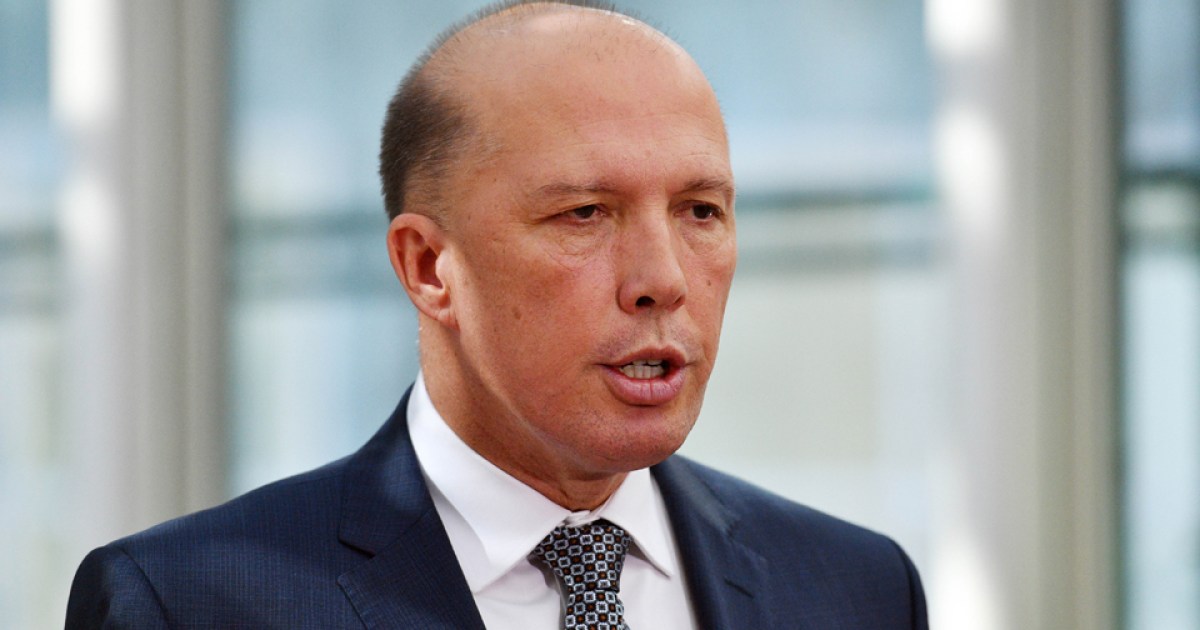
Peter Dutton, serving as Immigration Minister from 2015 to 2017, intervened directly in multiple au pair visa cases using his ministerial discretion under Section 195A of the Migration Act.
A Senate Constitutional and Legal Affairs Committee inquiry into these interventions found that Dutton did indeed mislead Parliament about his personal connections to visa beneficiaries [1].
The intended employer was Russel Keag, with whom Dutton had worked as Queensland Police colleagues in the 1990s—approximately 20 years before the visa request [3].
Dutton had repeatedly claimed in Parliament: "I don't know these people," despite evidence showing he had a documented prior relationship with Keag [4].
In the second case, French au pair Alexandra Deuwel was released from immigration detention in November 2015 after Dutton used his ministerial discretion to grant her a tourist visa.
Labor Senator Louise Pratt stated: "I confirm the evidence before the committee shows that Mr Dutton had both a personal connection with the intended employers of au pairs and misled the Parliament in claiming otherwise" [1].
While the claim is factually accurate regarding the parliamentary misleading finding, several important contextual elements deserve consideration:
**Legal Authority:** Dutton acted within his legal powers under Section 195A of the Migration Act, which grants the Immigration Minister significant personal discretionary authority that is "non-delegable, non-compellable and non-reviewable" [6].
The inquiry focused not on illegality but on inconsistency and fairness in exercising this broad power.
**Scale of Discretionary Power:** The Immigration Minister holds 47 personal discretionary powers—essentially unchecked authority—which raises systemic governance questions beyond Dutton's individual case [6].
**Broader Pattern of Denials:** The controversy was intensified by Dutton's simultaneous denials of assistance to others seeking ministerial intervention.
调查 diào chá 的 de 重点 zhòng diǎn 并非 bìng fēi 其 qí 行为 xíng wéi 的 de 合法性 hé fǎ xìng , , 而是 ér shì 其 qí 行使 xíng shǐ 这一 zhè yī 广泛 guǎng fàn 权力 quán lì 时 shí 的 de 一致性 yí zhì xìng 和 hé 公正性 gōng zhèng xìng 问题 wèn tí 。 。
For example, an Afghan interpreter who had assisted Australian troops in dangerous circumstances was denied assistance despite similar personal connection advocacy, creating perceptions of arbitrary and discriminatory decision-making [6].
**Parliamentary Outcome:** Despite the inquiry's findings that Dutton misled Parliament, a no-confidence motion against him in September 2018 failed to pass, with the vote splitting 67-68 [1].
The original sources provided represent mainstream Australian news outlets:
- **The New Daily**: A digital-native news outlet with Labor-leaning editorial perspective; however, its reporting on this issue drew from parliamentary inquiries and official records [7]
- **SBS News**: Public broadcaster with established editorial standards and fact-checking protocols; considered authoritative for parliamentary and government affairs [8]
All three sources cite the official Senate Constitutional and Legal Affairs Committee inquiry as their primary evidence base.
The reporting is consistent across sources, with all major outlets covering the same inquiry findings and the same core facts (the denied personal connections, the documented relationships, the parliament misleading finding).
工党 gōng dǎng 是否 shì fǒu 有过 yǒu guò 类似 lèi sì 行为 xíng wéi ? ?
**Did Labor do something similar?**
Search conducted: "Labor government minister mislead parliament visa discretion personal connection"
**Finding:** No direct equivalent cases of Labor Immigration Ministers misleading Parliament about personal connections in visa interventions were identified in available records [9].
Labor governments have been criticized for:
- Using ministerial discretion in asylum seeker deportation cases and third-country arrangements
- Visa intervention controversies (though not documented with identical parliamentary misleading findings)
- Questions about fairness in applying discretionary powers
However, the specific pattern—a minister making false parliamentary claims about having no personal connection while using discretionary power to benefit those connections—does not appear to have a documented Labor equivalent during comparable periods [9].
While the Senate inquiry's findings support the claim, several counterpoints merit consideration:
**Defense of Dutton's Position:** Dutton and Coalition defenders argued that:
1.
The au pairs' cases involved genuine humanitarian considerations (women facing deportation) that could justify ministerial intervention regardless of personal connections [2]
4.
The legal authority was exercised within proper bounds; the question was one of fairness and consistency, not legality [6]
**Critical Assessment:** However, the inquiry's finding of "misleading Parliament" is significant because:
1.
4 4 . . 法律 fǎ lǜ 权限 quán xiàn 的 de 行使 xíng shǐ 在 zài 适当 shì dàng 范围 fàn wéi 内 nèi ; ; 问题 wèn tí 涉及 shè jí 公正性 gōng zhèng xìng 和 hé 一致性 yí zhì xìng , , 而 ér 非 fēi 合法性 hé fǎ xìng [ [ 6 6 ] ]
Dutton made explicit denials ("I don't know these people") that contradicted documented evidence [1]
2.
The pattern of assistance for connected individuals versus denial to non-connected cases (such as the Afghan interpreter) suggested inconsistent application of discretion [6]
3.
The parliamentary misleading—not the discretionary exercise itself—became the central issue [1]
**Broader Governance Context:** This case highlights systemic vulnerability in ministerial discretionary powers.
The 47 personal discretionary powers available to the Immigration Minister operate outside normal review mechanisms, creating potential for abuse regardless of the minister's individual character or intentions [6].
The Senate Constitutional and Legal Affairs Committee inquiry explicitly found that Peter Dutton misled Parliament about his personal connections to beneficiaries of his ministerial visa interventions.
The evidence is specific (documented relationships with Russel Keag and Gillon McLachlan), the parliamentary denials are explicit ("I don't know these people"), and the discrepancy between claimed and actual connections is established through committee findings [1].
While Dutton's use of ministerial discretion was technically legal and he provided humanitarian justifications, the parliamentary misleading—the core of the claim—is definitively substantiated by official inquiry findings [1].
The Senate Constitutional and Legal Affairs Committee inquiry explicitly found that Peter Dutton misled Parliament about his personal connections to beneficiaries of his ministerial visa interventions.
The evidence is specific (documented relationships with Russel Keag and Gillon McLachlan), the parliamentary denials are explicit ("I don't know these people"), and the discrepancy between claimed and actual connections is established through committee findings [1].
While Dutton's use of ministerial discretion was technically legal and he provided humanitarian justifications, the parliamentary misleading—the core of the claim—is definitively substantiated by official inquiry findings [1].