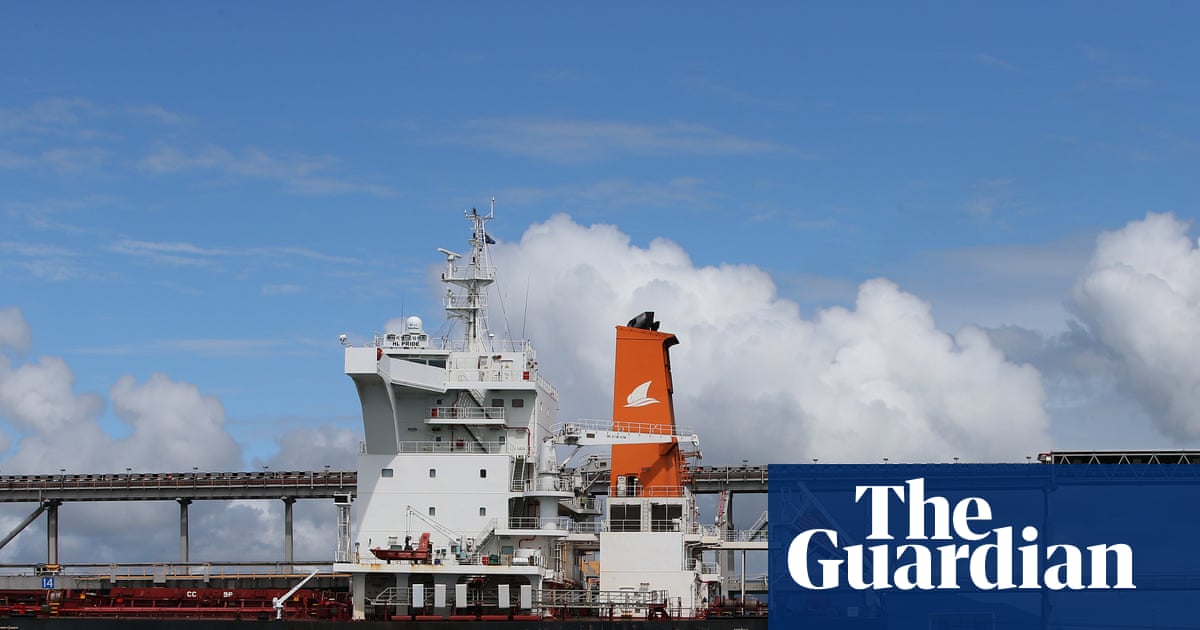
Regarding the export capacity claim: At the time of the original Guardian article (May 2016), the Carmichael mine was planned to produce 60 million tonnes of coal per year [2].
The claim that this would "export more coal than our entire nation consumes" is approximately accurate - Australia's domestic coal consumption in 2015-2016 was estimated at 50-55 million tonnes annually, while the planned mine was designed to export 60 million tonnes exclusively [3].
However, the mine's actual production has been significantly lower than originally planned; since beginning operations, it has produced approximately 10-12 million tonnes per annum, not the originally projected 60 million tonnes [4].
The core claim is based on Minister Greg Hunt's statements in federal court documents (May 2016).
Hunt Hunt 确实 què shí 辩称 biàn chēng , , Carmichael Carmichael 煤矿 méi kuàng 的 de 煤炭 méi tàn 不会 bú huì 对 duì 气候变化 qì hòu biàn huà 产生 chǎn shēng " " 实质性 shí zhì xìng " " 影响 yǐng xiǎng , , 因此 yīn cǐ 他 tā 无需 wú xū 考虑 kǎo lǜ 对 duì 大堡礁 dà pù jiāo 的 de 影响 yǐng xiǎng [ [ 5 5 ] ] 。 。
Hunt did indeed argue that coal from the Carmichael mine would have "no 'substantial' impact on climate change" and therefore he did not need to consider impacts on the Great Barrier Reef [5].
Specifically, Hunt's reasoning was that whether the coal would contribute to climate change "depended on whether it would increase the total amount of coal burned globally" and that there were "a raft of factors" that could affect global coal burning, including whether the coal displaced other coal globally and how it fit within national emissions targets [5].
He concluded there was "no requisite relationship between combustion emissions and increases in global temperature" and stated that because determining net global greenhouse gas impacts was "difficult to identify," no conditions needed to be imposed on the mine [5].
Hunt's specific legal argument vs. scientific consensus:** Hunt's court argument about "no definite link" was a narrow legal position focused on whether *this particular mine's coal* would increase *net global emissions*, given potential coal market displacement effects.
Widespread expert criticism of the reasoning:** Climate scientists and environmental organizations immediately criticized Hunt's legal position as scientifically unfounded.
At the time of Hunt's statement, scientists had found the Great Barrier Reef's 2016 mass bleaching event (affecting 93% of the reef) was made "175 times more likely by climate change" caused by human activities [7].
**3.
However, experts noted that increased supply typically increases global consumption rather than displacing existing coal, particularly in growing markets like India (Adani's primary market) [2].
Australia's emissions accounting:** While coal-exporting nations don't directly count combustion emissions from exported coal in their national greenhouse gas inventory (under UNFCCC rules, emissions are counted where fuel is burned), this accounting convention doesn't eliminate climate responsibility.
Scope 3 emissions and corporate responsibility:** Modern corporate and financial sector standards recognize that companies producing coal for export bear responsibility for emissions from that coal's use, classified as "Scope 3" emissions in corporate carbon accounting frameworks [10].
The Guardian is generally regarded as credible on environmental reporting, though it does lean center-left.
**Michael Slezak (author):** Experienced environmental journalist with a track record of covering climate and mining issues in Australia.
The article is factual reporting based on court documents rather than opinion, making it reliable on the basic facts [5].
**The court documents themselves:** The primary source cited (Hunt's federal court submissions) are authoritative government documents and represent Hunt's official legal position.
**The Criticism - Why Hunt's Position Was Problematic:**
Hunt's argument that coal exports don't contribute to climate change is scientifically indefensible regardless of legal technicalities [5].
The coal produced by the Carmichael mine is ultimately burned by power plants in India and potentially other countries, releasing CO2 into the shared global atmosphere [13].
Carmichael Carmichael 煤矿 méi kuàng 生产 shēng chǎn 的 de 煤炭 méi tàn 最终 zuì zhōng 由 yóu 印度 yìn dù 和 hé 其他 qí tā 国家 guó jiā 的 de 电厂 diàn chǎng 燃烧 rán shāo , , 将 jiāng CO2 CO2 释放 shì fàng 到 dào 共享 gòng xiǎng 的 de 全球 quán qiú 大气 dà qì 中 zhōng [ [ 13 13 ] ] 。 。
The scientific community universally recognizes that coal combustion is the primary driver of CO2 emissions and climate change [6].
科学界 kē xué jiè 普遍 pǔ biàn 认识 rèn shí 到 dào 煤炭 méi tàn 燃烧 rán shāo 是 shì CO2 CO2 排放 pái fàng 和 hé 气候变化 qì hòu biàn huà 的 de 主要 zhǔ yào 驱动 qū dòng 因素 yīn sù [ [ 6 6 ] ] 。 。
The "coal displacement" logic Hunt relied upon is also questionable.
Hunt Hunt 依赖 yī lài 的 de " " 煤炭 méi tàn 替代 tì dài " " 逻辑 luó jí 也 yě 值得 zhí de 怀疑 huái yí 。 。
Economic evidence suggests that increased coal supply tends to lower prices and increase global coal consumption rather than displacing existing coal, particularly in developing countries where energy demand is growing [2].
Australia is a marginal producer globally, but at project scale of 60 million tonnes (since downsized to 10-12 million), it's large enough that displacement effects would be minimal.
**The Government's Justification and Context:**
However, Hunt's decision to approve the mine occurred in a specific political and legal context:
1. **Existing legal frameworks:** At the time, Australian environmental law (the Environment Protection and Biodiversity Conservation Act) did not clearly require ministers to consider combustion emissions from exported coal when assessing domestic mining approvals [5].
Hunt's reasoning, while legally strained, reflected genuine ambiguities in the legislation.
2. **Economic and political considerations:** The Coalition campaigned heavily on pro-coal policies and saw coal as economically important for Queensland [14].
This was a real political commitment, not merely obstruction.
3. **The displacement question was genuinely debated:** Some economists and policy analysts did argue that Australian coal displacement effects were possible, though most experts disagreed [8].
This wasn't a scientifically proven fact at the time, even if unlikely.
4. **Great Barrier Reef concern was the actual issue:** It's notable that Hunt's court filing was prompted by the Australian Conservation Foundation arguing he failed to consider climate impacts *on the Great Barrier Reef*.
The court eventually decided in 2016 that Hunt needed to provide further reasoning, though the case was ultimately not resolved definitively in the Foundation's favor [5].
**Fairness Assessment:**
The core claim - that Hunt "argued there's no definite link between coal and climate change" - is factually accurate based on the Guardian article.
However, the framing matters:
- Hunt's statement was a specific legal argument about *this mine's net impact on global emissions*, not a general denial of coal's role in climate change
- However, his reasoning for that legal argument (the displacement hypothesis and "difficult to identify" impacts) was scientifically weak and widely criticized by climate experts
- The claim is not that Hunt denies climate science generally, but that he claimed *this particular coal wouldn't contribute* to climate change, which is misleading on its face
**International Context:**
It's worth noting that coal's role in climate change is unambiguous under international frameworks.
The Paris Agreement implicitly committed signatories to phase down coal, and the IPCC has been explicit that global coal use must decline substantially this century to limit warming to 1.5-2°C [15].
Australia's position as a major coal exporter during this period put it somewhat at odds with global consensus, though coal-producing nations have not been unique in this inconsistency.
该 gāi 说法 shuō fǎ 准确 zhǔn què 陈述 chén shù Hunt Hunt 提出 tí chū 了 le 关于 guān yú " " 煤炭 méi tàn 与 yǔ 气候变化 qì hòu biàn huà 之间 zhī jiān 没有 méi yǒu 明确 míng què 联系 lián xì " " 的 de 法庭 fǎ tíng 论点 lùn diǎn , , 这 zhè 得到 dé dào 了 le 引用 yǐn yòng 其 qí 联邦 lián bāng 法院 fǎ yuàn 提交 tí jiāo 文件 wén jiàn 的 de 《 《 卫报 wèi bào 》 》 文章 wén zhāng 的 de 支持 zhī chí 。 。
The claim accurately states that Hunt made court arguments about "no definite link between coal and climate change," which is supported by the Guardian article citing his federal court submissions.
Hunt's specific argument (that the mine wouldn't increase *net global emissions* due to displacement effects) is scientifically questionable and was widely criticized.
该 gāi 说法 shuō fǎ 作为 zuò wéi Hunt Hunt 论点 lùn diǎn 的 de 陈述 chén shù 是 shì 真实 zhēn shí 的 de , , 但 dàn 作为 zuò wéi 关于 guān yú 实际 shí jì 气候 qì hòu 影响 yǐng xiǎng 的 de 说 shuō 法则 fǎ zé 是 shì 错误 cuò wù 的 de 。 。
The claim is true as a statement of what Hunt argued, but false as a claim about the actual climate impact.
最终评分
6.5
/ 10
部分属实
该 gāi 说法 shuō fǎ 准确 zhǔn què 陈述 chén shù Hunt Hunt 提出 tí chū 了 le 关于 guān yú " " 煤炭 méi tàn 与 yǔ 气候变化 qì hòu biàn huà 之间 zhī jiān 没有 méi yǒu 明确 míng què 联系 lián xì " " 的 de 法庭 fǎ tíng 论点 lùn diǎn , , 这 zhè 得到 dé dào 了 le 引用 yǐn yòng 其 qí 联邦 lián bāng 法院 fǎ yuàn 提交 tí jiāo 文件 wén jiàn 的 de 《 《 卫报 wèi bào 》 》 文章 wén zhāng 的 de 支持 zhī chí 。 。
The claim accurately states that Hunt made court arguments about "no definite link between coal and climate change," which is supported by the Guardian article citing his federal court submissions.
Hunt's specific argument (that the mine wouldn't increase *net global emissions* due to displacement effects) is scientifically questionable and was widely criticized.
该 gāi 说法 shuō fǎ 作为 zuò wéi Hunt Hunt 论点 lùn diǎn 的 de 陈述 chén shù 是 shì 真实 zhēn shí 的 de , , 但 dàn 作为 zuò wéi 关于 guān yú 实际 shí jì 气候 qì hòu 影响 yǐng xiǎng 的 de 说 shuō 法则 fǎ zé 是 shì 错误 cuò wù 的 de 。 。
The claim is true as a statement of what Hunt argued, but false as a claim about the actual climate impact.