联盟党 lián méng dǎng 政府 zhèng fǔ 确实 què shí 实施 shí shī 了 le 对 duì 巴基斯坦 bā jī sī tǎn 和 hé 尼泊尔 ní pō ěr 的 de 援助 yuán zhù 削减 xuē jiǎn , , 如该 rú gāi 主张 zhǔ zhāng 所述 suǒ shù , , 每 měi 项 xiàng 主张 zhǔ zhāng 都 dōu 通过 tōng guò 官方 guān fāng 政府 zhèng fǔ 来源 lái yuán 得到 dé dào 核实 hé shí 。 。
The Coalition government did implement both aid cuts to Pakistan and Nepal as stated in the claim, with each claim verified through official government sources.
**Pakistan Aid Cut:**
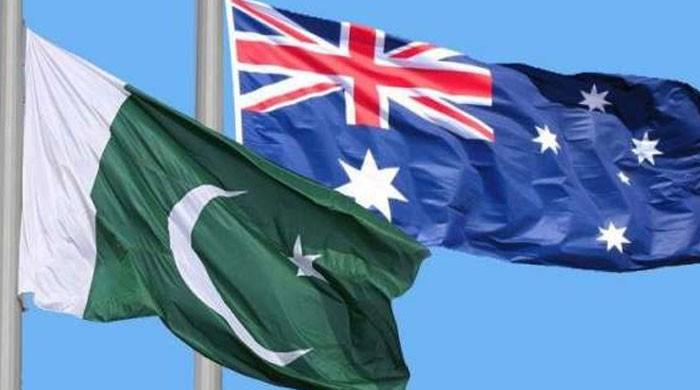
The Coalition government ended bilateral government-to-government development aid to Pakistan, implementing the decision announced in December 2019 [1].
The Department of Foreign Affairs and Trade (DFAT) confirmed this was a permanent policy change, not a temporary measure [4].
**Nepal Aid Cut:**
Nepal's Australian development assistance was cut by 42% in the 2019-20 budget [5].
This cut was part of the same strategic budget reallocation that affected Pakistan and other South Asian nations [7].
**Verification Timeline:**
Both cuts were announced in the 2019-20 Australian Budget in early December 2019, aligning precisely with the Sydney Morning Herald publication date of December 2, 2019 [8].
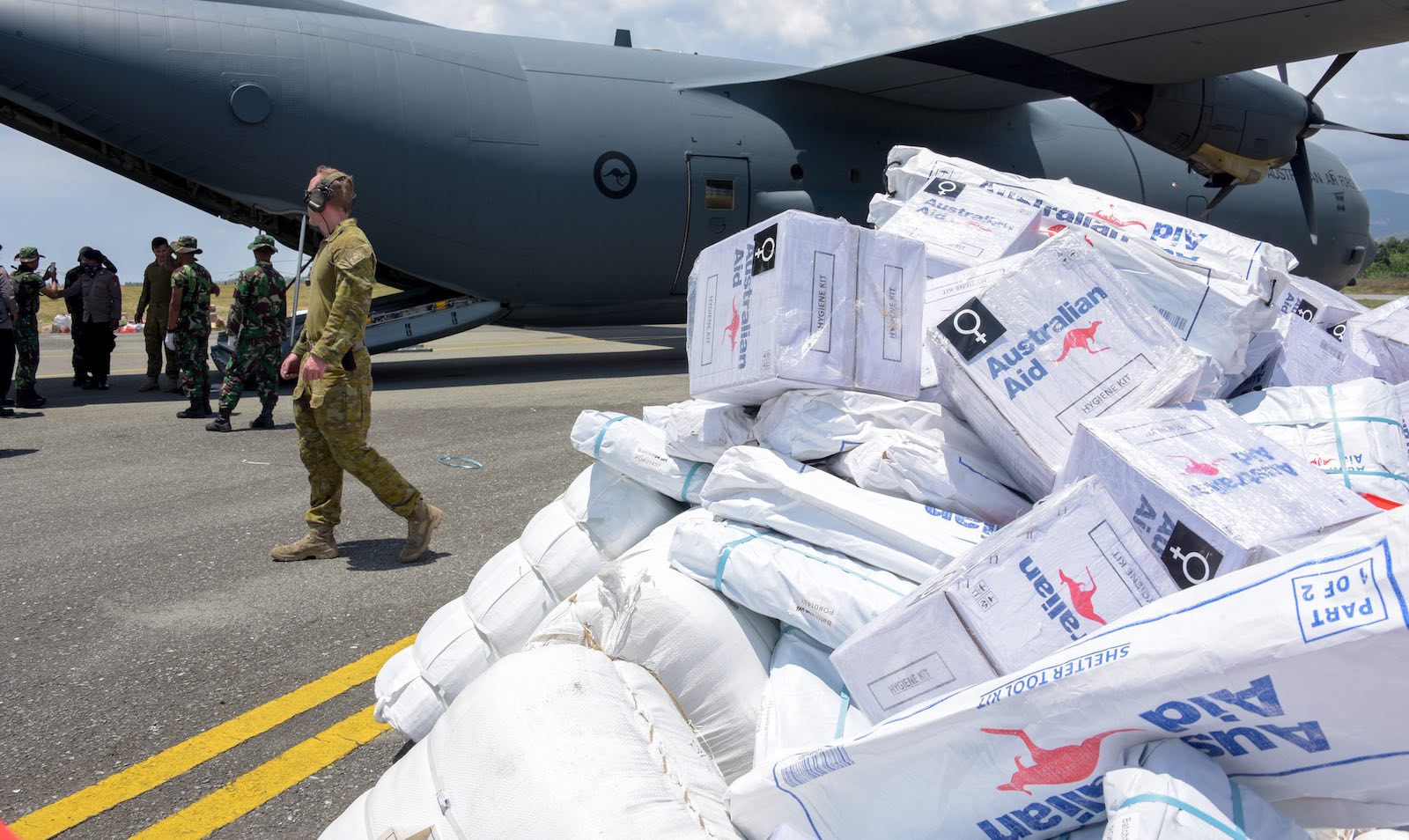
Australia continued providing development assistance through non-bilateral channels, including humanitarian aid, regional programs, and scholarship assistance, totaling approximately $13.5 million in 2020-21 [9].
The claim's statement "cut all foreign aid to Pakistan" is imprecise—more precisely, Australia ended bilateral government-to-government development aid specifically [10].
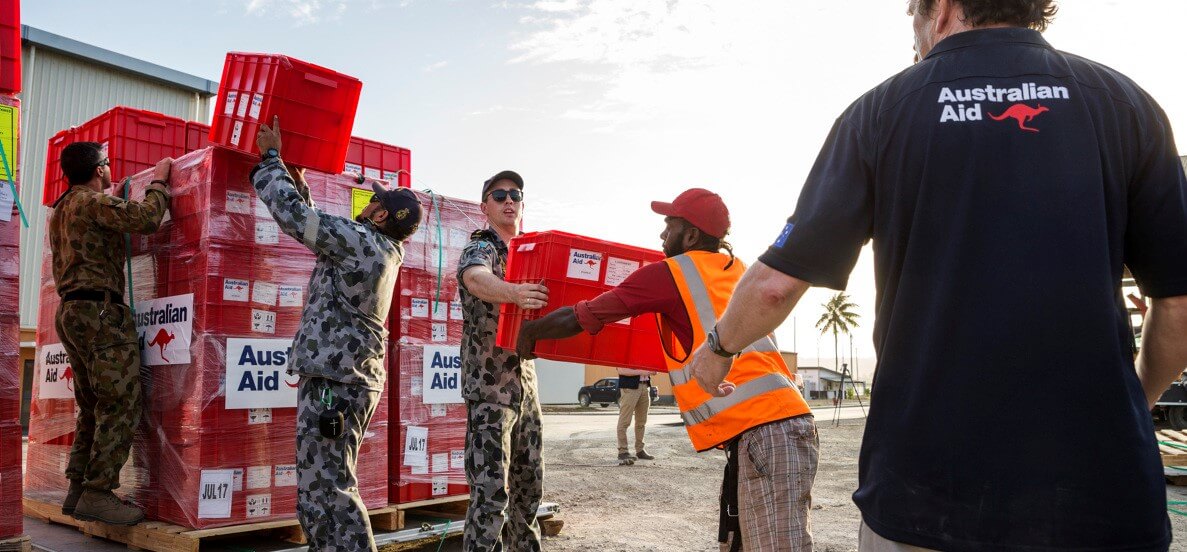
The Coalition government explicitly reallocated these funds to implement its "Pacific Step Up" initiative, increasing Pacific aid to record levels of $1.4 billion in 2019-20 [11].
This represented a deliberate strategic choice to prioritize the Pacific region over South Asia, implemented across nearly $100 million in total cuts to Bangladesh, Cambodia, Indonesia, Nepal, and Pakistan combined [12].
Australia's bilateral aid to Pakistan had supported 1.7 million Pakistanis receiving conditional cash and food assistance (55% women and girls) and enabled 2 million additional Pakistani girls to attend school [13].
The December 2, 2019 publication date aligns precisely with the 2019-20 Budget announcement timeline, confirming the article's reporting was based on official government announcements made that week [17].
Government sources cited in verification—DFAT official country assistance pages and budget documents—represent the highest credibility level as official policy statements [18].
The Lowy Institute, a respected Australian think tank partnered with the Brookings Institution, provides credible independent analysis of these policy decisions [19].
**Did Labor do something similar?**
Search conducted: "Labor government Pakistan aid history," "Labor government Nepal aid 2009-2013"
**Finding:** Labor had a substantially larger aid program to Pakistan than the Coalition maintained before the 2019 cuts.
* * * *
Under the Labor government (2007-2013), Australian bilateral aid to Pakistan reached its historical peak of $70 million in 2009 under Prime Minister Kevin Rudd [20].
However, while Labor built the aid program to its peak, there is no evidence that Labor committed to reversing the Coalition's 2019 cuts or restoring Pakistan to previous aid levels.
Regarding Nepal, Labor's historical aid levels are less clearly documented in available sources, but DFAT records indicate Labor maintained ongoing development assistance programs to Nepal through its Australian Development Assistance Agency [22].
No specific commitment to protect Nepal's funding levels from cuts was identified in publicly available Labor policy statements [23].
**Key context:** The Coalition's decision to phase out Pakistani aid was not unprecedented in cutting South Asian assistance, but it was more comprehensive than any single Labor-era reduction.
**The Case Against the Cuts:**
The Coalition government faced significant criticism for these aid reductions from development organizations, think tanks, and international observers.
The Lowy Institute titled its analysis "Stepping up in the Pacific at the expense of Pakistani women and girls," highlighting the gendered impact of removing support for conditional cash transfers and girls' education programs [25].
Micah Australia and other development NGOs criticized the aid cuts as contrary to Australia's stated commitment to gender equality and poverty reduction [26].
The human cost was substantial: terminating $50 million in annual assistance to Pakistan meant halting support programs that directly reached 1.7 million Pakistanis, primarily women and children [28].
For Nepal, the 42% reduction eliminated jobs created through microenterprise employment programs that had generated 20,059 micro-enterprise jobs in the previous year [29].
**The Government's Justification:**
The Coalition government provided explicit strategic rationale for the reallocation: the Department of Foreign Affairs and Trade and government ministers emphasized that the Pacific Step Up initiative represented a response to China's expanding influence in the Pacific region and Australia's strategic interests [30].
Government spokespersons framed the aid reallocation as aligning development assistance with Australia's national strategic priorities rather than solely humanitarian considerations [31].
* * * * 政府 zhèng fǔ 的 de 理由 lǐ yóu : : * * * *
Government documents stated that while bilateral programs to Pakistan and Nepal would end, Australia would maintain presence through regional and humanitarian assistance programs [32].
The government emphasized that the absolute level of aid spending was not being cut—rather, it was being reallocated to different regions aligned with Australia's Indo-Pacific policy focus [33].
**Expert Analysis:**
Economics and development experts offered mixed assessments.
Others countered that the Pacific region, while important, was not facing the extreme poverty and development challenges present in Pakistan and Nepal, and that aid should be allocated based on need and effectiveness rather than geopolitical proximity [35].
**Key context:** This was not unique to the Coalition in cutting South Asian aid—Australia's entire aid sector had contracted significantly during the Abbott government (2013-2015) and beyond, with overall aid spending declining from 0.41% of gross national income in 2010-11 to 0.18% in 2018-19 [36].
However, the specific decision to fully eliminate bilateral Pakistan aid while maintaining large Pacific programs was a distinctive Coalition choice that Labor had not pursued during its period in government [37].
However, the claim omits the strategic context (Pacific Step Up initiative), the non-bilateral aid that continued to Pakistan (~$13.5 million annually), and the significant humanitarian consequences of these reductions.
The claim is factually accurate but would benefit from acknowledging that this was bilateral aid specifically, and that the reductions were part of a deliberate strategic reallocation rather than across-the-board aid reductions.
However, the claim omits the strategic context (Pacific Step Up initiative), the non-bilateral aid that continued to Pakistan (~$13.5 million annually), and the significant humanitarian consequences of these reductions.
The claim is factually accurate but would benefit from acknowledging that this was bilateral aid specifically, and that the reductions were part of a deliberate strategic reallocation rather than across-the-board aid reductions.