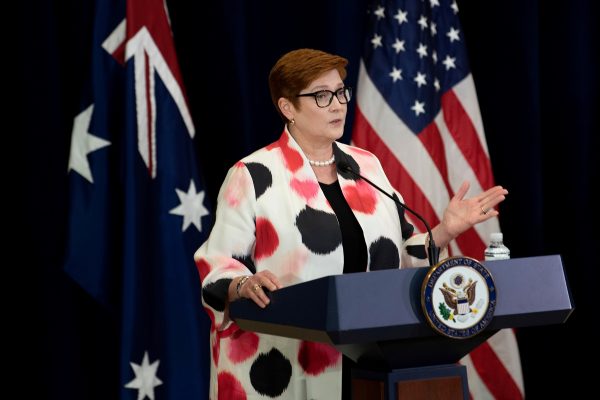
The bill was passed by Parliament and received Royal Assent on December 10, 2020, becoming the Foreign Relations (State and Territory Arrangements) Act 2020 [2].
The Minister for Foreign Affairs can cancel existing arrangements between these entities and foreign governments if the Minister determines the arrangement would "adversely affect Australia's foreign relations, or is inconsistent with Australia's foreign policy" [4].
However, sporting bodies were **not** included in the final legislation despite being the subject of unsuccessful amendments during parliamentary consideration [5].
The legislation was bipartisan—the Labor Party backed the bill during parliamentary passage, though Senator Penny Wong criticised the government for rushing it and blocking Labor amendments [6].
It **became law** and has been operational since December 10, 2020 [2].
这一 zhè yī 区别 qū bié 很 hěn 重要 zhòng yào , , 因为 yīn wèi 它 tā 暗示 àn shì 该 gāi 立法 lì fǎ 因 yīn 争议 zhēng yì 而 ér 停滞 tíng zhì , , 而 ér 实际上 shí jì shàng 它 tā 获得 huò dé 了 le 政府 zhèng fǔ 和 hé 反对党 fǎn duì dǎng 的 de 共同 gòng tóng 支持 zhī chí 而 ér 通过 tōng guò 。 。
This distinction is important because it suggests the legislation was controversial enough to stall, when in fact it passed with both government and opposition support.
The legislation applies specifically to written formal "arrangements" between covered entities and foreign governments or foreign government entities [4].
Not all international cooperation arrangements would necessarily fall within the scope—the government must notify and review arrangements according to defined criteria.
A critical procedural context is missing: the legislation explicitly states the Minister "is not required to observe any requirements of procedural fairness" when making cancellation decisions [7].
Both articles were published in 2020 during parliamentary consideration of the bill, so they represent contemporary analysis rather than retrospective critique.
However, both sources were published before the bill's passage and therefore reflect pre-enactment concerns rather than post-enactment analysis of actual impact.
The The Guardian Guardian 文章 wén zhāng 标题 biāo tí 提到 tí dào 大学 dà xué " " 措手不及 cuò shǒu bù jí " " , , 这 zhè 反映 fǎn yìng 了 le 机构 jī gòu 的 de 担忧 dān yōu , , 但 dàn 属于 shǔ yú 观点 guān diǎn 性 xìng 表述 biǎo shù 而 ér 非 fēi 中立 zhōng lì 报道 bào dào 。 。
The Guardian article headline mentions universities being "blindsided," which reflects institutional concern but is opinion-framing rather than neutral reporting.
The The Conversation Conversation 文章 wén zhāng 标题 biāo tí ( ( " " 不 bù 应 yīng 通过 tōng guò 议会 yì huì " " ) ) 明确 míng què 表达 biǎo dá 了 le 对 duì 特定 tè dìng 结果 jié guǒ 的 de 支持 zhī chí 。 。
The Conversation article title ("should not pass parliament") explicitly signals advocacy for a particular outcome.
**Did Labor do something similar?**
The Labor Party did not propose equivalent legislation during their time in government (2007-2013).
* * * *
However, the foreign relations issue was not a significant point of partisan dispute—Labor backed this Coalition bill during parliamentary consideration [6].
工党 gōng dǎng 在 zài 2007 2007 - - 2013 2013 年 nián 执政 zhí zhèng 期间 qī jiān 没有 méi yǒu 提出 tí chū 过 guò 类似 lèi sì 的 de 立法 lì fǎ 。 。
The precedent actually came from the states: Victoria's Labor government introduced a similar state-level bill (Victorian Foreign Investment Review Scheme) to review state government agreements [8], though this had a different scope focused on investment rather than all arrangements.
While the legislation grants significant ministerial power, the government's rationale was national security concerns and the need to ensure state and institutional agreements aligned with Australian foreign policy [1].
This followed years of concerns about state and institutional agreements that were sometimes made without federal consultation, particularly regarding Chinese partnerships through the Belt and Road Initiative framework.
The lack of appeal mechanisms, procedural fairness requirements, and the exclusion of decisions from judicial review raise important questions about institutional autonomy and proportionality [7].
The legislation has been actively used in practice—on April 21, 2021, the Commonwealth Minister for Foreign Affairs announced cancellation of two memoranda of understanding between the Victorian government and Chinese government regarding Belt and Road Initiative participation [5].
This demonstrates the power is not merely theoretical.
**Key context:** This is not unique to the Coalition—Labor supported the bill's passage, and similar state-level mechanisms exist in other Australian states.
However, the absence of procedural fairness, appeals mechanisms, and judicial review is unusual for Australian administrative law and represents a distinctive policy approach.
The inclusion of sports institutions in the claim is inaccurate, as they were explicitly excluded from the final legislation despite consideration during drafting.
However, the claim contains a significant factual error: sports institutions were **not** included in the final legislation, despite being subject to discussion during parliamentary consideration.
Additionally, the claim's phrasing using past tense ("Introduced a bill") understates that the legislation passed Parliament, received Royal Assent, and has been operational for over three years.
However, the claim contains a significant factual error: sports institutions were **not** included in the final legislation, despite being subject to discussion during parliamentary consideration.
Additionally, the claim's phrasing using past tense ("Introduced a bill") understates that the legislation passed Parliament, received Royal Assent, and has been operational for over three years.