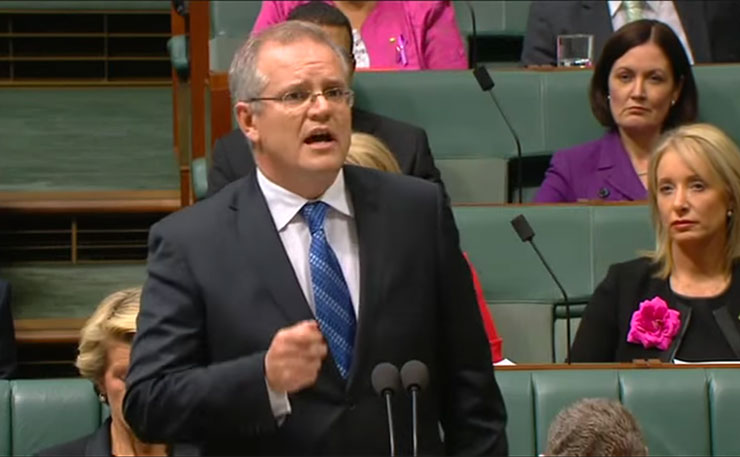
“Nagpanukala ng isang espesyal na 'code of conduct' para sa mga refugee na naninirahan sa Australia, sa kabila ng katotohanan na ang mga refugee ay may mas kaunting krimen bawat tao kaysa sa pambansang average.”
**Ang Code of Conduct ay Totoo** Noong Marso 2014, inanunsyo ni Immigration Minister Scott Morrison (sa ilalim ng Abbott Coalition Government) na ang mga asylum seeker na naninirahan sa komunidad sa bridging visas ay kailangang pumirma sa isang mandatoryong "code of conduct" na naglalaman ng mga kinakailangan sa pag-uugali at mga posibleng parusa para sa mga paglabag, kabilang ang posibleng pagbabalik sa detention [1]. **Tila Tumpak ang Paghahambing ng Rate ng Krimen** Ang artikulo ng Sydney Morning Herald noong Pebrero 2013 ay nag-ulat na napaka-kaunting asylum seeker ang nasampahan ng kriminal na kaso, na binanggit na sa libu-libong asylum seeker na naninirahan sa komunidad, iilan lamang ang nasampahan ng anumang krimen [2].
**The Code of Conduct Was Real**
In March 2014, Immigration Minister Scott Morrison (under the Abbott Coalition Government) announced that asylum seekers living in the community on bridging visas would be required to sign a mandatory "code of conduct" that included behavioral requirements and potential penalties for violations, including possible return to detention [1].
**Crime Rate Comparison Appears Accurate**
The Sydney Morning Herald article from February 2013 reported that very few asylum seekers were charged with criminal offenses, with the article noting that out of thousands of asylum seekers living in the community, only a small number had been charged with any crime [2].
Ang datos noong panahong iyon ay nagmungkahi na ang mga asylum seeker ay may mas mababang rate ng krimen kaysa sa pangkalahatang populasyon ng Australia.
The data at that time suggested asylum seekers had a lower crime rate than the general Australian population.
Nawawalang Konteksto
**Kung Sino ang Saklaw ng Code** Ang code of conduct ay pangunahing inilapat sa mga asylum seeker na naninirahan sa komunidad sa bridging visas - hindi sa mga refugee na nabigyan na ng permanenteng proteksyon.
**Who the Code Applied To**
The code of conduct primarily applied to asylum seekers living in the community on bridging visas - not refugees who had already been granted permanent protection.
Mahalagang pagkakaiba ito, dahil ang claim ay pinagsasama ang "refugee" at "asylum seeker na naghihintay ng desisyon." Magkaiba ang mga kategoryang ito sa legal na aspeto. **Ang Rason sa Likod ng Patakaran** Sinabi ng gobyerno na ang code ay dinisenyo upang tiyakin ang kaligtasan ng komunidad at magtakda ng malinaw na inaasahan sa pag-uugali para sa mga nasa bridging visas.
This is an important distinction, as the claim conflates "refugees" with "asylum seekers awaiting determination." These are legally distinct categories.
**The Policy Rationale**
The government stated the code was designed to ensure community safety and set clear behavioral expectations for those on bridging visas.
Argumento ng Coalition na ang malinaw na mga patakaran ay makakatulong sa integrasyon at magbibigay ng balangkas para sa pagtugon sa anumang isyu sa pag-uugali [1]. **Limitadong mga Parusa at Saklaw** Ang mga mekanismo ng pagpapatupad ng code at aktwal na pagpapatupad ay mas limitado kaysa sa inihahayag ng claim.
The Coalition argued that clear rules would help integration and provide a framework for addressing any behavioral issues [1].
**Limited Penalties and Scope**
The code's enforcement mechanisms and actual implementation were more limited than the claim suggests.
Bagama't ang mga paglabag ay maaaring humantong sa pagkakansela ng visa, limitado ang ebidensya ng malawakang pagpapatupad.
While violations could theoretically lead to visa cancellation, evidence of widespread enforcement is limited.
Pagsusuri ng Kredibilidad ng Pinagmulan
**New Matilda (Pangunahing Pinagmulan)** Ang New Matilda ay isang independenteng Australian online news outlet na may kilalang progresibo/kaliwang editorial stance.
**New Matilda (Primary Source)**
New Matilda is an independent Australian online news outlet with a known progressive/left-leaning editorial stance.
Madalas itong naglalathala mula sa pananaw ng adbokasiya sa mga isyung kabilang ang karapatan ng refugee, patakaran sa kapaligiran, at katarungang panlipunan.
It often publishes from an advocacy perspective on issues including refugee rights, environmental policy, and social justice.
Bagama't nakapaglabas ito ng mga lehitimong kuwento, dapat malaman ng mga mambabasa ang kanilang political positioning sa pagtatasa ng paghahayag at diin [1]. **Sydney Morning Herald** Ang SMH ay isang mainstream Fairfax Media (ngayon ay Nine) na pahayagan na may mga itinatag na pamantayan sa pamamahayag.
While it has broken legitimate stories, readers should be aware of its political positioning when assessing framing and emphasis [1].
**Sydney Morning Herald**
The SMH is a mainstream Fairfax Media (now Nine) newspaper with established journalistic standards.
Ang artikulo noong 2013 ay tila factual reporting batay sa datos ng pulisya.
The 2013 article appears to be factual reporting based on police data.
Karaniwang itinuturing itong isang kredibleng mainstream source [2]. **World Justice Project** Ang WJP ay isang internasyonal na non-profit organization na nakatuon sa mga prinsipyo ng rule of law.
It is generally considered a credible mainstream source [2].
**World Justice Project**
The WJP is an international non-profit organization focused on rule of law principles.
Hindi ito isang partisan political organization kundi isang research-focused NGO.
It is not a partisan political organization but rather a research-focused NGO.
Ang pagkakasama nito ay tila upang magtatag ng mas malawak na prinsipyo tungkol sa rule of law at mga vulnerable na populasyon [3].
Its inclusion appears to be to establish a broader principle about rule of law and vulnerable populations [3].
⚖️
Paghahambing sa Labor
**Ginawa ba ng Labor ang katulad?** Ang mga gobyernong Rudd/Gillard Labor (2007-2013) ay nagpataw din ng mga paghihigpit at kinakailangan sa mga asylum seeker, bagama't hindi sa anyo ng pormal na dokumentong "code of conduct." Ang mga patakaran ng Labor ay kinabibilangan ng: - **Mandatory detention** para sa mga dumating sa barko (ipinagpatuloy mula sa panahon ni Howard) - **Mga kinakailangan sa character test** para sa pagbibigay ng visa - **Mga security assessment** ng ASIO - **Ang prinsipyo ng "no advantage"** na nagpataw ng mga pagkaantala sa pagproseso - **Regional processing** (ang Malaysia Solution at pagkatapos ay mga kasunduan sa PNG/Nauru) Ang partikular na format ng "code of conduct" ay inobasyon ng Coalition, ngunit ang saligang prinsipyo ng pagpataw ng mga kinakailangan sa pag-uugali at mga paghihigpit sa mga asylum seeker ay pareho sa dalawang pangunahing partido.
**Did Labor do something similar?**
The Rudd/Gillard Labor governments (2007-2013) also imposed restrictions and requirements on asylum seekers, though not in the form of a formal "code of conduct" document.
Parehong nanatili ang dalawang gobyerno na ang mga asylum seeker ay dapat matugunan ang ilang mga pamantayan upang manatili sa komunidad.
Labor's policies included:
- **Mandatory detention** for boat arrivals (maintained from the Howard era)
- **Character test requirements** for visa grants
- **Security assessments** by ASIO
- **The "no advantage" principle** which imposed delays on processing
- **Regional processing** (the Malaysia Solution and later PNG/Nauru arrangements)
The specific "code of conduct" format was a Coalition innovation, but the underlying principle of imposing behavioral requirements and restrictions on asylum seekers was consistent across both major parties.
🌐
Balanseng Pananaw
**Ang Puna** Ang mga kritiko, kabilang ang mga organisasyon para sa karapatan ng refugee at ang artikulo ng New Matilda, ay nagsabing ang pagpataw ng code of conduct sa isang populasyon na may mas mababang rate ng krimen kaysa sa pangkalahatang publiko ay hindi kinakailangang pagkakalagay ng marka.
**The Criticism**
Critics, including refugee advocacy organizations and the New Matilda article, argued that imposing a code of conduct on a population that already had lower crime rates than the general public was unnecessary stigmatization.
Naniniwala sila na lumikha ito ng isang sistema na may dalawang antas kung saan ang mga asylum seeker ay napapailalim sa espesyal na pagsusuri sa pag-uugali na hindi inilalapat sa mga mamamayan ng Australia [1]. **Ang Posisyon ng Gobyerno** Argumento ng gobyernong Coalition na: - Ang code ay nagbibigay ng malinaw na inaasahan sa pag-uugali - Nagbibigay ito sa mga awtoridad ng mekanismo para tugunan ang mga isyu kung sakaling magkaroon - Ang kaligtasan ng komunidad ay lehitimong prayoridad - Ang mga kinakailangan ay makatuwiran at hindi mabigat - Ang karamihan sa mga asylum seeker ay walang kahirap-hirap na makakatugon **Kontekstong Komparatibo** Ang ibang bansa ay nagpatupad ng mga katulad na kinakailangan sa pag-uugali para sa mga asylum seeker.
They contended it created a two-tiered system where asylum seekers were subject to special behavioral scrutiny not applied to Australian citizens [1].
**The Government's Position**
The Coalition government argued that:
- The code provided clear expectations for behavior
- It gave authorities a mechanism to address issues if they arose
- Community safety was a legitimate priority
- The requirements were reasonable and not onerous
- Most asylum seekers would have no difficulty complying
**Comparative Context**
Other countries have implemented similar behavioral requirements for asylum seekers.
Halimbawa, ang ilang bansa sa Europa ay may mga kontrata sa integrasyon o mga kinakailangan sa pag-uugali bilang kondisyon para sa pagtanggap ng benepisyo o pagmanatili sa komunidad.
For example, several European countries have integration contracts or behavioral requirements as conditions for receiving benefits or remaining in the community.
Ang konsepto, bagama't kontrobersyal, ay hindi natatangi sa Australia. **Ang Estadistikang Realidad** Bagama't tama ang claim na ang mga asylum seeker ay may mas mababang rate ng krimen kaysa sa pambansang average, hindi nito kinakailangang hindi wasto ang pagkakaroon ng mga pamantayan sa pag-uugali.
The concept, while controversial, is not unique to Australia.
**The Statistical Reality**
While the claim correctly notes that asylum seekers had lower crime rates than the national average, this does not necessarily invalidate having behavioral standards.
Karaniwang nagpapatupad ang mga gobyerno ng mga kinakailangan sa mga grupo sa kabila ng aktwal na rate ng paglabag (hal. lisensya sa pagmamaneho, propesyonal na sertipikasyon).
Governments routinely impose requirements on groups regardless of actual violation rates (e.g., driver licensing, professional certifications).
Gayunpaman, ang paghahayag ng patakaran ay tila nagmumungkahi ng isang problema (maling pag-uugali ng mga asylum seeker) na hindi sinusuportahan ng mga estadistika, na isang lehitimong puna.
However, the framing of the policy did appear to suggest a problem (misconduct by asylum seekers) that the statistics did not support, which is a legitimate criticism.
BAHAGYANG TOTOO
6.0
sa 10
Tumpak ang mga pangunahing katotohanan: ang Coalition ay talagang nagpanukala ng code of conduct para sa mga asylum seeker noong 2014, at ang available na datos noong panahong iyon ay nagpapakita na ang mga asylum seeker ay may mas mababang rate ng krimen kaysa sa pangkalahatang populasyon.
The core facts are accurate: the Coalition did propose a code of conduct for asylum seekers in 2014, and available data at the time indicated asylum seekers had lower crime rates than the general population.
Gayunpaman, ang claim ay pinagsasama ang "refugee" (mga nabigyan na ng proteksyon) at "asylum seeker sa bridging visas" (mga naghihintay ng desisyon).
However, the claim conflates "refugees" (those granted protection) with "asylum seekers on bridging visas" (those awaiting determination).
Bukod pa rito, hindi binanggit ng claim na parehong partido ang nagpataw ng mga paghihigpit sa mga asylum seeker - ang "code of conduct" ng Coalition ay pagkakaiba sa anyo sa halip na pagkakaiba sa pilosopiya tungkol sa pagpataw ng mga kinakailangan sa pag-uugali sa populasyon na ito.
Additionally, the claim omits that both major parties imposed restrictions on asylum seekers - the Coalition's "code of conduct" approach was a difference in form rather than a fundamental difference in philosophy about imposing behavioral requirements on this population.
Huling Iskor
6.0
SA 10
BAHAGYANG TOTOO
Tumpak ang mga pangunahing katotohanan: ang Coalition ay talagang nagpanukala ng code of conduct para sa mga asylum seeker noong 2014, at ang available na datos noong panahong iyon ay nagpapakita na ang mga asylum seeker ay may mas mababang rate ng krimen kaysa sa pangkalahatang populasyon.
The core facts are accurate: the Coalition did propose a code of conduct for asylum seekers in 2014, and available data at the time indicated asylum seekers had lower crime rates than the general population.
Gayunpaman, ang claim ay pinagsasama ang "refugee" (mga nabigyan na ng proteksyon) at "asylum seeker sa bridging visas" (mga naghihintay ng desisyon).
However, the claim conflates "refugees" (those granted protection) with "asylum seekers on bridging visas" (those awaiting determination).
Bukod pa rito, hindi binanggit ng claim na parehong partido ang nagpataw ng mga paghihigpit sa mga asylum seeker - ang "code of conduct" ng Coalition ay pagkakaiba sa anyo sa halip na pagkakaiba sa pilosopiya tungkol sa pagpataw ng mga kinakailangan sa pag-uugali sa populasyon na ito.
Additionally, the claim omits that both major parties imposed restrictions on asylum seekers - the Coalition's "code of conduct" approach was a difference in form rather than a fundamental difference in philosophy about imposing behavioral requirements on this population.
Hindi tama sa katotohanan o malisyosong gawa-gawa.
4-6: BAHAGYA
May katotohanan ngunit kulang o baluktot ang konteksto.
7-9: HALOS TOTOO
Maliit na teknikal na detalye o isyu sa pagkakasulat.
10: TUMPAK
Perpektong na-verify at patas ayon sa konteksto.
Pamamaraan: Ang mga rating ay tinutukoy sa pamamagitan ng cross-referencing ng opisyal na mga rekord ng pamahalaan, independiyenteng mga organisasyong nag-fact-check, at mga primaryang dokumento.