Totoo

Rating: 8.0/10

Coalition
C0949

Ang Claim

“Tinanggal ang Biodiversity Fund.”
Orihinal na Pinagmulan: Matthew Davis

Orihinal na Pinagmulan

FACTUAL NA BERIPIKASYON

Ang Biodiversity Fund ay itinatag ng Gillard Labor Government noong 2011 bilang bahagi ng Clean Energy Future (CEF) plan, na may paunang badyet na $946.2 milyon sa loob ng anim na taon mula 2011-12 hanggang 2016-17 [1].
The Biodiversity Fund was established by the Gillard Labor Government in 2011 as part of the Clean Energy Future (CEF) plan, with an initial budget of $946.2 million over six years from 2011-12 to 2016-17 [1].
Ang programang ito ay dinisenyo upang mapabuti ang pagtitiis ng mga natatanging species ng Australia sa mga epekto ng climate change, mapahusay ang mga resultang pangkapaligiran ng mga proyekto sa carbon farming, at tulungan ang mga may-ari ng lupa na protektahan ang mga halaga ng carbon at biodiversity sa kanilang lupa [2].
The program was designed to improve the resilience of Australia's unique species to climate change impacts, enhance environmental outcomes of carbon farming projects, and help landholders protect carbon and biodiversity values on their land [2].
Sa 2013-14 Federal Budget (na inihain ng paalis na Labor government), ang kabuuang pondo ay binawasan ng $32.3 milyon, na may $225.4 milyon na inilipat sa 2017-18 at 2018-19 [1].
In the 2013-14 Federal Budget (delivered by the outgoing Labor government), the overall funding was reduced by $32.3 million, with $225.4 million rephased to 2017-18 and 2018-19 [1].
Gayunpaman, ang Coalition government na nahalal noong 2013 ay muling istinakda ang balangkas ng patakaran sa klima at kapaligiran ng Australia.
However, the Coalition government elected in 2013 substantially restructured Australia's climate and environmental policy framework.
Pagkatapos ng pagpapalit ng gobyerno noong 2013, ang Clean Energy Act 2011 ay pinawalang-bisa noong Hulyo 2014 [3].
Following the change of government in 2013, the Clean Energy Act 2011 was repealed in July 2014 [3].
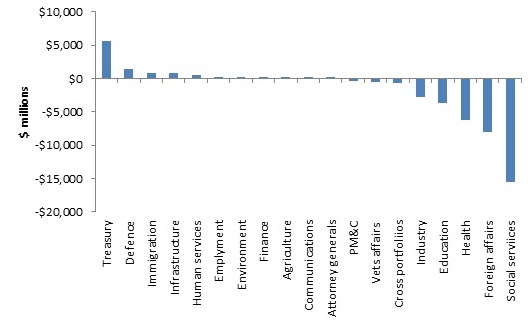
Ang unang badyet ng Abbott government noong Mayo 2014 ay nagmarka ng isang makabuluhang pagbabago sa patakarang pangkapaligiran, na ang ABC News ay nag-ulat ng "massive, massive cut" sa mga programang pangkapaligiran at klima ng gobyerno [4].
The Abbott government's first budget in May 2014 marked a significant shift in environmental policy, with ABC News reporting "massive, massive cut" to government environment and climate programs [4].
Ang Biodiversity Fund ay epektibong pinawalang-bisa nang palitan ng Coalition ang carbon pricing mechanism ng Labor sa boluntaryong Emissions Reduction Fund (ERF), na nagsimula noong Disyembre 2014 [3].
The Biodiversity Fund was effectively abolished as the Coalition replaced Labor's carbon pricing mechanism with the voluntary Emissions Reduction Fund (ERF), which commenced in December 2014 [3].
Ang ERF ay gumagamit ng Carbon Farming Initiative (CFI) bilang kanyang statutory vehicle ngunit nag-o-operate sa ilalim ng isang ganap na naiibang boluntaryong market-based approach sa halip na ang grant-based Biodiversity Fund model.
The ERF uses the Carbon Farming Initiative (CFI) as its statutory vehicle but operates under a fundamentally different voluntary market-based approach rather than the grant-based Biodiversity Fund model.

Nawawalang Konteksto

Ang claim ay naglilimot ng ilang mahahalagang kontekstwal na elemento: 1. **Ang Biodiversity Fund ay bahagi ng carbon price package**: Ang Fund ay intrinsically na konektado sa Clean Energy Future plan, na kabilang ang carbon pricing mechanism na ang Coalition ay tahasang nagkampanya na alisin [2].
The claim omits several important contextual elements: 1. **The Biodiversity Fund was part of the carbon price package**: The Fund was intrinsically linked to the Clean Energy Future plan, which included a carbon pricing mechanism that the Coalition had campaigned explicitly to abolish [2].
Ang pagpawalang-bisa sa Biodiversity Fund ay bahagi ng mas malawak na pagbubuwag sa carbon price framework na naging sentro ng oposisyong patakaran ng Coalition. 2. **Ang Labor ay bumaba na ng pondo**: Ang paalis na Labor government sa 2013-14 Budget ay bumaba na ng Biodiversity Fund funding ng $32.3 milyon at inilipat ang $225.4 milyon sa mga sumusunod na taon, na nagpapahiwatig na ang mga piscal na presyon ay nakaapekto sa parehong partido sa kanilang paglapit sa programang ito [1]. 3. **Mayroong replacement policy**: Ang Coalition ay pinalitan ang Biodiversity Fund sa Emissions Reduction Fund (ERF), na bagama't nag-o-operate sa ilalim ng naiibang mga prinsipyo (boluntaryo vs. grants), ay inihain bilang ang bagong mekanismo para sa pagkamit ng mga resultang carbon at biodiversity [3]. 4. **Konteksto ng budget consolidation**: Ang 2014 budget ay inihain sa isang konteksto kung saan sinabi ng gobyerno na ang Australia ay nakakaharap sa isang "budget emergency" na nangangailangan ng mga makabuluhang pagbabawas sa gastos sa maraming portfolio [5].
The abolition of the Biodiversity Fund was part of a broader dismantling of the carbon price framework that had been central to Coalition policy opposition. 2. **Labor had already reduced funding**: The outgoing Labor government in the 2013-14 Budget had already reduced Biodiversity Fund funding by $32.3 million and rephased $225.4 million to later years, indicating fiscal pressures affected both parties' approach to the program [1]. 3. **Replacement policy existed**: The Coalition replaced the Biodiversity Fund with the Emissions Reduction Fund (ERF), which while operating under different principles (voluntary vs. grants), was presented as the new mechanism for achieving carbon and biodiversity outcomes [3]. 4. **Budget consolidation context**: The 2014 budget was delivered in a context where the government claimed Australia faced a "budget emergency" requiring significant spending reductions across multiple portfolios [5].

Pagsusuri ng Kredibilidad ng Pinagmulan

Ang orihinal na pinagmulan ay ang pahayagang *The Australian*, na pagmamay-ari ng News Corp Australia.
The original source is *The Australian* newspaper, which is owned by News Corp Australia.
Ayon sa Media Bias/Fact Check, ang *The Australian* ay may center-right editorial bias, na may mga tiyakang konserbatibong posisyon sa iba't ibang mga paksang patakaran [6].
According to Media Bias/Fact Check, *The Australian* has a center-right editorial bias, with distinct conservative positions on various policy topics [6].
Ang pahayagan ay nag-iintegrate ng nilalaman mula sa mga overseas News Corp publication kabilang ang right-leaning *Wall Street Journal* at *The Times* of London [6].
The newspaper integrates content from overseas News Corp publications including the right-leaning *Wall Street Journal* and *The Times* of London [6].
Bagama't ang *The Australian* ay isang mainstream na pambansang pahayagan na may mga propesyonal na pamantayan sa pamamahayag, ang kanilang editorial stance ay umaabante sa konserbatibo, na nauugnay kapag sinusuri ang coverage ng mga pagbabago sa patakarang pangkapaligiran ng Coalition government.
While *The Australian* is a mainstream national newspaper with professional journalism standards, its editorial stance leans conservative, which is relevant when assessing coverage of Coalition government environmental policy changes.
Ang tiyak na artikulo na binanggit ay tila factual reporting tungkol sa mga desisyon sa badyet sa halip na opinion content.
The specific article cited appears to be factual reporting on budget decisions rather than opinion content.
⚖️

Paghahambing sa Labor

**Ginawa ba ng Labor ang katulad na bagay?** Nagsagawa ng paghahanap: "Labor government environmental programs funding cuts conservation" Natuklasan: Ang Rudd-Gillard Labor Government (2007-2013) ay hindi pinawalang-bisa ang mga katulad na malalaking programang pangkapaligiran na itinatag ng kanilang predecessor.
**Did Labor do something similar?** Search conducted: "Labor government environmental programs funding cuts conservation" Finding: The Rudd-Gillard Labor Government (2007-2013) did not abolish comparable major environmental programs established by its predecessor.
Gayunpaman, ang Labor ay: 1. **Bumaba na ng Biodiversity Fund**: Ang 2013-14 Labor Budget ay binawasan ang Biodiversity Fund funding ng $32.3 milyon at inilipat ang $225.4 milyon sa mga sumusunod na taon [1], na nagpapakita na ang mga piscal na presyon ay nakaapekto na sa programang ito bago pa man umupo ang Coalition. 2. **Nagkaroon ng mga pagbawas sa mga programang pangkapaligiran**: Noong Hulyo 2013, inihayag ng Labor government ang milyun-milyong dolyar na mga pagbawas sa Biodiversity Fund at Carbon Farming Futures program upang matulungan ang pagbabayad para sa transisyon sa isang floating carbon price [7]. 3. **Naiibang paglapit sa environmental funding**: Ang talaan ng Labor ay nagpapakita na sa pangkalahatan ay pinataas nila ang pagtatatag ng mga programang pangkapaligiran (paglikha ng Biodiversity Fund, Clean Energy Future package, atbp.) sa halip na alisin ang mga umiiral na programa.
However, Labor did: 1. **Already reduced the Biodiversity Fund**: The 2013-14 Labor Budget reduced Biodiversity Fund funding by $32.3 million and rephased $225.4 million to later years [1], demonstrating fiscal pressures were already affecting the program before the Coalition took office. 2. **Made cuts to environmental programs**: In July 2013, the Labor government announced millions of dollars in cuts to the Biodiversity Fund and Carbon Farming Futures program to help pay for the transition to a floating carbon price [7]. 3. **Different approach to environmental funding**: Labor's record shows they generally increased environmental program establishment (creating the Biodiversity Fund, Clean Energy Future package, etc.) rather than abolishing existing programs.
Ang pangunahing exception ay ang pagbabago o pagbabawas sa mga programa na kanilang mismo nilikha kapag kinakailangan ng mga piscal na kalagayan. **Paghahambing:** Ang paglapit ng Coalition ay naiiba sa paglapit ng Labor sa paraan na ang Coalition ay sistematikong binuwag ang mga programang nilikha ng nakaraang gobyerno bilang isang bagay ng prinsipyo ng patakaran (pagtutol sa carbon pricing), samantalang ang mga pagbabawas ng Labor ay pangunahing mga piscal na pag-aayos sa kanilang sariling mga programa.
The main exception was modifying or reducing programs they themselves had created when fiscal circumstances required. **Comparison:** The Coalition's approach differed from Labor's in that the Coalition systematically dismantled programs created by the previous government as a matter of policy principle (opposition to carbon pricing), whereas Labor's reductions were primarily fiscal adjustments to their own programs.
🌐

Balanseng Pananaw

Ang pagpawalang-bisa sa Biodiversity Fund ay isang pangunahing elemento ng climate policy platform ng Coalition.
The abolition of the Biodiversity Fund was a core element of the Coalition's climate policy platform.
Ang Abbott government ay nagkampanya sa pag-alis sa carbon price at mga kaugnay na mekanismo, at ang pagbubuwag sa Biodiversity Fund ay naaayon sa mandatong ito [3].
The Abbott government campaigned on abolishing the carbon price and associated mechanisms, and the dismantling of the Biodiversity Fund was consistent with this mandate [3].
Nag-argumento ang Coalition na ang Emissions Reduction Fund (ERF), na pinalitan ang carbon pricing architecture kabilang ang Biodiversity Fund, ay makakamit ng mga pagbabawas sa emisyon nang mas cost-effective sa pamamagitan ng isang boluntaryo, incentive-based approach sa halip na mga grant at regulatory mechanisms [3].
The Coalition argued that the Emissions Reduction Fund (ERF), which replaced the carbon pricing architecture including the Biodiversity Fund, would achieve emissions reductions more cost-effectively through a voluntary, incentive-based approach rather than grants and regulatory mechanisms [3].
Gayunpaman, tinukoy ng mga kritiko na ang ERF ay kumakatawan sa isang ganap na naiibang paglapit na inilipat mula sa direktang pamumuhunan sa biodiversity patungo sa mga mekanismong nakatuon sa carbon offset, na potensyal na nagbabawas ng suporta para sa biodiversity conservation na hindi direktang naglilikha ng carbon credits [2].
However, critics noted that the ERF represented a fundamentally different approach that shifted from direct biodiversity investment to carbon offset-focused mechanisms, potentially reducing support for biodiversity conservation that didn't directly generate carbon credits [2].
Ang konteksto ng fiscal consolidation ay nagbigay ng katuwiran para sa mga pagbabawas, bagama't sinabi ng mga kritiko na ang "budget emergency" ay labis na pinalaki at ang mga pagbabawas ay hindi pantay na nakatutok sa mga programang pangkapaligiran habang ang iba pang mga lugar ay protektado [5].
The context of fiscal consolidation provided justification for the cuts, though critics argued the "budget emergency" was overstated and the cuts disproportionately targeted environmental programs while other areas were protected [5].

TOTOO

8.0

sa 10

Ang Coalition government ay talagang pinawalang-bisa ang Biodiversity Fund bilang bahagi ng mas malawak na pagbubuwag sa Clean Energy Future policy architecture.
The Coalition government did abolish the Biodiversity Fund as part of its broader dismantling of the Clean Energy Future policy architecture.
Ito ay nangyari pagkatapos ng 2013 election at naipatupad sa pamamagitan ng 2014 budget process at kasunod na pagpawalang-bisa sa carbon pricing legislation.
This occurred following the 2013 election and was implemented through the 2014 budget process and subsequent repeal of the carbon pricing legislation.
Ang claim ay factually accurate, bagama't naglilimot ito ng konteksto tungkol sa koneksyon ng programang ito sa carbon price, ang pag-iral ng mga replacement mechanism (ERF), at mga naunang pagbabawas sa pondo ng paalis na Labor government.
The claim is factually accurate, though it omits context about the program's link to the carbon price, the existence of replacement mechanisms (ERF), and prior funding reductions by the outgoing Labor government.

📚 MGA PINAGMULAN AT SANGGUNIAN (7)

  1. 1
    anao.gov.au

    Administration of the Biodiversity Fund Program - Australian National Audit Office (ANAO)

    Anao Gov

  2. 2
    Chapter 2 - Parliament of Australia - Australia's environment

    Chapter 2 - Parliament of Australia - Australia's environment

    Chapter 2 Commonwealth funding of environmental programsIntroduction 2.1        This chapter looks at the abolition of the Biodiversity Fund by the current government and the funding now available from the Commonwealth Department of the

    Aph Gov
  3. 3
    sciencedirect.com

    Cost benefits of forest restoration - ScienceDirect

    Sciencedirect

  4. 4
    Budget 2014: Abbott Government makes its mark - ABC News

    Budget 2014: Abbott Government makes its mark - ABC News

    Will 2014 be a watershed year, a point of redefinition which sees the public share of the GDP significantly changed? Big cuts would help explain why the Abbott Government has been ready to take the torrent of criticism it received when the "deficit levy" kite was first flown two weeks out from the budget. Few policy proposals have arrived quite so friendless. Its real purpose might be to provide evidence that the pain to come is being shared by the best-off.

    Abc Net
  5. 5
    The Scissor List - Budget 2014 - The Australia Institute

    The Scissor List - Budget 2014 - The Australia Institute

    The Imaginary Crisis The Budget Blow By Blow The Devil Is In The Detail TAI In The Media Infographic The Imaginary Crisis When the previous government

    The Australia Institute
  6. 6
    The Australian - Bias and Credibility - Media Bias/Fact Check

    The Australian - Bias and Credibility - Media Bias/Fact Check

    RIGHT-CENTER BIAS These media sources are slightly to moderately conservative in bias. They often publish factual information that utilizes loaded words

    Media Bias/Fact Check
  7. 7
    Environment and carbon farming programs cut to pay for ETS - ABC Rural

    Environment and carbon farming programs cut to pay for ETS - ABC Rural

    The Federal Government has announced millions of dollars in cuts to the Biodiversity Fund and Carbon Farming Futures program, as Australia moves to a floating carbon price.

    Abc Net

Pamamaraan ng Rating Scale

1-3: MALI

Hindi tama sa katotohanan o malisyosong gawa-gawa.

4-6: BAHAGYA

May katotohanan ngunit kulang o baluktot ang konteksto.

7-9: HALOS TOTOO

Maliit na teknikal na detalye o isyu sa pagkakasulat.

10: TUMPAK

Perpektong na-verify at patas ayon sa konteksto.

Pamamaraan: Ang mga rating ay tinutukoy sa pamamagitan ng cross-referencing ng opisyal na mga rekord ng pamahalaan, independiyenteng mga organisasyong nag-fact-check, at mga primaryang dokumento.