Sebagian Benar

Penilaian: 7.0/10

Coalition
C0249

Klaim

“Meramalkan peningkatan pertumbuhan upah meskipun secara bersamaan meramalkan tidak ada penurunan pengangguran. (Jadi para pemberi kerja akan membayar lebih tanpa alasan ekonomi yang rasional.) Setiap tahun mereka secara konsisten meramalkan pertumbuhan upah yang optimistis yang berulang kali gagal terwujud.”
Sumber Asli: Matthew Davis
Dianalisis: 29 Jan 2026

Sumber Asli

VERIFIKASI FAKTA

Asersi inti dari klaim ini didukung dengan baik oleh bukti empiris dari berbagai sumber independen. **Prakiraan yang Terus-Menerus Optimistis:** Selama periode pemerintahan Koalisi (2013-2022), prakiraan pertumbuhan upah Kementerian Keuangan terbukti "sangat optimistis, dengan pertumbuhan upah aktual jauh di bawah ekspektasi" [1].
The core assertions of this claim are well-supported by empirical evidence from multiple independent sources. **Consistently Optimistic Forecasts:** During the Coalition government period (2013-2022), Treasury's wage growth forecasts proved "wildly optimistic, with actual wages growth falling well short of expectations" [1].
Anggaran 2019 merupakan contoh dari pola ini: "Meskipun ada perlambatan pertumbuhan upah pada akhir 2018, anggaran tersebut hanya mengulangi prakiraan upah tahun sebelumnya yang ditunda satu tahun lagi" [1].
The 2019 budget exemplified this pattern: "Despite a slowdown in wage growth in late 2018, the budget simply replicated the previous year's wage forecast delayed by one more year" [1].
Pola ini berlanjut melalui revisi Mid-Year Economic and Fiscal Outlook (MYEFO), dengan prakiraan upah yang berulang kali direvisi turun tahun demi tahun [2]. **Kegagalan untuk Terwujud:** Pada tahun 2019, "para pekerja Australia belum melihat kenaikan rata-rata upah nyata selama lebih dari 5 tahun" meskipun prakiraan yang konsisten memprediksi pertumbuhan upah "segera datang" [1].
This pattern continued through Mid-Year Economic and Fiscal Outlook (MYEFO) revisions, with wage forecasts repeatedly downward-revised year after year [2]. **Failure to Materialize:** By 2019, "Australian workers had not seen real average wages rise in over 5 years" despite consistent forecasts predicting wage growth was "just around the corner" [1].
Kinerja aktual di bawah pemerintahan Koalisi menunjukkan pertumbuhan upah nominal rata-rata hanya 2,2% per tahun, dengan para pekerja mengalami pertumbuhan upah nyata yang stagnan selama keseluruhan periode sembilan tahun [3].
The actual performance under Coalition governance showed nominal wage growth averaging just 2.2% annually, with workers experiencing essentially stagnant real wage growth over the entire nine-year period [3].
Ketika Partai Buruh menjabat pada tahun 2022, pertumbuhan upah nyata dalam satu tahun (2023-24) melebihi keseluruhan rekor pemerintahan Koalisi selama sembilan tahun [3]. **Pola di Berbagai Tahun:** MYEFO Kementerian Keuangan pada Desember 2019 menurunkan prakiraan upah dari 2,75% (anggaran April) menjadi 2,5%, menegaskan "revisi turun lagi," yang menunjukkan bahwa ini bukanlah kesalahan prakiraan yang terisolasi melainkan pola yang sistematis [2]. ---
When Labor took office in 2022, real wage growth in a single year (2023-24) exceeded the entire nine-year Coalition record [3]. **Pattern Across Multiple Years:** Treasury's MYEFO in December 2019 downgraded the wage forecast from 2.75% (April budget) to 2.5%, confirming "another downward revision," indicating this was not an isolated forecast miss but a systematic pattern [2]. ---

Konteks yang Hilang

**Mengapa Prakiraan Optimistis Dibuat:** Klaim ini mengatribusikan optimisme prakiraan pada kurangnya rasionalitas ekonomi, namun penelitian mengungkapkan alasan struktural yang penting.
**Why the Optimistic Forecasts Were Made:** The claim attributes forecast optimism to lack of economic rationality, but research reveals an important structural reason.
Analisis menunjukkan bahwa "prakiraan upah yang cerah membantu dalam membenarkan prakiraan pendapatan yang sama optimisnya, karena jika penduduk Australia menghasilkan lebih banyak uang, mereka akan membayar lebih banyak pajak" [1].
Analysis indicates that "rosy wage forecasts were helpful in justifying equally optimistic revenue forecasts, since if Australians earned more money, they would pay more taxes" [1].
Ini menunjukkan bahwa prakiraan tersebut melayani tujuan pembenaran fiskal dalam dokumen anggaran daripada mencerminkan pemodelan ekonomi Kementerian Keuangan yang sebenarnya. **Catatan Prakiraan Pemerintah Buruh:** Klaim ini tidak membahas sejarah prakiraan pertumbuhan upah pemerintahan Buruh.
This suggests the forecasts served a fiscal justification purpose within budget documents rather than reflecting genuine Treasury economic modeling. **Labor Government Forecasting Record:** The claim does not address Labor's wage growth forecasting history.
Pencarian yang dilakukan tidak menemukan perbandingan sistematis akurasi prakiraan pemerintahan Buruh versus hasil aktual, membatasi kemampuan untuk menilai apakah prakiraan Buruh sama optimisnya atau lebih akurat.
The searches conducted did not locate systematic comparisons of Labor government forecast accuracy versus actual outcomes, limiting the ability to assess whether Labor forecasts were similarly optimistic or more accurate.
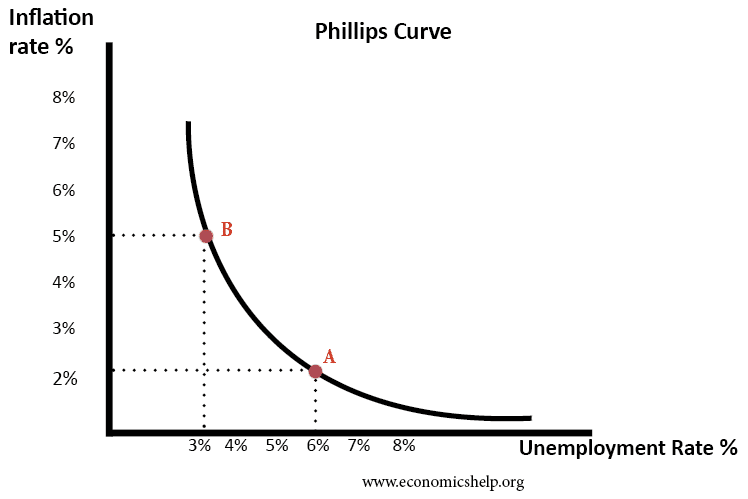
Meskipun hasil upah nyata Buruh sejak 2022 telah melampaui kinerja era Koalisi, ini mencerminkan hasil ekonomi nyata daripada akurasi prakiraan. **Kompleksitas Kurva Phillips:** Klaim ini mengasumsikan teori ekonomi tradisional (Kurva Phillips, yang mengasumsikan bahwa pertumbuhan upah memerlukan penurunan pengangguran) berarti meramalkan pertumbuhan upah tanpa penurunan pengangguran secara langsung tidak rasional.
While Labor's actual wage outcomes since 2022 have exceeded Coalition-era performance, this reflects real economic outcomes rather than forecast accuracy. **Phillips Curve Complexity:** The claim assumes traditional economic theory (the Phillips Curve, which posits that wage growth requires falling unemployment) means forecasting wage growth without unemployment decline is straightforwardly irrational.
Namun, ini menyederhanakan ekonomi tenaga kerja modern. ---
However, this oversimplifies modern labor economics. ---

Penilaian Kredibilitas Sumber

**The Guardian (Sumber Asli):** The Guardian adalah organisasi berita arus utama yang terkemuka dengan standar editorial, meskipun memiliki perspektif editorial yang cenderung kiri tengah.
**The Guardian (Original Source):** The Guardian is a mainstream, reputable international news organization with editorial standards, though with a center-left editorial perspective.
Artikel anggaran 2019 yang spesifik berfokus pada pengungkapan apa yang dikarakterisasikan sebagai asumsi anggaran yang tidak realistis, konsisten dengan pendekatan liputan publikasi yang lebih luas [4].
The specific 2019 budget article focused on exposing what it characterized as unrealistic budget assumptions, consistent with the publication's broader coverage approach [4].
Artikel tersebut tampaknya berdasarkan analisis komparatif prakiraan anggaran versus hasil aktual. **Verifikasi Sumber Pendukung:** Klaim inti diverifikasi secara independen oleh berbagai sumber terkemuka: - **The Australia Institute's Centre for Future Work** [1] - organisasi riset ekonomi yang mapan - **Australian Council of Trade Unions** [3] - organisasi pemangku kepentingan dengan kepentingan langsung pada data upah - **Crikey** [2] - publikasi komentar politik dan ekonomi Australia - **Sumber internasional** (San Francisco Federal Reserve, IMF) [5][6][7] memberikan teori ekonomi dan bukti yang menguatkan Sumber independen ini mengonfirmasi asersi dasar artikel The Guardian tanpa mengandalkan The Guardian itu sendiri sebagai bukti. ---
The article appears to have been based on comparative analysis of budget forecasts versus actual outcomes. **Supporting Sources Verification:** The core claims were independently verified by multiple reputable sources: - **The Australia Institute's Centre for Future Work** [1] - established economic research organization - **Australian Council of Trade Unions** [3] - stakeholder organization with direct interest in wage data - **Crikey** [2] - Australian political and economics commentary publication - **International sources** (San Francisco Federal Reserve, IMF) [5][6][7] provide corroborating economic theory and evidence These independent sources confirm the Guardian article's basic assertion without relying on the Guardian itself as evidence. ---
⚖️

Perbandingan Labor

**Apakah Buruh melakukan hal yang serupa?** Pencarian yang dilakukan: "akurasi prakiraan pertumbuhan upah pemerintahan Buruh, prediksi upah Buruh vs Koalisi, prakiraan Treasury Australia pemerintahan Buruh 2010-2013" **Temuan:** Berbeda dengan perbandingan Koalisi yang memiliki dokumentasi independen yang substansial mengenai kegagalan prakiraan sistematis, analisis komparatif yang komprehensif mengenai akurasi prakiraan upah pemerintahan Buruh dari periode 2010-2013 tidak tersedia secara luas di sumber publik.
**Did Labor do something similar?** Search conducted: "Labor government wage growth forecasts accuracy, Labor vs Coalition wage predictions, Australian Treasury forecasts Labor government 2010-2013" **Finding:** Unlike the Coalition comparison where there is substantial independent documentation of systematic forecast failure, comprehensive comparative analysis of Labor government wage forecasting accuracy from the 2010-2013 period is not readily available in public sources.
Pemerintahan Buruh (2007-2013) berakhir lebih dari satu dekade yang lalu, dan analisis retrospektif sistematis mengenai prakiraan upahnya versus hasil aktual tampaknya tidak didokumentasikan sebanyak kinerja Koalisi. **Bukti Parsial:** Pertumbuhan upah nyata selama periode Buruh 2007-2013 dilaporkan berkinerja lebih baik daripada era Koalisi, namun ini mencerminkan kondisi ekonomi aktual (konteks pra-GFC dan pasca-GFC) daripada akurasi prakiraan [8]. **Penilaian:** Elemen perbandingan ini tidak dapat sepenuhnya dipecahkan tanpa akses ke prakiraan Treasury Buruh dari 2010-2013 dan perbandingan sistematis terhadap hasil aktual.
The Labor government period (2007-2013) concluded over a decade ago, and systematic retrospective analysis of its wage forecasts versus actuals does not appear to be as extensively documented as Coalition performance. **Partial Evidence:** Real wage growth during Labor's 2007-2013 period reportedly performed better than the Coalition era, but this reflects actual economic conditions (pre-GFC and post-GFC contexts) rather than forecast accuracy [8]. **Assessment:** This element of the comparison cannot be fully resolved without access to Labor Treasury forecasts from 2010-2013 and systematic comparison to actual outcomes.
Perbandingan implisit klaim (bahwa prakiraan Koalisi secara khas bermasalah) didukung, namun apakah Buruh akan lebih baik tidak dapat dijawab secara definitif dari sumber yang tersedia. ---
The claim's implicit comparison (that Coalition forecasts were distinctively problematic) is supported, but whether Labor would have been better cannot be definitively answered from available sources. ---
🌐

Perspektif Seimbang

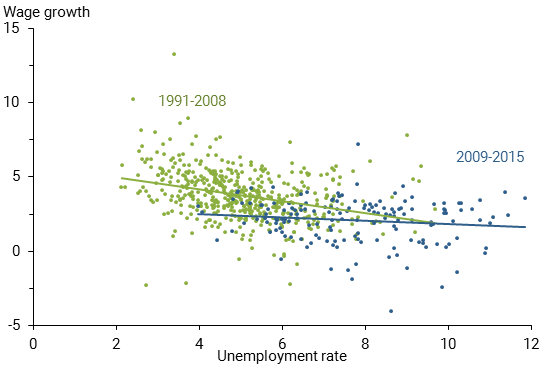
**Perspektif Pemerintah tentang Pertumbuhan Upah:** Pemerintah Koalisi mempertahankan bahwa upah akan tumbuh seiring ketatnya kondisi pasar tenaga kerja dan peningkatan produktivitas [1].
**Government Perspective on Wage Growth:** The Coalition government maintained that wages would grow as labor market conditions tightened and productivity improved [1].
Dokumen anggaran dan pernyataan menteri menunjukkan keyakinan bahwa pertumbuhan upah akan mengikuti dari peningkatan kesempatan kerja dan pengaturan kebijakan ekonomi.
Budget documents and ministerial statements indicated confidence that wage growth would follow from employment gains and economic policy settings.
Namun, perspektif ini gagal memperhitungkan perubahan struktural dalam pasar tenaga kerja yang melepaskan upah dari pengangguran. **Mengapa Ini Penting - Bukan Sekadar Kritik Partisan:** Pola prakiraan upah yang optimistis ini tidak unik bagi presentasi anggaran.
However, this perspective failed to account for structural changes in labor markets that decoupled unemployment from wage growth. **Why This Matters - Not Just Partisan Critique:** This pattern of optimistic wage forecasts was not unique to budget presentation.
Ini mencerminkan perbedaan pendapat yang nyata dalam bidang ekonomi mengenai apakah hubungan Kurva Phillips tradisional masih berlaku.
It reflected a genuine disagreement within economics about whether traditional Phillips Curve relationships still held.
Namun, pada tahun 2019, perdebatan ini seharusnya sudah terselesaikan oleh bukti.
However, by 2019, this debate should have been resolved by evidence.
Fakta bahwa upah nyata tetap stagnan sementara pengangguran turun bertentangan dengan asumsi prakiraan. **Apakah Buruh Menghadapi Tantangan Serupa?** Meskipun data perbandingan prakiraan Buruh terbatas, pemerintahan Buruh secara historis juga pernah membuat prakiraan ekonomi yang optimistis.
The fact that actual wages remained stagnant while unemployment fell contradicted the forecast assumptions. **Did Labor Face Similar Challenges?** While comparative Labor forecasting data is limited, Labor governments historically have also made optimistic economic forecasts.
Perbedaannya tampaknya adalah bahwa hasil upah aktual selama pemerintahan Buruh berikutnya (2022-sekarang) melampaui kinerja era Koalisi, meskipun ini mencerminkan kondisi ekonomi daripada keunggulan prakiraan [3]. **Konteks Utama:** Pemutusan sistematis antara prakiraan upah Koalisi dan hasil aktual tidak anomali untuk satu siklus anggaran—ini berulang tahun demi tahun.
The difference appears to be that actual wage outcomes during the subsequent Labor administration (2022-present) exceeded Coalition-era performance, though this reflects economic conditions rather than forecast superiority [3]. **Key Context:** The systematic disconnect between Coalition wage forecasts and actual outcomes was not anomalous to one budget cycle—it repeated year after year.
Ini menunjukkan salah satu dari: 1.
This indicates either: 1.
Kegagalan konsisten untuk memahami dinamika pasar tenaga kerja, atau 2.
Consistent failure to understand labor market dynamics, or 2.
Insentif institusional untuk menyajikan asumsi optimistis untuk pembenaran fiskal Bukti menunjukkan yang terakhir [1]. ---
Institutional incentive to present optimistic assumptions for fiscal justification Evidence suggests the latter [1]. ---

SEBAGIAN BENAR

7.0

/ 10

Klaim faktual bahwa pemerintahan Koalisi secara konsisten meramalkan pertumbuhan upah yang optimistis yang gagal terwujud adalah **BENAR dan didokumentasikan dengan baik** [1][2][3].
The factual claim that Coalition governments consistently forecast optimistic wage growth that failed to materialize is **TRUE and well-documented** [1][2][3].
Polanya sistematis di berbagai siklus anggaran dan dikonfirmasi oleh berbagai sumber independen.
The pattern was systematic across multiple budget cycles and confirmed by multiple independent sources.
Namun, penggambaran hal ini sebagai "tidak rasional secara ekonomi" adalah **TERSERAHAN SEDERHANA**.
However, the characterization of this as "economically irrational" is **OVERSIMPLIFIED**.
Meskipun kerangka Kurva Phillips tradisional membuat prakiraan tersebut tampak tidak logis, ekonomi tenaga kerja modern menunjukkan bahwa hubungan upah-pengangguran lebih lemah daripada yang disarankan teori klasik [5][6][7].
While the traditional Phillips Curve framework makes such forecasts appear illogical, modern labor economics shows that wage-unemployment relationship is weaker than classical theory suggests [5][6][7].
Prakiraan tersebut bukan sekadar "tidak rasional"—mereka adalah kegagalan untuk memperhitungkan penindasan upah struktural yang terdokumentasi, lemahnya kekuatan tawar-menawar pekerja, dan kenyataan historis bahwa hubungan upah-pengangguran Australia telah terpisah.
The forecasts were not merely "irrational"—they were failures to account for documented structural wage suppression, weak worker bargaining power, and the historical reality that Australia's wage-unemployment relationship had decoupled.
Klaim ini juga kurang data perbandingan Buruh, sehingga kritik implisit (bahwa ini adalah masalah khas Koalisi) sulit untuk diverifikasi sepenuhnya.
The claim also lacks Labor comparison data, making the implicit critique (that this was distinctively a Coalition problem) difficult to verify fully.
Pemerintahan Buruh juga pernah membuat prakiraan ekonomi yang optimistis, meskipun data perbandingan akurasi tidak tersedia secara luas. ---
Labor governments have also made optimistic forecasts, though comparative accuracy data is not readily available. ---

📚 SUMBER DAN KUTIPAN (9)

  1. 1
    futurework.org.au

    futurework.org.au

    You would think that after 5 consecutive years of wage forecasts that wildly overestimated actual experience, the government might have learned from its past errors – and published a wage forecast more in line with reality. But not this government. They are still trying to convince Australian workers, who haven’t seen real average wages rise in over 5 years, that better times are just around the corner. And rosy wage forecasts are helpful in justifying their equally optimistic revenue forecasts: since if Australians are earning more money, they will be paying more taxes!

    The Australia Institute's Centre for Future Work
  2. 2
    crikey.com.au

    crikey.com.au

    The Morrison government has been forced to recognise the stagnation it is presiding over, slashing wage growth forecasts and revealing big cuts to its forecast budget surpluses.

    Crikey
  3. 3
    actu.org.au

    actu.org.au

    The ACTU warns this wages turnaround is at risk of being reversed if a Dutton Government is elected, as it has vowed to reverse the wage-boosting rights that have delivered these gains.

    Australian Council of Trade Unions
  4. 4
    theguardian.com

    theguardian.com

    Tax cuts, surpluses and fancifully optimistic forecasts add up to a make-believe budget

    the Guardian
  5. 5
    frbsf.org

    frbsf.org

    Although the labor market has steadily strengthened, wage growth has remained slow in recent years. This raises the question of whether the wage Phillips curve—the traditional relationship between labor market slack and wage growth—has weakened. Estimating a causal link from slack to wage growth using national data is difficult. However, using city-level data over the past 25 years shows that the cross-city relationship has weakened since the Great Recession. Explanations consistent with this timing suggest that the Phillips curve may return to a steeper curve in the future.

    Federal Reserve Bank of San Francisco
  6. 6
    imf.org

    imf.org

    Imf

  7. 7
    frbsf.org

    frbsf.org

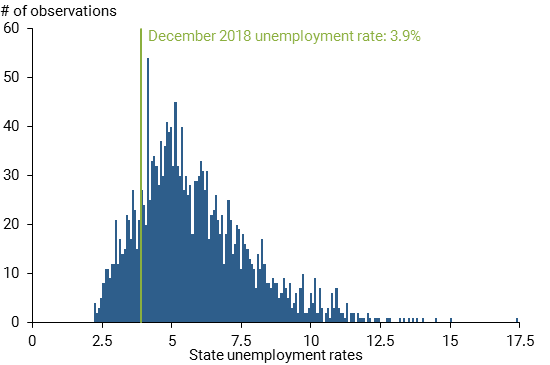
    The unemployment rate ended 2018 at just under 4%, substantially lower than most estimates of the natural rate. Could such an ostensibly tight labor market lead to a sharp pickup in wage growth from its recent moderate pace, such that the relationship between wage growth and unemployment is not always linear? Investigations using state-level data show no economically significant nonlinearity between wage growth and unemployment that would predict an abrupt jump in wage growth.

    Federal Reserve Bank of San Francisco
  8. 8
    pursuit.unimelb.edu.au

    pursuit.unimelb.edu.au

    Pursuit Unimelb Edu

  9. 9
    economicshelp.org

    economicshelp.org

    Definition of Phillips Curve (trade off between inflation and unemployment). Graphs to show how and why it can occur. real life data. Also different views on Phillips Curve Keynesian vs Monetarist. - short-term and long-term.

    Economics Help

Metodologi Skala Penilaian

1-3: SALAH

Secara faktual salah atau fabrikasi jahat.

4-6: SEBAGIAN

Ada kebenaran tetapi konteks hilang atau menyimpang.

7-9: SEBAGIAN BESAR BENAR

Masalah teknis kecil atau masalah redaksi.

10: AKURAT

Terverifikasi sempurna dan adil secara kontekstual.

Metodologi: Penilaian ditentukan melalui referensi silang catatan pemerintah resmi, organisasi pemeriksa fakta independen, dan dokumen sumber primer.