
The Claim
“Simultaneously proposed plans to support electric vehicles and ridiculed plans to support electric vehicles, within the same week.”
Original Sources Provided
✅ FACTUAL VERIFICATION
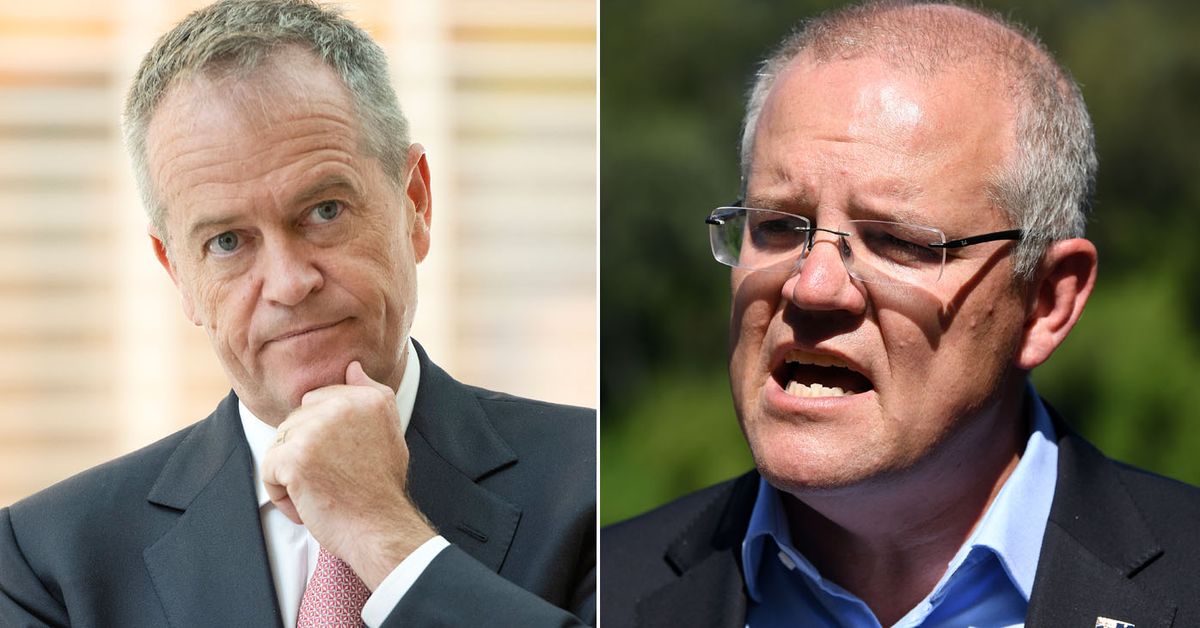
The claim refers to events in April 2019 during the 2019 Australian federal election campaign. On April 1, 2019, the Labor Party, led by Bill Shorten, announced its electric vehicle (EV) policy [1], which included a national target for 50 per cent of new car sales to be electric by 2030 and a target that 50 per cent of new government vehicles would be electric by 2025 [1].
In response to Labor's policy, Coalition Energy Minister Angus Taylor publicly rejected the approach and ridiculed the policy. On April 18, 2019, just over a week later, Taylor stated during an ABC 7.30 interview that "What we're not going to do is tell people what cars to drive. That's just not the role of government" [2]. During the same election campaign period, Prime Minister Scott Morrison derided Labor's policy, famously describing it as "a war on the weekend" [3]. Morrison also claimed—incorrectly according to AAP FactCheck—that Labor's policy would raise petrol prices [4].
Concurrently with criticizing Labor's EV policy, the Coalition government did acknowledge it was "working on an electric vehicle strategy" [2]. However, at the time of the April 2019 debate, the Coalition had not released a detailed EV support plan. Taylor explicitly rejected the notion that government should mandate EV uptake through emissions standards [2].
The Coalition government did not unveil its own formal EV strategy until November 9, 2021—more than two years later [5]. This policy shift came after Morrison's 2019 criticism of Labor's EV approach.
Missing Context
The claim requires clarification about what constitutes "proposing plans to support electric vehicles" on the Coalition's part. During April 2019, the Coalition's actual position was:
- Rejection of Labor's EV policy - The Coalition explicitly opposed mandatory emissions standards and targets for EV adoption [2]
- Vague commitment to EV strategy - The Coalition stated it was "working on" an EV strategy but provided no concrete proposals or timeline [2]
- No formal support proposal in April 2019 - The Coalition did not announce a detailed EV support plan during the same week as Labor's announcement [2]
The claim's assertion that the Coalition "simultaneously proposed plans to support electric vehicles" appears to be inaccurate if interpreted as meaning the Coalition made a formal proposal supporting EVs during the same week as Labor's announcement. The Coalition's actual position was opposition to Labor's policy, combined with vague reference to ongoing work on a strategy with no public details [2].
A more precise characterization would be that the Coalition ridiculed Labor's EV support proposal while claiming to be developing their own unspecified strategy—not that they simultaneously proposed competing EV support plans.
Source Credibility Assessment
The original Twitter source provided (Adam Bandt's tweet) is from a Greens politician and environmentalist who would naturally critique the Coalition's position on climate and EV policy. While Bandt's observation about inconsistency may reflect genuine frustration with the Coalition's stance, the claim itself requires verification of whether the Coalition actually "proposed plans to support electric vehicles" during April 2019, which the evidence does not confirm.
The sources used for fact-checking (ABC News, AAP FactCheck) are mainstream, credible Australian media organizations with strong reputations for factual accuracy.
Labor Comparison
Did Labor propose a contradictory EV policy?
Labor's position during 2019 was consistent: the party supported EV adoption through:
- National 50% EV target by 2030 [1]
- 50% government vehicle EV target by 2025 [1]
- Emissions standards for new vehicles [1]
- Infrastructure investment ($100 million in grants for charging stations) [2]
Labor did not ridicule or oppose its own EV policy during the same period. The party maintained a consistent pro-EV stance throughout the 2019 election campaign.
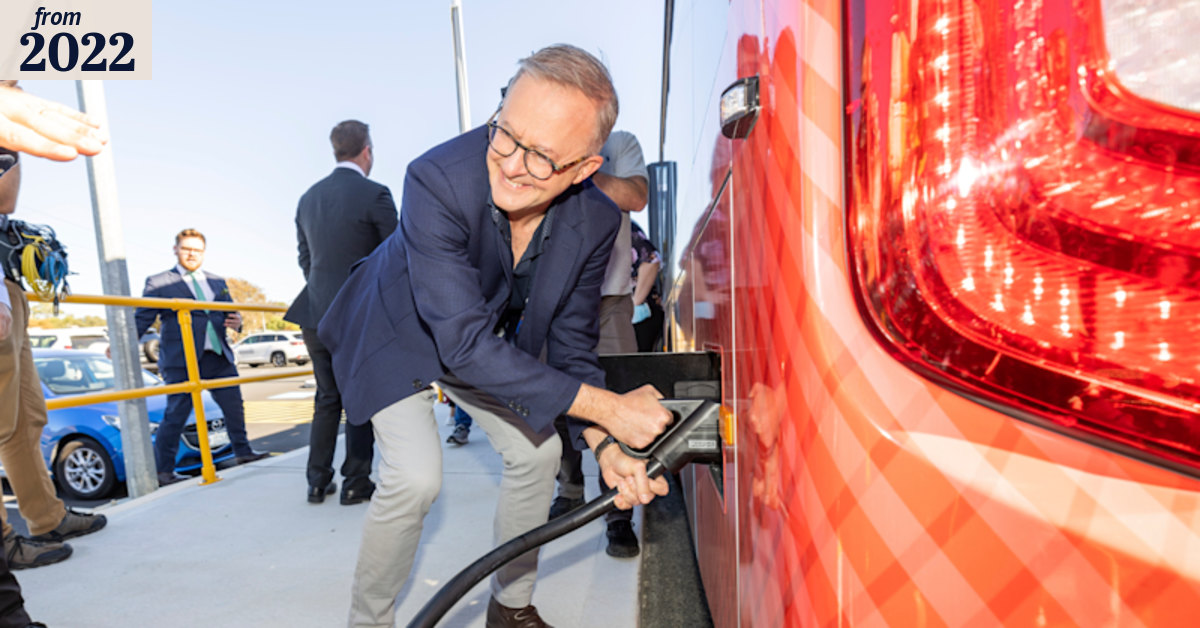
After Labor's 2022 election victory, the party committed to doubling the Coalition's EV charging funding but dropped the mandatory emissions standards component of their 2019 policy, suggesting some evolution rather than simultaneous contradiction [6].
Balanced Perspective
The Coalition's actual position during April 2019 is more nuanced than the claim suggests:
Coalition's stated rationale: Energy Minister Taylor argued that Australia's unique geography—large distances and low-density cities—made government-mandated EV targets inappropriate compared to other countries [2]. The Coalition rejected the notion that government should dictate vehicle choices and argued against emissions standards.
The apparent contradiction: While criticizing Labor's EV policy as overreach, the Coalition acknowledged it was developing its own EV strategy [2]. However, this "strategy" remained unspecified and was not publicly detailed during the April 2019 timeframe. The Coalition did not propose specific EV support measures during the same week as Labor's announcement.
Why the timing matters: The claim's core assertion—that the Coalition "simultaneously proposed plans" to support EVs within the same week as ridiculing Labor's plans—appears factually inaccurate based on available evidence. The Coalition:
- Ridiculed Labor's proposal (confirmed) [2][3]
- Said it was developing a strategy (confirmed but vague) [2]
- Did NOT release a formal, detailed EV support proposal in April 2019 [2]
The Coalition's actual EV strategy was not unveiled until November 2021, nearly two and a half years after this incident [5].
Context on the 2019 position: The Coalition's skepticism about government-mandated EV adoption was not unreasonable given Australia's unique circumstances. However, the claim of "simultaneously proposing" support while ridiculing the policy is not well-supported by the evidence, as the Coalition did not make a specific proposal during that timeframe.
PARTIALLY TRUE
4.0
out of 10
The Coalition did ridicule Labor's EV policy during the April 2019 period [3], but the claim that they "simultaneously proposed plans to support electric vehicles" during the same week is not substantiated by evidence. The Coalition said it was working on an EV strategy but did not publicly propose detailed support measures at that time. The formal EV strategy was announced much later in November 2021 [5].
The claim appears to conflate a vague acknowledgment of future EV strategy work with an actual simultaneous proposal, which is inaccurate. The more accurate characterization is that the Coalition opposed Labor's EV policy while remaining non-committal about its own approach.
Final Score
4.0
OUT OF 10
PARTIALLY TRUE
The Coalition did ridicule Labor's EV policy during the April 2019 period [3], but the claim that they "simultaneously proposed plans to support electric vehicles" during the same week is not substantiated by evidence. The Coalition said it was working on an EV strategy but did not publicly propose detailed support measures at that time. The formal EV strategy was announced much later in November 2021 [5].
The claim appears to conflate a vague acknowledgment of future EV strategy work with an actual simultaneous proposal, which is inaccurate. The more accurate characterization is that the Coalition opposed Labor's EV policy while remaining non-committal about its own approach.
📚 SOURCES & CITATIONS (5)
-
1
Bill Shorten 2019 Climate Change Action Plan media release
Billshorten Com
-
2
Coalition says it's not anti-electric cars, but doesn't want to tell people what to drive
Energy Minister Angus Taylor says the Government is not against electric vehicles, but believes it is not the role of government to tell people what cars to drive.
Abc Net -
3

PM's claim about Labor's 2019 electric car policy is all gas
Scott Morrison famously labelled the opposition's proposals as
Aap Com -
4
Scott Morrison "war on the weekend" quote on EV policy
Australia is well behind in the uptake of electric vehicles compared to other countries, the Clean Energy F...
9news Com -
5
Labor charges up electric vehicle funding, does U-turn on old policy
Labor has committed to double the Coalition’s funding commitment to grow electric vehicle sales, but it has dropped a key policy it took to the 2019 election.
The Sydney Morning Herald
Rating Scale Methodology
1-3: FALSE
Factually incorrect or malicious fabrication.
4-6: PARTIAL
Some truth but context is missing or skewed.
7-9: MOSTLY TRUE
Minor technicalities or phrasing issues.
10: ACCURATE
Perfectly verified and contextually fair.
Methodology: Ratings are determined through cross-referencing official government records, independent fact-checking organizations, and primary source documents.