Trompeur

Note : 4.0/10

Coalition
C0785

L'affirmation

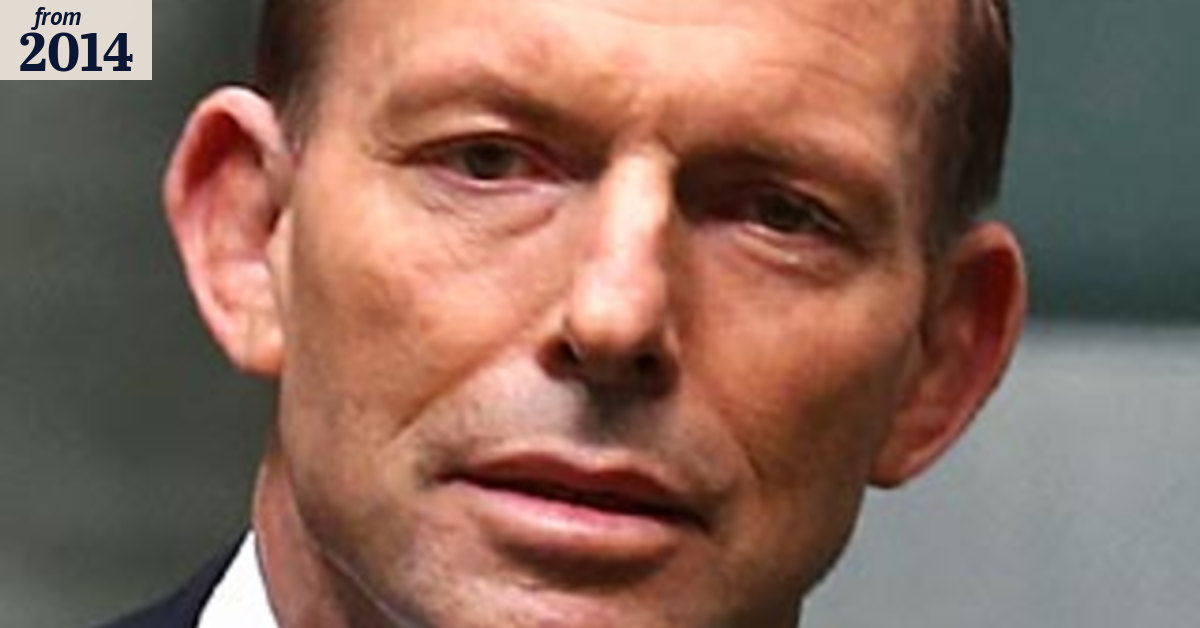
“A retiré le changement climatique de l'agenda du sommet international du G20 de 2014.”
Source originale : Matthew Davis

Sources originales

VÉRIFICATION FACTUELLE

L'affirmation contient des éléments de vérité mais représente mal le résultat final.
The claim contains elements of truth but misrepresents the final outcome.
En juin 2014, le Premier ministre Tony Abbott a déclaré que le changement climatique ne serait pas à l'agenda du G20, arguant que le sommet devait se concentrer sur les questions économiques [1].
In June 2014, Prime Minister Tony Abbott did state that climate change would not be on the G20 agenda, arguing the summit should focus on economic issues [1].
Abbott a déclaré : « Il est également important de s'assurer que ces réunions internationales ne couvrent pas tous les sujets et n'éclairent aucun » et « L'accent du G20 sera écrasément mis sur notre sécurité économique, notre stabilisation financière, l'importance de la croissance menée par le secteur privé » [1].
Abbott said: "It's also important to ensure that these international meetings don't cover all subjects and illuminate none" and "The focus of the G20 will overwhelmingly be our economic security, our financial stabilisation, the importance of private sector-led growth" [1].
Cependant, l'affirmation omet le fait critique que le changement climatique a ÉTÉ finalement inclus à l'agenda du G20.
However, the claim omits the critical fact that **climate change WAS ultimately included on the G20 agenda**.
Suite à une pression internationale significative des États-Unis, de l'UE et d'autres membres du G20, l'Australie a reculé et a inclus le changement climatique dans le communiqué final du Sommet de Brisbane [2][3].
Following significant international pressure from the US, EU, and other G20 members, Australia backed down and included climate change in the final Brisbane Summit communiqué [2][3].
Le communiqué final des dirigeants du G20 des 15-16 novembre 2014 a explicitement inclus un paragraphe complet sur le changement climatique (paragraphe 19), déclarant : « Nous soutenons une action forte et efficace pour relever le défi du changement climatique » et s'engageant à travailler vers un accord climatique de Paris 2015 [4].
The final G20 Leaders' Communiqué from November 15-16, 2014 explicitly included a full paragraph on climate change (paragraph 19), stating: "We support strong and effective action to address climate change" and committing to work toward a Paris 2015 climate agreement [4].
Le sommet du G20 a également produit un Plan d'action sur l'efficacité énergétique et a approuvé des principes sur la collaboration énergétique incluant des considérations climatiques [4][5].
The G20 summit also produced an Energy Efficiency Action Plan and endorsed principles on energy collaboration that included climate considerations [4][5].

Contexte manquant

L'affirmation omet plusieurs faits critiques : 1. **Abbott a reculé sous la pression** : D'octobre 2014, l'Australie a accepté d'inclure le changement climatique à l'agenda après avoir fait face à une « forte pression diplomatique de l'administration américaine » et d'autres dirigeants internationaux [2].
The claim omits several critical facts: 1. **Abbott backed down under pressure**: By October 2014, Australia agreed to include climate change on the agenda after facing "tough diplomatic pressure from the US administration" and other international leaders [2].
L'ambassadeur américain John Berry a déclaré que le changement climatique était un problème que « les États-Unis soulèveront dans chaque forum international » [2]. 2. **Le raisonnement d'Abbott** : Bien que considéré comme erroné par les critiques, la justification d'Abbott était que le G20 devait se concentrer sur les questions économiques de base comme la croissance, l'emploi et la stabilité financière - il a argué que le changement climatique était mieux adapté à d'autres forums comme le processus de la CCNUCC [1]. 3. **Contexte des politiques intérieures** : Abbott venait d'accomplir sa promesse électorale d'abolir la taxe carbone en juillet 2014 [2].
US Ambassador John Berry stated that climate change was an issue that "the United States will raise in every international forum" [2]. 2. **Abbott's reasoning**: While misguided in the eyes of critics, Abbott's rationale was that the G20 should focus on core economic issues like growth, jobs, and financial stability - he argued climate change was better suited to other forums like the UNFCCC process [1]. 3. **Domestic policy context**: Abbott had just fulfilled his election promise to abolish the carbon tax in July 2014 [2].
Sa position sur l'agenda du G20 était cohérente avec sa politique climatique intérieure de « l'Action Directe » plutôt que la tarification du carbone. 4. **Résultat final** : Le sommet du G20 de Brisbane 2014 a produit des résultats substantiels liés au climat, incluant des engagements envers le processus de la CCNUCC, le soutien au Fonds vert pour le climat et des initiatives d'efficacité énergétique [4].
His position on the G20 agenda was consistent with his domestic climate policy of "Direct Action" rather than carbon pricing. 4. **Final outcome**: The G20 Brisbane 2014 summit produced substantive climate-related outcomes including commitments to the UNFCCC process, support for the Green Climate Fund, and energy efficiency initiatives [4].

Évaluation de la crédibilité de la source

La source originale fournie est GlobalPost, spécifiquement un article intitulé « 11 ways prime minister tony abbott ruining australia and threatening the planet ».
The original source provided is GlobalPost, specifically an article titled "11 ways prime minister tony abbott ruining australia and threatening the planet." According to Media Bias/Fact Check, GlobalPost covers a wide range of original news with minimal use of loaded language and sources to credible outlets such as Reuters and Human Rights Watch [6].
Selon Media Bias/Fact Check, GlobalPost couvre une large gamme d'informations originales avec une utilisation minimale du langage chargé et cite des sources crédibles comme Reuters et Human Rights Watch [6].
However, the specific article cited appears to be an opinion/commentary piece with a clear negative framing of Abbott, suggesting potential bias in presentation.
Cependant, l'article spécifique cité semble être une tribune/un billet d'opinion avec une claire orientation négative d'Abbott, suggérant un potentiel biais dans la présentation.
The article title itself indicates a critical/opinion stance rather than neutral reporting.
Le titre de l'article lui-même indique une position critique/d'opinion plutôt qu'un reportage neutre.
⚖️

Comparaison avec Labor

**Les gouvernements travaillistes ont-ils géré les sommets internationaux sur le climat différemment ?** Recherche effectuée : « Kevin Rudd Sommet de Copenhague 2009 Ratification du Protocole de Kyoto » Constat : Les gouvernements travaillistes sous Kevin Rudd et Julia Gillard ont adopté des approches sensiblement différentes concernant l'engagement international sur le climat : - **Kevin Rudd (2007-2010)** : A ratifié le Protocole de Kyoto comme premier acte officiel en tant que Premier ministre en décembre 2007, déclarant que cela démontrait l'« engagement de son gouvernement à relever le défi du changement climatique » [7][8].
**Did Labor handle international climate summits differently?** Search conducted: "Kevin Rudd Copenhagen climate summit 2009 Kyoto Protocol ratification" Finding: Labor governments under Kevin Rudd and Julia Gillard took markedly different approaches to international climate engagement: - **Kevin Rudd (2007-2010)**: Made ratifying the Kyoto Protocol his first official act as Prime Minister in December 2007, stating it demonstrated his government's "commitment to tackling climate change" [7][8].
Rudd a assisté personnellement au sommet de Copenhague 2009. - **Cependant, les efforts de Rudd à Copenhague ont échoué** : Le sommet de Copenhague 2009, auquel Rudd a participé avec de grandes attentes, a « échoué » et a été considéré comme une grande déception dans les négociations internationales sur le climat [9].
Rudd attended the 2009 Copenhagen climate summit personally. - **However, Rudd's Copenhagen efforts failed**: The 2009 Copenhagen summit, which Rudd attended with high expectations, "collapsed" and was considered a major disappointment in international climate negotiations [9].
Rudd a ensuite abandonné son mécanisme national de Réduction de la pollution carbone (CPRS) après son échec au Sénat. - **Julia Gillard (2010-2013)** : A mis en place un mécanisme de tarification du carbone en 2012 et a maintenu l'engagement international sur le climat, bien que cette politique se soit avérée politiquement coûteuse. **Comparaison** : Bien que les gouvernements travaillistes se soient plus engagés verbalement en faveur de l'action climatique dans les forums internationaux, ils ont également fait face à des revers importants.
Rudd subsequently abandoned his domestic Carbon Pollution Reduction Scheme (CPRS) after it failed to pass the Senate. - **Julia Gillard (2010-2013)**: Implemented a carbon pricing scheme in 2012 and maintained international climate engagement, though the policy proved politically costly. **Comparison**: While Labor governments were more rhetorically committed to climate action at international forums, they also faced significant setbacks.
L'échec de Copenhague sous Rudd a été probablement plus dommageable pour les progrès internationaux sur le climat que la réticence d'Abbott au G20, qui a été finalement inversée.
The Copenhagen failure under Rudd was arguably more damaging to international climate progress than Abbott's G20 reluctance, which was ultimately reversed.
L'approche travailliste était plus proactive mais a fait face à des défis politiques intérieurs ; l'approche d'Abbott était initialement résistante mais a finalement cédé à la pression internationale.
Labor's approach was more proactive but faced domestic political challenges; Abbott's approach was initially resistant but ultimately yielded to international pressure.
🌐

Perspective équilibrée

La tentative initiale de Tony Abbott d'exclure le changement climatique de l'agenda du G20 était cohérente avec l'approche de son gouvernement en matière de politique climatique intérieure et sa vision selon laquelle le G20 devait se concentrer étroitement sur les questions de croissance économique [1].
Tony Abbott's initial attempt to exclude climate change from the G20 agenda was consistent with his government's domestic climate policy approach and his view that the G20 should focus narrowly on economic growth issues [1].
Cette position a été critiquée au niveau national par le Parti travailliste et les Verts, avec Tony Wood du Grattan Institute notant que « le changement climatique était clairement une question économique » et devait être à l'agenda [1].
This position was criticized domestically by Labor and the Greens, with the Grattan Institute's Tony Wood noting that "climate change was clearly an economic issue" and should be on the agenda [1].
Cependant, l'affirmation représente mal le résultat.
However, the claim misrepresents the outcome.
Bien qu'Abbott ait initialement résisté, la pression internationale - particulièrement des États-Unis - a conduit l'Australie à inclure le changement climatique à l'agenda final du G20 [2][3].
While Abbott initially resisted, international pressure - particularly from the United States - led Australia to include climate change in the final G20 agenda [2][3].
Le communiqué final a inclus un paragraphe complet sur le changement climatique et des engagements envers le processus de Paris 2015 [4].
The final communiqué included a full paragraph on climate change and commitments to the Paris 2015 process [4].
En comparaison avec le Parti travailliste, la différence est une question d'approche plutôt que d'opposition complète à l'action climatique.
When compared to Labor, the difference is one of approach rather than complete opposition to climate action.
Le Parti travailliste sous Rudd a fait du climat une question phare, ratifiant Kyoto immédiatement et participant à Copenhague, mais n'a finalement pas réalisé de résultats significatifs à Copenhague ni adopté de législation nationale [9].
Labor under Rudd made climate a signature issue, ratifying Kyoto immediately and attending Copenhagen, but ultimately failed to achieve significant outcomes at Copenhagen or pass domestic legislation [9].
Le gouvernement d'Abbott était moins engagé sur le plan rhétorique mais a finalement tout de même inclus le climat dans les résultats du G20 après la pression. **Contexte clé** : Ce n'était **pas entièrement unique** - les gouvernements ajustent souvent les agendas des sommets en fonction des priorités des hôtes et de la pression internationale.
Abbott's government was rhetorically less committed but ultimately still included climate in the G20 outcomes after pressure. **Key context**: This was **not entirely unique** - governments often adjust summit agendas based on host priorities and international pressure.
La réticence d'Abbott était cohérente avec sa position politique intérieure à l'époque (venant d'abolir la taxe carbone), mais l'affirmation ignore qu'il a finalement cédé et que le changement climatique a été discuté et inclus dans les résultats finaux du G20.
Abbott's reluctance was consistent with his domestic policy position at the time (having just abolished the carbon tax), but the claim ignores that he ultimately backed down and climate change WAS discussed and included in the final G20 outcomes.

TROMPEUR

4.0

sur 10

L'affirmation est trompeuse car elle présente la position initiale d'Abbott (juin 2014) comme le résultat final, alors qu'en réalité le changement climatique a ÉTÉ finalement inclus à l'agenda du G20 suite à une pression internationale.
The claim is misleading because it presents Abbott's initial position (June 2014) as the final outcome, when in fact climate change WAS ultimately included on the G20 agenda following international pressure.
Le communiqué final du Sommet de Brisbane incluait des engagements substantiels sur le climat.
The final Brisbane Summit communiqué included substantive climate commitments.
Bien qu'Abbott ait initialement tenté d'exclure le sujet - une position cohérente avec son approche des politiques intérieures et qui a attiré des critiques - l'affirmation omet le contexte critique qu'il a reculé et que le G20 a bien discuté et s'est engagé à agir sur le climat [1][2][3][4].
While Abbott did initially attempt to exclude the topic - a position consistent with his domestic policy approach and which drew criticism - the claim omits the critical context that he backed down and the G20 did discuss and commit to climate action [1][2][3][4].

📚 SOURCES ET CITATIONS (9)

  1. 1
    smh.com.au

    smh.com.au

    PM downplays likelihood of climate change being discussed at a G20 leaders' summit hosted by Australia, suggesting it does not fit the meeting's economic focus.

    The Sydney Morning Herald
  2. 2
    climatechangenews.com

    climatechangenews.com

    NEWS: Tony Abbott grudgingly inserts paragraph on climate change, in line with international demands

    Climate Home News
  3. 3
    news.com.au

    news.com.au

    News Com

  4. 4
    PDF

    brisbane g20 leaders summit communique14

    G20 • PDF Document
  5. 5
    g7g20-documents.org

    g7g20-documents.org

    G7g20-documents
  6. 6
    mediabiasfactcheck.com

    mediabiasfactcheck.com

    LEFT-CENTER BIAS These media sources have a slight to moderate liberal bias.  They often publish factual information that utilizes loaded words (wording

    Media Bias/Fact Check
  7. 7
    kevinrudd.com

    kevinrudd.com

    Australia has ratified the Kyoto Protocol. Prime Minister Kevin Rudd signed the instrument of ratification of the Kyoto Protocol in his first act after being sworn in this morning.The ratification will come into force in 90 days."This is the first official act of the new Australian Government,

    Kevin Rudd
  8. 8
    pmtranscripts.pmc.gov.au

    pmtranscripts.pmc.gov.au

    Pmtranscripts Pmc Gov

  9. 9
    insidestory.org.au

    insidestory.org.au

    Philip Chubb’s insider account of the demise of Kevin Rudd’s climate scheme is essential reading, says Andrew Dodd

    Inside Story
Méthodologie de l'échelle de notation

1-3: FAUX

Factuellement incorrect ou fabrication malveillante.

4-6: PARTIEL

Une part de vérité mais le contexte manque ou est biaisé.

7-9: MAJORITAIREMENT VRAI

Détails techniques mineurs ou problèmes de formulation.

10: EXACT

Parfaitement vérifié et contextuellement équitable.

Méthodologie: Les notations sont déterminées par recoupement des documents gouvernementaux officiels, des organisations indépendantes de vérification des faits et des documents sources primaires.