Teilweise wahr

Bewertung: 6.0/10

Coalition
C0562

Die Behauptung

“6 Millionen australische Dollar für einen Film ausgegeben, der Menschen davon abhalten soll, vor Völkermord, Kriegsverbrechen, Folter und anderer Verfolgung zu fliehen. Es sind keine englischen Synchronisationen oder Untertitel verfügbar.”
Originalquelle: Matthew Davis
Analysiert: 30 Jan 2026

Originalquellen

FAKTENÜBERPRÜFUNG

Die zentralen sachlichen Elemente dieser Behauptung sind **akkurat**.
The core factual elements of this claim are **accurate**.
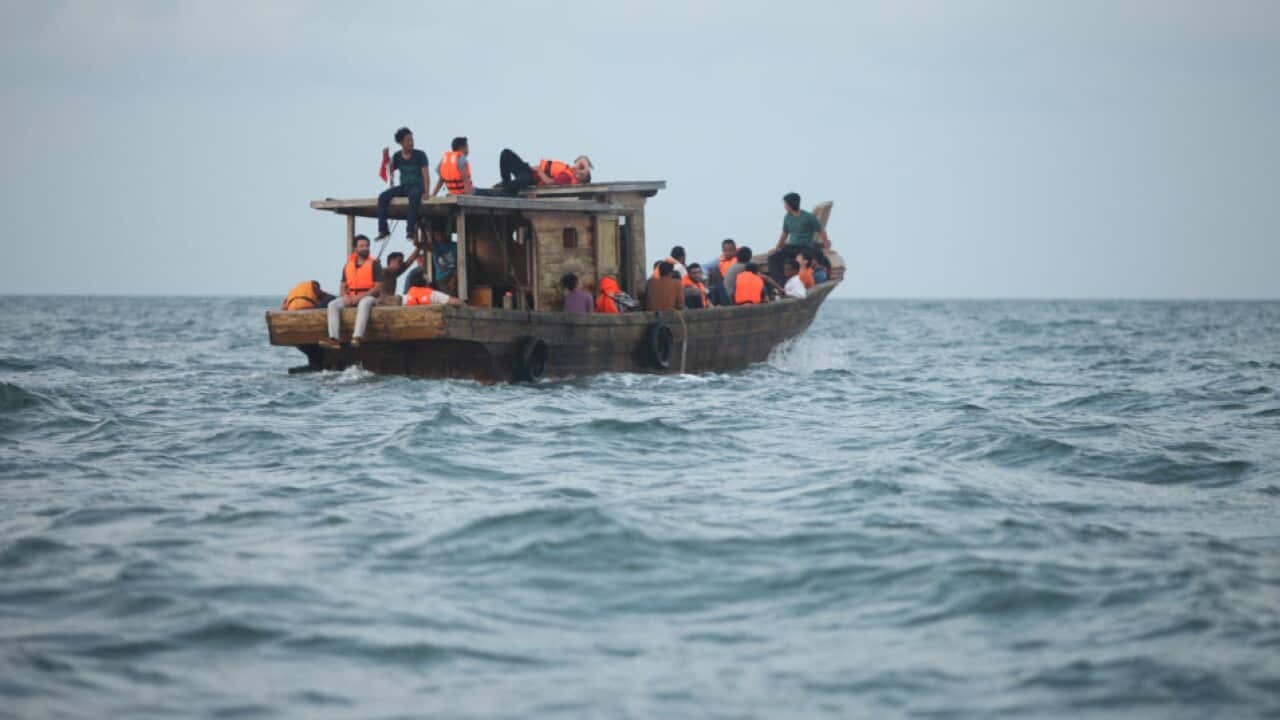
Das Ministerium für Einwanderung und Grenzschutz (unter Einwanderungsminister Peter Dutton) beauftragte und produzierte einen Fernsehfilm mit dem Titel *Journey* zu Gesamtkosten von etwa **6 Millionen australischen Dollar** (genau 5,97 Mio.
The Department of Immigration and Border Protection (under Immigration Minister Peter Dutton) commissioned and produced a telemovie titled *Journey* at a total cost of approximately **$6 million** (specifically $5.97 million) [1].
AUD) [1].
The cost breakdown, confirmed by government tender documents and Senate estimates, was: - **$4.34 million** paid to Put It Out There Pictures (Sydney-based production company) for film production [1] - **$1.63 million** paid to Lapis Communications for promotion and advertising [1] The 90-minute telemovie was filmed across three countries with cast and crew from 13 countries.
Die Kostenausführung, bestätigt durch Regierungsausschreibungsunterlagen und Senatsschätzungen, war: - **4,34 Mio.
It premiered on Afghan television in March 2016, and was also screened in Pakistan, Iran, and Iraq [1][2].
AUD** an Put It Out There Pictures (Sydney-basierte Produktionsfirma) für Filmproduktion [1] - **1,63 Mio.
Regarding the language availability claim: The film was produced in and made available in **Dari, Pashto, Urdu, Arabic, and Farsi** - languages spoken in the target source countries [1][3].
AUD** an Lapis Communications für Werbung und Promotion [1] Der 90-minütige Fernsehfilm wurde in drei Ländern gedreht mit Darstellern und Crew aus 13 Ländern.
The Sydney Morning Herald and other sources confirmed that "it will not be available in English" [1].
Die Premiere erfolgte im März 2016 im afghanischen Fernsehen und wurde auch in Pakistan, Iran und Irak gezeigt [1][2].
This was an intentional decision since the target audience was potential asylum seekers in Afghanistan, Iran, Pakistan, and Iraq, not English-speaking audiences.
Zur Sprachverfügbarkeit: Der Film wurde in **Dari, Pashto, Urdu, Arabisch und Farsi** produziert und angeboten Sprachen, die in den Zielländern gesprochen werden [1][3].
Der Sydney Morning Herald und andere Quellen bestätigten, dass „er nicht auf Englisch verfügbar sein wird“ [1].
Dies war eine bewusste Entscheidung, da die Zielgruppe potentielle Asylsuchende in Afghanistan, Iran, Pakistan und Irak waren, nicht englischsprachige Zuschauer.

Fehlender Kontext

### 1. Die umfassendere Strategie gegen Menschenschmuggel
### 1. The Broader Anti-People Smuggling Strategy
Die Behauptung lässt aus, dass dieser Fernsehfilm Teil einer größeren, laufenden Kommunikationskampagne unter „Operation Sovereign Borders“ war.
The claim omits that this telemovie was part of a larger, ongoing communication campaign under "Operation Sovereign Borders." The Department stated the film was a "key part" of their anti-people smuggling strategy and was designed to reach a potential audience of 50 million people [1][2].
Das Ministerium erklärte, der Film sei ein „Schlüsselelement“ ihrer Anti-Menschenschmuggel-Strategie und sei darauf ausgelegt, eine potenzielle Zielgruppe von 50 Millionen Menschen zu erreichen [1][2].
The government cited market research showing that telemovies were "a proven way to reach and influence the target audience" in these regions [3].
Die Regierung berief sich auf Marktforschung, die zeigte, dass Fernsehfilme „ein bewährter Weg sind, die Zielgruppe in diesen Regionen zu erreichen und zu beeinflussen“ [3].
### 2. Labor Precedent
### 2. Labour-Vorläufer
The claim fails to mention that **the Labor government also commissioned similar communication materials**.
Die Behauptung erwähnt nicht, dass **die Labour-Regierung ähnliche Kommunikationsmaterialien in Auftrag gab**.
According to the Sydney Morning Herald's reporting: "It's not the first time the department has strayed into drama. **Under Labor, it commissioned a radio drama, but that was much less expensive**" [1].
Laut Berichterstattung des Sydney Morning Herald: „Es ist nicht das erste Mal, dass das Ministerium ins Drama verstrickt ist. **Unter Labour beauftragte es ein Hörspiel, aber das war viel billiger**“ [1].
This demonstrates that using dramatic media for deterrence messaging was not unique to the Coalition - though the scale and cost differed significantly.
Dies zeigt, dass die Nutzung dramatischer Medien für Abschreckungsbotschaften nicht einzig der Koalition vorbehalten war auch wenn Umfang und Kosten deutlich unterschiedlich waren.
### 3. The "No English" Rationale
### 3. Die „kein Englisch“-Begründung
The lack of English dubbing or subtitles was intentional and strategic, not an oversight.
Das Fehlen englischer Synchronisation oder Untertitel war beabsichtigt und strategisch, kein Versehen.
The film was specifically targeted at populations in Afghanistan, Iran, Iraq, and Pakistan - where the languages used (Dari, Pashto, Urdu, Arabic, Farsi) are spoken.
Der Film war spezifisch auf Bevölkerungen in Afghanistan, Iran, Irak und Pakistan ausgerichtet wo die verwendeten Sprachen (Dari, Pashto, Urdu, Arabisch, Farsi) gesprochen werden.
English would have been irrelevant to the intended audience [1][3].
Englisch wäre für die beabsichtigte Zielgruppe irrelevant gewesen [1][3].
### 4. Policy Justification
### 4. Politische Rechtfertigung
The government defended the expenditure as necessary for "saving lives" by discouraging dangerous boat journeys.
Die Regierung verteidigte die Ausgaben als notwendig zum „Rett von Leben“, indem gefährliche Bootsfahrten abgelehnt werden.
The production company's website stated the film aimed to "educate and inform audiences in source countries about the futility of investing in people smugglers, the perils of the trip, and the hardline policies that await them if they do reach Australian waters" [1][2].
Die Website der Produktionsfirma erklärte, der Film ziele darauf ab, „Zielgruppen in Herkunftsländern über die Sinnlosigkeit der Investition in Schlepper, die Gefahren der Reise und die harte Politik, die auf sie wartet, wenn sie australische Gewässer erreichen, zu informieren“ [1][2].

Bewertung der Quellenglaubwürdigkeit

**Canberra Times** Die ursprünglich referenzierte Quelle ist Fairfax Medias Canberra Times (jetzt Teil von Nine Entertainment).
**Canberra Times** - The original source referenced is Fairfax Media's Canberra Times (now part of Nine Entertainment).
Fairfax galt allgemein als renommierte Mainstream-Medienorganisation, obwohl die Canberra Times eine kleinere Auflage hatte als der Sydney Morning Herald oder The Age.
Fairfax was generally considered a reputable mainstream media organization, though the Canberra Times had a smaller circulation than the Sydney Morning Herald or The Age.
Der Artikel scheint syndiziert oder ähnlich der Berichterstattung des SMH gewesen zu sein. **YouTube** Ein YouTube-Link ohne spezifischen Kontext macht diese Quelle schwer bewertbar.
The article appears to have been syndicated or similar to the SMH reporting. **YouTube** - A YouTube link without specific context makes this source difficult to assess for credibility.
Das Video könnte ein offizieller Trailer, eine durchgesickerte Kopie oder Kommentar zum Film gewesen sein.
The video could have been an official trailer, a leaked copy, or commentary on the film.
Die Behauptung selbst stammt von mdavis.xyz/govlist, einer Labour-nahen Quelle, was wichtigen Kontext für potenzielle Framing-Verzerrungen liefert.
The claim itself comes from mdavis.xyz/govlist, a Labor-aligned source, which provides important context for potential framing bias.
⚖️

Labor-Vergleich

**Hat Labour etwas Ähnliches gemacht?** **Ja wenn auch in kleinerem Maßstab.** Laut Berichterstattung des Sydney Morning Herald zu diesem spezifischen Thema: „Es ist nicht das erste Mal, dass das Ministerium ins Drama verstrickt ist.
**Did Labor do something similar?** **Yes - though at a smaller scale.** According to Sydney Morning Herald reporting on this exact issue: "It's not the first time the department has strayed into drama.
Unter Labour beauftragte es ein Hörspiel, aber das war viel billiger“ [1].
Under Labor, it commissioned a radio drama, but that was much less expensive" [1].
Darüber hinaus führte die **Rudd-Labour-Regierung im Juli 2013 die „PNG-Lösung“ ein**, die die grundlegende Politik etablierte, wonach per Boot ankommende Asylsuchende nie in Australien angesiedelt würden [4][5].
Additionally, the **Rudd Labor government introduced the "PNG Solution" in July 2013**, which was the foundational policy that established that asylum seekers arriving by boat would never be settled in Australia [4][5].
Diese Politik wurde später von der „Operation Sovereign Borders“ der Koalition fortgeführt und verstärkt.
This policy was later continued and reinforced by the Coalition's "Operation Sovereign Borders." The use of communication campaigns to deter asylum seekers was not a Coalition invention - both major Australian parties have employed deterrence messaging, though the specific $6 million telemovie represented a significant escalation in spending and production values compared to previous efforts.
Die Nutzung von Kommunikationskampagnen zur Abschreckung von Asylsuchenden war keine Erfindung der Koalition beide großen australischen Parteien setzten Abschreckungsbotschaften ein, auch wenn der spezifische 6-Millionen-Fernsehfilm eine signifikante Eskalation von Umfang und Produktionswerten im Vergleich zu früheren Bemühungen darstellte.
Labor's offshore detention policy (which began in 2012-2013) cost over **$1 billion annually** by 2015-2016 [4], far exceeding the cost of this telemovie, demonstrating that deterrence-based approaches were bipartisan, even if the specific methods differed.
Die Offshore-Inhaftierungspolitik der Labour-Regierung (begonnen 2012-2013) kostete bis 2015-2016 jährlich über **1 Milliarde AUD** [4], bei Weitem mehr als die Kosten dieses Fernsehfilms, was zeigt, dass ansatz-basierte Ansätze bipartisan waren, selbst wenn die spezifischen Methoden unterschiedlich waren.
🌐

Ausgewogene Perspektive

### Kritik an den Ausgaben
### Criticisms of the Expenditure
Menschenrechtsorganisationen und Flüchtlingsbefürworter äußerten legitime Bedenken: - **Amnesty International** kritisierte die Ausgaben, wobei Flüchtlingskoordinator Graham Thom sagte: „Das Geld hätte für die Bekämpfung der Ursachen ausgegeben werden können, warum Menschen gezwungen sind, ihre Heimat zu verlassen, für die Unterstützung von Menschen auf der Durchreise oder für die Erhöhung und Verbesserung der Effizienz der Umsiedlung von Menschen nach Australien“ [2][3]. - **Refugee Council of Australia**-CEO Paul Power stimmte zu, dass das Geld besser für praktische Unterstützung Vertriebener ausgegeben werden könnte [2]. - **Vergleichender Haushaltskontext**: Das Budget des Films überstieg die kombinierten Budgets der ikonischen australischen Filme *Priscilla Queen of the Desert* (~2 Mio.
Human rights organizations and refugee advocates raised legitimate concerns: - **Amnesty International** criticized the expenditure, with Refugee Coordinator Graham Thom stating: "That money could have been spent to address the root causes of why people are forced to flee their homes, used to support people in transit, or put towards increasing and improving the efficiency of resettling people to Australia" [2][3]. - **Refugee Council of Australia** CEO Paul Power agreed that the money could have been better spent on practical support for displaced people [2]. - **Comparative budget context**: The film's budget exceeded the combined budgets of iconic Australian films *Priscilla Queen of the Desert* (~$2M), *Wolf Creek* (~$1M), and *The Castle* ($750,000) - even when adjusted for inflation (combined ~$5.8M in 2016 dollars) [1]. - **Producer's own words**: Trudi-Ann Tierney, the director of Put It Out There Pictures, previously described her work on Afghan television as "propaganda" and part of "psychological operations" in her book *Making Soapies in Kabul* [1].
AUD), *Wolf Creek* (~1 Mio.
### Government Justification
AUD) und *The Castle* (750.000 AUD) selbst inflationsbereinigt (kombiniert ~5,8 Mio.
The Coalition government defended the expenditure with several arguments: - **Life-saving intent**: The stated purpose was to prevent deaths at sea by discouraging people from attempting dangerous boat journeys with people smugglers. - **Research-based approach**: The Department cited "independent research in these countries has revealed misunderstandings and false rumours about Australia's policy, and a perception that Australia remains a preferred destination country for those seeking to travel illegally by boat" [1][2]. - **Effectiveness**: The government claimed "initial feedback from viewers has been positive" [1]. - **Scale of reach**: With a potential audience of 50 million and screenings across multiple countries, the per-viewer cost was relatively low. - **Innovation**: The Department described this as the first time such "innovative methods" had been used to reach the target audience directly [3].
AUD in 2016-Dollar) [1]. - **Eigene Worte der Produzentin**: Trudi-Ann Tierney, Direktorin von Put It Out There Pictures, beschrieb ihre Arbeit für das afghanische Fernsehen zuvor als „Propaganda“ und Teil „psychologischer Operationen“ in ihrem Buch *Making Soapies in Kabul* [1].
### Broader Political Context
### Regierungsrechtfertigung
Both major Australian parties have pursued deterrence-based asylum seeker policies.
Die Koalitionsregierung verteidigte die Ausgaben mit mehreren Argumenten: - **Lebensrettende Absicht**: Der angegebene Zweck war, Todesfälle auf See zu verhindern, indem Menschen von gefährlichen Bootsfahrten mit Schleppern abgehalten werden. - **Forschungsbasierter Ansatz**: Das Ministerium berief sich auf „unabhängige Forschung in diesen Ländern, die Missverständnisse und falsche Gerüchte über die australische Politik sowie die Wahrnehmung aufgedeckt hat, dass Australien weiterhin ein bevorzugtes Zielland für diejenigen bleibt, die illegal per Boot reisen möchten“ [1][2]. - **Wirksamkeit**: Die Regierung behauptete, „erstes Feedback von Zuschauern sei positiv“ [1]. - **Reichweite**: Mit einer potenziellen Zielgruppe von 50 Millionen und Vorführungen in mehreren Ländern waren die Kosten pro Zuschauer relativ niedrig. - **Innovation**: Das Ministerium beschrieb dies als erstmalige Nutzung solch „innovativer Methoden“, um die Zielgruppe direkt zu erreichen [3].
The Rudd Labor government (2013) and the Abbott/Turnbull Coalition governments (2013-2022) both maintained that asylum seekers arriving by boat would not be settled in Australia.
### Breiterer politischer Kontext
The telemovie represented a continuation and intensification of this bipartisan deterrence approach, using a higher-budget dramatic format. **Key context:** This was **not unique to the Coalition** - deterrence messaging was a bipartisan approach, though the specific high-cost telemovie format was a Coalition initiative that significantly exceeded previous Labor efforts.
Beide großen australischen Parteien verfolgten abschreckungsbasierte Asylpolitik.
Die Rudd-Labour-Regierung (2013) und die Abbott/Turnbull-Koalitionsregierungen (2013-2022) hielten beide daran fest, dass per Boot ankommende Asylsuchende nicht in Australien angesiedelt würden.
Der Fernsehfilm stellte eine Fortsetzung und Intensivierung dieses bipartisanen Abschreckungsansatzes dar, unter Nutzung eines höherbudgetierten dramatischen Formats. **Wichtiger Kontext:** Dies war **nicht einzig der Koalition vorbehalten** Abschreckungsbotschaften waren ein bipartisaner Ansatz, auch wenn das spezifische hochbudgetige Fernsehfilm-Format eine Koalitionsinitiative war, die frühere Labour-Bemühungen bei Weitem übertraf.

TEILWEISE WAHR

6.0

von 10

Die Behauptung gibt korrekt an, dass die Koalitionsregierung etwa 6 Millionen australische Dollar für einen Fernsehfilm (*Journey*) ausgab, der Asylsuchende abschrecken sollte, und dass keine englischen Synchronisationen oder Untertitel verfügbar waren (absichtlich, da die Zielgruppe andere Sprachen sprach).
The claim accurately states that the Coalition government spent approximately $6 million on a telemovie (*Journey*) intended to deter asylum seekers, and that no English dubbing or subtitles were available (by design, since the target audience spoke other languages).
Die Behauptung präsentiert dies jedoch als einzig der Koalition vorbehalten, ohne anzuerkennen, dass: 1.
However, the claim presents this as unique to the Coalition without acknowledging that: 1.
Die Labour-Regierung zuvor ähnliche (wenn auch weniger teure) Abschreckungsmedien (Hörspiele) in Auftrag gab 2.
The Labor government had previously commissioned similar (though less expensive) deterrence media (radio dramas) 2.
Das breitere Rahmenwerk der Offshore-Inhaftierung und Abschreckungspolitik tatsächlich von der Rudd-Labour-Regierung 2013 initiiert wurde 3.
The broader offshore detention and deterrence policy framework was actually initiated by the Rudd Labor government in 2013 3.
Das Fehlen von Englisch strategische Zielgruppenansprache war, kein Versehen 4.
The lack of English was strategic targeting, not an oversight 4.
Die dramatische Rahmung auslässt, dass dies Teil einer größeren, laufenden Anti-Menschenschmuggel-Strategie mit bipartisanen Elementen war Die Behauptung ist bei den zentralen Elementen faktisch akkurat, mangelt jedoch wichtigem Kontext über Präzedenzfälle und den bipartisanen Charakter des australischen Asylsuchenden-Abschreckungsansatzes.
The dramatic framing omits that this was part of a larger, ongoing anti-people smuggling strategy that had bipartisan elements The claim is factually accurate on the core elements but lacks important context about precedent and the bipartisan nature of Australia's asylum seeker deterrence approach.

📚 QUELLEN UND ZITATE (7)

  1. 1
    Taxpayers charged $6 million for Immigration Department telemovie

    Taxpayers charged $6 million for Immigration Department telemovie

    The immigration department has spent $6 million of taxpayers' cash making a telemovie drama to deter would-be asylum seekers.

    The Sydney Morning Herald
  2. 2
    Telemovie aimed at deterring asylum seekers condemned by human rights groups

    Telemovie aimed at deterring asylum seekers condemned by human rights groups

    The more than $6m spent on an Australian government film targeting Afghan asylum seekers could have been could have been put to better use, human rights groups say.

    SBS News
  3. 3
    Australian movie encourages asylum seekers to stay in their homeland

    Australian movie encourages asylum seekers to stay in their homeland

    The Australian government has released a telemovie in war-torn regions with the aim of stopping asylum seekers heading for Australia by boat.

    Mashable
  4. 4
    The Cost of Labor's Open Borders Disaster: Rudd's Boat People Legacy

    The Cost of Labor's Open Borders Disaster: Rudd's Boat People Legacy

    A Decade of Chaos: The Rudd-Gillard-Rudd Border Catastrophe

    Ozeunleashed Substack
  5. 5
    Labor's refugee shame ten years on—End offshore detention

    Labor's refugee shame ten years on—End offshore detention

    The last ten years of the Australian government’s abuse of refugee rights are bookended by Labor governments.

    Solidarity Online – Socialist organisation in Australia affiliated to the International Socialist Tendency
  6. 6
    This is the $6 million feature film you paid for to keep refugees out of Australia

    This is the $6 million feature film you paid for to keep refugees out of Australia

    It's not a happy tale. But it is a hell of a lot of on-water matters for a government not keen to speak about them.

    Crikey
  7. 7
    Here's The $6M Anti-Refugee Telemovie The Government Didn't Want You To See

    Here's The $6M Anti-Refugee Telemovie The Government Didn't Want You To See

    Yesterday, Fairfax published a story about Journey, a telemovie produced by the Department of Immigration and Border Protection at a cost of $6 million to try and deter asylum seekers from coming to Australia. The movie – whose budget, they pointed out, eclipses the combined cost it took to make The Castle, Wolf Creek and Priscilla […]

    PEDESTRIAN.TV
Bewertungsskala-Methodik

1-3: FALSCH

Sachlich falsch oder böswillige Fälschung.

4-6: TEILWEISE

Etwas Wahrheit, aber Kontext fehlt oder ist verzerrt.

7-9: GRÖSSTENTEILS WAHR

Kleine technische Details oder Formulierungsprobleme.

10: KORREKT

Perfekt verifiziert und kontextuell fair.

Methodik: Bewertungen werden durch Abgleich offizieller Regierungsdokumente, unabhängiger Faktenprüfungsorganisationen und Primärquellendokumente bestimmt.