
The Claim
“Mandated that all public servants should incorrectly refer to boat arrivals as 'illegal'.”
Original Sources Provided
✅ FACTUAL VERIFICATION
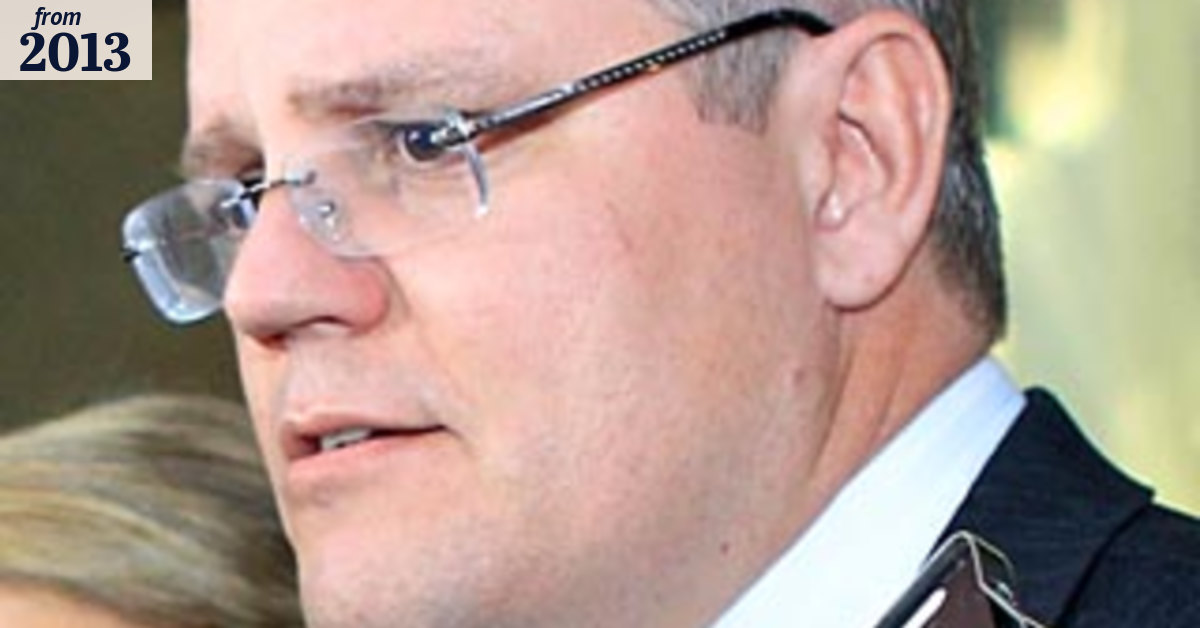
The claim is TRUE in its core assertion. Immigration Minister Scott Morrison did issue a directive in October 2013 instructing Department of Immigration and Border Protection staff and contractors to refer to asylum seekers arriving by boat as "illegal maritime arrivals" rather than the previous terminology [1].
According to The Guardian, Morrison directed that boat arrivals must be called "illegal maritime arrivals," and asylum seekers in detention must be called "detainees" instead of "clients" [2]. This directive applied to public servants and detention centre staff.
Morrison defended the terminology change, stating he was simply "calling a spade a spade" and that "I'm not going to make any apologies for not using politically correct language to describe something that I am trying to stop" [2]. He further clarified that the term referred to the mode of entry, not the act of seeking asylum: "People who have entered Australia illegally by boat have illegally entered by boat... I've never said that it is illegal to claim asylum. That's not what the term refers to. It refers to their mode of entry" [2].
The Sydney Morning Herald reported that 138 non-government agencies, faith-based organisations, and community groups signed a joint letter to Prime Minister Tony Abbott urging the government to stop using the term "illegal" to describe asylum seekers [1].
Missing Context
The claim omits several important contextual elements:
Labor's previous terminology: The previous Labor government (Rudd/Gillard) had used the term "irregular maritime arrivals" (IMAs) to describe the same group of people [3][4]. The ANU Reporter noted: "In late 2013, not long after the Coalition won power, Federal Immigration Minister Scott Morrison changed the policy of calling people who arrived in Australia by boat from Irregular Maritime Arrivals - the preferred terminology of the Labor government - to Illegal Maritime Arrivals" [3].
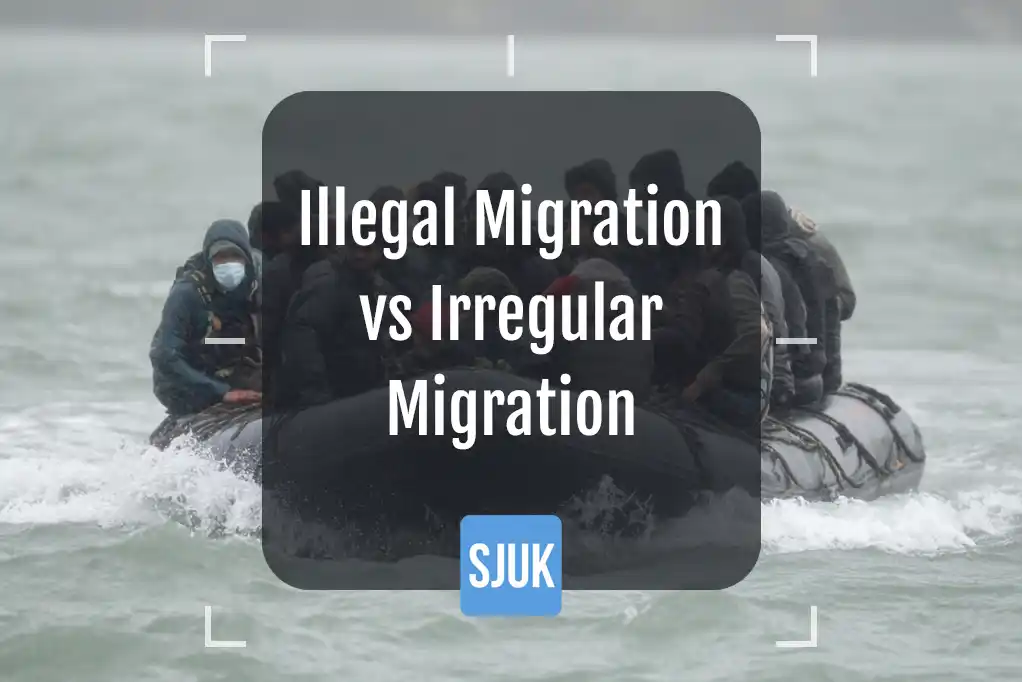
The legal distinction: The term "illegal" was applied to the method of entry (arriving without a visa), not to the act of seeking asylum itself. Under international law and the Refugee Convention, it is not illegal to seek asylum [5]. The UN and international agencies consistently distinguish between "irregular migration" (entering without proper documentation) and "illegal migration," emphasizing that seeking asylum is a fundamental right regardless of how one enters a country [5][6].
The "mode of entry" defense: Morrison explicitly stated he was not claiming that seeking asylum was illegal, but rather that arriving without authorization was an illegal entry method [2]. This distinction is significant in international law, though critics argue the terminology conflates the two in public perception.
Historical precedent: The Howard government (1996-2007) had also used inflammatory rhetoric around boat arrivals, including terms like "queue jumpers" and the "Pacific Solution" [7]. The European Council on Refugees noted: "One of the first steps the Coalition Government took was a rhetorical change: led by Prime Minister Tony Abbott, the Government decided to refer to asylum seekers who enter by boat as 'illegal maritime arrivals', a shift from the previous 'irregular maritime arrivals'" [7].
Source Credibility Assessment
The original sources provided with the claim vary in credibility:
Sydney Morning Herald (SMH): A mainstream Australian newspaper with established journalistic standards. Fairfax Media (now Nine) is generally considered reputable, though like all media, has some editorial perspective. This source is credible [1].
Glenn Murray website: This appears to be a personal/political website. Without additional information about the author and their credentials, this source should be treated as less authoritative than mainstream media outlets.
The Big Smoke: An online publication. While it publishes commentary, it may have less rigorous editorial standards than established newspapers. The article cited appears to be an opinion piece rather than straight news reporting.
The most authoritative sources on this claim are mainstream news outlets (SMH, The Guardian, ABC) and parliamentary records, which confirm the directive was issued as claimed.
Labor Comparison
Did Labor do something similar?
Search conducted: "Labor government Rudd Gillard asylum seeker boat arrivals illegal terminology"
Finding: Labor did not use the term "illegal" - they used "irregular maritime arrivals" (IMAs) [3][4]. However, Labor maintained similar hardline policies regarding boat arrivals:
- The Gillard government re-established offshore processing in Nauru and Papua New Guinea in 2012 (the "Pacific Solution" that Labor had previously dismantled) [8]
- Labor's Immigration Minister Chris Bowen used the term "irregular maritime arrivals" (IMAs) in official communications, including press releases about bridging visas and community placement [4]
- Labor also used military-led border protection operations and maintained detention facilities
- The terminology difference reflects a different framing approach rather than fundamentally different policy outcomes
Richard Marles, Labor's immigration spokesman at the time, explicitly criticized Morrison's terminology change as "demonising asylum seekers" and a return to "inflammatory rhetoric of the Howard era" [2].
Key distinction: While Labor did not use "illegal" terminology, they implemented many of the same deterrence policies. The terminology change represents a shift in rhetoric rather than a unique policy position.
Balanced Perspective
While the claim that public servants were mandated to use "illegal" terminology is factually accurate, the full context includes:
Coalition position:
- Morrison argued he was simply being direct about the method of entry, not criminalizing asylum-seeking itself [2]
- The Coalition viewed this as part of a broader deterrence strategy under "Operation Sovereign Borders," treating boat arrivals as a border security issue rather than a humanitarian one [7][9]
- The government maintained that arriving without a visa violates Australia's Migration Act, making the entry method illegal even if the asylum claim is legitimate
Criticisms:
- 138 organizations, including faith-based groups and refugee advocates, signed a joint letter protesting the terminology as dehumanizing [1]
- The Refugee Council of Australia and other advocates argued the term misrepresents international law, as seeking asylum is a protected right regardless of entry method [1][5]
- Critics noted the terminology blurs the distinction between unauthorized entry (a technical violation) and the legitimate right to seek asylum
Comparative analysis:
- This is not unique to the Coalition in terms of hardline border rhetoric - the Howard government used similar framing
- However, the specific "illegal" terminology was a Coalition innovation not used by Labor
- Both major parties have used deterrence-based approaches to boat arrivals, though with different rhetorical framings
- The international standard preferred by UNHCR and refugee agencies is "irregular" rather than "illegal" to maintain the distinction between entry method and asylum rights [5][6]
PARTIALLY TRUE
6.0
out of 10
The core claim is accurate: the Coalition government did mandate that public servants use "illegal maritime arrivals" terminology. However, the claim's framing that this was "incorrect" is itself a contested position. While refugee advocates and international agencies argue "illegal" misrepresents the legal right to seek asylum, the Coalition maintained the term described the entry method (which is technically unauthorized under the Migration Act), not the asylum claim itself. The claim omits that Labor used different terminology ("irregular") for similar policies, and misses the nuanced legal distinction Morrison attempted to draw. The terminology was controversial and widely criticized by refugee advocates, but whether it was "incorrect" depends on whether one accepts the Coalition's framing about mode of entry versus the broader international law perspective on asylum rights.
Final Score
6.0
OUT OF 10
PARTIALLY TRUE
The core claim is accurate: the Coalition government did mandate that public servants use "illegal maritime arrivals" terminology. However, the claim's framing that this was "incorrect" is itself a contested position. While refugee advocates and international agencies argue "illegal" misrepresents the legal right to seek asylum, the Coalition maintained the term described the entry method (which is technically unauthorized under the Migration Act), not the asylum claim itself. The claim omits that Labor used different terminology ("irregular") for similar policies, and misses the nuanced legal distinction Morrison attempted to draw. The terminology was controversial and widely criticized by refugee advocates, but whether it was "incorrect" depends on whether one accepts the Coalition's framing about mode of entry versus the broader international law perspective on asylum rights.
📚 SOURCES & CITATIONS (9)
-
1
smh.com.au
The Prime Minister is being urged to stop the using the term ''illegal maritime arrivals'' and follow Europe's lead on the protection of refugees.
The Sydney Morning Herald -
2

theguardian.com
Minister under fire for directing public servants to refer to asylum seekers who arrive by boat as 'illegal maritime arrivals'
the Guardian -
3

reporter.anu.edu.au
The term 'boat people' was first used of refugees who fled Vietnam after the fall of Saigon in 1975 on a variety of boats.
Reporter Anu Edu -
4
parlinfo.aph.gov.au
Parlinfo Aph Gov
-
5
securityjournaluk.com
Discover the key differences between illegal migration vs irregular migration, and why language shapes how we understand modern migration.
Security Journal UK -
6PDF
RegularAndIrregular
Ohchr • PDF Document -
7

ecre.org
Ecre -
8
asyluminsight.com
Asylum Insight
-
9
en.wikipedia.org
Wikipedia
Rating Scale Methodology
1-3: FALSE
Factually incorrect or malicious fabrication.
4-6: PARTIAL
Some truth but context is missing or skewed.
7-9: MOSTLY TRUE
Minor technicalities or phrasing issues.
10: ACCURATE
Perfectly verified and contextually fair.
Methodology: Ratings are determined through cross-referencing official government records, independent fact-checking organizations, and primary source documents.