
The Claim
“Declared bushfires unrelated to climate change.”
Original Sources Provided
✅ FACTUAL VERIFICATION
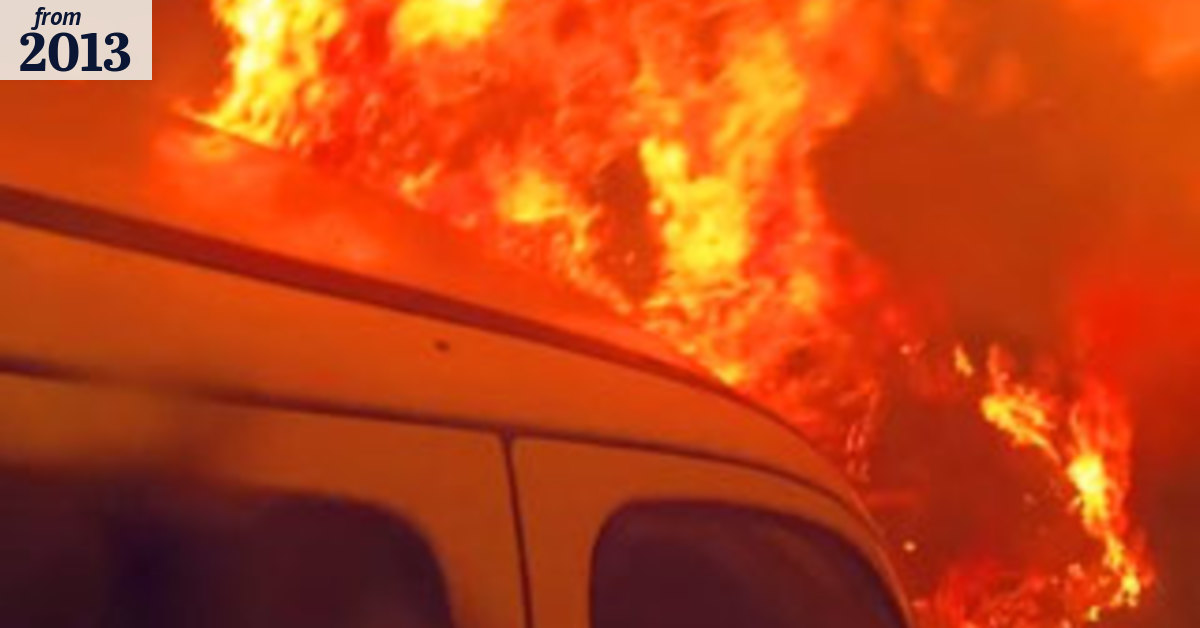
TRUE - Prime Minister Tony Abbott explicitly dismissed the link between the October 2013 NSW bushfires and climate change.
In October 2013, as severe bushfires raged in New South Wales, UN climate chief Christiana Figueres stated there was a clear link between climate change and bushfires, describing the NSW fires as "an example of what we may be looking at unless we take actually vigorous action" [1].
Abbott responded directly: "Well I think the official in question is talking through her hat, if I may say so... Climate change is real as I've often said and we should take strong action against it. But these fires are certainly not a function of climate change, they're a function of life in Australia" [1].
Abbott also defended his view that fire has been part of the Australian experience since European settlement began: "Australia has had bad fires since the beginning of European settlement" [1].
However, Abbott's own Environment Minister Greg Hunt acknowledged the broader science, stating: "This is not a debate about science. It is a debate about the carbon tax" and confirming that he and Abbott "accept the science on the broad link between bushfire risk and climate change" [2].
Missing Context
The claim omits important nuance about Abbott's position:
Abbott acknowledged climate change is real: He stated "Climate change is real as I've often said and we should take strong action against it" [1]. His denial was specific to the link between these particular bushfires and climate change, not a wholesale denial of climate science.
Scientific complexity of attribution: The World Meteorological Organisation had not yet established a direct link between the specific NSW fires and climate change at the time of Abbott's remarks [1]. Climate scientists distinguish between long-term trends (which are linked to climate change) and individual weather events (where attribution is more complex).
Political context: The comments occurred three weeks before UN climate talks in Warsaw, and Figueres had also criticized the Coalition's plan to scrap carbon pricing, warning it would be "much more expensive for them and for the population" [1].
It is rare for UN officials to intervene in domestic debates: Figueres' comments were unusual for a senior UN official intervening in a domestic climate policy debate [1].
Source Credibility Assessment
The Sydney Morning Herald (SMH) [1]:
- Major Australian mainstream newspaper (Fairfax Media, now Nine)
- Generally centrist/centre-left editorial stance
- Article written by Judith Ireland, political reporter
- Credible source for direct quotes and political reporting
- No evidence of fabrication or significant bias in this reporting
ABC News [2]:
- Australia's public broadcaster
- Statutorily required to maintain independence and accuracy
- Article written by Simon Lauder, ABC reporter
- Highly credible source for Australian political news
- Provides balanced reporting including both the Climate Council's position and the government's response
Both sources are mainstream, reputable Australian news outlets. The quotes from Abbott are direct and consistent across multiple sources. No evidence of partisan distortion in the basic factual reporting.
Labor Comparison
Did Labor do something similar?
Different approach to climate-bushfire connections:
The previous Labor government (Rudd/Gillard) established the Climate Commission in 2011 to provide scientific information about climate change to the public [2]. This body was explicitly designed to communicate climate science, including connections between extreme weather and climate change.
The Climate Commission was "de-funded by the Coalition Government" shortly after Abbott took office in September 2013 [2]. Its members then reformed as the privately-funded Climate Council, which released a report linking the October 2013 bushfires to climate change.
Labor's record on climate and extreme weather:
- Labor explicitly linked extreme weather events to climate change in public communications
- The Climate Commission under Labor stated that "climate change is increasing the probability of extreme fire weather days and is lengthening the fire season" [2]
- Labor maintained carbon pricing (the "carbon tax") which Abbott's Coalition campaigned to repeal
Key difference: Labor actively promoted the climate-bushfire connection through official government channels, while the Coalition de-funded the body responsible for such communications and Abbott publicly rejected the link for specific events.
Balanced Perspective
Abbott's statement must be viewed in context of both the scientific debate and the political environment of October 2013.
On the scientific question:
Abbott was making a distinction between long-term climate trends and specific weather events. The World Meteorological Organisation had not yet established a direct causal link between the specific 2013 fires and climate change [1]. However, the Climate Council (comprising scientists including Professor Will Steffen from ANU) argued that "hotter, drier weather increases the risk of fires" and that climate change was contributing to hotter conditions [2].
On the political context:
Abbott had just won the September 2013 election on a platform that included repealing the carbon tax. The UN climate chief's intervention was seen by the government as politicizing the tragedy. Abbott's dismissal of Figueres was partly a rejection of what he viewed as inappropriate international interference in domestic policy [1].
Comparative context:
While Labor's approach emphasized climate connections, both major Australian parties have historically struggled with the politics of climate adaptation. The difference here is one of communication strategy rather than substantive policy - both parties acknowledged climate change was real; they differed on whether to publicly connect specific disasters to climate change and on carbon pricing policy.
Nobel laureate Al Gore's perspective:
Former US Vice President Al Gore compared Abbott's position to "politicians here in the United States who got a lot of support from the tobacco companies and who argued to the public that there was absolutely no connection between smoking cigarettes and lung cancer" [3].
TRUE
7.0
out of 10
The claim is factually accurate. Prime Minister Tony Abbott explicitly stated that the October 2013 NSW bushfires were "certainly not a function of climate change" and characterized the UN climate chief's comments as "talking out of her hat." These direct quotes from Abbott are well-documented in multiple reputable sources.
However, the claim could benefit from context: Abbott acknowledged climate change is real generally, and his denial was specific to the attribution of these particular bushfires rather than a wholesale rejection of climate science. His own Environment Minister accepted the broader scientific link between bushfire risk and climate change.
Final Score
7.0
OUT OF 10
TRUE
The claim is factually accurate. Prime Minister Tony Abbott explicitly stated that the October 2013 NSW bushfires were "certainly not a function of climate change" and characterized the UN climate chief's comments as "talking out of her hat." These direct quotes from Abbott are well-documented in multiple reputable sources.
However, the claim could benefit from context: Abbott acknowledged climate change is real generally, and his denial was specific to the attribution of these particular bushfires rather than a wholesale rejection of climate science. His own Environment Minister accepted the broader scientific link between bushfire risk and climate change.
📚 SOURCES & CITATIONS (4)
-
1
smh.com.au
Prime Minister Tony Abbott has dismissed the comments of a senior UN official who said there was a clear link between bushfires and climate change, arguing ''fire is a part of the Australian experience''.
The Sydney Morning Herald -
2
abc.net.au
Scientists say there is a very real link between the recent bushfires in New South Wales and climate change.
Abc Net -
3

theguardian.com
Alexander White: The debate which has erupted over extreme weather events has important lessons for all those urging more, not less, action on climate change, argues David Spratt in this guest blog post.
the Guardian -
4
nema.gov.au
Nema Gov
Rating Scale Methodology
1-3: FALSE
Factually incorrect or malicious fabrication.
4-6: PARTIAL
Some truth but context is missing or skewed.
7-9: MOSTLY TRUE
Minor technicalities or phrasing issues.
10: ACCURATE
Perfectly verified and contextually fair.
Methodology: Ratings are determined through cross-referencing official government records, independent fact-checking organizations, and primary source documents.