
The Claim
“Sent no one important to the international climate summit. The people who did go went in tee-shirts, giggled and were so insensitive and disrespectful that there was a walkout by other countries.”
Original Sources Provided
✅ FACTUAL VERIFICATION
The claim refers to events at the UN Climate Change Conference (COP19) held in Warsaw, Poland in November 2013, shortly after Tony Abbott's Coalition government was elected in September 2013.
Regarding "no one important sent": The Australian delegation was indeed without ministerial representation. According to Climate Change News, "The government has not sent any ministers to the conference" [1]. The delegation was reportedly led by Justin Lee, a senior official, but no elected ministers attended. This was a notable departure from previous Australian practice where ministers typically attended such international summits [2].
Regarding t-shirts and casual dress: Multiple sources confirm the casual attire. Climate Change News reported that "Australia's team at UN talks in Warsaw have been accused of lacking respect after delegates turned up to critical discussions wearing shorts and teeshirts" [1]. Renew Economy confirmed they "were being extremely insensitive, wearing t-shirts" and noted that while there was speculation about whether they were wearing t-shirts or pyjamas, photos confirmed they were indeed t-shirts [2]. EU negotiator Paul Watkinson tweeted: "It is one thing to be tired in a negotiation meeting, another to turn up in pyjamas – respect matters" [1].
Regarding giggling and insensitive behavior: Saleemul Huq, a scientific advisor to the G77 and China negotiating bloc, stated: "This is a serious issue. We are talking about life and death, people are dying from Typhoon Haiyan, we've got people on hunger strike here. You don't trivialise these issues, by giggling, and marking brackets around anything. It is just not done" [2]. Reports also described delegates "gorging on snacks" during critical negotiations [1].
Regarding the walkout: The G77 and China bloc (representing 132 developing nations) walked out of talks at approximately 4am on Wednesday, November 20, 2013. According to Climate Change News, "The G77 alliance, which includes India, Africa and the small island states, staged a walk out of the negotiation when Australia refused to agree to a functioning text" [1]. Bangladesh confirmed "what occurred in the early hours of Wednesday was a walk-out" [2]. The walkout was specifically related to negotiations on a new "loss and damage mechanism" which would address compensation for developing nations affected by climate change impacts.
Missing Context
The claim omits several important contextual elements:
Timing and circumstances: The incident occurred at 4am during marathon late-night negotiations, a common feature of international climate talks. As Renew Economy noted, "in the institutionalised chaos of international climate talks, particularly in the final days of negotiations, grandstanding is commonplace" [2]. The casual dress may have reflected the late hour rather than deliberate disrespect, though other negotiators considered it inappropriate regardless.
The substantive policy dispute: The walkout wasn't solely about manners—it was about a substantive disagreement on the "loss and damage mechanism." Australia was blocking progress on this mechanism, which developing nations viewed as essential. According to Huq, "the Australian delegation just put brackets around everything. All that negotiation went to waste" [1]. The walkout was a negotiating tactic as much as a protest against behavior.
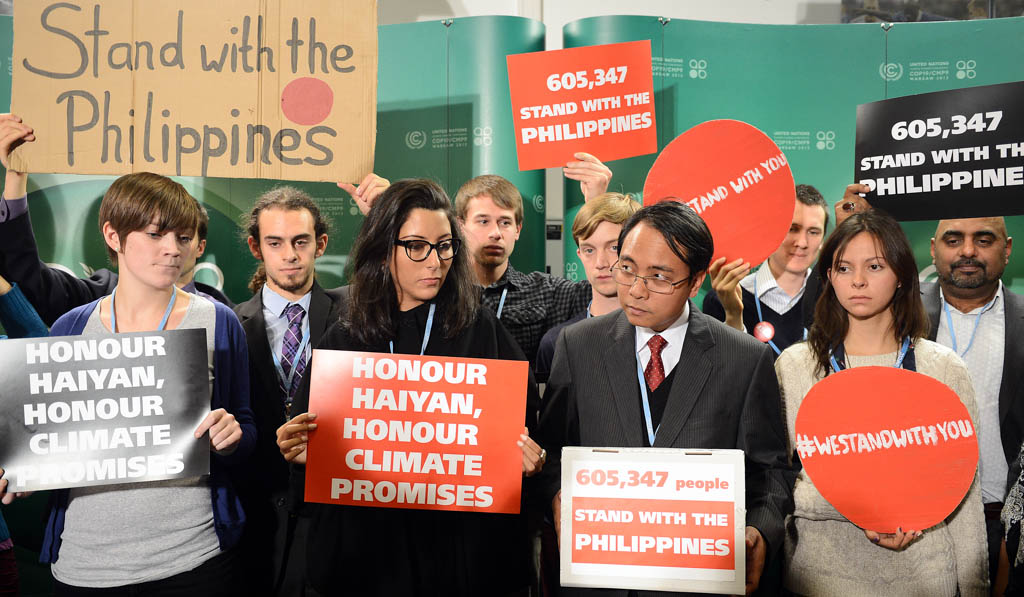
Typhoon Haiyan context: The sensitivity around this issue was heightened because Typhoon Haiyan had recently devastated the Philippines, making the loss and damage issue particularly emotional for developing nations [2].
Australia's broader policy shift: The incident occurred in the context of the new Abbott government dismantling Australian climate policies. Australia had previously played a constructive role in climate negotiations and chaired the Umbrella Group (representing non-EU developed countries). Alden Meyer from the Union of Concerned Scientists noted that Australia had previously "done a fairly good job of co-ordinating the Umbrella Group and taking a responsible position" but was now in "a totally different mode of behaviour" [2].
Source Credibility Assessment
The original source is Renew Economy, a publication focused on clean energy and climate policy in Australia. Key considerations:
Renew Economy has a clear editorial focus on renewable energy and climate action, which could influence framing [2]. However, the specific factual claims about the incident are corroborated by multiple other sources including Climate Change News [1] and direct quotes from negotiators.
Climate Change News (now Climate Home News) is a specialized climate journalism outlet with a reputation for independent reporting on international climate negotiations [1].
Primary source quotes: The reporting includes direct quotes from named individuals including Saleemul Huq (International Institute for Environment and Development), Paul Watkinson (EU negotiator), and Alden Meyer (Union of Concerned Scientists), adding credibility to the factual claims [1][2].
Photo evidence: Renew Economy noted they had seen photos confirming the t-shirts, adding photographic verification to textual reports [2].
The sources appear credible for the factual claims about the incident, though the framing emphasizes the negative aspects of Australia's conduct.
Labor Comparison
Did Labor do something similar?
Search conducted: "Australian Labor government climate summit attendance ministers Copenhagen Cancun Durban"
Finding: No direct equivalent to this specific incident was found. The Rudd and Gillard Labor governments (2007-2013) took a different approach to international climate engagement:
The Labor government ratified the Kyoto Protocol and established the carbon pricing mechanism that the Abbott government was actively dismantling during COP19 [1][2].
Under Labor, Australia had played a more constructive role in international climate negotiations, including chairing the Umbrella Group and participating in the Cartagena Dialogue [2].
South African negotiator Alf Wills explicitly noted the contrast: "We are mindful that the Australian government has recently changed, and has a different policy... What is disappointing for us is the comment made by the new prime minister that Australia will only do minus 5%" [2].
Key difference: The incident at COP19 reflected a fundamental policy shift under the new Coalition government rather than a continuation of previous practice. Bangladesh's head of delegation noted that "the political change in Australia has completely reversed its position" [2].
Did other governments behave similarly?
The incident was not entirely unique to Australia in terms of diplomatic friction at climate talks. However, the combination of no ministerial attendance, casual dress during serious negotiations, and the specific behavior alleged (giggling, snacking) was unusual enough to prompt a walkout—a relatively rare occurrence in UN climate negotiations.
Balanced Perspective
The criticisms are largely valid:
The core factual elements of the claim are supported by multiple independent sources. Australia did not send ministers, delegates wore casual attire during serious negotiations, and a walkout by 132 developing nations did occur specifically in response to Australian conduct and negotiating positions [1][2].
However, context matters:
The walkout was partly a negotiating tactic around the contentious "loss and damage" issue, not purely a reaction to manners. As noted, no developed country supported financial compensation on this issue—the UK negotiator stated: "We don't accept the argument on compensation. We never have and we're not intending to start now" [1]. Australia was not alone in opposing the mechanism, though its tactics were particularly confrontational.
The casual dress occurred at 4am during marathon negotiations. While still considered inappropriate by other negotiators, this context suggests exhaustion rather than deliberate mockery.
The Abbott government's approach reflected its domestic mandate to dismantle the carbon price and reduce Australia's climate ambition. While internationally unpopular, this was consistent with the government's domestic policy platform.
Comparative context:
This incident represents a sharp departure from Australia's previous constructive role in climate negotiations under Labor. The specific combination of no ministerial presence, casual attire, and alleged insensitive behavior was unusual enough to become international news and damage Australia's diplomatic standing on climate issues.
Key context: This incident was unique to the Coalition government's early period and reflected a deliberate shift away from active climate engagement, not a pattern common across Australian governments of different parties. The subsequent Coalition government under Malcolm Turnbull and Scott Morrison would later return to more conventional diplomatic engagement at climate summits.
TRUE
8.0
out of 10
The claim is factually accurate. Multiple independent sources confirm that: (1) no ministers were sent to the COP19 climate summit in Warsaw in 2013 [1]; (2) delegates wore t-shirts/shorts during serious negotiations [1][2]; (3) other negotiators accused them of insensitive behavior including giggling [2]; and (4) 132 developing nations in the G77 and China bloc walked out of negotiations in response [1][2]. The specific details are well-documented with named sources and photographic evidence. The incident was widely reported internationally and represented a genuine diplomatic embarrassment for Australia.
Final Score
8.0
OUT OF 10
TRUE
The claim is factually accurate. Multiple independent sources confirm that: (1) no ministers were sent to the COP19 climate summit in Warsaw in 2013 [1]; (2) delegates wore t-shirts/shorts during serious negotiations [1][2]; (3) other negotiators accused them of insensitive behavior including giggling [2]; and (4) 132 developing nations in the G77 and China bloc walked out of negotiations in response [1][2]. The specific details are well-documented with named sources and photographic evidence. The incident was widely reported internationally and represented a genuine diplomatic embarrassment for Australia.
📚 SOURCES & CITATIONS (5)
-
1

climatechangenews.com
Delegation accused of wearing t-shirts and "gorging on snacks" during critical UN talks
Climate Home News -
2
reneweconomy.com.au
Reneweconomy Com
-
3
theworld.org
What you need to know about Australia's outrage-inspiring "t-shirt diplomacy" at this week's Warsaw climate talks.
The World from PRX -
4

transcend.org
The story is now part of climate history. Yesterday [21 Nov 2013], as climate talks degraded into a sideshow for the coal industry, more than 800 conference participants walked out. Wearing T-shirts adorned with the word, Volveremos (We will return), the activists handed in their registration badges and abandoned the United Nations Climate Change Summit. ...
TRANSCEND Media Service -
5

news.mongabay.com
Australia, Japan and Poland blamed for sabotaging UN Climate Summit talks. Thirteen citizen groups—including Oxfam, Greenpeace, and WWF—have walked out of ongoing climate talks in Warsaw to protest what they view as a lack of ambition and long-stalled progress on combating global climate change. Nearly 200 governments are currently meeting in Warsaw, Poland at the […]
Mongabay Environmental News
Rating Scale Methodology
1-3: FALSE
Factually incorrect or malicious fabrication.
4-6: PARTIAL
Some truth but context is missing or skewed.
7-9: MOSTLY TRUE
Minor technicalities or phrasing issues.
10: ACCURATE
Perfectly verified and contextually fair.
Methodology: Ratings are determined through cross-referencing official government records, independent fact-checking organizations, and primary source documents.