
The Claim
“Abandoned Gonski agreements with states and committed to 3 fewer years of Gonski than their pre-election promise.”
Original Sources Provided
✅ FACTUAL VERIFICATION
The core facts are partially accurate but require significant context.
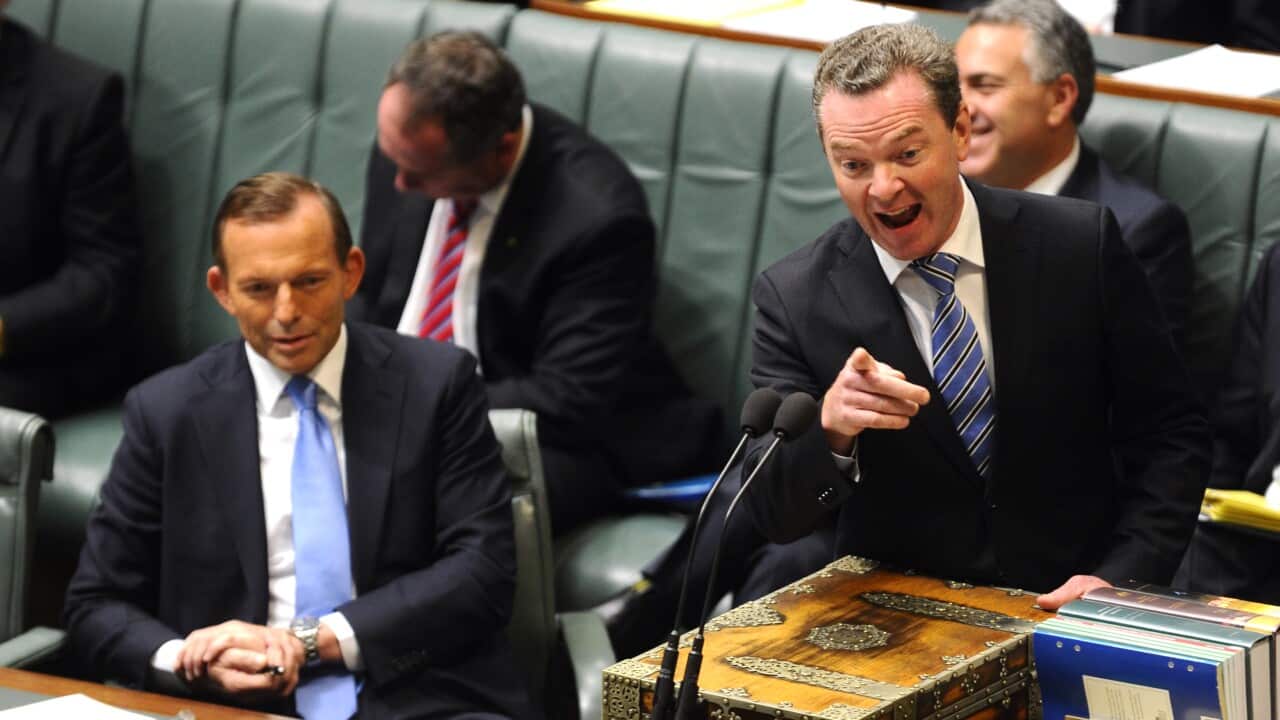
The Coalition did announce in November 2013, within weeks of taking office, that it would scrap Labor's Gonski school funding model and renegotiate with states [1]. Education Minister Christopher Pyne confirmed the Government would honor funding for 2014 but implement a new "flatter, fairer and simpler" model beyond that [2].
However, the claim that the Coalition committed to "3 fewer years" misrepresents the nature of the pre-election commitment. Before the 2013 election, the Coalition promised to match Labor's school funding for the next four years - the period covered by the forward estimates in the budget [3][4]. Coalition MPs, including Tony Abbott and Christopher Pyne, consistently stated they were on a "unity ticket" with Labor on school funding for the four years of the forward estimates [1][4].
The Senate Education and Employment Committee's 2014 inquiry confirmed that under the Australian Education Act 2013, the needs-based funding model legislated by Labor would operate for the initial four years, but the Coalition's changes to indexation arrangements post-2017 would significantly alter the funding trajectory [5].
Missing Context
The claim omits several critical pieces of context:
Labor's $1.2 billion shortfall: Before the election, Labor had removed $1.2 billion from the education budget after failing to secure agreements with Western Australia, Queensland, and the Northern Territory [1][2]. The Coalition actually committed to putting $230 million of this back into school funding for 2014, meaning schools in those three jurisdictions received more than they would have under Labor's plan [1].
The difference between forward estimates and full implementation: The "four years" versus "six years" distinction arises from the difference between budget forward estimates (which cover 4 years) and Labor's aspirational timeline for full Gonski implementation by 2020. The Coalition promised to match funding for the forward estimates period (4 years), not for Labor's full 6-year rollout timeline [3][4].
States that hadn't signed up: Three jurisdictions (WA, Queensland, NT) had not signed Gonski agreements with Labor. The Coalition provided them funding to bring them into line with other states for 2014 [1][2].
The nature of the agreements: The Coalition argued that "no government can bind any future government" and that the agreements were subject to change after an election [2]. Western Australian Premier Colin Barnett publicly supported this view, stating that states who signed up needed to "get real" as "it's a political process" [1].
Source Credibility Assessment
The original source is the Sydney Morning Herald, a mainstream Australian newspaper with a center-left editorial stance. SMH is generally regarded as a credible news source, though like all media, it has editorial perspectives. The article from November 2013 captures the immediate political reaction to Pyne's announcement.
ABC News and SBS News (sources [1], [2], [3], [4]) are Australia's public broadcasters, generally considered authoritative and balanced in their news coverage.
The Senate Committee report (source [5]) is an official parliamentary document representing the findings of a Labor/Greens majority committee. While it is an official parliamentary source, it reflects the political composition of the committee at that time and should be read as a committee opinion rather than bipartisan consensus.
Labor Comparison
Did Labor do something similar?
Search conducted: "Labor government school funding changes previous government"
Labor's Gonski reforms themselves represented a significant departure from previous school funding arrangements. The National Plan for School Improvement (NPSI) replaced the previous funding model and involved renegotiating arrangements with states [5].
When Labor came to power in 2007, it also made substantial changes to education funding, including ending the previous Howard government's funding model for non-government schools. The 2011 Gonski Review itself was commissioned by the Gillard government to address what Labor viewed as fundamental inequities in the existing system [5].
In terms of broken promises or renegotiated agreements, the Rudd/Gillard governments also faced criticism for delays in Gonski implementation and for the fact that several states (WA, Queensland, NT) never signed agreements before the 2013 election - meaning Labor itself had not fully delivered on its Gonski commitments by the time it left office [1][2].
Balanced Perspective
The "broken promise" narrative captures only one side of a complex policy dispute.
While critics, including state premiers from Labor jurisdictions, accused the Coalition of breaking an election promise [1], the Coalition maintained it was honoring its commitment to match Labor's funding for the forward estimates period (4 years). The claim that the Coalition promised "6 years" is inaccurate - they explicitly promised 4 years, which they delivered [3][4].
The Coalition's argument was that:
- They promised the same funding envelope as Labor for the forward estimates (4 years) - and delivered this
- They always stated they would improve the model to remove "command and control" features from Canberra [2][4]
- Labor had itself left a $1.2 billion hole in the funding by failing to secure state agreements
The counter-argument from education stakeholders was that:
- The "unity ticket" rhetoric created an expectation of continuity beyond just the dollar amount
- The shift to a new model created uncertainty for schools
- Changes to indexation post-2017 would result in significant long-term funding reductions (estimated at $30 billion by Senate Committee estimates) [5]
Key context: The claim that the Coalition committed to "3 fewer years" is technically incorrect because the Coalition never promised 6 years - they promised 4 years. Labor's full Gonski implementation timeline was 6 years (to 2020), but only the first 4 years were locked in the budget forward estimates. The dispute is more about whether the Coalition created an impression of complete continuity that they didn't deliver, rather than a clear breach of a specific numerical commitment.
PARTIALLY TRUE
6.0
out of 10
The claim contains elements of truth but is misleading in important respects. The Coalition did abandon the Gonski model and renegotiate with states, creating significant policy disruption. However, the assertion that they committed to "3 fewer years than their pre-election promise" is incorrect - they promised to match Labor's funding for the 4-year forward estimates period, which they honored. Labor's 6-year timeline to full implementation was never promised by the Coalition. The reduction from 6 years (Labor's aspirational timeline) to 4 years (Coalition's implementation) reflects different policy approaches, not a broken promise on duration. The claim conflates Labor's full Gonski timeline with the Coalition's actual pre-election commitments.
Final Score
6.0
OUT OF 10
PARTIALLY TRUE
The claim contains elements of truth but is misleading in important respects. The Coalition did abandon the Gonski model and renegotiate with states, creating significant policy disruption. However, the assertion that they committed to "3 fewer years than their pre-election promise" is incorrect - they promised to match Labor's funding for the 4-year forward estimates period, which they honored. Labor's 6-year timeline to full implementation was never promised by the Coalition. The reduction from 6 years (Labor's aspirational timeline) to 4 years (Coalition's implementation) reflects different policy approaches, not a broken promise on duration. The claim conflates Labor's full Gonski timeline with the Coalition's actual pre-election commitments.
📚 SOURCES & CITATIONS (5)
-
1
Abbott denies Coalition broke election promise on school funding
Prime Minister Tony Abbott has rejected accusations the Coalition misled voters on education funding, saying Labor "utterly mismanaged" the issue. The Government will scrap Labor's so-called Gonski plans for school funding and renegotiate agreements with all states and territories within a year. Opposition Leader Bill Shorten says the Government "is not sticking to its election promise", while SA's Treasurer Jay Weatherill says it's "policy chaos at a national level". But Mr Abbott says the Coalition is "absolutely honouring our pre-election commitments". "In fact, we're going to do a little bit better.. we know that Labor ripped $1.2 billion out of school funding just before the election - we're going to put some of that back in," he said.
Abc Net -
2
Coalition to ditch Gonski school funding model
Federal Education Minister Christopher Pyne denies the Coalition is breaking an election promise on schools funding. Prior to the federal election, the Coalition promised to match Labor's increase in school funding over the next four years and said individual schools would recieve the same amount…
SBS News -
3
Tony Abbott says government will honour schools funding promise but cites confusion over what was promised
News Com
-
4
Gillard reveals details of Gonski school funding
Prime Minister Julia Gillard has unveiled the Government's long-awaited plan to overhaul school funding, promising to contribute 65 per cent of the total cost.
Abc Net -
5

Executive Summary - Senate Education and Employment Committee Report on School Funding
Executive Summary The historic Gonski Review Report identified several highly concerning trends in the educational outcomes of Australian students. It found that over the past decade, the performance of Australian students had declined at all levels of achievement compared
Aph Gov
Rating Scale Methodology
1-3: FALSE
Factually incorrect or malicious fabrication.
4-6: PARTIAL
Some truth but context is missing or skewed.
7-9: MOSTLY TRUE
Minor technicalities or phrasing issues.
10: ACCURATE
Perfectly verified and contextually fair.
Methodology: Ratings are determined through cross-referencing official government records, independent fact-checking organizations, and primary source documents.