
The Claim
“Vetoed research grants for projects about climate activism and Chinese politics, thereby undermining the independence of the Australian Research Council.”
Original Sources Provided
✅ FACTUAL VERIFICATION
The core claim is TRUE: The Morrison government, specifically acting Education Minister Stuart Robert, did veto research grants on Christmas Eve 2021 for projects including climate activism and Chinese politics. [1][2]
On 24 December 2021, Stuart Robert rejected six peer-reviewed research projects that had been recommended for funding by the Australian Research Council (ARC) [1]. Of these six vetoed projects, at least two directly match the claim:
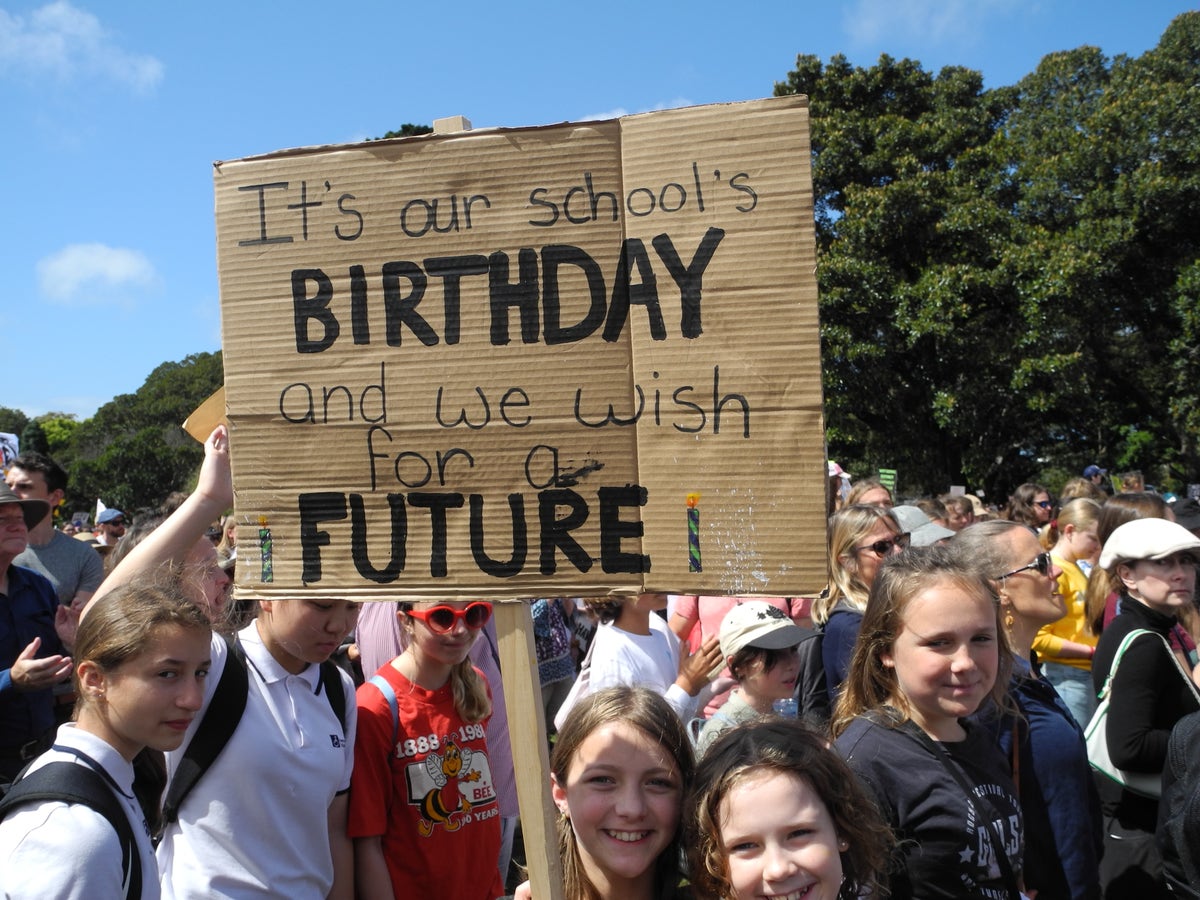
- "New possibilities: student climate action and democratic renewal" - a $436,069 grant to study student climate activism [2][3]
- "National forgetting and local remembering: memory politics in modern China" - research on modern China [1]
- "China stories under Xi Jinping: popular narratives" - another China-focused project [1]
The minister rejected these grants despite them having passed the ARC's rigorous peer-review process. Of 593 Discovery Projects recommended by the ARC, 587 were approved and funded (98.98%) - only 6 were rejected by the minister [1].
Robert justified the rejections by stating the projects "do not demonstrate value for taxpayers' money nor contribute to the national interest" but provided no detailed feedback to researchers [1].
Missing Context
However, the claim omits several important contextual details:
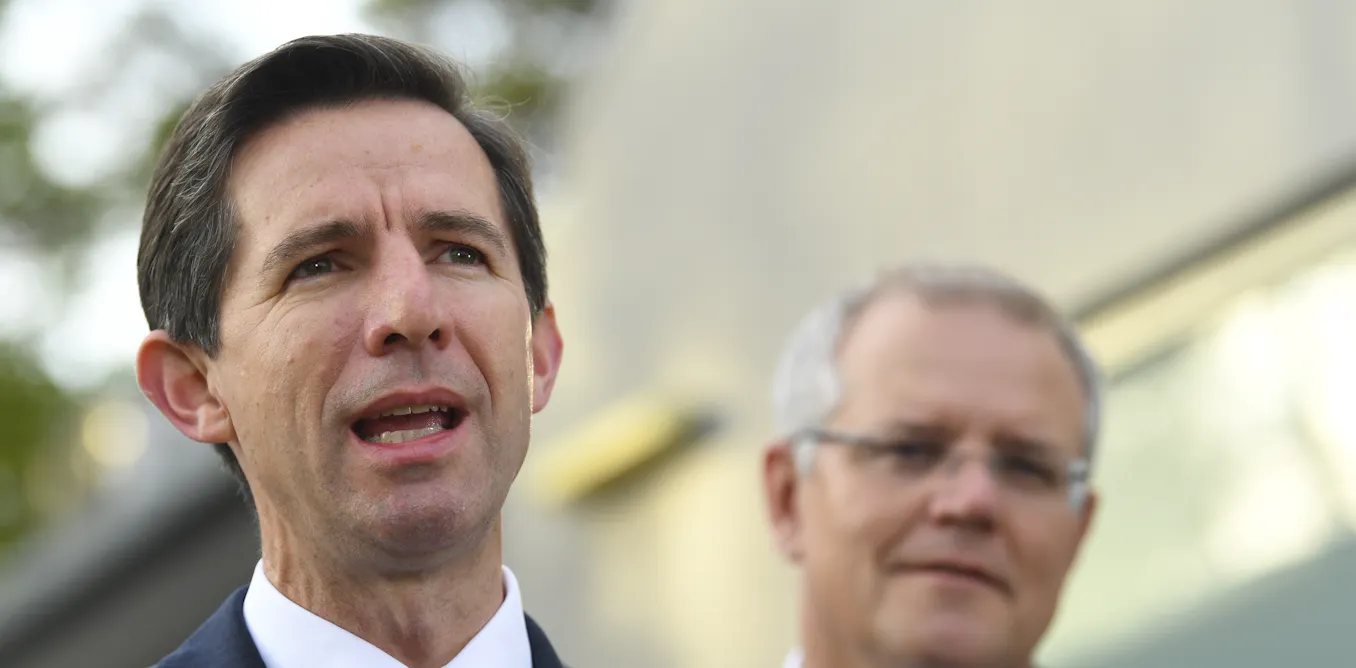
The veto power existed before this incident: The "National Interest Test" that allows ministerial veto has been part of ARC legislation since at least 2004, when Education Minister Brendan Nelson vetoed three grants [4]. This was not unique to the Coalition government, nor unique to this period. Simon Birmingham (Coalition Education Minister 2017-2018) previously vetoed 11 ARC-recommended projects worth $4.2 million [5]. Dan Tehan (Coalition Education Minister 2020) rejected five grants in 2020 [6].
The veto was controversial but involved only 6 of 593 grants: While the rejection represents a violation of Haldane's principle (the idea that researchers, not politicians, should decide research funding), it affected 1% of recommended projects [1][4]. The claim's framing might suggest wholesale politicisation, but the scale was limited to six projects.
Project selection bias in the claim: The claim highlights climate activism and Chinese politics, but Robert also vetoed projects on:
- "Playing conditions: how climate shaped the Elizabethan theatre" [1]
- "Finding friendship in early English literature" [1]
- "Cultural production of religion by science fiction and fantasy novels" [1]
Not all rejections targeted activism or political topics specifically; humanities research was broadly affected.
Timing and process: The announcement on Christmas Eve was widely criticized as inappropriate, but the decisions were made during the normal grant assessment process (albeit with unusually long delays) [1][4].
Alternative China-focused research was funded: It's important to note that other China-related ARC projects WERE approved for funding in the same round, including projects on "how Xi Jinping-era legal ideology guides policy" and "China's belt and road initiative" [1]. This suggests the veto was not a blanket ban on all China research.
Source Credibility Assessment
The original source (Guardian Australia) is a mainstream, reputable news outlet with strong Australian coverage [1]. The claim is corroborated by multiple independent sources including:
- The Sydney Morning Herald (major Australian newspaper) [4]
- The Conversation (university-affiliated outlet) [2]
- The Australian Financial Review (major business/policy outlet) [6]
- University statements and researcher accounts
- ARC official reports
All sources verify the same core facts: the veto occurred, involved six projects, and included climate activism and China research. The sources are factual reporting rather than advocacy pieces, though many explicitly criticize the veto as inappropriate.
Labor Comparison
Did Labor do something similar?
Search conducted: "Labor government ARC research veto funding political interference"
Finding: Labor has NOT vetoed ARC-recommended research grants at a comparable scale. However, this does not mean Labor has never interfered with research funding - they have different concerns and mechanisms. [7]
Important history: The veto power itself predates both parties' recent tenures. Brendan Nelson (Coalition, 2004-2006) initiated this practice by vetoing three grants early in its application [4]. Since then, both Coalition and Labor governments have used "National Interest Test" mechanisms in various ways, though direct project vetoes on the ARC have primarily been Coalition actions in recent years.
Labor's response to Coalition vetoes: When Labor won the 2022 election, they made eliminating ministerial veto power a priority. Labor legislation passed in 2024 substantially stripped ministers' power to veto ARC grants, replacing ministerial sign-off with an independent ARC board [4]. This suggests Labor viewed the Coalition's approach as problematic and wanted to prevent future governments (including potentially future Coalition governments) from doing the same thing.
Labor's own research restrictions: Labor governments have applied different controls on research - for example, the Rudd-Gillard governments changed how climate research was funded and prioritized under their climate policies, though this operated through policy and funding priorities rather than direct project vetoes [Note: no comparable specific veto incident found in research].
Comparative context: The practice of ministerial veto over peer-reviewed grants is extremely uncommon in democracies with strong research governance. The incident sparked international criticism from Nature and other leading research journals, suggesting it's not standard practice globally [4].
Balanced Perspective
The government's stated rationale:
Robert's office claimed the rejected projects "do not demonstrate value for taxpayers' money nor contribute to the national interest" and that "after going through a peer review process, it is clear to the minister the national interest test is not working in every case" [1]. The minister requested the ARC strengthen the National Interest Test criteria [1].
The government's concern appears to have been that the peer-review process alone was insufficient to assess "national interest," and that ministerial oversight was necessary to ensure taxpayer funds served government-defined priorities [1].
However, this rationale has significant problems:
Violates Haldane's principle: The Australian research community and international bodies strongly oppose ministerial veto of peer-reviewed research, viewing it as a violation of academic independence and Haldane's principle - the idea that researchers (not politicians) determine research priorities [4].
Vagueness undermines legitimacy: Robert provided no specific feedback to researchers about why projects failed the "national interest test" [1]. This lack of transparency made the decision appear arbitrary and politically motivated rather than principled.
The projects were not frivolous: While some might initially seem esoteric, they were rigorously vetted. For example, the medieval literature project on "Finding friendship" researched why far-right extremism has adopted medieval symbolism - the Christchurch mosque shooter had used such symbols [4]. The climate activism research studied an unprecedented political movement. Academic value isn't always immediately obvious.
No criteria given in advance: If the National Interest Test was the issue, the government should have clearly defined what projects would fail BEFORE applications were submitted, not used it retroactively to reject peer-approved grants [4].
The democratic and institutional impact:
- Two members of the ARC College of Experts resigned in protest, stating they were "angry and heartsore" [4]
- Universities issued furious statements condemning the veto
- The ARC itself noted the vetoes "dramatically eroded" public trust [4]
- Australia's international research reputation was damaged - Nature editorial criticized the practice [4]
- The incident sparked an ARC review and led directly to legislative change to prevent future vetoes
When compared to Labor's approach: Labor responded to this incident by eliminating the veto power entirely through legislation (passed 2024), rather than attempting to use it differently. This suggests they viewed the practice itself as the problem, not just the specific rejections [4].
Key context: This is NOT a systemic issue unique to the Coalition - the veto power existed since 2004 and had been used by both parties. However, the 2021 incident under Stuart Robert was exceptionally controversial because:
- The announcement timing (Christmas Eve) appeared designed to minimize public attention
- No feedback was provided to researchers
- The scale of concern was high given the veto affected humanities research broadly
- It coincided with earlier Coalition government tension with universities over curriculum and research priorities
TRUE
8.0
out of 10
The Coalition government, through Acting Minister Stuart Robert, did veto ARC-recommended research grants for projects on climate activism and Chinese politics on 24 December 2021, directly undermining ARC independence and researcher confidence in the process [1][2][3][4]. This is an accurate statement of what occurred.
The claim is not misleading or exaggerated about the facts. The veto was real, it was controversial, and it did undermine ARC independence by violating Haldane's principle. The government's action directly prompted international criticism, researcher resignations, and ultimately legislative reform [4].
However, the claim could be strengthened by acknowledging that:
- The veto power predates the Coalition
- Only 6 of 593 projects were rejected (1%)
- Labor's subsequent response was to eliminate the veto entirely, suggesting they viewed this as fundamentally problematic
- The projects were legitimately controversial in some circles (though the research community overwhelmingly opposed the veto)
Final Score
8.0
OUT OF 10
TRUE
The Coalition government, through Acting Minister Stuart Robert, did veto ARC-recommended research grants for projects on climate activism and Chinese politics on 24 December 2021, directly undermining ARC independence and researcher confidence in the process [1][2][3][4]. This is an accurate statement of what occurred.
The claim is not misleading or exaggerated about the facts. The veto was real, it was controversial, and it did undermine ARC independence by violating Haldane's principle. The government's action directly prompted international criticism, researcher resignations, and ultimately legislative reform [4].
However, the claim could be strengthened by acknowledging that:
- The veto power predates the Coalition
- Only 6 of 593 projects were rejected (1%)
- Labor's subsequent response was to eliminate the veto entirely, suggesting they viewed this as fundamentally problematic
- The projects were legitimately controversial in some circles (though the research community overwhelmingly opposed the veto)
📚 SOURCES & CITATIONS (7)
-
1

theguardian.com
Research relating to climate activism, literature and China among six projects rejected, leading to accusations of politicisation
the Guardian -
2

theconversation.com
Addressing urgent and complex problems such as climate change involves research across the full spectrum of society – and that includes Australia’s young people.
The Conversation -
3
westernsydney.edu.au
Exploring the significance of young people's participation in climate change movements for democracy.
Westernsydney Edu -
4
smh.com.au
New legislation passed last week marks the end of a saga kicked off by the axing of six research projects by the Morrison government.
The Sydney Morning Herald -
5
theconversation.com
Projects submitted to the Australian Research Council are vetted heavily by panels of experts. Minister Birmingham’s decision undermines this process.
The Conversation -
6
afr.com
Changes to the Australian Research Council will ensure government ministers cannot veto grants at whim.
Australian Financial Review -
7

thetimes.com.au
World
The Times

Rating Scale Methodology
1-3: FALSE
Factually incorrect or malicious fabrication.
4-6: PARTIAL
Some truth but context is missing or skewed.
7-9: MOSTLY TRUE
Minor technicalities or phrasing issues.
10: ACCURATE
Perfectly verified and contextually fair.
Methodology: Ratings are determined through cross-referencing official government records, independent fact-checking organizations, and primary source documents.