
The Claim
“Gave ASIO the power to read, delete and modify anything and everything on the entire internet, with only one warrant. No one can sue them if they use that information or power illegally. If a journalist reports such abuse, they will be jailed for 10 years.”
Original Sources Provided
✅ FACTUAL VERIFICATION
The claim refers to the National Security Legislation Amendment Bill (No. 1) 2014, passed by the Coalition government in September-October 2014. This legislation did significantly expand ASIO's surveillance and operational capabilities [1].
Regarding "one warrant for the entire internet":
The legislation allowed ASIO to obtain a single warrant to access "a limitless number of computers on a computer network" when attempting to monitor a target [1]. Critics, including lawyers, rights groups, and academics, noted that because the internet is a "network of networks" and the bill did not specifically define what constitutes a "computer network," this could theoretically allow ASIO to access the entire Australian internet with one warrant [1]. Attorney-General George Brandis confirmed that "there is no arbitrary or artificial limit on the number of devices" [1].
Regarding "read, delete and modify":
The legislation explicitly empowered ASIO to "copy, delete, or modify the data held on any of the computers it has a warrant to monitor" [1]. Senate debate records confirm these warrants allowed ASIO or those working for ASIO to "modify these computers, to delete files, to install malware, to seek higher levels of user access and to impersonate people" [2].
Regarding immunity from lawsuits:
The legislation established a "special intelligence operations" (SIO) regime that granted ASIO officers immunity from civil and criminal liability when conducting authorised operations [3]. This immunity applies when officers act within the scope of authorised SIOs, even if they would otherwise be committing crimes or civil wrongs.
Regarding 10 years jail for journalists:
The legislation created offences punishable by up to 5 years jail for "recklessly" disclosing information about an SIO, and up to 10 years if the disclosure "will endanger the safety of participants or harm the operation" [4]. ABC Fact Check verified that these penalties could apply to journalists exposing errors by security agencies [4].
Missing Context
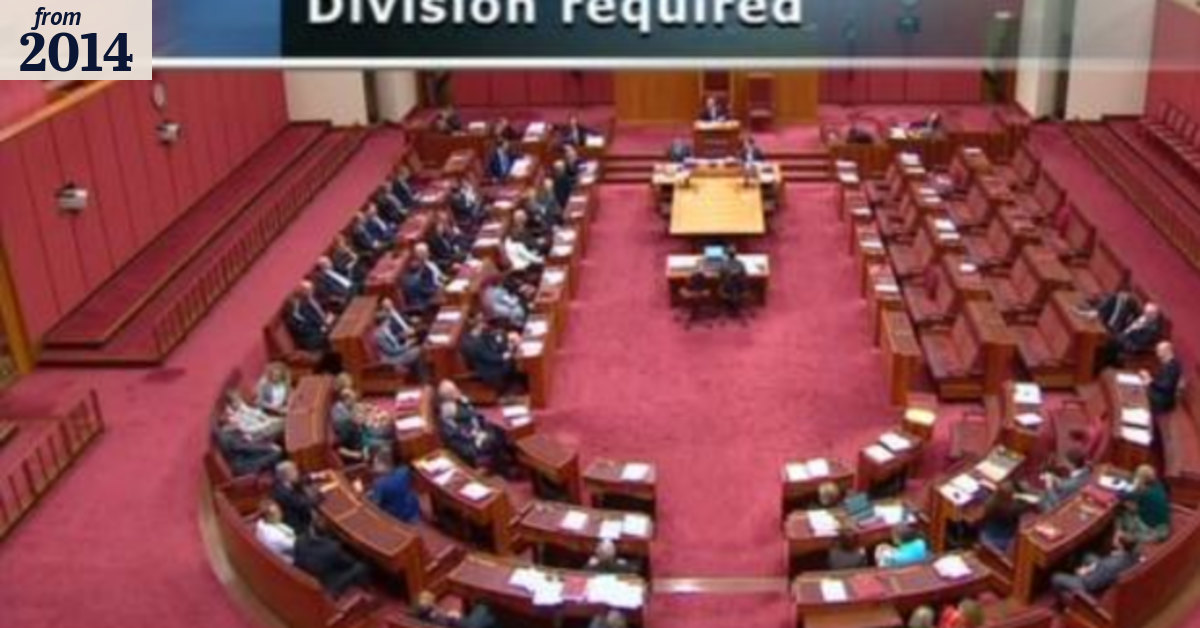
Bipartisan Support: The claim omits that this legislation passed with bipartisan support from the Australian Labor Party [1][5]. The bill passed the Senate 44 votes to 12, with Labor supporting the government [1]. Opposition Leader Bill Shorten maintained Labor's support for the laws despite some internal concerns from frontbenchers like Anthony Albanese [5].
Precedent for Controlled Operations: The SIO regime was modelled on existing "controlled operation" (CO) schemes that had been in place for the Australian Federal Police since 1996, with disclosure offences added in 2010 under the previous Labor government [4]. These existing CO provisions also carried 10-year penalties for endangering operations [4].
Purpose and Context: The legislation was introduced following recommendations from a Parliamentary Joint Committee on Intelligence and Security inquiry initiated under the previous Labor government [6]. It was framed as a response to the emerging threat of Islamic State and terrorism concerns, coming amid major counter-terrorism raids and after IS had called for attacks on Australian civilians [1].
Safeguards: The legislation included some oversight mechanisms, including the requirement for SIOs to be authorised by the Attorney-General or ASIO Director-General, and the continued role of the Inspector-General of Intelligence and Security (IGIS) as an independent watchdog [4]. Amendments were made to explicitly rule out torture [1].
Recklessness Standard: For journalists to face prosecution, they must act "recklessly" - the bill was amended to confirm that inadvertent reporting without knowledge of an SIO would not be sufficient for prosecution [4].
Source Credibility Assessment
The original sources provided with the claim are:
Sydney Morning Herald - A mainstream Australian newspaper (Fairfax Media, now Nine). Generally reputable with professional editorial standards. The cited article quotes Greens Senator Scott Ludlam's opposition to the bill [1].
The Guardian Australia - The Australian edition of the UK-based Guardian, generally reputable with a progressive editorial stance. Published an opinion piece critical of the legislation [7].
Both sources are mainstream media outlets with established credibility, though the specific articles cited represent critical/opinion perspectives rather than neutral reporting. Neither source is a partisan advocacy organisation, though they reflect the concerns raised by legal experts, human rights organisations, and the Greens party about the legislation.
Labor Comparison
Did Labor do something similar?
Search conducted: "Labor government controlled operations surveillance powers AFP"
Finding: Yes - Labor established the precedent for this type of legislation. The "controlled operations" (CO) scheme for the Australian Federal Police was introduced in 1996 and strengthened over time. The previous Labor government (2010) amended the Crimes Act to make it an offence to disclose information about controlled operations, with penalties of up to 10 years jail for endangering operations - identical to the ASIO SIO penalties [4].
Labor's 2013 Public Interest Disclosure Act established whistleblower protections, though these had limited application to the new SIO regime [4].
Key comparison:
- Labor's 2010 CO provisions: Up to 10 years for disclosing controlled operations
- Coalition's 2014 SIO provisions: Up to 10 years for disclosing special intelligence operations
- Both provisions apply to journalists and lack a public interest defence
Additionally, the current Labor government (Albanese, 2025) has proposed expanding ASIO's compulsory questioning powers and making them permanent - continuing the trend of strengthening security agency powers regardless of party [8].
Balanced Perspective
The National Security Legislation Amendment Bill (No. 1) 2014 represented a significant expansion of ASIO's powers, consistent with similar expansions of security agency powers in comparable Western nations (UK, USA) following terrorism threats [9].
Government justification:
The Coalition government argued these powers were necessary to modernise intelligence capabilities in a "newly dangerous age" [1]. Attorney-General George Brandis stated the provisions were modelled on existing AFP controlled operations laws and were "the most important reform for Australia's intelligence agencies since the late 1970s" [1]. The government emphasised that the laws targeted leakers like Edward Snowden, not legitimate journalism [1].
Expert concerns:
Legal experts, the Law Council of Australia, Australian Lawyers Alliance, human rights advocates, and media organisations raised significant concerns about press freedom, the breadth of the powers, and lack of public interest defences [4]. Professor George Williams (UNSW) described the bill as "too broad" [1], and Bret Walker SC (former Independent National Security Legislation Monitor) raised concerns about the chilling effect on reporting [4].
Parliamentary scrutiny:
The legislation was reviewed by the Parliamentary Joint Committee on Intelligence and Security, which made recommendations that were largely adopted. However, amendments proposed by Greens and crossbench Senators to limit the number of computers per warrant (to 20), protect whistleblowers, and require public interest considerations in sentencing were defeated with Labor and government opposition [1][4].
Comparative context:
This was not unique to the Coalition. Labor supported the bill and had established similar frameworks for the AFP. The trend of expanding security powers has been bipartisan, reflecting a broader Western pattern post-9/11 and post-ISIS emergence. The UK and US have similarly expansive surveillance capabilities, often with less parliamentary oversight than Australia's system [9].
PARTIALLY TRUE
6.0
out of 10
The claim contains significant exaggerations alongside factually accurate elements. ASIO was given expanded powers to access multiple computers with a single warrant and could copy, delete, or modify data. The SIO regime did provide immunity from civil and criminal liability for authorised operations. Journalists could face up to 10 years jail for disclosing SIO information.
However, the claim overstates the scope (the warrant applies to a "computer network" rather than "the entire internet" - though critics noted the lack of definition could have broad application). More significantly, the claim omits crucial context: this legislation passed with bipartisan Labor support, was modelled on Labor-era AFP provisions, and followed recommendations from a parliamentary inquiry initiated under the previous government. The framing suggests this was unique Coalition overreach, when it was actually a continuation of bipartisan national security expansions.
Final Score
6.0
OUT OF 10
PARTIALLY TRUE
The claim contains significant exaggerations alongside factually accurate elements. ASIO was given expanded powers to access multiple computers with a single warrant and could copy, delete, or modify data. The SIO regime did provide immunity from civil and criminal liability for authorised operations. Journalists could face up to 10 years jail for disclosing SIO information.
However, the claim overstates the scope (the warrant applies to a "computer network" rather than "the entire internet" - though critics noted the lack of definition could have broad application). More significantly, the claim omits crucial context: this legislation passed with bipartisan Labor support, was modelled on Labor-era AFP provisions, and followed recommendations from a parliamentary inquiry initiated under the previous government. The framing suggests this was unique Coalition overreach, when it was actually a continuation of bipartisan national security expansions.
📚 SOURCES & CITATIONS (9)
-
1
smh.com.au
Australian spies will soon have the power to monitor the entire Australian internet with just one warrant, and journalists and whistleblowers will face up to 10 years' jail for disclosing classified information.
The Sydney Morning Herald -
2
openaustralia.org.au
Making parliament easy.
Openaustralia Org -
3
unsw.edu.au
Unsw Edu
-
4
abc.net.au
Labor frontbencher Anthony Albanese is concerned about how the Government's new counter-terrorism laws will affect the media. "The media laws... when we talk about potential penalties of five to 10 years' jail for exposing what might be an error made by the security agencies," Mr Albanese said. ABC Fact Check examines whether journalists face up to 10 years' jail for exposing errors made by security agencies.
Abc Net -
5
smh.com.au
Opposition Leader Bill Shorten has brushed aside concerns raised by his former leadership rival Anthony Albanese about national security laws recently passed with Labor's support
The Sydney Morning Herald -
6

aph.gov.au
Helpful information Text of bill First reading: Text of the bill as introduced into the Parliament Third reading: Prepared if the bill is amended by the house in which it was introduced. This version of the bill is then considered by the second house. As passed by
Aph Gov -
7

theguardian.com
A series of law enforcement and intelligence gathering bills to be considered by parliament will affect the freedom of all Australians
the Guardian -
8

theguardian.com
Exclusive: Tony Burke also introduced legislation to add sabotage, promotion of communal violence and serious threats to Australia’s border security to the rules
the Guardian -
9

en.wikipedia.org
Wikipedia

Rating Scale Methodology
1-3: FALSE
Factually incorrect or malicious fabrication.
4-6: PARTIAL
Some truth but context is missing or skewed.
7-9: MOSTLY TRUE
Minor technicalities or phrasing issues.
10: ACCURATE
Perfectly verified and contextually fair.
Methodology: Ratings are determined through cross-referencing official government records, independent fact-checking organizations, and primary source documents.