
The Claim
“Voted against a motion which called for independent investigation of the bombing of a hospital in Afghanistan by the USA, which is a war crime.”
Original Sources Provided
✅ FACTUAL VERIFICATION
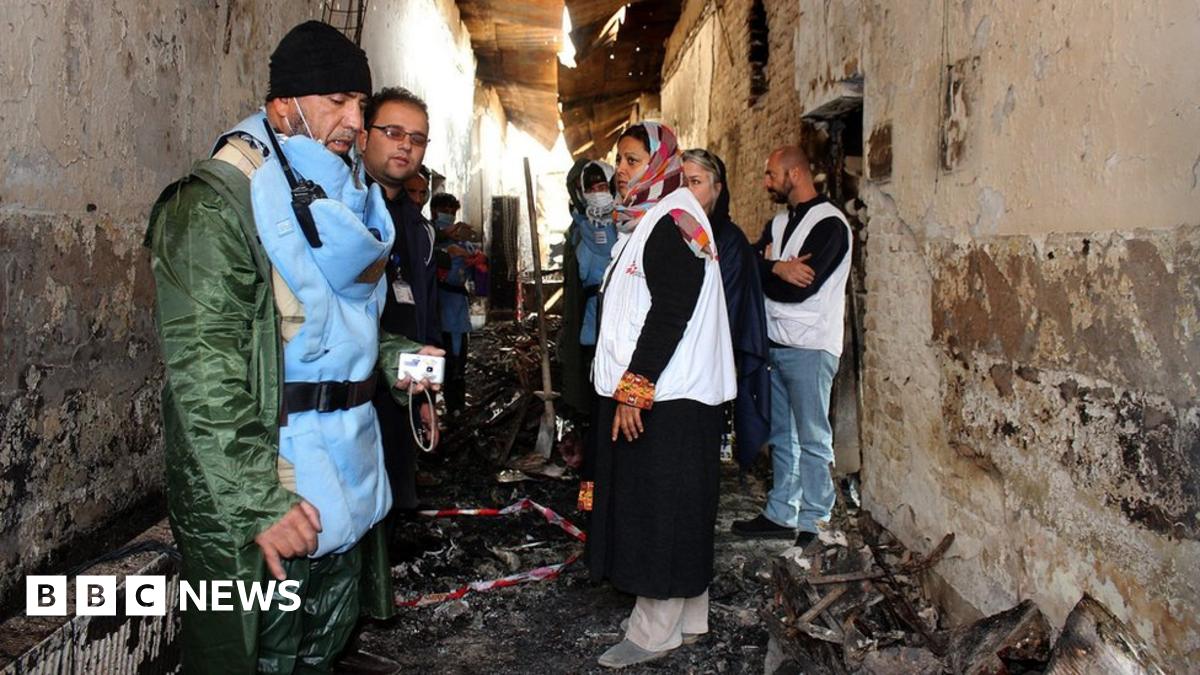
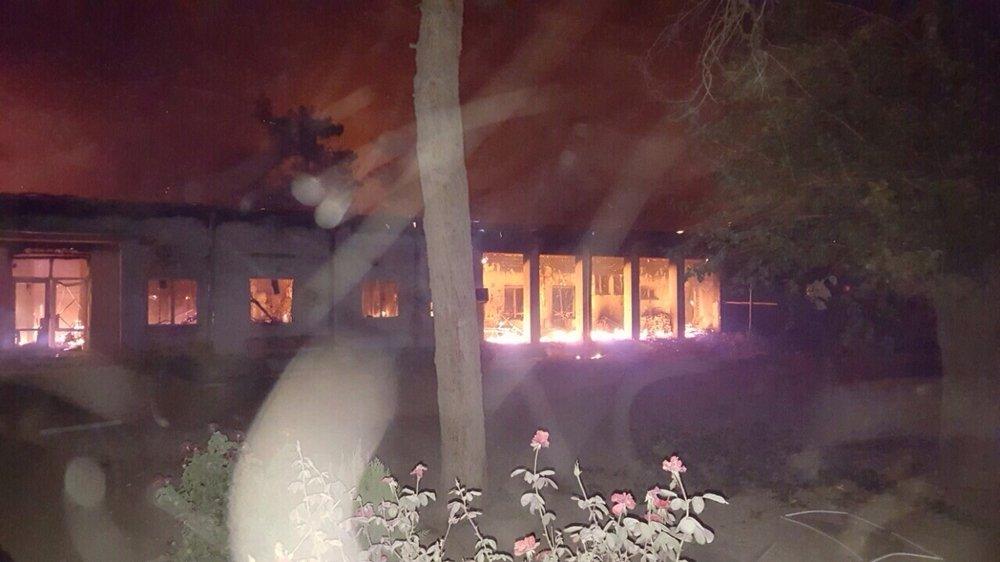
The Incident: On October 3, 2015, a US AC-130 gunship conducted an airstrike on a Medecins Sans Frontieres (MSF/Doctors Without Borders) trauma center in Kunduz, Afghanistan. The attack killed at least 30 people, including 13 MSF staff members, and injured dozens more [1]. The hospital was the only trauma center in northeastern Afghanistan and had been operating since 2011.
The US Investigation: The US military conducted an internal investigation and released findings in November 2015. The investigation concluded that the attack resulted from a combination of equipment malfunctions, communication failures, and human error [1]. The crew of the AC-130 gunship had relied on a physical description of a Taliban compound provided by Afghan forces, but attacked the wrong building - the hospital was approximately 410 meters away from the intended target [1].
War Crime Allegations: MSF described the attack as a "war crime" and a "black day" in its history [1]. Under international humanitarian law, hospitals and medical personnel are explicitly protected, and intentionally directing attacks against hospitals can constitute a war crime [1]. The International Criminal Court defines war crimes to include "intentionally directing attacks against buildings dedicated to...hospitals" [1].
International Calls for Investigation: MSF demanded an independent international investigation through the International Humanitarian Fact-Finding Commission (IHFFC), a body established in 1991 under the Geneva Conventions specifically to investigate violations of international humanitarian law [1]. UN Secretary-General Ban Ki-moon called for an independent investigation, stating "hospitals and medical personnel are explicitly protected under international humanitarian law" [1].
Australian Parliamentary Motion: The original source indicates the Greens (through Senator Scott Ludlam) proposed a condolence motion calling for an independent investigation, which the government did not support. The claim states the Coalition "voted against" this motion.
Missing Context
Nature of the Vote: The claim states the Coalition "voted against" a motion for independent investigation. However, the Greens source refers to the government "denying" a condolence motion. Parliamentary records would be needed to verify whether this was a formal recorded vote with Coalition members voting "no," or whether the government simply declined to support/sponsor the motion. These are procedurally different scenarios [original source].
US Investigation Outcomes: The US investigation led to administrative and disciplinary actions against personnel involved. The US military acknowledged the error and stated they had "learned from this terrible incident" [1]. No independent international investigation was ultimately conducted, as neither the US nor Afghanistan were signatories to the IHFFC, requiring separate declarations of consent which were not provided [1].
Complexity of the Conflict: The attack occurred during the Battle of Kunduz when Taliban forces had captured the city. Afghan forces claimed armed terrorists were using the hospital as a position, though MSF denied any fighting inside the compound [1].
No Finding of Intentional Targeting: The US investigation found no evidence that the aircraft crew or US Special Forces knew the targeted compound was a hospital at the time of the attack [1]. This distinguishes the incident from intentional targeting, which would be a clearer war crime.
International Response: Most Western allies of the US, including Australia, did not join calls for an independent international investigation. The US conducted its own investigation and provided compensation to victims [1].
Source Credibility Assessment
The original source is a media release from Scott Ludlam, then a Greens Senator. The Australian Greens are a progressive political party that is generally more critical of military actions and more supportive of international law mechanisms than the major parties. This source has a clear political perspective opposing the government's position. The Greens media release would represent their interpretation of events and the parliamentary proceedings, which may not capture the full procedural context or the government's stated reasons for their position.
The Wikipedia article provides a more neutral summary of events, citing multiple sources including BBC, MSF, and the US military investigation [1].
Labor Comparison
Did Labor do something similar?
Labor was in government from 2007-2013 during the Afghanistan war. During this period, Australian forces were deployed in Afghanistan as part of the NATO-led coalition. Labor governments also participated in coalition military operations that resulted in civilian casualties.
There is no public record of the Rudd or Gillard Labor governments calling for independent international investigations into US military actions in Afghanistan when they were in government. Like the Coalition, Labor governments maintained Australia's alliance relationship with the United States and generally accepted US military investigations into incidents involving civilian casualties.
This suggests that declining to demand independent international investigations of allied military operations is standard practice across both major Australian political parties, rather than something unique to the Coalition.
Balanced Perspective
The Coalition Position: The Coalition government's decision not to support an independent international investigation aligns with Australia's long-standing alliance with the United States. Successive Australian governments (both Labor and Coalition) have generally accepted US military investigations into incidents involving civilian casualties rather than demanding international scrutiny.
Policy Rationale: The government likely viewed this as a matter for the US military to investigate, particularly given that the US did conduct an internal investigation and took administrative action. Demanding an independent international investigation could have strained Australia-US relations without clear benefit, given that neither the US nor Afghanistan were signatories to the IHFFC mechanism.
What the Claim Misses: The claim frames this as the Coalition uniquely opposing accountability for war crimes. However:
- Labor has not historically called for independent investigations of allied military operations either
- Most Western allies accepted the US investigation
- The incident was acknowledged by the US as an error with disciplinary consequences
- The procedural nature of the "vote" (whether formal opposition or declining to support) matters for accuracy
Comparative Analysis: This appears to be standard Australian foreign policy across governments - prioritizing alliance relationships over demanding international scrutiny of allied military actions. The Greens, as a minor party without government responsibility, can take positions that major parties in government typically do not.
PARTIALLY TRUE
6.0
out of 10
The core facts are accurate: there was a proposed parliamentary motion regarding the Kunduz hospital bombing, and the Coalition government did not support it. MSF did characterize the attack as a war crime. However, the claim omits crucial context:
- Procedural ambiguity: "Voted against" versus "declined to support" a condolence motion are different procedural scenarios
- Bipartisan pattern: Neither major Australian party (Labor or Coalition) has historically demanded independent investigations of allied military operations
- US accountability: The US conducted an investigation and took disciplinary action
- International context: Most Western allies accepted the US investigation rather than demanding independent scrutiny
The claim presents this as a unique Coalition failing on war crimes accountability, when it actually reflects standard Australian foreign policy across governments of both major parties.
Final Score
6.0
OUT OF 10
PARTIALLY TRUE
The core facts are accurate: there was a proposed parliamentary motion regarding the Kunduz hospital bombing, and the Coalition government did not support it. MSF did characterize the attack as a war crime. However, the claim omits crucial context:
- Procedural ambiguity: "Voted against" versus "declined to support" a condolence motion are different procedural scenarios
- Bipartisan pattern: Neither major Australian party (Labor or Coalition) has historically demanded independent investigations of allied military operations
- US accountability: The US conducted an investigation and took disciplinary action
- International context: Most Western allies accepted the US investigation rather than demanding independent scrutiny
The claim presents this as a unique Coalition failing on war crimes accountability, when it actually reflects standard Australian foreign policy across governments of both major parties.
📚 SOURCES & CITATIONS (5)
-
1

Kunduz hospital airstrike - Wikipedia
Wikipedia -
2
Afghan conflict: What we know about Kunduz hospital bombing
MSF has demanded an international inquiry into the US bombing of its clinic in the Afghan city of Kunduz, saying the attack may constitute a war crime. We examine what is known so far.
BBC News -
3
MSF demands explanations after deadly airstrikes hit hospital in Kunduz
Msf
-
4
Kunduz Attack - MSF Demands Independent Investigation
Leaders at MSF condemn the attack on the Kunduz trauma centre - demanding an independent investigation
MSF Southern Africa -
5

Marking 10 years since the US attack on Kunduz hospital
On October 3, 2015, 42 people were killed by US airstrikes on MSF’s hospital in northern Afghanistan. Today our new Kunduz trauma center continues to provide emergency care.
Doctors Without Borders - USA
Rating Scale Methodology
1-3: FALSE
Factually incorrect or malicious fabrication.
4-6: PARTIAL
Some truth but context is missing or skewed.
7-9: MOSTLY TRUE
Minor technicalities or phrasing issues.
10: ACCURATE
Perfectly verified and contextually fair.
Methodology: Ratings are determined through cross-referencing official government records, independent fact-checking organizations, and primary source documents.